
What Is SEO and SEM Marketing?
SEO and SEM are the two ways a business shows up in search results. SEO, short for search engine optimization, is the work of earning a place in the unpaid, organic results by making your site easier for Google to understand and more useful to the people searching. SEM, short for search engine marketing, is used in two ways: most people today mean paid search, such as Google Ads, while the older usage, which some guides still follow, treats it as an umbrella that covers both paid ads and SEO. Either way, the practical split is the same, because one channel earns its visibility and the other pays for it.
The two sit on the same results page, but they behave very differently. Paid ads can start showing soon after they are approved, as long as they clear the auction, and they stop the moment the budget does, while organic rankings usually take months to build and can keep bringing in visitors for some time after the work stops. This guide covers what each term means in web marketing, how each channel works, what each one costs in Calgary, and how to decide which one a business should start with.

Two definitions of SEM
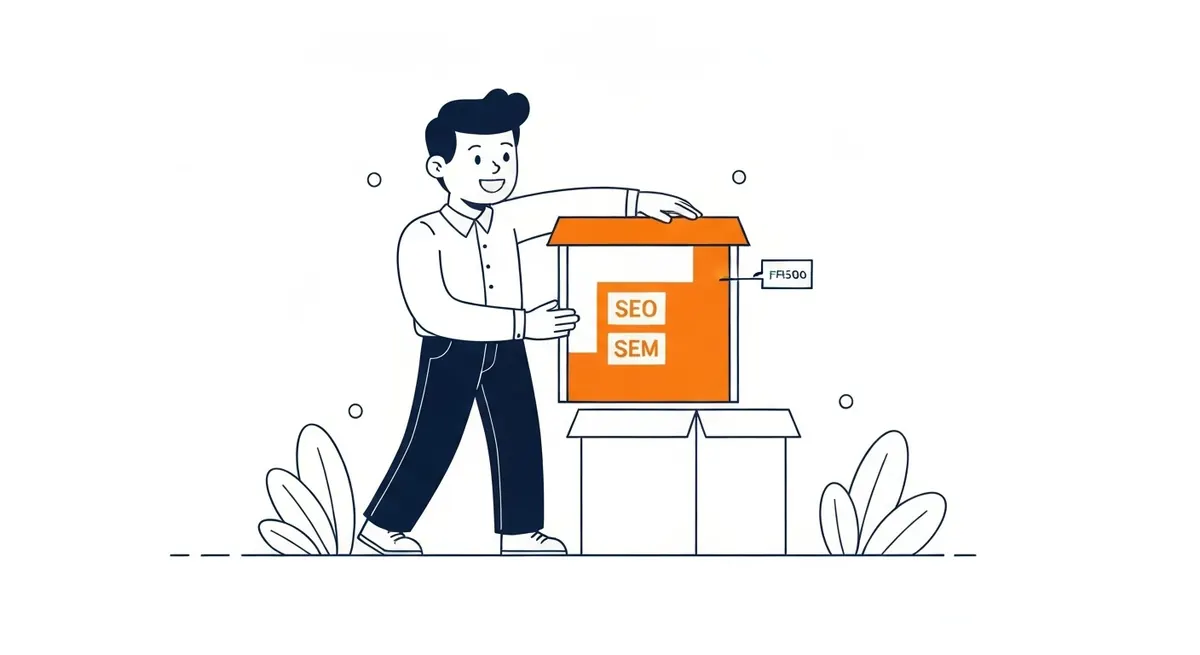
The confusion is real, and it comes from history. In the early years of search marketing, SEM was the name for everything a business did to get traffic from search engines, so SEO sat underneath it as one part, and some well-known guides still define it that way. Over time the industry started using SEM for the paid side alone, which is why a vendor who says “SEM” today almost always means the ad account rather than the content or the site.
Neither usage is wrong, but it pays to ask which one a person means before comparing quotes, because “SEM services” can describe a Google Ads campaign or a bundle of paid and organic work. The same caution applies to PPC, pay-per-click, which describes how most search ads are billed rather than a separate channel. The guide to SEM and PPC covers that pair in more detail. In the rest of this article, SEM means paid search, so the comparison is between earning a place in the organic results and paying for one.
You can see the split on any Google results page. Google says ads are always labelled “Sponsored” or “Ad” and shown separately from the search results, and everything without that label is organic. Google also states in its guide for site owners, Do you need an SEO?, that “advertising with Google won’t have any effect on your site’s presence in our search results.” Buying ads does not lift your organic rankings, and stopping them does not hurt your rankings either, which is the single most useful fact to hold on to when you weigh the two.
SEO: earning a place in the organic results
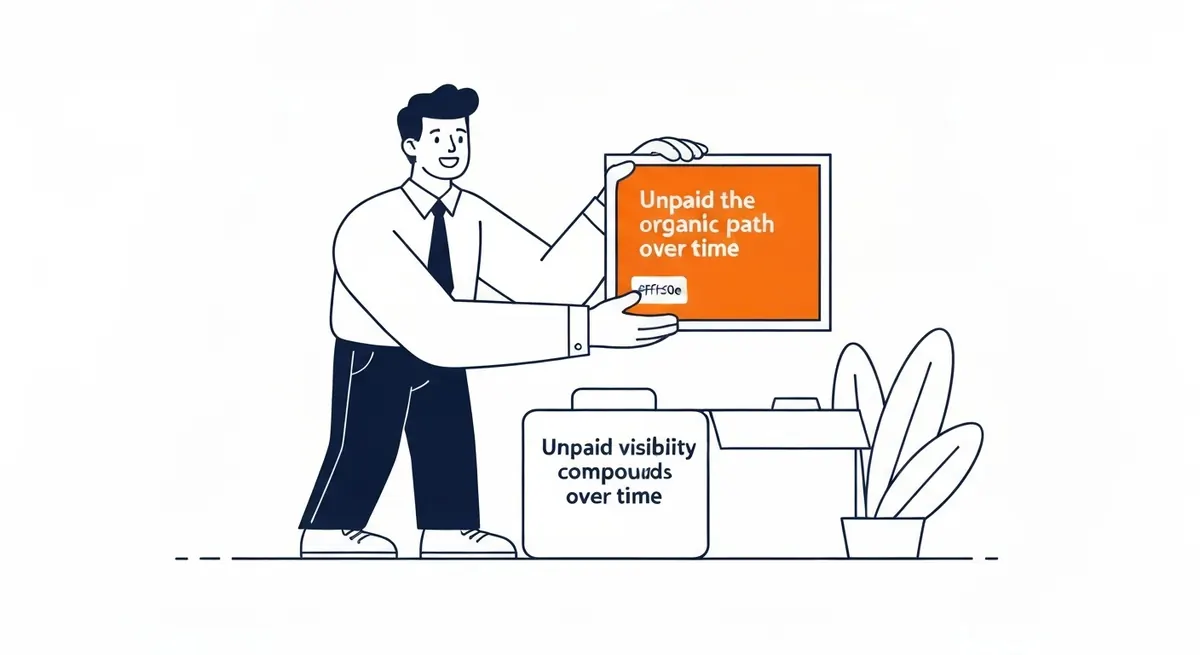
Google’s SEO Starter Guide describes SEO as helping search engines understand your content and helping people find your site and decide whether to visit it. In practice the work falls into three areas. Technical work makes sure Google can crawl and index the site and that pages load well on a phone. On-page work matches each page to the searches it should answer, through the content, the title, the headings and the internal links. Off-page work builds the reputation of the site through links and mentions from other reputable websites, along with listings such as a Google Business Profile for a local business.
Google does not accept payment to rank pages higher, and ranking is done programmatically, so nobody can buy an organic position directly. That is the strength and the weakness of SEO in one sentence. A page that earns a good position keeps drawing visitors without a charge for each click, but getting it there takes time and cannot be rushed with money alone.
There is no fixed timetable for SEO. As a general rule of thumb among practitioners, a new page aimed at a competitive commercial search in a city like Calgary needs months of steady work rather than weeks, and how quickly progress shows depends on the authority the site already has, its technical condition, the strength of the competition and the scope of the work. Anyone who promises a fixed date is guessing.
SEM: paying for a place in the results
Paid search works through an auction that runs every time someone searches. You choose keywords, write ads and set a budget and bids, and when a search matches your keywords your ad competes with other advertisers for the paid positions. Google reviews new ads first and says most ads are reviewed within one business day, so a new campaign can often start showing within a day or so of launch, which is why many businesses turn to paid search when they need enquiries quickly.
The highest bid does not simply win. Google Ads Help says Ad Rank, which decides whether your ad shows and where, is based on six factors: your bid, the quality of your ads and landing page, the Ad Rank thresholds, the competitiveness of the auction, the context of the person’s search, and the expected impact of your ad assets. The Quality Score you see in the account is a separate 1 to 10 diagnostic, and Google states plainly that it “is not an input in the ad auction,” although the qualities it reports on, such as expected clickthrough rate and landing page experience, are the same ones the auction rewards. The article on how Ad Rank works explains the auction step by step.
A common description says you pay whatever you bid. Google’s own explanation of actual cost per click is different: you pay only what is needed to clear the thresholds and beat the advertiser below you, so the actual cost per click is often lower than your maximum bid. The catch is that every click carries a cost, and the visibility ends the day the budget ends. Nothing carries over once the ads stop.
SEO and SEM side by side
| SEO | SEM (paid search) | |
|---|---|---|
| Where it appears | Organic results, unlabelled | Paid positions labelled “Sponsored” or “Ad” |
| How you get there | Site quality, relevance and reputation | Ad Rank in an auction for each search |
| Speed | Months for competitive searches | Can show soon after approval, and Google says most ads are reviewed within one business day |
| Cost structure | Work on the site, usually a monthly fee or project | Ad spend for every click, plus a management fee if someone runs the account |
| When you stop paying | Rankings usually hold for a while, then can slip as competitors keep working | Ads stop showing immediately |
| Control | Indirect: Google decides the ranking and the snippet | More direct: you set the keywords, ad text, budget, hours and locations, although Google decides how keywords match searches and which combination of your ad text to show |
| Best at | Steady traffic for searches you can earn | Fast, targeted traffic and testing which searches convert |
What each one costs
The cost of SEM is easiest to understand as two separate numbers. The first is ad spend, which you pay to Google and which depends on your budget and on how much competitors bid for the same searches. The second is the fee for whoever builds and manages the account, unless you run it yourself. When comparing offers, ask any provider for those two numbers separately, because a single monthly figure can hide how much of it reaches Google.
Some Calgary agencies publish their management fees. As published on their own sites in August 2026, and still listed when rechecked in October 2026, Andy Kuiper charged $350 a month for Google Ads management for its SEO clients, Kobzza listed Google Ads management at $1,000 a month with no setup fee (its page does not state a currency), and GrowME published management fees from $500 to $3,800 a month. Each of those is the agency’s own fee and excludes the ad spend paid to Google.
SEO is usually priced as a monthly fee or a project. In the review of the prices Calgary agencies publish, carried out in August 2026, the median of the lowest monthly figure each agency published was $1,000, leaving out one agency whose figure covers marketing services in general rather than SEO. That is a starting point the agencies advertise, not a typical bill, and the scope behind each figure varies a great deal. SEO Company To-The-TOP! is a solo practice, so the person who prices the work is the person who does it, and its own prices are not part of that review. To ask what your project would cost, call (403) 308-5949.
Which one comes first
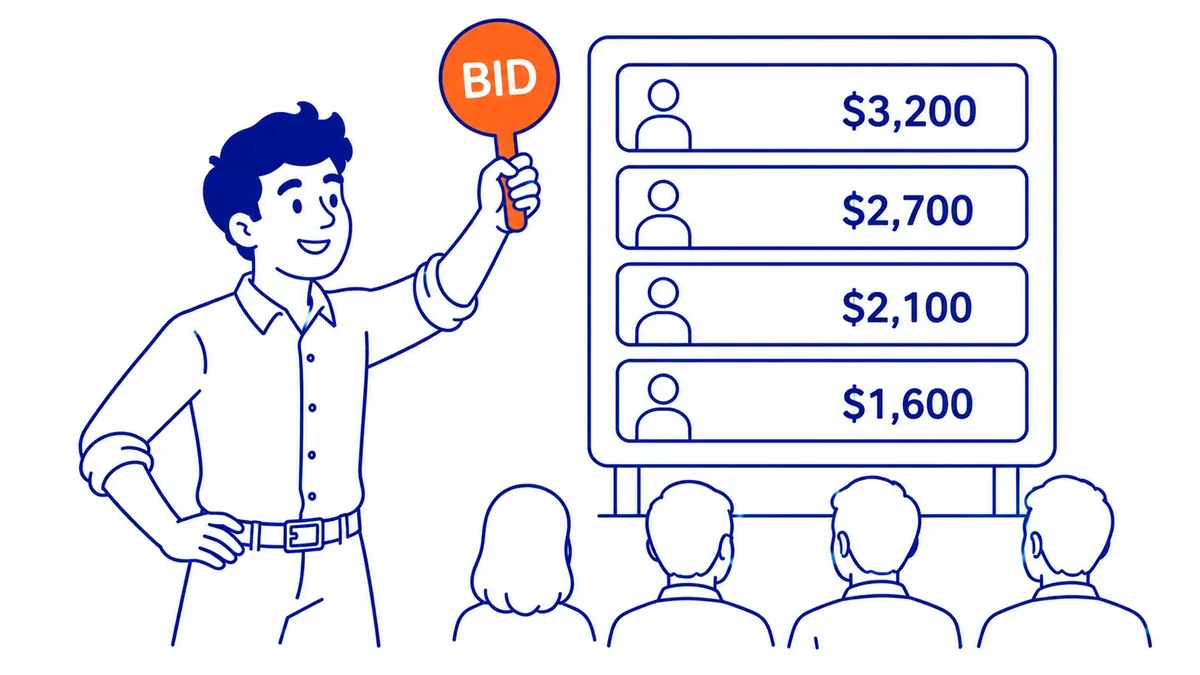
The answer depends on how soon you need enquiries and how much organic presence you already have. A new business with no rankings and a need for leads this quarter usually starts with paid search, because SEO alone is unlikely to bring in a steady flow of enquiries that quickly, and it starts the SEO work alongside so that it is not paying for every visitor forever. A business that can wait, or that cannot afford ad spend yet, can reasonably put its money into SEO first, as long as it accepts that the return comes later.
An established business should look at the gaps rather than pick a side. Searches where its pages already sit near the top of the organic results may not need ads at all, although brand and high-value searches are sometimes worth covering with both. Searches where it sits on page two or three are often a sensible place to test paid coverage while the SEO work tries to close the gap, provided those searches bring the kind of enquiries that justify the cost of each click. Some searches are hard to win organically, for example when the results page is full of large directories and national brands, and in that case paid search, a Google Business Profile in the local results or a listing on those same directories may be a more realistic way onto the page than a new organic page.
There are also cases where paid search is the wrong first move. If the website has no clear way to call or send an enquiry, or the landing page does not match what the ad promises, ad spend mostly buys visits that leave. Fixing the site comes first in that case, and that work helps both channels at once.
Using both together
The two channels work best when they share data. With conversion tracking set up and enough traffic, a paid campaign can show fairly quickly which searches turn into calls and forms, which is information SEO usually takes much longer to gather, so it is a sound way to decide which pages to build or improve. Good keyword research for SEO should look at that paid data where it exists, not just at search volume.
Google Ads has a built-in report for this. Once a Search Console account is linked to the Google Ads account, the paid and organic report shows how often your site appears in the organic results and in your text ads for the same searches. Google suggests using it to find searches where you appear only organically and might add ads, and to see how the two channels perform together, which is far easier than comparing two separate reports by hand.
The opposite also applies. When organic pages start ranking well for searches that you are paying for, that is the moment to test whether the ads still earn their cost, using your conversion data rather than the paid and organic report alone, since that report shows visibility and clicks rather than enquiries or sales. Whoever runs the ads should be able to show you paid and organic performance side by side, with calls and forms measured separately. To-The-TOP! runs SEO and Google Ads management as separate services.
If you would like a second opinion on how SEO and paid search fit together for your business, SEO Company To-The-TOP! has been based in Calgary since 2007 and is Google Ads certified. Call (403) 308-5949 to talk it through.
Contact Calgary SEO Company To-The-TOP!
Questions about anything in this article, or about your own rankings? Talk to a Calgary SEO specialist directly.
Phone: (403) 308-5949
Address: 1509 14 Ave SW, Calgary, AB T3C 0W4
Hours:
Monday to Friday: 10:00 am – 7:00 pm
Saturday: 12:00 pm – 4:00 pm
Sunday: closed