What Is Traffic in SEO?
Clients bring up traffic numbers in the first meeting. Usually the first ten minutes. The number is a reasonable starting point. What it actually measures depends on where those visitors came from and what they were looking for when they arrived.
SEO traffic is visitors arriving at your website from unpaid search results. No ad budget behind those visits. Someone typed a query into Google, an organic listing appeared, they clicked through. That session is SEO traffic.

What SEO Traffic Actually Measures
Sessions from organic search. That is the metric.
Analytics labels those sessions the organic channel. Google Search Console breaks them down by query and page. Position data sits alongside. The metric counts sessions, not people. One visitor returning three times is three sessions. Neither tool automatically tells you whether those visitors were ready to buy, though.
That distinction still matters. 10,000 monthly sessions from informational queries converting at 0.2% is not outperforming 800 sessions from transactional queries converting at 4%. SEO traffic is a top-of-funnel count. What happens below depends on keyword intent. Target terms that match buyer behaviour. Visits become useful. Target the wrong terms. Sessions accumulate without turning into leads.
The number itself does not tell the story. What the visitors searched before they arrived does. Rankings decide which queries send anyone at all, and more on domain authority explains that ceiling.
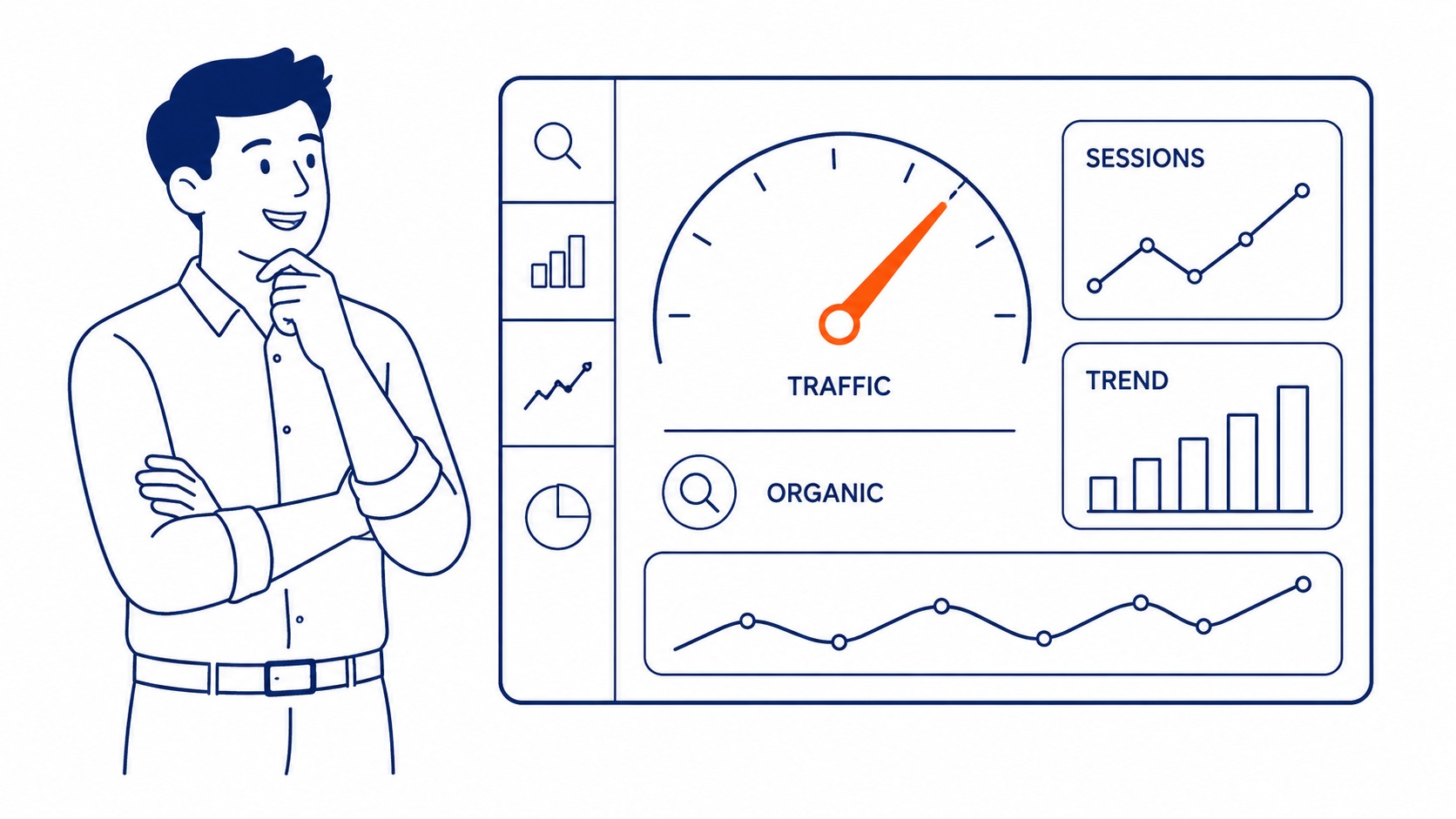
Where SEO Traffic Comes From
Organic search. One channel only.
Paid search visits arrive through their own channel in Analytics. Referral visits do too. Direct visits have a separate label. SEO traffic refers specifically to sessions starting from an organic listing. The visitor searched Google and clicked an unpaid result. No ad. Not from a referring site either.
There is also a secondary effect worth noting. Businesses that rank for non-branded terms build visibility over time. That visibility drives branded searches later. Someone who encountered the name while researching a service types it directly weeks later. That session appears as direct in Analytics, not as organic. SEO produced it. Attribution often misses it.
Backlinks from industry publications send some of those readers to your website. Those visits show up as referral. The same link-building work that improves organic rankings also generates them as a side effect.

Types of SEO Traffic Worth Knowing
Not all organic sessions convert the same.
Someone searching for a definition is in research mode. Searching for an SEO company in Calgary means evaluating providers. The search volume is usually much higher on the informational side. Conversion rate is much higher on the transactional side. Which of the two your site attracts comes down to keyword research.
Search engines serve both types of queries. Local search sessions behave differently from general informational visits. A business ranking for a city-specific service term attracts visitors with local purchase intent. They are looking for a provider, not background information. Those searches tend to convert at much higher rates, though.
Navigational searches form a third category. These are simply searches for a specific business name. Ranking for your own brand terms in organic search protects those visitors. Competitors sometimes bid on the same names in paid search.

Why Traffic Quality Outweighs Volume
High volume often means lower intent.
Someone searching a broad educational topic is not the same as someone searching for a local service provider. The traffic count does not distinguish between the two. Which searches the site attracts matters more than how many sessions it logs. Volume is the headline number. Quality is what converts.
Bounce rate surfaces a mismatch. A page earning strong organic search volume but immediately losing visitors usually has a content gap. Your content covers something slightly different from what the searcher expected. Tightening the relationship between the keyword and what your content actually delivers resolves most of those situations.
To-The-TOP! focuses on keyword intent from the start of our Calgary SEO work. Fewer total sessions from better-matched keywords outperform high session counts from poorly matched terms. That trade-off still produces better outcomes for local businesses with limited capacity to handle leads.

Organic SEO vs. Paid Search
Paid search stops. Organic search compounds.
Paid search visits disappear the day the budget runs out. Organic search built through our search engine optimization work keeps running as long as the rankings hold. A page reaching position three in month four still drives visitors in month twenty-four.
Cost per visit from organic search decreases over time. Early months carry the investment. Later months produce visitors without additional spend. That is still the economic argument for SEO over sustained paid advertising on the same keywords.
Running both channels simultaneously works well for most businesses. Google ad management covers priority keywords immediately while organic positions build. PPC offers speed and control. Once organic rankings firm up on specific terms, paid spend can move to less competitive ones. The two channels serve different timelines. Neither replaces the other.

How to Track SEO Traffic
Google Search Console first. Then Google Analytics.
Search Console shows which queries generate search traffic on your site. Pages that earn clicks appear alongside. Average position for each query. Click-through rate at each position. Free for any verified site owner and updated regularly.
Google Analytics tracks what visitors do after arriving from search. The organic segment in GA4 separates organic sessions from paid and referral sources. Connecting GA4 to Google Search Console adds query data to user behaviour in one report. That combination already answers most of the useful questions about your site’s organic performance.
Third-party tools like SEMrush and Ahrefs also estimate organic sessions for competitor sites. Useful for benchmarking against others in the market. For your own numbers, Search Console data is always the more accurate source. Traffic is one metric among many, so a guide to measuring SEO covers the rest. Feed those numbers into your other tools and you find where SEO meets marketing automation.
What Drives SEO Traffic Growth
Rankings first. Visits follow.
A page at position eight for a commercial keyword draws roughly 2-3% of available clicks. Move it to position two. Click-through rate often climbs above 15%. The ranking gap drives more visits than most other factors combined.
Backlinks from relevant sites lift rankings for competitive keywords. Content depth also matters. Page speed affects rankings. Mobile usability does too. Crawl accessibility rounds out the technical floor. A website audit early in an engagement identifies which factor is holding SEO traffic growth back most.
Content gaps limit visits as often as ranking problems do. A site with authority in one area but thin coverage of related queries leaves searches uncontested. Expanding your content across a topic cluster is usually where established sites find the fastest growth.
How Long Does SEO Traffic Take to Grow?
Three to six months. Realistic range.
Newer domains take longer. Competitive keywords take longer. Sites with technical issues blocking crawling or indexing take longer still. A website audit at the start sets more accurate expectations than any general timeline.
SEO traffic does not arrive in a straight line. New content indexes in batches. Algorithm updates create short-term swings in both directions. Quarterly trends give a more reliable read than week-to-week numbers. The organic session gains that hold up over years come from consistent content investment, not from one-time pushes.
Monthly position reporting helps separate signal from noise during the growth period. To-The-TOP! tracks ranking positions and organic session volume for every client. Conversion rate from organic traffic sits alongside those numbers. Traffic is one metric in that group. The others provide the context that makes it useful.
FAQ
What is meant by traffic in SEO?
Visitors arriving at your website from unpaid search results. Someone types a query into Google. They click an organic listing. That session is SEO traffic. Your analytics platform tracks it separately from paid ads and referral sources.
Does traffic help SEO?
Engagement signals from visitor behaviour influence rankings indirectly. Pages that earn clicks and hold visitors send different signals than pages that lose visitors immediately. High bounce rate on key landing pages is worth investigating. Google has acknowledged using engagement data in quality assessments, though the exact weighting is not disclosed publicly.
What is traffic vs leads vs sales?
Traffic is visitors to your website. Leads are visitors who showed purchase intent. A form submission or phone call. Sales are leads that became paying customers. SEO drives traffic. Converting that traffic is a separate challenge. It depends on how well your content matches what the searcher wanted. The offer determines the rest.
What is traffic in simple words?
People who visit your website. Where they came from determines the label in Analytics. Organic search delivers SEO traffic. Google Ads delivers paid visits. Each channel has different growth timelines. The organic work is the kind that keeps building after delivery, as long as the rankings hold.
Contact Calgary SEO Company To-The-TOP!
Questions about anything in this article, or about your own rankings? Talk to a Calgary SEO specialist directly.
Phone: (403) 308-5949
Address: 1509 14 Ave SW, Calgary, AB T3C 0W4
Hours:
Monday to Friday: 10:00 am – 7:00 pm
Saturday: 12:00 pm – 4:00 pm
Sunday: closed
