
What Is Intent in SEO?
Intent is the reason a person typed the words they typed. That is the whole definition. Somebody wants something. The keyword is just the sound they made reaching for it.
Search intent usually gets sorted into four buckets. Informational queries. Navigational ones. Commercial and transactional. That sorting is useful. Our keyword research pages cover it well already. So this page skips the list. There is a stranger idea sitting underneath it, and almost nobody says it out loud.
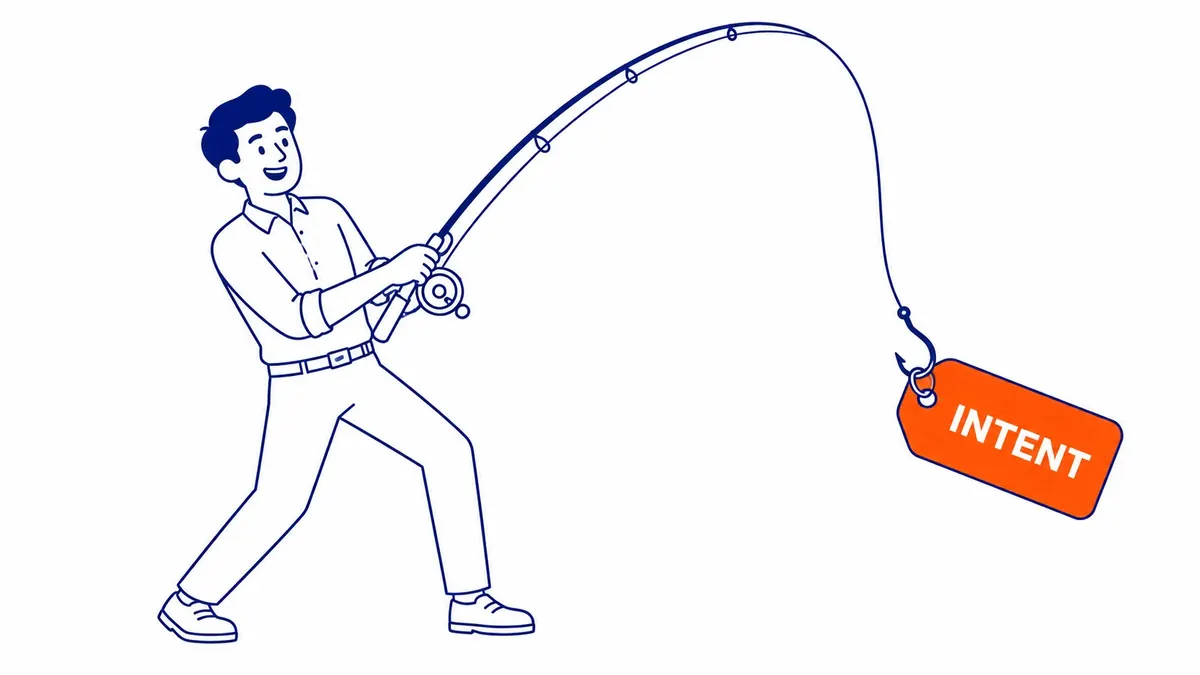
Here it is. A keyword does not have an intent. The people typing it do.
What the Textbooks Say
Ask what intent means and you get the four types. Then a method. Read the results page. See what Google already ranks for the term. Match your page to it. All of that is sound. We use it every week. Finding the dominant want behind a query is a solved problem, covered on our keyword pages.
So this page skips it too. The question here is not how you read intent. It is what kind of thing intent even is. The same crowd stands behind keywords in an AdWords account, priced by the click.

A Keyword Does Not Have an Intent
Take three words. “Best running shoes.” One person typing that is about to buy a pair tonight. Another is a blogger building a roundup. A third already owns a pair and wants to see if theirs made somebody’s list. Same three words. Three different wants, all typed the same afternoon.
Nothing in the letters tells them apart. The intent was never in the query. It arrived with the person and left with them.
So when a tool stamps a keyword “transactional,” it is not reading the words. It cannot. The tool is guessing the most common reason those words get typed, across everybody who types them. Often a good guess. Still a guess, about a stranger you will never meet.
That changes what you are doing when you assign intent. You are not measuring a property of the query. Instead you are predicting a person. Calling it the intent behind a query hides how much guessing is involved.

One Query, a Crowd of Reasons
Here is the part the four buckets hide. A single query does not carry one intent. It carries a crowd of them.
Picture everybody who searched “seo services” last month. Some wanted to hire that day. A few were comparing a shortlist of agencies. Others were students writing an assignment. One or two were rival SEOs checking the field. Then one word gets stamped across the whole crowd. That word describes only its biggest group.
The stamp is an average. And nobody in the crowd is the average. Every real searcher had a reason sharper and narrower than any label could hold. “Commercial” is a room full of different people rounded down to one adjective.
So you are not classifying a query. You are betting on the largest group standing behind it. B2B SEO campaigns make that bet with a whole buying committee behind the query.

Why the Bet Is Still the Right One
None of this makes the label wrong to use. Using it is almost always correct.
You cannot build a separate page for every private reason a stranger reaches for three words. That would take a hundred pages and a way to read minds. So you pick the biggest group. You serve them properly. The rest, you let go. That is not a shortcut. It is simply how a page gets built.
The label is a simplification you should make. Search rewards pages that answer the dominant want. That is a big part of how you place at all. Skip the guess and you write for nobody in particular. That reads to a searcher exactly the way it sounds.
The error is never making the bet. It is forgetting a bet is what it was.

The Tail Is Still Customers
Treat “informational” as a fact you uncovered. Then something quiet goes wrong. You stop seeing the people the label threw out.
A guide aimed perfectly at researchers will still lose the reader who typed those words ready to buy. They wanted a price and a phone number. What they got was a definition. They left. No ranking dropped. Nothing showed up in a report. A real customer simply bounced off a page doing exactly what it was told to do.
The tail is small, by definition. It is also made of people, not noise. Often the smartest thing on a page is one line for the minority reader. A soft offer at the foot of a guide. Or a quick answer for the buyer who showed up early. It costs a sentence. And it catches the ones the label was about to discard.
Intent drifts, as well. The crowd behind a term this year is not the crowd behind it in three. A phrase that was pure research fills up with buyers as a market matures. Your label was a snapshot. Snapshots age.

How To-The-TOP! Uses This for Calgary Clients
SEO Company To-The-TOP! has been reading intent for Calgary businesses since 2007. The first thing we do with a target keyword is not classify it. We ask who is actually behind it. And how much they disagree with each other.
For most local searches the answer is easy. Somebody has a problem and wants it handled nearby. That crowd is tight, and one page serves it cleanly. For a broader term the crowd splits. Then the page has to decide out loud who it is for, and leave a door open for everybody else.
None of this is guesswork in a costume. It is one plain question asked before the writing starts. Businesses come to us after a page that ranks and still does not sell. The cause is nearly always the same. That page served the average searcher. The average searcher does not exist. So To-The-TOP! rebuilds the page around who the searcher actually was. Whether the repair belongs in the organic copy or a tighter Google Ads campaign depends on the term. Our portfolio shows both, played out across years of local work.
Common Questions About Intent in SEO
What are the four types of search intent?
Four buckets get used almost everywhere. Informational queries. Navigational ones. Commercial and transactional. Each names the most common reason a query gets typed. Useful shorthand, and only ever shorthand, because every query holds more than one.
Does a keyword have one intent or several?
Several, always. One label gets stamped on it, describing the largest group of people who type it. The rest are still there behind the word. A strong page serves that majority and still leaves a line for the others.
How do I find the intent behind a keyword?
Search it, then read what already ranks. The pages winning now reflect what most people who typed it were after. That method sits on our keyword research pages in full. This page is about what intent is, not how to read it off a results page.
Can a page rank and still have the wrong intent?
It happens constantly. A page can hold a high position and still send visitors away. It answered a want they did not bring. Rankings measure place, not fit. A visitor who wanted to buy and got a lesson is a lost sale that no report will flag for you.
Does search intent change over time?
Yes, always. The crowd behind a query shifts as a market grows. A term that was once pure research fills with buyers. Labels set two years ago can quietly go stale. That is why intent is worth a second look, not a single reading.
Contact Calgary SEO Company To-The-TOP!
Questions about anything in this article, or about your own rankings? Talk to a Calgary SEO specialist directly.
Phone: (403) 308-5949
Address: 1509 14 Ave SW, Calgary, AB T3C 0W4
Hours:
Monday to Friday: 10:00 am – 7:00 pm
Saturday: 12:00 pm – 4:00 pm
Sunday: closed