
What to Look for in a SaaS SEO Agency
A local plumber’s SEO checklist does not fit a SaaS company. Different funnel. New kind of buyer. Different content entirely. Self-serve signups replace phone calls. Comparison pages replace map pack rankings. A general Calgary SEO agency applying local-business habits to a SaaS site usually misses every signal that matters.
SEO Company To-The-TOP! hears this question from founders who already tried a Calgary SEO agency once. Local-business tactics landed instead of anything built for a software product. Six things separate an agency built for SaaS from one running a borrowed playbook.

Product-Led Growth Content, Not Just Blog Posts
Free trial. Freemium tier. Self-serve checkout. Product-led growth companies skip the sales call for most signups, so the content has to do the selling instead.
An agency that only pitches a blog calendar is missing half the funnel. Comparison pages decide signups before a demo ever gets booked. “Product vs Competitor” pages. Alternative pages. Use-case pages built around one specific job the software does. That content converts at a rate a generic listicle never will.
Ask what gets built first. Comparison and alternative pages, or another top-of-funnel blog series. The answer reveals which decade of SEO the agency is still running. Their answer also shows whether the basics of SaaS SEO are settled or still being figured out.

Technical SEO for JavaScript-Heavy Apps
React apps. Vue apps. A headless CMS bolted onto the app shell. Most SaaS marketing sites run on one of the three. Googlebot renders JavaScript, eventually. Eventually is the problem worth asking about.
Render-blocking scripts delay indexation. Client-side routing can hide entire sections from a crawl without anyone noticing for months. A generalist used to WordPress brochure sites has often never opened a rendered-HTML diff in Search Console, let alone fixed one.
Ask directly how rendered HTML gets audited against served HTML. A real answer names a tool. Screaming Frog with JavaScript rendering turned on, or a direct pull from the URL Inspection API. Half the job lives right here, not as optional homework. Whether any of the content above ever gets crawled properly comes down to technical SEO on that JS-heavy stack.
Core Web Vitals sit on top of the same problem. A single-page app shell often ships one giant JavaScript bundle before anything useful renders. Largest Contentful Paint suffers first, then rankings follow slower than founders expect. An agency that has never touched a bundle-splitting conversation with an engineering team is guessing at this section, not fixing it. Those conversations are also where people learn to become a B2B SaaS SEO consultant. Ask how they have handled improving SEO for SaaS companies on a similar stack.
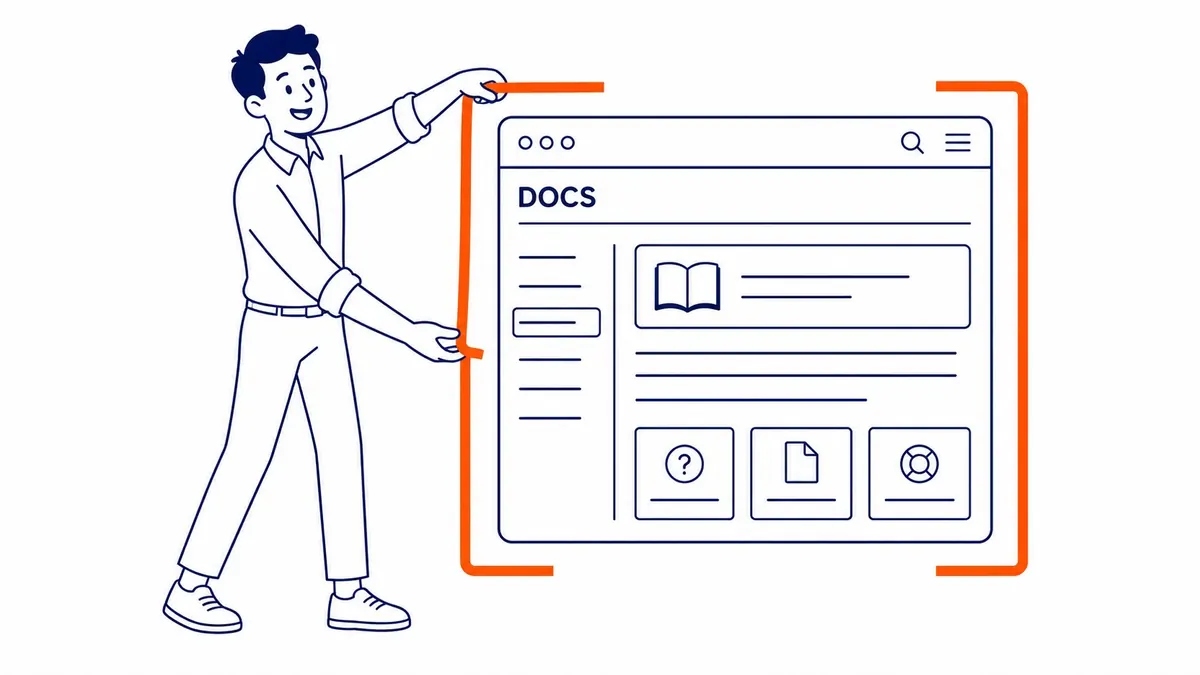
Docs and Help Centre Pages Rank Too
Documentation sites and help centres carry real search volume. “How to [task] in [software]” queries happen constantly, often from a competitor’s own users mid-comparison.
An SEO agency that ignores the docs subdomain is leaving half the domain unmanaged. Schema markup. Internal linking. Basic title tags on help articles. All three get skipped routinely. They sit outside the marketing team’s usual scope. Worth asking who owns SEO on the docs subdomain before signing anything.

Integration and Marketplace Pages
Zapier and Slack. HubSpot and Salesforce. Every integration a SaaS product supports is a landing page opportunity, and most companies leave it half-built.
A single integration page targets a genuine long-tail query. Someone already using a partner tool, searching for a way to connect it to this software. High intent. Low competition. Mostly ignored by agencies that never worked a SaaS account before. An agency that has shipped a marketplace page cluster brings templates and a process. One that has not will spend weeks just figuring out why the pages matter at all.

Attribution Beyond the Form Fill
Contact-form conversions are not the whole picture on a SaaS site. Free trial signups, freemium activations, product-qualified leads, all sit downstream of a blog post that never carried a form.
Last-click attribution punishes organic content that starts a journey but never closes it. A SaaS-fluent agency ties organic traffic to trial starts. Further downstream, that same traffic gets credited toward expansion revenue from accounts that began on a free plan. Some SaaS companies run Google Ads management next to organic for exactly this reason. Trial volume stays steady while organic content compounds in the background.
Reporting that stops at leads and never mentions product usage data has a gap. That gap costs a real growth story somewhere down the line.

Churn-Reduction Content Gets Skipped by Generalists
Content marketing for a SaaS product is not only acquisition. Retention content, feature-adoption guides, onboarding sequences that double as blog posts, cuts churn measurably in some segments.
A generalist agency builds top-of-funnel content and stops there. The SaaS-fluent version asks about activation metrics before writing a single onboarding guide. Content strategy depends on that answer.
A five percent monthly churn rate compounds into losing close to half a customer base within a year. Content aimed at accounts already inside the product moves that number. Another acquisition blog post rarely does.
Questions Worth Asking Before Signing
Which comparison pages have you built for a SaaS client, and did they move signups. What tool audits rendered HTML against served HTML. Keyword research for a SaaS buyer journey looks nothing like a purchase-now local search. How is organic-sourced trial activation tracked past the first session.
Four questions. Most agencies answer one clearly, maybe two.
Calgary work. Edmonton work. Vancouver work. SEO Company To-The-TOP! runs search engine optimization accounts in all three, for businesses on every model, SaaS included. Fit matters more than the size of an agency’s client roster. An agency that has never shipped an integration page or audited rendered HTML will learn the difference on someone else’s budget. Ask the four questions above before that someone else is the client.
Frequently Asked Questions
Does a SaaS Company Need a Different SEO Agency Than a Local Business Uses?
Different funnel, different content, different technical stack. A local-service specialist optimizing a map pack signal brings little to a self-serve trial funnel. The skill sets rarely overlap enough to matter.
What Is Product-Led Growth Content?
Content built around the self-serve funnel instead of a sales call. Comparison pages, alternative pages, use-case landing pages a visitor can act on without ever speaking to a rep.
Do Integration Pages Actually Drive Signups?
Individually, a small number each. A marketplace of forty or fifty partner integrations adds up fast, though. Combined volume becomes a real acquisition channel most companies leave unbuilt.
How Long Before SaaS SEO Content Shows Results?
Three to six months before meaningful movement, same as most competitive SEO work To-The-TOP! runs for any client. Comparison and alternative pages can move faster, since buyer intent is already high by the time someone searches them.
Is Technical SEO More Important for SaaS Than Content?
Neither wins alone. A comparison page Google cannot render properly never gets the chance to convert anyone, no matter how well it is written.
Contact Calgary SEO Company To-The-TOP!
Questions about anything in this article, or about your own rankings? Talk to a Calgary SEO specialist directly.
Phone: (403) 308-5949
Address: 1509 14 Ave SW, Calgary, AB T3C 0W4
Hours:
Monday to Friday: 10:00 am – 7:00 pm
Saturday: 12:00 pm – 4:00 pm
Sunday: closed