How to Create Pillar Pages for SaaS SEO
You already know the method. Pick a broad subject. Write one long page about it. Then write narrow pages around that one, and point every one of them back at it.
That is the pillar and cluster model. It works, and this site covers it properly elsewhere, so none of it gets repeated here. What nobody covers is the verb in the middle of the question. Create. Try it once, with nothing else on your site. Then notice there is nothing to do.

The Model Is Sound. It Is Also Published Everywhere.
The mechanics are settled. Cluster pages link up. Meanwhile the pillar links back down. Siblings cross-link. Underneath sits the keyword research giving each narrow page its own term.
All of it is right, and none in dispute. None of it is what this page is about.
The SaaS specifics are settled too. Comparison pages. Alternative pages. Those help centre articles quietly picking up traffic while nobody in marketing looks. Every one is covered elsewhere, and worth doing.
What is left over is a smaller question. It is about a word.
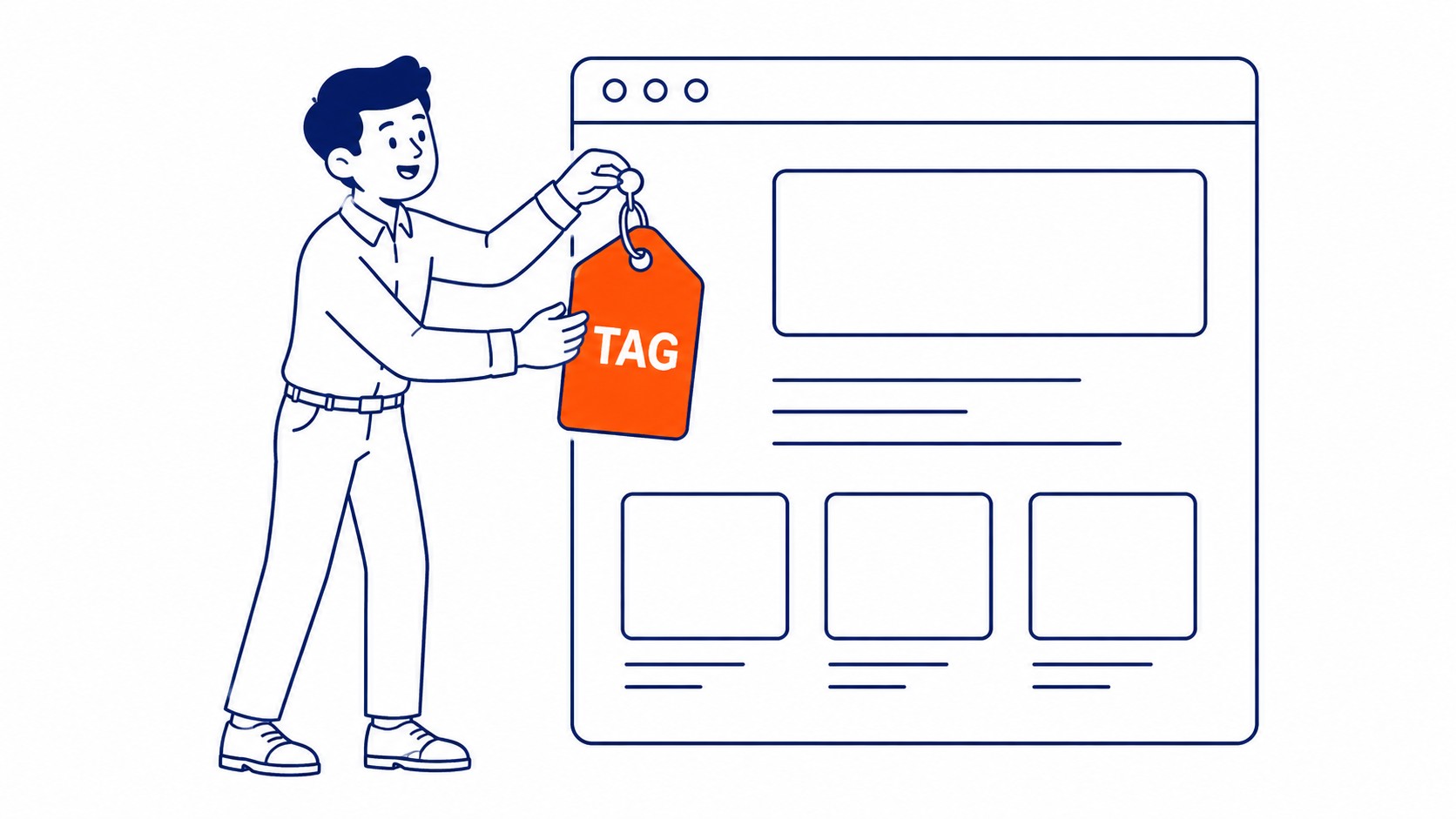
Nothing on a Pillar Page Makes It a Pillar
Open a pillar page. Any of them, on any site.
Nothing in it is unusual. Headings, paragraphs, a few images. The HTML is the same HTML. No tag says pillar, because no such tag exists.
Now delete every page around it. What you have is an article. Put the cluster back and it is a pillar again. Meanwhile the page itself never changed. Not one word moved.
Somebody will point at the cornerstone setting in their SEO plugin. Fair enough. Only look at what it does. It puts nothing on the page. Rather it changes how the plugin nags you about links. That is a note to yourself about where you mean to point things.
So even the software that marks a pillar marks it by managing links. Never the page.
The word was never describing the page at all. It describes where the page sits.
A pillar page is a position.

You Cannot Create an Eldest Child
Which makes the instruction strange, once you hear it properly. Create a pillar page. It asks for one act, and there is no act.
You cannot create an eldest child. Instead you have a second one, and the first becomes the eldest, without anybody touching them.
Pillars behave the same way. You write a page. Months later another points at it, and the first quietly becomes a pillar. Nobody edited it. No one republished anything.
So the pillar page you shipped in March was not a pillar in March. It was an article with plans.

In SaaS, the Buyers Are Down in the Clusters
Here is where software parts company with everything else.
The diagram treats the pillar as the prize. Clusters feed it, so up must be where you want people to end up.
Then look at where your buyers arrive from search. Almost nobody signs up for software after a broad guide to a category. They land on the narrow pages instead. The comparison. Then the one about exporting a report into a format nobody supports. Or the one answering whatever was blocking them at four in the afternoon.
Somebody reading the broad guide is usually learning. Meanwhile the person on the narrow page is stuck. And being stuck is what buys software. Most of lifting SEO at a SaaS company comes down to serving the stuck.

An Address Rather Than a Destination
So the arrows get drawn as though the pillar were where everybody should end up. In SaaS it rarely is.
What the pillar does is quieter. It gives the narrow pages somewhere to belong. Without one you own thirty unrelated posts. With one you own a topic.
That is no destination. Rather it is an address.

Write the Clusters First
A pillar is defined by what points at it. So you cannot build one first. You can only announce one. A page published with nothing around it is waiting to become something. Waiting is not a plan.
Then there is the second cost. A pillar written first gets written blind. You are summarizing thirty pages nobody has written. Afterwards the pages arrive. Several go somewhere you did not expect. Then the pillar quietly stops describing your own site.
So write the clusters. Each stands on its own. Every one answers something a person typed into a search box. And each earns arrivals without waiting for a structure to be finished.
Write the pillar last, once you know what it is the top of. It takes an afternoon by then, since the thinking is done and sitting in your drafts.
One more reason, the practical one. Stop halfway through a cluster and you still own the pages you finished. Halfway through a pillar, you own a draft.

Where the Pillar Page Argument Stops
None of this makes the pillar page optional. Write it. A reader who lands on a narrow page and wants the whole picture has nowhere else to go.
Nor is writing it first always wrong. Whenever you know a topic cold and the pillar is really a plan you happen to publish, go ahead. Simply be clear about what you are holding. A published plan is a fine thing. Still not a pillar.
Also worth saying plainly. The position does not do the work for you. Links pointing at a page can help people find it. They have never made it worth reading. A weak pillar with twenty links pointing at it is a weak page that got easy to find.
Take the pillar page you mean to write. Then name the pages that will point at it. Not the ones you might write one day. The live ones, on your site this afternoon.
Name eight and your pillar is overdue rather than pending. Most of it is written already, scattered across the pages pointing at it. Come back with none, and you are not creating a pillar. You are writing an article and hoping. No statistic about somebody else’s content settles which of those you are in. Yours is on your own site.
Pillar Pages and SaaS SEO in Calgary
SEO Company To-The-TOP! has been doing this work since 2007. The argument is nearly always about order. A business turns up holding a plan with one enormous page at the top and nothing underneath. It has usually been stuck for a while.
To-The-TOP! starts lower down. Good keyword research finds the narrow questions people already type. Those become pages that can each go live on their own. Structure shows up afterwards, which is usually the only time it shows up at all. Search engine optimization takes months. Three to six before anything meaningful moves. No guarantees either. So a Google Ads campaign often runs alongside while the pages accumulate. Businesses across Calgary can look through the To-The-TOP! portfolio to see what the patient version looks like. Firms new to this usually start by asking what SEO for software companies actually covers. Anyone wanting to do the work themselves is asking about becoming a B2B SaaS SEO consultant.
Common Questions About Pillar Pages for SaaS SEO
How long should a SaaS pillar page be?
No word count settles it. Length follows from the clusters you actually wrote, since the pillar has to gather them. Write the narrow pages first, then see how much gathering there is.
Should a SaaS pillar page mention the product?
Yes, plainly, once the reader has a reason to care. A broad guide pretending to have no seller behind it is still a page on your own website. Keep it out of the opening paragraph. Let it arrive where useful.
Can help centre articles work as cluster pages?
They often pick up traffic, and they are easy to forget you own. Whether to link them into a cluster is a real question, handled elsewhere on this site.
How many cluster pages does a pillar need?
There is no number. A page becomes a pillar the moment a second page points at it. The useful question is whether your topic holds enough narrow searches worth ranking for.
Is a pillar page the same as an SEO landing page?
No. A landing page asks somebody to act. Meanwhile a pillar page answers a topic broadly and sends people onward. Different jobs, and a site can want both.
Somewhere on your site there may be a pillar page already. Nobody meant to make one.
Contact Calgary SEO Company To-The-TOP!
Questions about anything in this article, or about your own rankings? Talk to a Calgary SEO specialist directly.
Phone: (403) 308-5949
Address: 1509 14 Ave SW, Calgary, AB T3C 0W4
Hours:
Monday to Friday: 10:00 am – 7:00 pm
Saturday: 12:00 pm – 4:00 pm
Sunday: closed
