
What Are Google Display Ads?
Running Google Ads accounts since 2007, we have seen the same confusion repeat. Business owners know display ads exist somewhere. Still, they are not sure where. A banner appears at the top of a news article. Product images show inside recipe blogs. That was likely a display ad, possibly from a competitor already reaching their customers.
Display ads are the visual ones. Not the text results on Google Search. Images, graphics, and responsive ad formats appearing on websites, apps, and Gmail while people browse.
Here is the practical outcome. Someone reads a home renovation blog. Your kitchen company ad appears in the sidebar. They never searched for you. Still, they saw your brand.
That is what google display ads do. Visual ads reach potential customers before any search happens.
How Display Ads Reach People Across the Web
Inventory that surprises most advertisers.
The Google Display Network (GDN) reaches over 35 million websites and apps. Gmail is also included. YouTube pre-roll runs through the same Google Ads account. So do banner placements on news sites, cooking blogs, mobile games, and sports apps.
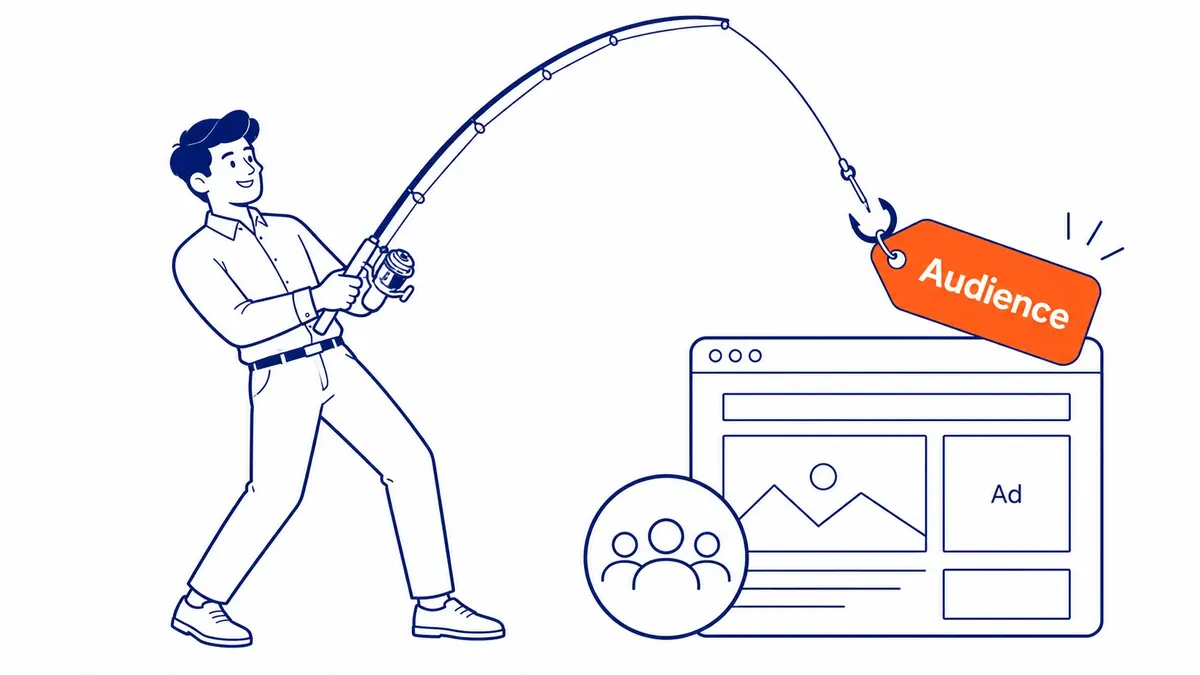
Your ads follow audiences, not queries. Someone browsing fitness content might see your supplement brand. They typed nothing. Audience matching did the work.
To-The-TOP! has run Calgary display campaigns producing two million impressions in a single month on a small daily budget. Most businesses are still not used to that kind of reach from their ad spend. It is not always the right channel, however. The goal matters more than the volume.

Google Display Network
Bigger than most people picture.
GDN is the collection of partner sites and apps where Google places ads. Google-owned properties like YouTube and Gmail sit inside it. Millions of third-party websites with Google AdSense enabled are also part of it.
Search Network and Display Network run separately. A campaign on one does not automatically appear on the other. That separation still matters. Running both networks without a clear plan burns display budget on the wrong placements.
One account handles both. The strategies differ, however. Display is where brand awareness builds over time. Search is where purchase intent converts in the moment. Which of those two you need decides everything about creating a Google display ad.
Display Ads vs. Search Ads
Different jobs. One platform.
Search ads show up after someone types a query. The intent is already there. Display ads appear while someone is browsing, before any search intent is expressed.
Sponsored results at the top of the page are search ads. Advertisers pay on the click, not on the impression. Display ads also pay per click in most campaign setups. Click-through rates on the GDN are lower than on Search, however.
Running both channels is still what our Calgary SEO company often recommends to clients. Search captures the people already looking. Display reaches the audience that will search later.
Ad Formats on the GDN
Not only banners. Several formats exist.
Responsive display ads are the default now. You upload images, logos, headlines, and descriptions. Google assembles the combinations. Different sizes. Varied placements. The system learns which combinations get the best results over time.
Uploaded image ads still work for tighter creative control. Finished banner files in fixed dimensions. 300×250, 728×90, and 160×600 are common sizes. More design work upfront. Greater control over the final appearance.
Video ads on YouTube also run through the same platform. Gmail ads appear in the Promotions tab. Each format reaches users differently. Responsive ads adapt across placements. Static image ads hold their format.
Targeting Who Sees Your Ads
Audiences drive display. Not keywords.
Affinity audiences group people by recurring interests. Someone who visits cooking sites frequently might fall into a “Cooking Enthusiasts” segment. Your ads reach that segment even if those users never searched your product.
In-market audiences are closer to purchase. These users have been searching and clicking on content in your product category. Their intent signals are recent.
Custom intent audiences let you define segments based on specific keywords and website URLs. Useful when the default Google Display Network audience segments are not specific enough for your industry.
Placement targeting adds control. You can name exact websites where your ads appear. Or exclude sites you would rather not be on. Content exclusions also keep your ads off certain content categories.
Age, gender, and household income are also available as demographic filters on display campaigns. You land in some of those buckets yourself, and viewing your Google Ad profile shows which ones.

Remarketing: Reaching People Who Already Visited
Second look at a warm audience.
Remarketing is where display ads earn their keep for most businesses we manage. Someone visited your site. Did not take action. Left without converting. Remarketing puts your ads in front of those visitors as they browse the GDN.
The audience list comes from a tag on your website tied to your account. Visitors are added automatically. Your ads also follow them for a time window you set.
Conversion rates on remarketing campaigns tend to run higher than on cold display prospecting. The audience already knows the business. Still, a visual reminder brings some of them back. Worth testing before committing budget to cold audience reach.
Service businesses and e-commerce stores also find remarketing the right starting point for display advertising. Lower cost per conversion than cold audience campaigns. Familiar audience. Manageable budget.

What Google Display Ads Cost
No single number is accurate here.
CPC on the GDN varies by industry, audience specificity, and competition. Lower on average than search ads. That average hides a lot, however. Some niche audiences push display CPC up significantly.
Most display campaigns run on a daily budget you set. Bidding strategies vary. Target CPA and Maximise Conversions are also common choices depending on your campaign goals.
Audience specificity and competition level move cost the most. Landing page relevance also matters. Broad affinity audiences cost less per impression. Tight custom intent segments cost more and tend to convert at higher rates.
Budget tests on display usually need two to four weeks before patterns emerge. Performance signals need time to stabilise before making bidding adjustments.
Are Google Display Ads Worth It?
Depends entirely on the goal.
Display works well for brand awareness, remarketing, and high-impression reach on a limited daily budget. It is not the right channel for capturing users who are ready to buy right now. That is still search.
Businesses with longer sales cycles get more from display. So do those with recognisable visual creative and a defined audience. Pairing display with search through Google Ads management tends to outperform either channel running alone.
High impressions with low click-through rate is expected on display. That is normal. Track reach and frequency on awareness campaigns. Downstream conversions matter when remarketing is running.
Ninety days is a reasonable window to see patterns from a display campaign. Decisions made at day 10 are usually premature.
As a local search engine optimization company, Calgary SEO also builds long-term organic visibility. Display builds brand presence now, while Calgary SEO services compound over time. Both serve different stages of the same buyer journey. What do impressions on Google Ads actually count as, before any of those numbers mean anything?
Frequently Asked Questions
Display ad formats: what do they actually show?
Visual ad formats, including images, graphics, and responsive combinations, placed on websites, apps, and Google properties while users browse. They also appear outside of Google Search results. Placements depend on your targeting settings and which audiences Google matches to your ads.
How do I stop Google display ads?
Two different situations. Pause the relevant campaign or ad group from within your Google Ads account to stop running your own ads. To stop seeing personalised display ads as a web user, visit Ad Settings at myaccount.google.com. There you can also manage or opt out of interest-based ad personalisation.
Search ads vs. display ads: what is the key difference?
Search ads show after someone types a query into Google. The person is actively looking. Display ads show while someone browses other sites, before any search happens. Search captures existing demand. Display builds awareness and enables remarketing to past visitors.
Are Google display ads worth it for a small business?
Remarketing is the strongest entry point. Small budget, past site visitors, clear call to action. Cold prospecting to new audiences via display takes more budget and more time before data is meaningful. Start with remarketing. in-depth keyword mapping for SEO purposes also feeds directly into display targeting. The search terms already showing purchase intent become the basis for custom intent audience lists.
Contact Calgary SEO Company To-The-TOP!
Questions about anything in this article, or about your own rankings? Talk to a Calgary SEO specialist directly.
Phone: (403) 308-5949
Address: 1509 14 Ave SW, Calgary, AB T3C 0W4
Hours:
Monday to Friday: 10:00 am – 7:00 pm
Saturday: 12:00 pm – 4:00 pm
Sunday: closed