Do Nofollow Links Help SEO
Every link audit eventually surfaces the same question: a nofollow link from a major publication just landed, and the client wants to know whether it counts. The short answer is that it might, and the honest answer requires context. Google reclassified nofollow links in September 2019, converting them from a hard directive to a hint. That changed the calculus for anyone building links or evaluating a backlink profile.
Here is what the 2019 shift meant, what nofollow links do and do not do for rankings, and how to factor them into a realistic backlinks in SEO strategy rather than filtering them out as worthless.

What Is a Nofollow Link
The rel=”nofollow” attribute instructs search engines not to pass authority to the linked page. Google introduced it in 2005 specifically to stop comment-section spam. High-traffic blogs had become a primary vehicle for dropping links to manipulate PageRank. Nofollow stripped the equity from user-submitted links and mostly killed that tactic.
From a visitor’s perspective, both link types look identical. Click either one and you reach the destination. The difference lives in the HTML. Dofollow links pass ranking credit and count as a signal for the linked page. Nofollow links, under the original design, passed nothing; search engines discarded the signal. The older model treated the attribute as an absolute instruction. Equity moves the opposite way through a 301 redirect. That hands a page’s full authority to its replacement rather than withholding it.
Most outgoing links on the open web are dofollow links by default. A link without a rel attribute counts as a dofollow link. Social platforms, Wikipedia, most comment sections, and forums apply nofollow automatically. That is why a Wikipedia mention, even from a high-authority page, does not move domain authority in the way an editorial dofollow link from the same page would.

The 2019 Rule Change: From Directive to Hint
September 2019 brought a significant update to how Google handles the attribute. Nofollow became a hint rather than a directive for crawling and indexing. Two new attributes came with it: rel=”sponsored” for paid or affiliate links, and rel=”ugc” for user-generated content. The blanket nofollow approach was not eliminated, just reclassified.
Hint means Google’s algorithms now evaluate nofollow links contextually. High-quality nofollow links on topically relevant pages from authoritative sources may pass some ranking credit. Nofollow links on thin, irrelevant, or low-trust pages probably pass nothing. Search engines make that call, not the attribute. This is meaningfully different from the pre-2019 model.
March 2020 confirmed it. Google stated it had begun treating nofollow as a hint for ranking purposes, not only crawling. Case studies started surfacing: sites gained positions after earning nofollow links from major news outlets. Those outlets apply the nofollow attribute uniformly to all outbound links regardless of context or quality. The ranking moves still happened.
Direct vs Indirect SEO Value
Direct ranking value: uncertain and source-dependent. High-authority, topically relevant nofollow links from content-rich pages on the right subject may influence rankings. Low-authority or off-topic nofollow links almost certainly do not. No tool can determine definitively which camp a given nofollow link falls into. The signal Google receives is opaque to anyone outside the algorithm.
Indirect value is more predictable. Nofollow links drive referral traffic. A mention in a high-circulation publication sends readers to the page regardless of the attribute. Those readers may share the content, link to it from their own sites, or generate brand searches. Traffic from major sources produces engagement signals: dwell time, direct lookups, return visits. Search engines observe all of these independently of whether the original link passed any equity.
Backlink profile diversity also matters. A profile containing only dofollow links looks artificial to search engines conducting link analysis. Organic link-building produces a mixture: news sites add nofollow uniformly, most social platforms are universally nofollow, directories vary. SEO services that filter every nofollow link out of an outreach list are chasing a standard that does not exist in natural link profiles. The healthy profile reflects how the open web actually links.
When to Use Nofollow, Sponsored, and UGC Attributes
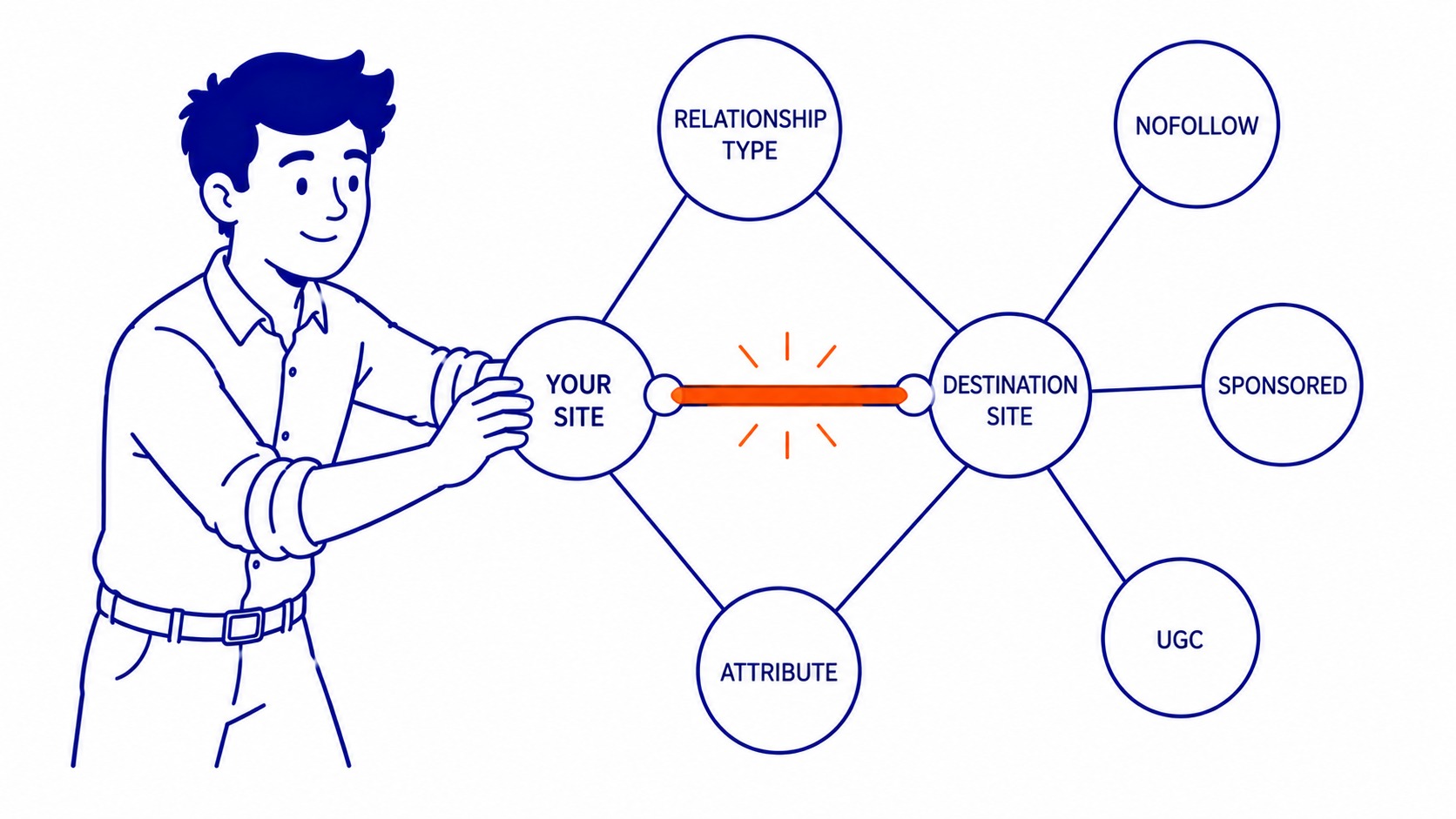
Outgoing links from your site: use the right attribute for the relationship. Paid placements and affiliate links get rel=”sponsored” per Google’s guidelines. Comment sections and forum posts get rel=”ugc” unless the platform adds it automatically, which most do. Organic editorial links to sources you trust and want to endorse: dofollow. References to content you are citing but not vouching for: nofollow. The prior question is whether to point outward at all. Most of the time, external links help a page more than they cost it.
Internal nofollow has a separate use case on larger sites. E-commerce platforms and directory sites generate large volumes of filter-parameter URLs. Applying nofollow internally to those faceted navigation links prevents crawl budget waste and stops near-duplicate pages from competing with the canonical. This is a technical SEO application, distinct from the outbound-link debate, but it matters on sites with thousands of dynamically generated pages.
Google also noted that ugc links from trusted contributors can have the attribute removed over time. Platforms with high-quality established members can retire the ugc tag for specific user groups as a reward mechanism. Most leave it as a blanket default. Few take advantage of the flexibility, even though it lets you let earned editorial authority flow through.
Nofollow Links in a Balanced Link Profile
Running Calgary SEO programmes since 2007, the backlink profiles we review most often show one of two failure patterns. Either the site has almost no nofollow links, which draws scrutiny in manual reviews, or the nofollow volume is dominated by low-quality sources while the dofollow link count is thin.
The practical target: enough dofollow links from authoritative sources to support rankings, a natural proportion of nofollow links from media and community contexts, and no link schemes in either category. What “natural” means varies by industry. A B2B professional services firm carries fewer total links but a higher dofollow ratio than a media company publishing daily content. Both profiles can be healthy. The issue arises when the pattern looks engineered rather than earned.
Nofollow links from high-authority sources should not be declined during outreach or filtered from prospect lists. A mention in a major publication, even with the attribute applied, still drives traffic, brand signals, and potentially partial ranking credit. Focusing on the attribute ahead of the source quality misses the value of the relationship. Website promotion at the link-building level should target quality sources first and treat the attribute as secondary information.
Google Ads runs alongside any organic link-building programme. Paid search produces keyword data that informs which pages deserve link-building investment: terms converting in paid campaigns usually justify organic content development and outreach. Both channels share data that the other cannot generate independently.
Frequently Asked Questions
Are nofollow links good for SEO?
Depends on the source. High-authority nofollow links from relevant, content-rich pages may pass partial ranking credit since the 2019 hint reclassification. Nofollow links from any quality source also generate referral traffic and contribute to a natural backlink profile. Low-authority nofollow links from irrelevant sources contribute nothing. The attribute matters less than the source quality and topical fit.
What is a nofollow link in SEO?
A link carrying rel=”nofollow” in its HTML code. Originally an absolute directive telling search engines not to follow the link or pass PageRank to the destination. Now treated as a hint by Google: the algorithm evaluates the source, context, and relevance before deciding whether to pass any ranking credit. Still effective at blocking equity transfer from low-quality or irrelevant sources. Crawling and indexing of the linked page are not blocked by the attribute.
Are no follow links worthless?
Not as a category. Three things nofollow links still deliver: partial ranking credit from high-quality hints post-2019, referral traffic that generates observable engagement signals, and natural backlink profile diversity that prevents suspicion in link analysis. Worthless applies specifically to low-authority nofollow links from unrelated sources, not to the attribute itself. A nofollow from a domain-authority-90 news site is worth more than dofollow links from a domain-authority-10 directory.
Do backlinks still matter in 2026?
Still one of the strongest ranking signals in search. Third-party citation is how search engines measure relevance and trust, and no algorithm change has displaced that logic. The channel is more competitive and the quality threshold is higher than in 2010, but the underlying mechanism holds. Backlinks earned through content and genuine relationships compound year over year in a way that other tactics do not.
