Are External Links Good for SEO?
A worry comes up on almost every content review. Link out to another website and you hand away your ranking power. So the safe move is to never link anywhere, right? Wrong, and the instinct behind it has cost more pages than it has ever protected. External links pull in two directions at once, and only one of them is the thing most people are actually asking about.
Two meanings hide inside the same phrase. An external link can mean a link you place pointing out to another domain. It can also mean a link from another domain pointing back at you, which is a backlink. Both affect SEO. They do it in opposite ways, and conflating them is where the bad advice starts. Here is how each one works, and what to do with that on a real page.
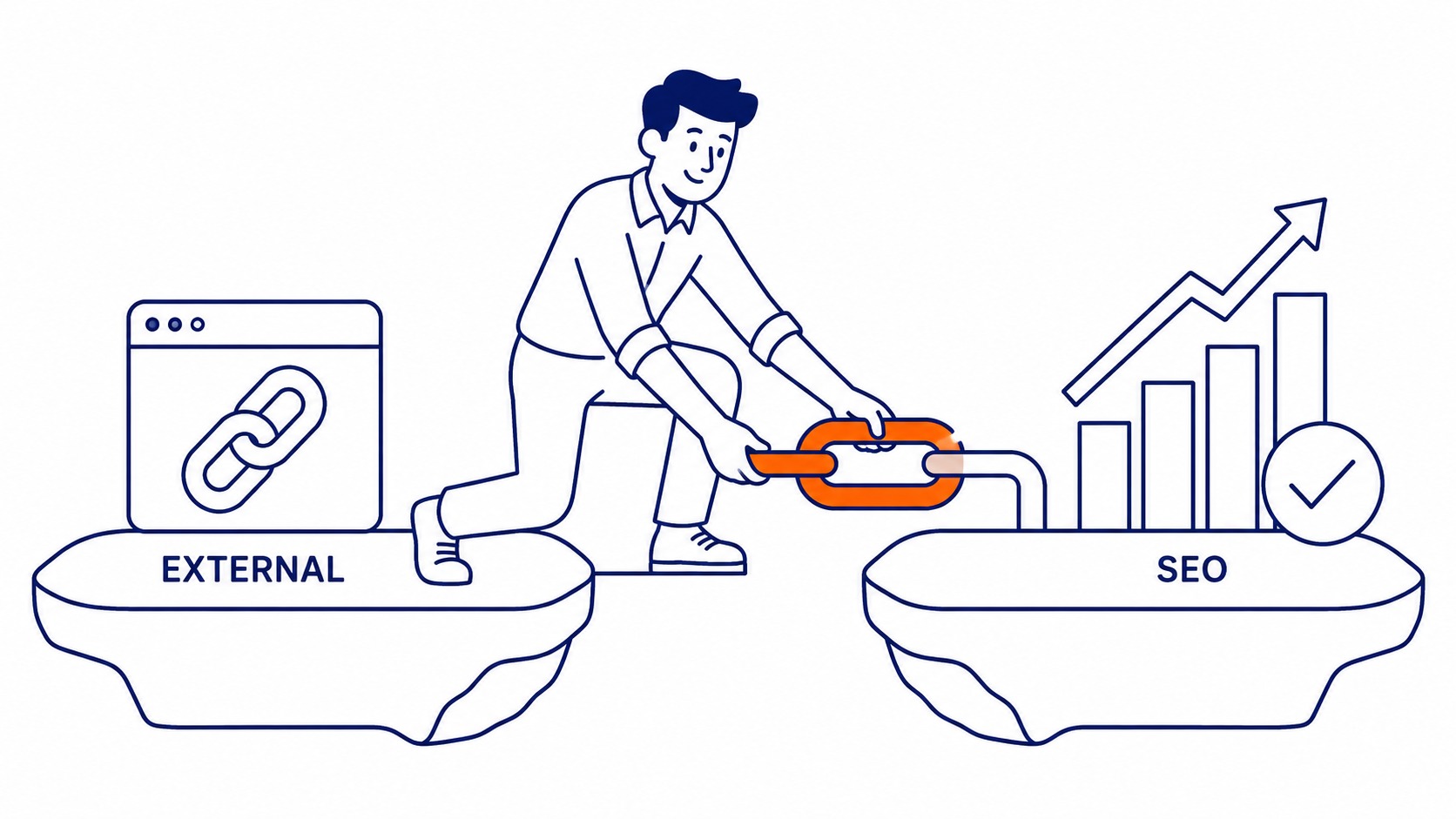
What Counts as an External Link
Any link whose destination sits on a different domain than the page it lives on. That is the whole definition. Link from your blog post to a study on a university site and that is an external link. Point from one of your service pages to your own contact page and it is an internal link, because the destination stays on your site. Internal links keep visitors and crawlers moving around your own domain, where external links send them off it. The split between the two is covered in more depth in our breakdown of internal and external linking.
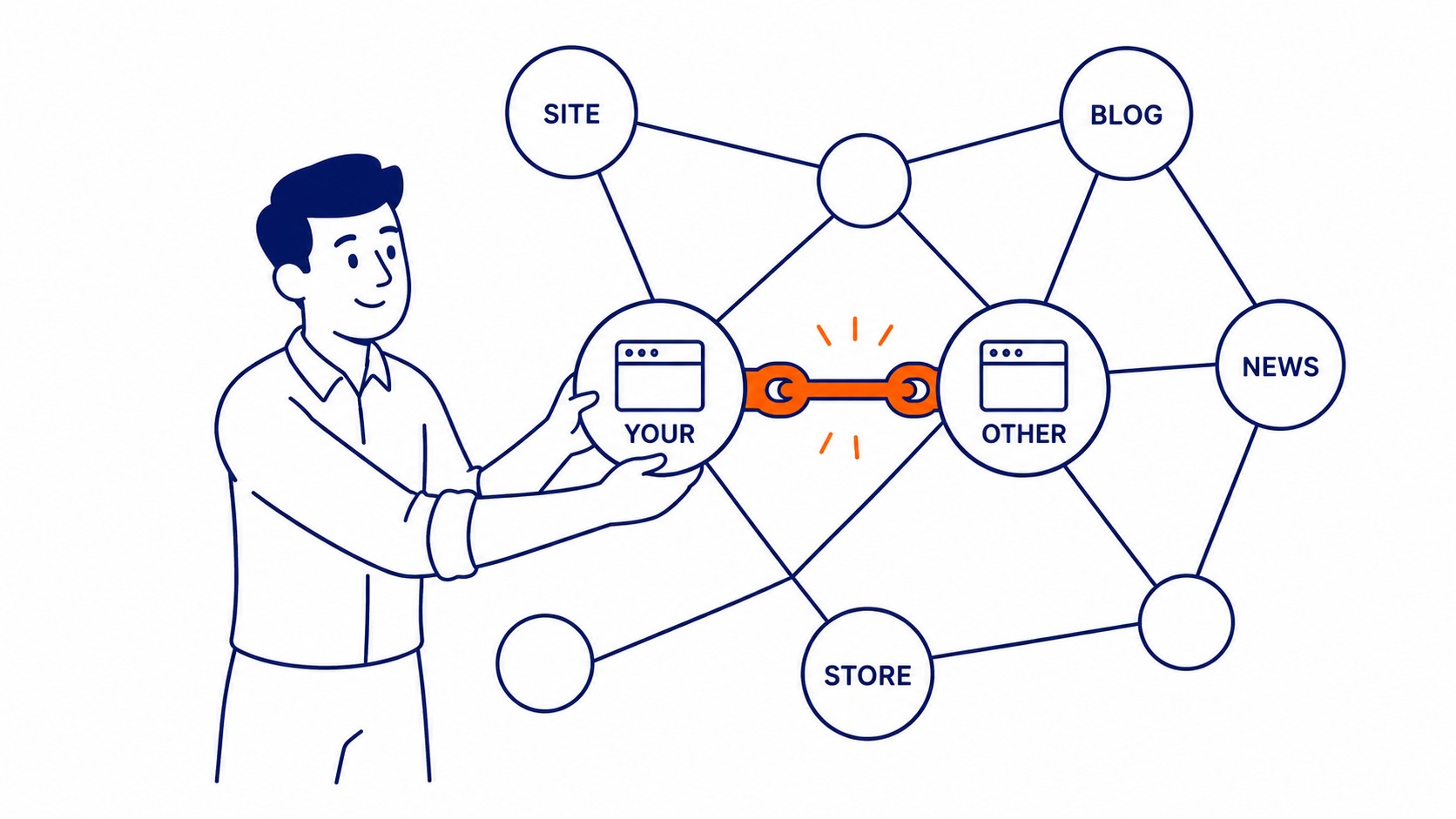
Direction is the part that trips people up. Outbound external links go from your page to someone else. Inbound external links come from someone else to your page, and those are what most of the industry calls backlinks. When a client raises the topic of external links, nine times out of ten they mean the outbound kind. They are scared of leaking authority. That fear is mostly misplaced.

Do Outbound External Links Help Rankings?
Short version: linking out to good sources helps more than it hurts. The “PageRank leak” theory says every outbound link bleeds a little equity off your page, so you should hoard it. That logic made some sense fifteen years ago. It does not describe how search engines read a page now.
What outbound links actually do is give context. Cite a credible study. Reference the original source for a statistic. Point readers to a tool you mentioned. Search engines use those connections to understand what your content is about and what neighbourhood it sits in. A page that links to authoritative sources on its topic looks like it was written by someone who knows the subject. One that links nowhere looks like it is hiding something, or worse, was generated to fill space. Google has said for years that good outbound links are part of a quality page, not a tax on it.
Relevance is the rule that matters. An external link to a respected source in your field reinforces the topic. A link dumped to an unrelated site for no reason does nothing useful and can look manipulative if there is money behind it. We have never seen a page lose rankings because it linked out to two or three solid references. What turns up instead is plenty of thin pages that linked to nothing and read like they had nothing to say. Readers notice the difference too, and so do the search engines watching how users behave on the page.
Inbound External Links Are the Bigger Lever
Here is the half of the question people forget to ask. Inbound external links, the ones pointing at you from other domains, are among the strongest ranking signals there are. Every one is a vote. Another site decided your page was worth referencing, and search engines treat that as third-party proof that your content has value.
Not every vote weighs the same, though. A link from a high-authority, topically relevant site moves the needle. One from a spun directory or a link farm moves nothing, or drags you down if the pattern looks bought. Quality and relevance beat raw count every time. Ten links from real sites in your industry outperform a hundred from places no human reads. The full mechanics live in our guide to backlinks in SEO, and they are worth reading before any link-building spend.
Earning these is the slow part. You cannot place them yourself, which is the whole point. They come from content people actually want to cite, relationships with others in your space, and being a source worth pointing at. This is the heart of off-page SEO, and it takes months, not days. Anyone promising a flood of inbound links next week is selling the kind of links you do not want.
Linking Out Without Hurting the Page
A handful of habits keep outbound external links on your side. None of them are complicated. Most pages break the rules simply because nobody set them in the first place, and the same goes for the internal links that connect your own pages. Both deserve a quick standard before you publish.
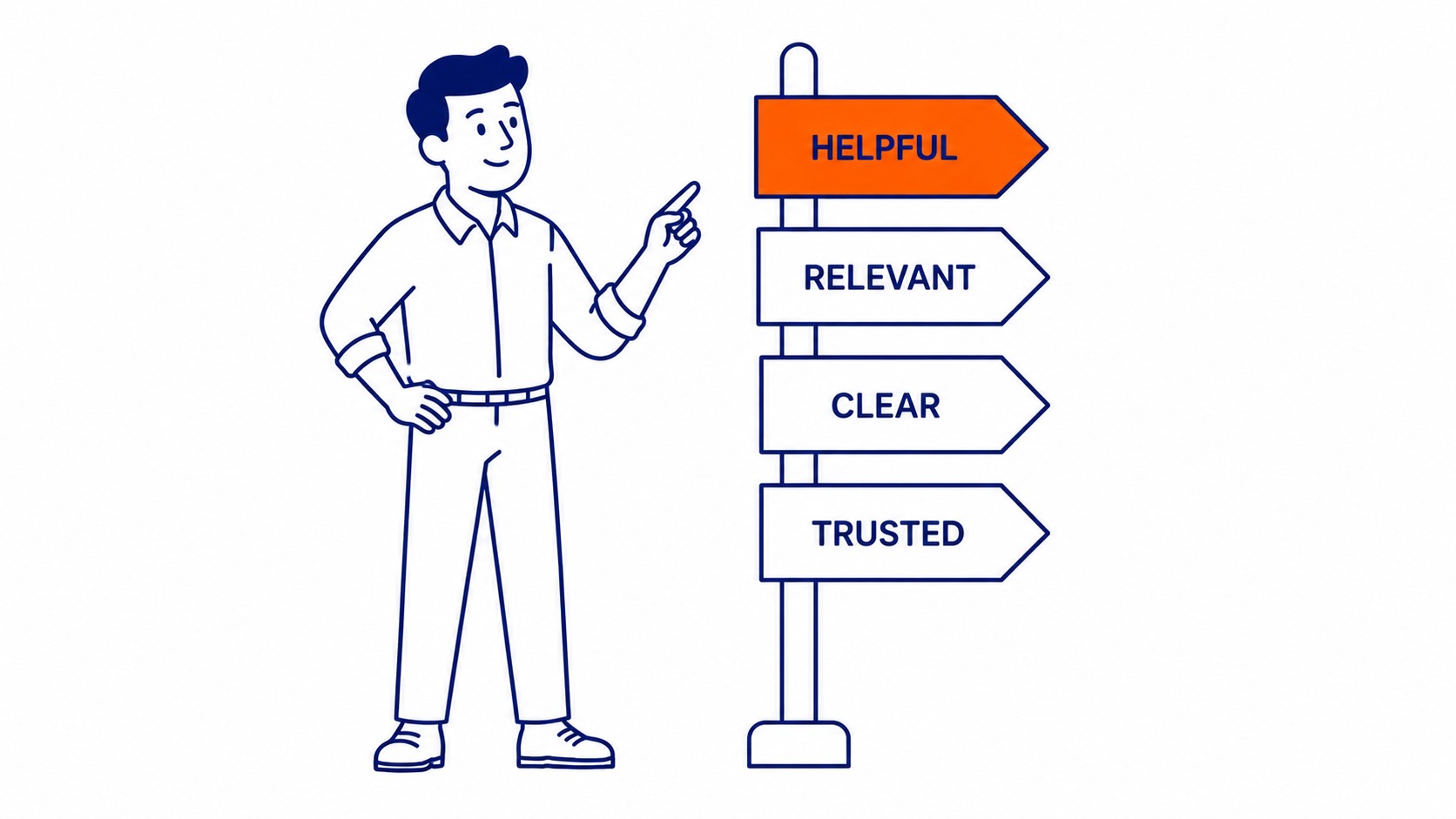
Link to authoritative sources, not whatever ranks first for a lazy search. Government data, original research, recognised publications in your field. Anchor text should describe the destination accurately. “A 2024 study on mobile load times” tells search engines and readers exactly what is on the other side, where “click here” tells them nothing. Keep it natural. Stuffing exact keywords into every outbound anchor reads as engineered.
Watch the relationship behind the link. Paid placements and affiliate links need rel=”sponsored” so you are not seen as buying or selling ranking credit. Links you cannot vouch for can carry rel=”nofollow”. Whether nofollow links still pass any value is its own question. The answer is less black-and-white than the tag implies. Open them in a new tab if you would rather keep readers on your page, though that is a usability choice more than an SEO one. And check your outbound links every so often. A link to a page that no longer exists is a small ding to user experience, and enough dead links across your site frustrate users and add up to a sloppy signal. Your own missing pages are the fixable case: a clean 301 redirect keeps the link resolving. The fear that 301 redirects hurt SEO almost never survives how they actually behave.
Volume is the last piece. Picture a 500-word page with twenty outbound links: it reads like a link directory, not an article. Two or three relevant external links inside a focused piece of content is plenty. The point of external links is to support what you wrote, not to bury it under references.

External Links in a Real SEO Strategy
SEO Company To-The-TOP! has been delivering Calgary SEO services since 2007, and the external-link mistakes we see fall into two camps. One group is terrified to link out at all, so their content reads sealed off and self-referential. The other group links to everything, including sites they have no business endorsing, usually because someone sold them a reciprocal-link scheme years ago.
Either way, the fix is the same. Outbound links go to sources that genuinely back up the point, in normal quantity, with natural anchors. Your site does not lose anything by pointing readers toward better information. Inbound links get earned through content worth citing and the patient relationship work that a real SEO service in Calgary is built on. Neither side of the external-link equation is a shortcut. Both reward sites that behave like they belong in their topic.
Paid search sits next to this work rather than replacing it. Google Ads management reveals which terms convert before a single backlink has been earned, and that data tells you which pages deserve the link-building effort first. Organic authority and paid traffic feed each other when both are run with the same target in mind. That is the plain version of how external links fit a campaign, with no overnight numbers attached. Same plain treatment applies to the truth about dofollow links in SEO. Commercial outbound links raise a separate worry, and the answer on affiliate links is not the same.
Frequently Asked Questions
Is external linking good for SEO?
Yes, when it is done with judgement. Linking out to authoritative, relevant sources gives your content context and signals that it was written by someone who knows the topic. The old fear about leaking PageRank does not match how Google reads pages today. Only paid or irrelevant external links placed to manipulate rankings actually hurt, and even those usually just get ignored rather than penalised. Keep outbound links relevant and reasonable in number and they work in your favour.
What is the 80/20 rule for SEO?
The idea that roughly 20% of your effort drives about 80% of your results, so you focus on the highest-impact work. In practice that usually means content quality and earning inbound external links from strong sources, rather than chasing every minor technical tweak. It is a prioritisation mindset, not a literal formula. For most sites the 20% that matters is publishing pages people want to reference and making sure the technical foundation does not get in their way.
What type of link is best for SEO?
An editorial inbound link from a high-authority, topically relevant site, given freely because your content earned it. That is the strongest signal in the link category. Dofollow matters, but source quality and relevance outweigh the attribute. A nofollow link from a major publication still drives traffic and brand signals that a dofollow link from an obscure directory never will. Best link, plainly: a real site in your field pointing at you because the page deserved it.
Contact Calgary SEO Company To-The-TOP!
Questions about anything in this article, or about your own rankings? Talk to a Calgary SEO specialist directly.
Phone: (403) 308-5949
Address: 1509 14 Ave SW, Calgary, AB T3C 0W4
Hours:
Monday to Friday: 10:00 am – 7:00 pm
Saturday: 12:00 pm – 4:00 pm
Sunday: closed
