How to Do Keyword Research Using AI
AI keyword research changed when the tools became genuinely usable. Not the underlying logic. The fundamentals stayed the same. How fast you can build a keyword list, and how much early discovery work you can hand off to a machine: that is what shifted.
Here is how To-The-TOP! uses AI in this process today. Not a platform comparison. A working method, with the limitations included.

What AI Actually Does in Keyword Research
Pattern Recognition Without the Spreadsheet Grind
Feed ChatGPT a seed keyword and the response is fast: fifty related keyword ideas, sometimes more, in under a minute. Before AI tools, building that list meant Google autocomplete scraping, forum mining, competitor analysis across multiple tabs. Hours of it. The speed difference is real.
What AI is doing: pattern matching from training text. Pattern recognition across which terms cluster together, which questions appear around a topic, which phrase variations show up in real language. The output is a raw starting list. Not finished keyword research.
Where AI Still Falls Short
Live search volume is outside what ChatGPT carries. It does not know how many times a month someone searches “AI keyword research for a Calgary contractor.” AI generates plausible keyword ideas. Whether those terms get searched is a separate question, one that requires a dedicated tool to answer.
AI also does not know your site: which pages already rank, which competitors you are actually up against, what your domain can realistically target. That context has to come from you. Still, for the initial idea-generation step, AI earns its place. How far automating SEO tasks can go beyond that step is a fair question to ask.
Start With Seed Keywords
Building Your Seed Keyword List
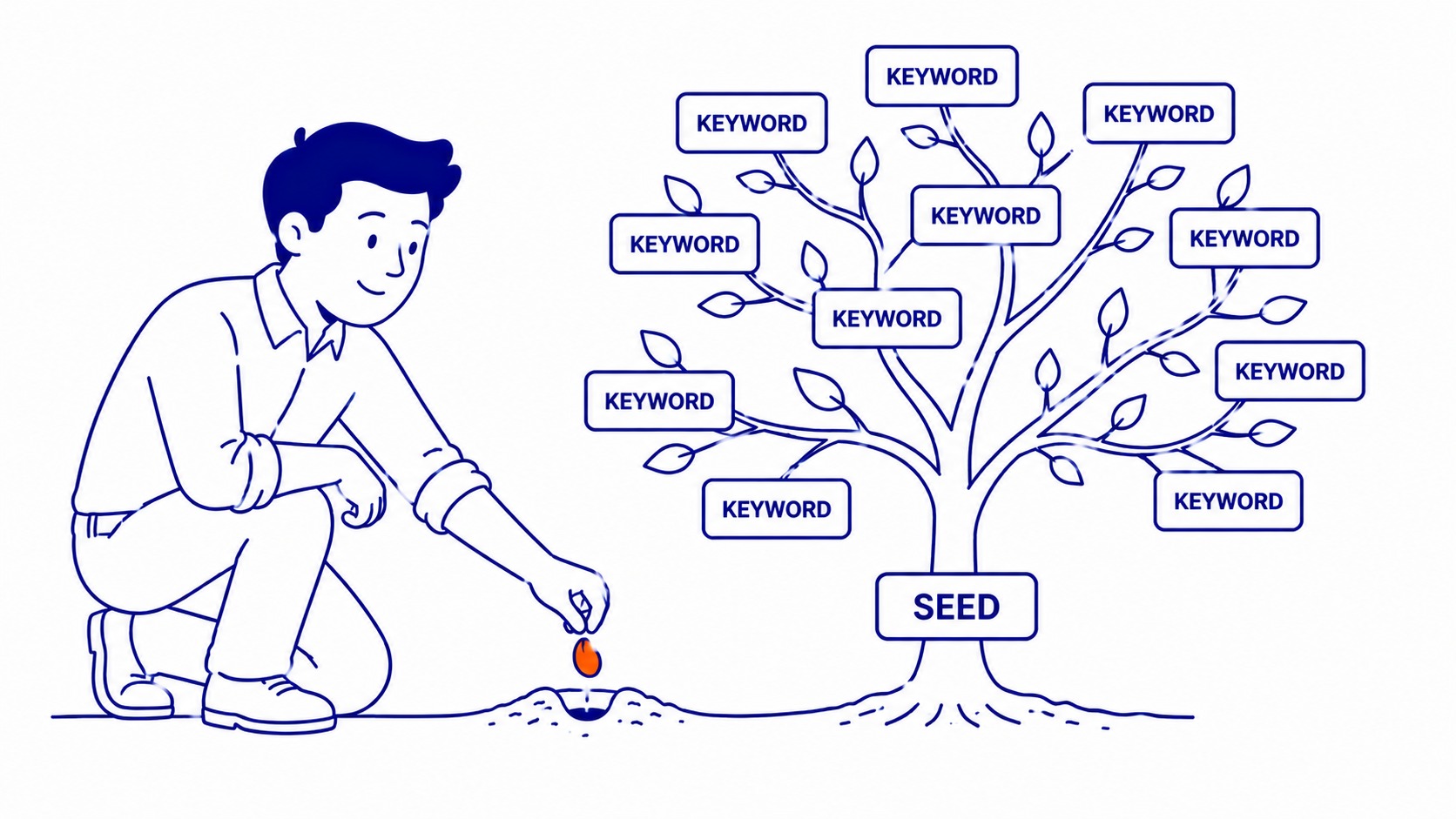
Seed keywords are the short core terms. “Calgary SEO.” “AI tools for search.” Everything branches from them. AI generates the branch list fast from a small seed set.
The explainer on what is keyword research covers the foundational process that AI tools are now extending rather than replacing.
Prompt structure that works better than vague requests: describe your business, your audience, your core services. Ask for informational long-tail keywords and commercial intent phrases separately. The intent signal in the prompt shapes what you get. Better keyword ideas follow from the AI knowing who you are trying to reach.
Taking AI Suggestions Into a Real Tool
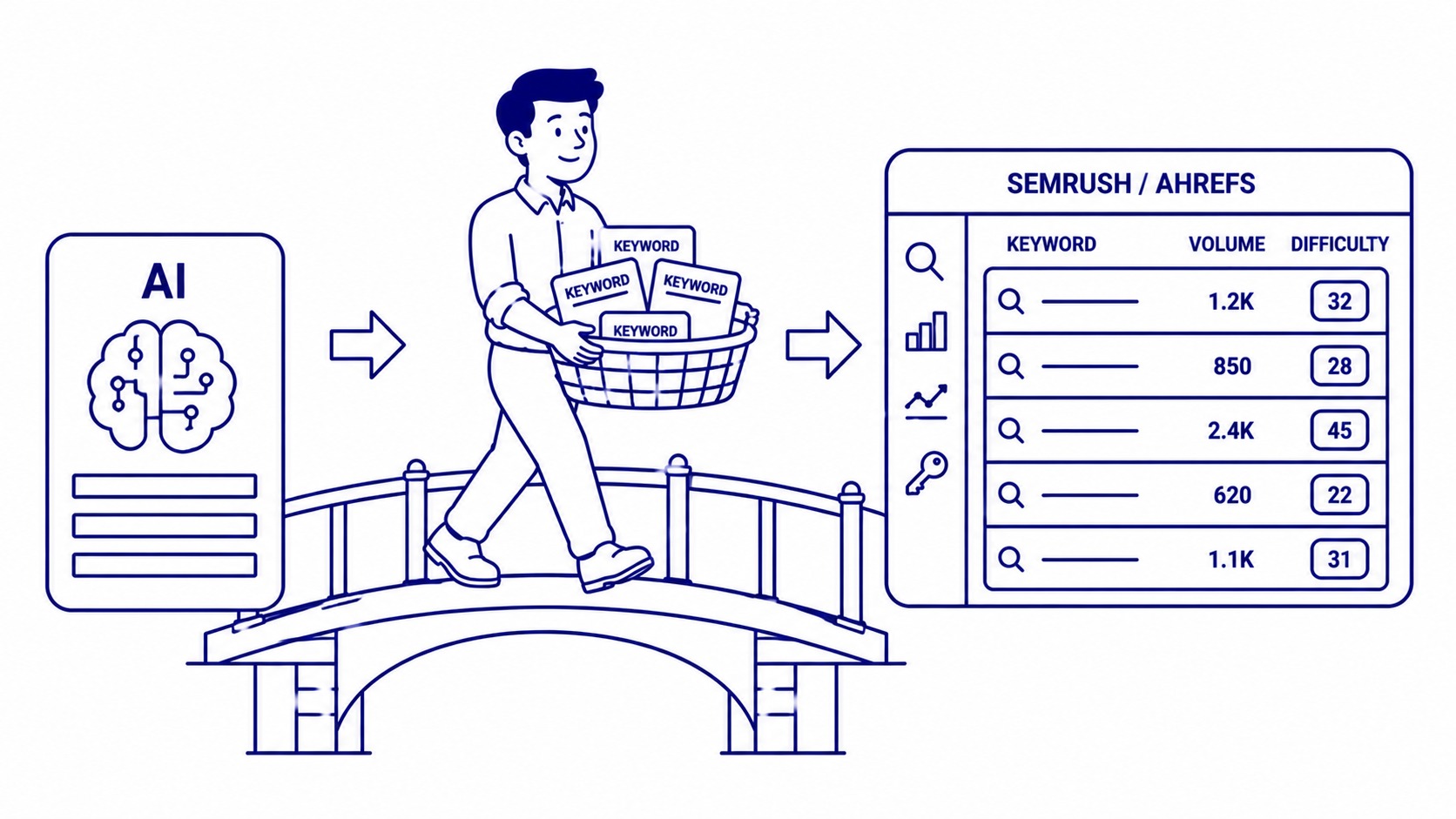
Pull the useful terms out. Run them through Semrush’s Keyword Magic Tool or Ahrefs Keywords Explorer. That step surfaces real search volume, keyword difficulty scores, and related terms you may have missed.
Without it, you are optimizing for phrases nobody searches. Or phrases too competitive for your site to reach, regardless of quality. A site SEO audit shows which of your existing pages already rank. That shapes which new terms are actually worth targeting.
How to Use ChatGPT for Keyword Research
Prompts That Actually Work
Vague prompts produce vague keyword lists. This structure works:
The broader guide on how to use AI for SEO covers where AI delivers genuine time savings versus where human judgment still matters more.
Act as an SEO strategist. My site covers [service]. The target audience is [description]. List 20 long-tail keywords with informational intent and 10 with commercial intent.
Separating informational from commercial in the prompt matters. Blog content targets informational intent. Service pages target transactional intent. Mixing them produces pages that rank poorly for both. Keep the intent types separated from the start.
Checking AI Output Against Real Search Data
ChatGPT’s training cutoff means recent trend shifts and local search behaviour changes fall outside its knowledge. Perplexity AI handles real-time data checks. Google Trends covers seasonality. Neither fully replaces a dedicated tool, but both fill gaps ChatGPT leaves open.
Practical sequence: ChatGPT for the initial keyword ideas list, Semrush or Ahrefs to validate search volume and difficulty, then a SERP check to confirm intent.
AI Keyword Research Tools Worth Using
Semrush and Ahrefs
Both platforms added AI-assisted keyword suggestions in recent years. Semrush’s Keyword Magic Tool now groups suggestions into AI-clustered topic groups. That saves real time at the content planning stage. Ahrefs surfaces related keywords alongside verified volume and keyword difficulty data in a workflow that is straightforward to filter through.
Both pull from real search data. That is the core difference between these platforms and ChatGPT for this work. Volume and competition figures are verified, not inferred.
Surfer SEO and NLP-Based Analysis
Surfer SEO analyses the top SERP results for a given keyword, extracts the terms those pages use, and recommends targets based on what search engines already reward. Artificial intelligence and natural language processing drive that analysis.
More useful at the content optimization stage than early keyword discovery, however. Worth integrating after you have a confirmed target keyword, not while building the initial list.

Filtering Your Keyword List
Search Volume and Keyword Difficulty
Every AI-generated keyword list needs a filter pass before it becomes a working list. Volume and keyword difficulty are the primary filters.
Search volume floor: around 100 searches per month. Below that, targeting is worthwhile only if competition is minimal and intent is highly transactional. Keyword difficulty: new domains realistically target scores under 30. Sites with established authority can go higher. Those scores come from tools, not from AI.
The same filter logic applies to the keywords behind Google ad management and every other paid campaign. Bidding on the wrong keywords wastes budget without generating leads.
Long-Tail Keywords Worth Prioritizing
Specific intent, lower competition, better audience match: those are the reasons long-tail keywords convert better than broad head terms.
AI generates long-tail keywords well. It catches phrase variations that manual brainstorming misses. Most of the practical value from using AI in this process comes from this step alone, not from anything more complicated.
Search Intent: The Step AI Cannot Do for You
Informational vs. Transactional Intent
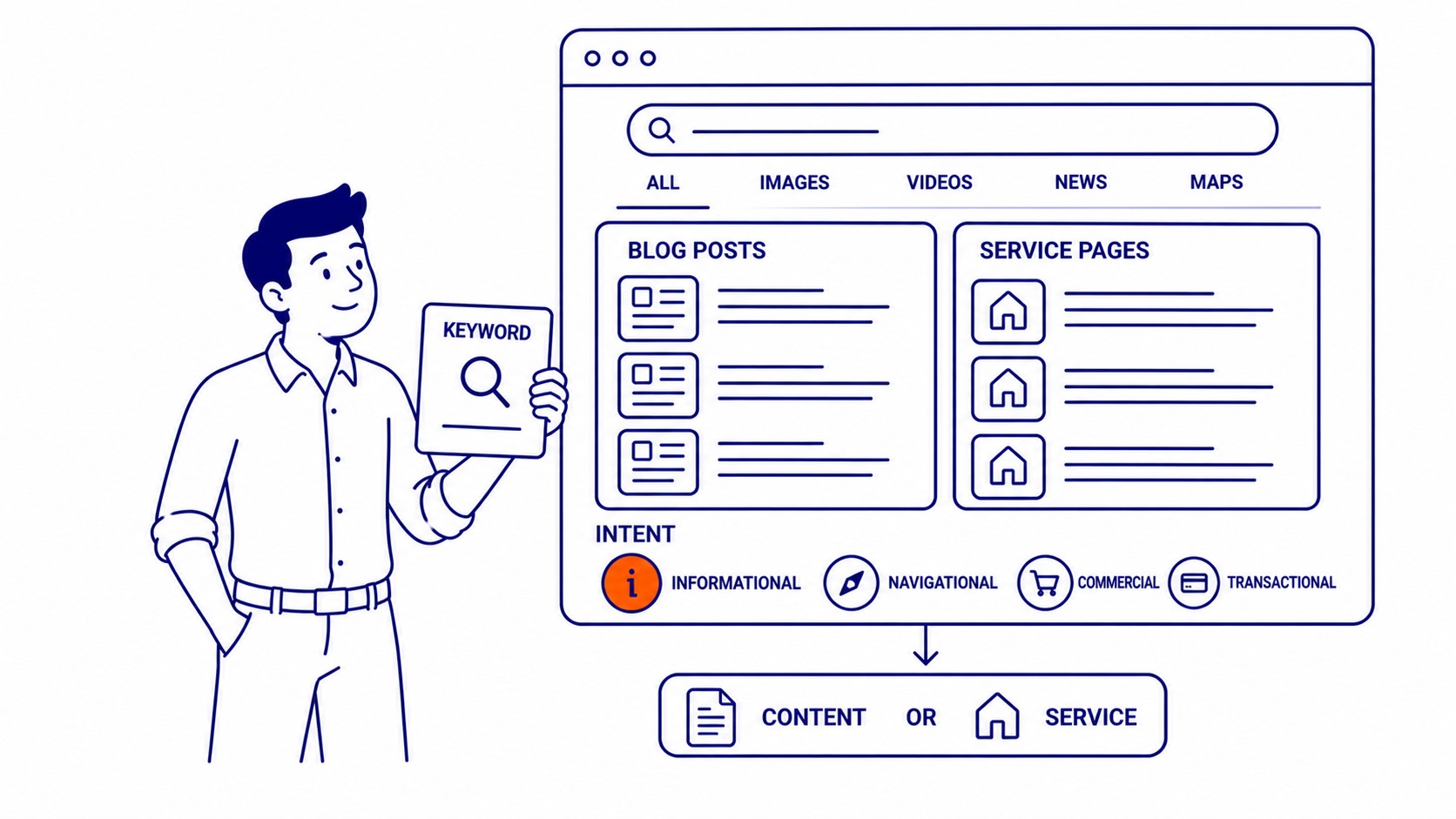
Not every keyword from an AI list belongs in your content strategy. Informational terms belong on blog pages. Transactional terms belong on service and landing pages.
Mixing them up wastes content budget. It also tells search engines your page is trying to be two things at once. That generally means it ranks well for neither.
SERP Checks Before You Commit
The intent check AI cannot run for you: look at what the SERP actually shows for a given keyword. Mostly blog posts means informational searches dominate that term. Service pages ranking instead means commercial searches drive it.
Build content to match what already ranks. AI suggestions without a SERP check still leave that step undone. That gap costs rankings.
Marketers and SEO specialists in Jasper SEO, Kamloops SEO, and Kelowna SEO are adding AI keyword tools to their research workflow. Local packs get the same treatment in AI for local SEO, city by city.
Frequently Asked Questions
Can I use AI for keyword research?
Useful for generating keyword ideas and long-tail keyword variations. Not a replacement for data from Semrush, Ahrefs, or Google Search Console. AI suggests plausible terms. Volume, keyword difficulty, and search intent checks still require dedicated tools.
Which AI tool is best for keyword research?
Depends on the stage. ChatGPT for brainstorming and long-tail keyword generation. Semrush or Ahrefs for verified keyword data with AI-assisted clustering. Surfer SEO for NLP-based SERP analysis. Most practitioners use two or three at different stages, not one exclusively.
Can I use ChatGPT for keyword research?
Practical sequence: ChatGPT for the initial keyword ideas, a dedicated keyword research tool to validate search volume and keyword difficulty, Google Search Console to find which terms your site already gets impressions for. That approach alone leaves gaps in the data that cost you later.
Can ChatGPT do SEO?
Parts of it. Content outline generation, keyword brainstorming, meta description drafts: ChatGPT handles those well. Technical SEO audits, rank tracking, backlink analysis: none of that is possible without dedicated tools and someone who knows how to read the data.
Anyone offering Calgary SEO services will tell you the same thing: local search behaviour matters here. AI generates the raw material. Judgment shapes it into a strategy that fits the actual market.
Owners still have plenty of questions about SEO keyword research. To-The-TOP! has been sorting those questions out in this market since 2007. AI tools are part of the process now. They are not the whole process. Worth keeping that distinction clear before committing to a purely AI-driven approach.
Contact Calgary SEO Company To-The-TOP!
Questions about anything in this article, or about your own rankings? Talk to a Calgary SEO specialist directly.
Phone: (403) 308-5949
Address: 1509 14 Ave SW, Calgary, AB T3C 0W4
Hours:
Monday to Friday: 10:00 am – 7:00 pm
Saturday: 12:00 pm – 4:00 pm
Sunday: closed