How Many Meta Keywords for SEO? The Straight Answer
New client calls follow patterns. Meta keywords questions come up within the first fifteen minutes of almost every onboarding. Usually it sounds like this: “How many meta keywords should I be using?” Reasonable thing to ask. The answer depends heavily on which search engine you care about.
For Google: zero.
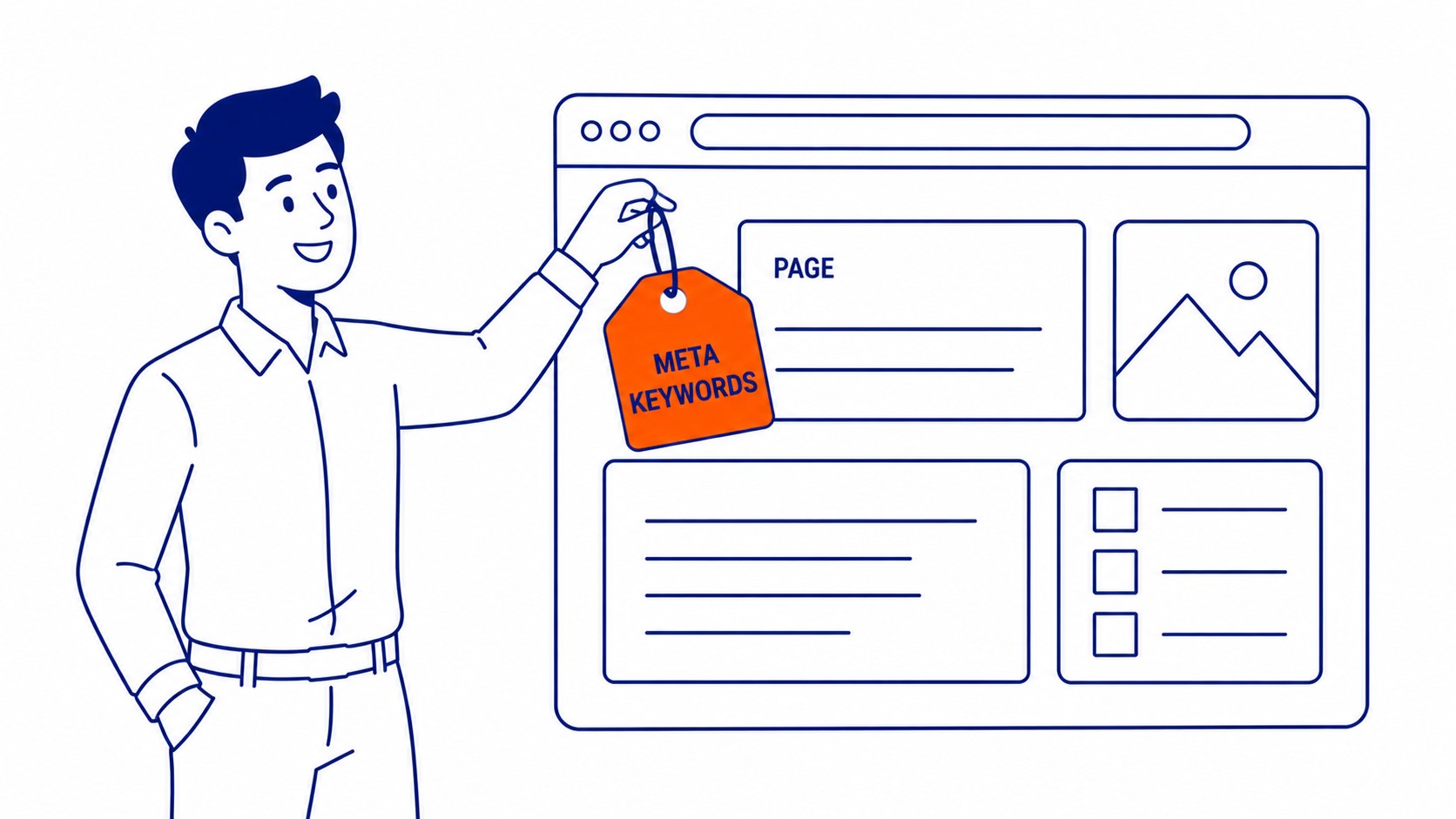
Not five, not ten. The meta keywords tag carries no weight in Google’s ranking algorithm. Google’s own search team published a statement in 2009 confirming this. Keyword stuffing in that tag had made it untrustworthy. Spam sites were loading hundreds of unrelated terms. Google stopped reading it.
The Meta Keywords Tag in 2026
Still in the HTML. Still ignored by Google.
The tag lives inside the head section of a web page. Search engines originally used it to categorise pages based on a comma-separated list of keywords. For a while, that worked. Then it became a spam vector. Google cut it from their ranking factors. That decision has not changed.

Bing still reads the meta keywords tag. They have confirmed this publicly. How much influence it carries is unclear, though most search engine optimisation research rates it as minimal. For businesses focused primarily on Google traffic, the practical impact is close to zero.
Zero meta keywords for Google. Anywhere from five to fifteen if you want to cover Bing. The sister tag fares better, and the verdict on meta descriptions is a different story.
Google Dropped It. Other Search Engines Didn’t.
Worth knowing before you spend time on this.
Yahoo! dropped the meta keywords tag around the same time as Google. Bing held on. A handful of smaller search engines still read it. Bing’s market share sits below 10% in most Canadian markets. In the campaigns SEO Company To-The-TOP! runs, Google is where the traffic lives.

If you use the meta keywords tag for Bing coverage, keep the keywords accurate. No stuffing. Avoid unrelated terms. Ten relevant keywords per page is a reasonable ceiling. More than that and you are spending time on something that does not move results.
How Many Meta Keywords to Use Per Page
A small number. Specific to the page.
Ten to fifteen meta keywords per page is the range most commonly cited for Bing. Each keyword should reflect what that page actually covers. Repeating the same keyword inside the tag multiple times does nothing. Adding terms from a different page does nothing either.
Here is what most posts about how many keywords to use do not say clearly: meta keywords are not your SEO keyword strategy. Not even a small piece of it. The real keyword work happens in your content, your title tags, your meta descriptions, and your headings. Proper keyword competitive analysis starts with search intent, not a list of terms for a tag Google ignores. Content and titles carry the practical route to using keywords, not a tag Google ignores. Only Bing muddies that, and the answer on meta keywords there runs a little differently.
What Actually Moves Your Search Rankings
Different signals entirely.

One primary keyword per page. Two or three secondary keywords. That is what has moved search results consistently across nearly two decades of Calgary SEO work at To-The-TOP!. Primary keyword goes in the title tag, the H1, the meta description, and naturally throughout the body. Secondary keywords fit into subheadings and supporting paragraphs where they belong.
Keyword density around 1-2% for the primary keyword is a reasonable target. More important than the percentage is whether the content reads naturally. Keyword stuffing in body content still carries penalty risk. Cramming keywords into sentences where they do not belong signals thin, manipulative content. Google’s systems have been trained to recognise this pattern for over a decade.
A website audit for SEO will surface pages where keyword density is running too high. It shows up in the data clearly.
Meta Keywords vs. The Tags That Matter
Two meta tags actually count in search rankings.

Title tags influence rankings directly. The title tag is what appears as the clickable headline in search results. Sixty characters or fewer. Primary keyword early in the title. This has always mattered and still does.
Meta descriptions do not affect rankings directly. Google has confirmed this. However, a well-written meta description improves click-through rates. More clicks from the same position signal relevance. That has indirect effects on visibility over time.
Neither of those is the meta keywords tag. Worth being clear on that distinction.

For businesses wanting stronger visibility, our SEO services focused on content, title tags, links, and technical health will outperform any effort on meta keywords. Two decades of algorithm updates have made that the consensus. Google Ads management operates on bid and quality signals, not organic search tags.
Frequently Asked Questions
How many meta keywords should I use for SEO?
For Google: none required. The meta keywords tag has not influenced Google rankings since 2009. For Bing: ten to fifteen meta keywords per page is a reasonable range, specific to that page’s content. Neither will meaningfully affect your overall search engine rankings.
Are meta keywords still relevant for SEO?
Relevant for Google: no. Bing still reads the meta keywords tag, though the weight they assign is minimal. Most SEOs skip the tag entirely and focus time on content and links. That is where rankings move.
What is the 80/20 rule of SEO?
Roughly 20% of pages drive about 80% of organic traffic. Most sites have a handful of top performers pulling most visits. Identify them, strengthen them, and build content clusters around what is already working rather than spreading effort evenly across hundreds of keywords.
Is SEO dead or evolving in 2026?
Evolving. AI-assisted results and featured snippets have changed how search results look. Page authority, content depth, and backlinks still drive which pages get cited, however. The underlying ranking signals have not changed. Search engine optimization still produces results, though the timeline is months, not days.
Contact Calgary SEO Company To-The-TOP!
Questions about anything in this article, or about your own rankings? Talk to a Calgary SEO specialist directly.
Phone: (403) 308-5949
Address: 1509 14 Ave SW, Calgary, AB T3C 0W4
Hours:
Monday to Friday: 10:00 am – 7:00 pm
Saturday: 12:00 pm – 4:00 pm
Sunday: closed
