
Do Meta Descriptions Affect SEO?
Do meta descriptions affect SEO? They do not affect where a page ranks in Google. Google said so directly in 2009, writing that even though it sometimes uses the description meta tag for the snippets it shows, it does not use that tag in ranking, and Google’s current documentation says nothing to the contrary. They still affect SEO in the wider sense, though, because a description can become the text a searcher reads under your title, and that text helps decide whether the person clicks your result or the one beside it.
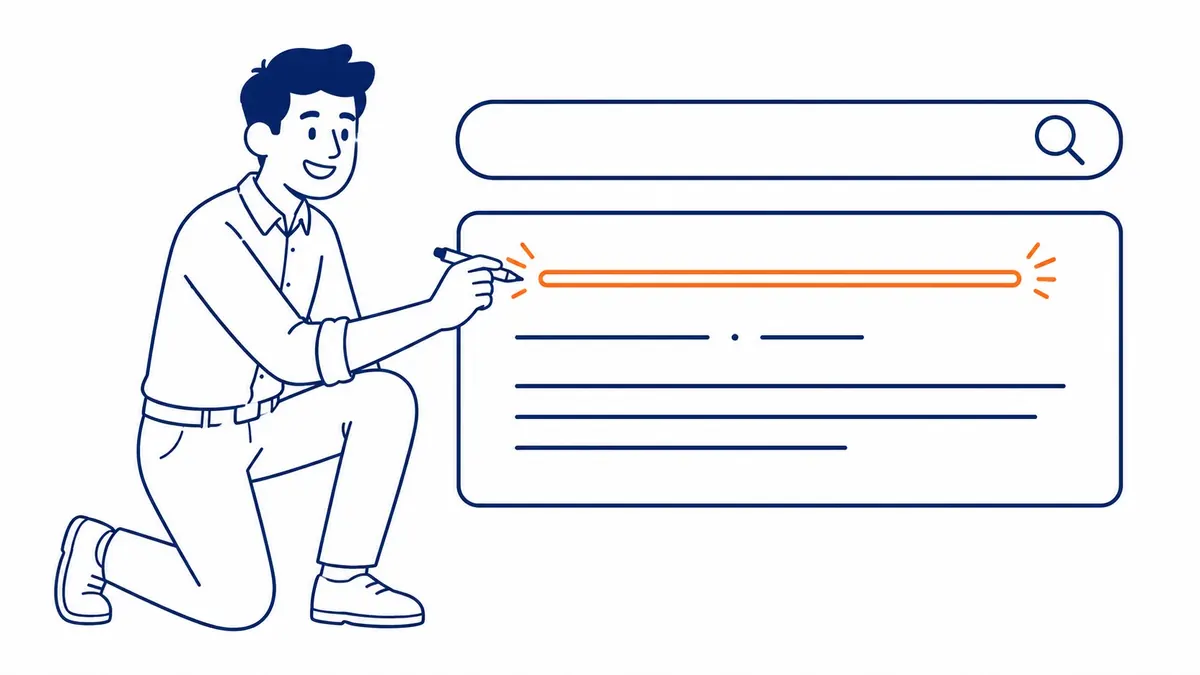
So the useful question is less “does it rank” and more “when is a description worth the time”. The rest of this page sets out what Google documents, what outside research has measured, what is only theory, and which pages on a typical small-business site deserve a hand-written description.
What Google says about meta descriptions
A meta description is a short summary of a page, placed in the page’s HTML head as <meta name="description" content="...">. Visitors never see it on the page itself. Google lists it among the meta tags it supports and describes its purpose plainly: in some situations, the description is used in the snippet shown in search results.
The key words there are “in some situations”. Google’s snippet documentation says snippets are created primarily from the page content, and that Google sometimes uses the meta description if it might give users a more accurate description of the page than content taken directly from the page. That is why the same page can show different snippets for different searches. The description is a suggestion Google may accept or set aside, which is worth keeping in mind when you compare it with the other tags in the head of a page, such as the title tag.

The 2009 statement came in a Google Search Central blog post about the keywords meta tag, which Google does not use in web ranking at all. The same post separated the two tags: the keywords tag is ignored, while the description tag is sometimes used for snippets but still not for ranking. That distinction is the source most of the “not a ranking factor” answers on this topic trace back to, so it is worth knowing where it comes from rather than relying on a paraphrase.
The evidence, sorted by how solid it is
Most articles on this question mix Google’s statements with study results and with theory, which is how the same few claims keep getting repeated with more confidence than they deserve. The table below separates them.
| Claim | What the evidence supports | Type of evidence |
|---|---|---|
| Meta descriptions are not used to rank pages | Google, 2009: the description tag is not used in ranking | Google statement |
| Google may show your description, or may not | Snippets come primarily from page content; the description is used when it describes the page better | Google documentation (2026) |
| There is a fixed character limit | No. Google says there is no limit on length, and the snippet is truncated as needed, typically to fit the device width | Google documentation (2026) |
| Google rewrites most descriptions | Ahrefs found Google showed its own snippet instead of the description 62.78% of the time | Third-party study, 2020, desktop, 20,000 keywords |
| A good description earns more clicks at the same position | Plausible when Google shows the description, and the usual reason given for writing one (Ahrefs says relevant descriptions entice clicks), but the size of the effect depends on the query and the page | Reasonable inference |
| Higher click-through rate raises rankings | Not established. Google says it uses aggregated, anonymized interaction data to assess relevance, but has not said a description’s click-through rate moves a page up | Theory |
The last two rows are where most of the confusion sits. Google’s How Search Works pages say it uses “aggregated and anonymized interaction data” to help its systems judge whether results are relevant to queries. That is a general statement about how Google’s systems estimate relevance, and it does not say that rewriting a meta description will lift a page. Anyone who tells you a better description will improve your rankings through click-through rate is describing a theory, so treat it as one.
Where meta descriptions do make a difference
The effect that is easy to defend is the click itself. If a page holds the same position and more of the people who see it choose to click, it receives more visitors, which is the point of ranking in the first place. A description that matches what the searcher was looking for, and says something specific about the page, gives them a reason to choose it.

Here is an illustrative example. Imagine a Calgary furnace repair company whose service page carries the description “Welcome to our website. We offer quality heating services.” Someone searching for emergency furnace repair in Calgary learns nothing from that, so Google is likely to pass it over for a passage from the page, and if it does show, it gives the searcher no reason to choose that result. A description that names the service, the city, whether the company handles after-hours calls and how to reach it gives Google a better candidate and the searcher a reason to click. That is a judgement about relevance, not a promise of a particular result.
Search Console is where you can see whether this matters for a given page. Its Performance report shows clicks, impressions and click-through rate for each page and query, so a page with plenty of impressions and an unusually low click-through rate for its position is the first place to look. Open that page’s queries in the report, since one or two broad queries can pull the average down, before deciding the description is the cause. Improving the description is one of several things worth testing there, alongside the title, and there is more on that in this guide to improving click-through rate. Change one thing at a time and give it enough time for Google to recrawl the page and for both periods to collect a comparable number of impressions, which takes longer on low-traffic pages. The numbers also move with seasons and with the searches people happen to run, so compare like with like.
One more distinction trips people up. The descriptions in paid results at the top of the page are not meta descriptions at all. They are ad descriptions written inside a Google Ads campaign, with their own character limits and their own testing, so changing a page’s meta description has no effect on the ads that point to it.
How often Google uses your description
The most cited measurement is still the Ahrefs study published in 2020, which compared hard-coded meta descriptions with the snippets Google showed on desktop for 20,000 keywords. Google showed a snippet other than the description 62.78% of the time. The rate was 59.65% for the higher-volume “fat-head” keywords and 65.62% for long-tail ones, which fits Google’s explanation that snippets are chosen to match each search. The same study found that 25.02% of the top-ranking pages it looked at had no meta description at all.

Two findings from that study are worth keeping in mind. First, length made little difference: Google rewrote 61.46% of descriptions that were too long and 63.69% of the rest. Second, a description is usually written around a page’s main keyword, while a page that ranks well tends to appear for many related searches, so a rewrite on a long-tail query is normal rather than a sign that something is wrong. The figures are from 2020 and from desktop results only, so treat them as an indication of scale, not a current rate.
Does a missing meta description hurt?
A missing description is not a penalty, and it does not stop a page from ranking. Google builds a snippet from the page content when there is no description, and Google says page content is its main snippet source in any case. What a missing or weak description costs you is the chance to offer Google a clear summary for the searches where the page content does not supply one, which is most often the case on home pages, category pages and service pages that are short on body text.

That is also the right way to read the warnings SEO tools produce. A crawler or a site audit may list dozens of pages with missing, duplicate, short or long descriptions, and none of those is a ranking problem in itself. Duplicates deserve a look because Google’s guidance says identical or similar descriptions are not helpful when individual pages appear in search results, so where two important pages share one description, each should get its own. Length warnings matter least: Google says there is no limit on how long a description can be, and Yoast’s plugin, for example, simply flags descriptions under 120 or over 156 characters as a prompt to check how the text will read.
If you need to control what Google shows, the description tag is not the tool for it. Google documents three controls that are: the nosnippet meta tag stops a snippet being shown, max-snippet sets a maximum snippet length, and the data-nosnippet attribute keeps specific parts of a page out of the snippet. These change what can appear, which a meta description never guarantees.
Which pages deserve a hand-written description
Google’s own advice on this is practical. It says that if you do not have time to write a description for every page, you should prioritize, and at the very least write one for critical URLs such as the home page and popular pages. It also says that large, database-driven sites can generate descriptions programmatically from page-specific data, as long as the results are readable and varied, and that descriptions made of long keyword lists are less likely to be shown.

For a typical small-business site, that turns into a simple order of work. Start with the home page and the main service pages, because they carry the business’s most valuable searches and often have the least body text for Google to draw on. Next, use the Search Console Performance report to find pages that already earn impressions, and work through them from the most impressions down. Leave pages with no impressions until last, since a better description cannot earn clicks for a page that is not being shown, and the time is better spent on the content itself.
So, are meta descriptions worth writing?
Yes, for the pages that matter, provided you expect the right thing from them. A description will not lift a page’s position, and Google will often show something else, but where it does show, it is one of the few places you can tell a searcher why this page answers their question. If you would like to write them well, this guide on how to write meta descriptions covers length, structure and before-and-after examples.

SEO Company To-The-TOP! is a Calgary SEO practice founded in 2007. If you would like a second opinion on your site’s titles and descriptions, or on an audit report full of description warnings, call (403) 308-5949.
Contact Calgary SEO Company To-The-TOP!
Questions about anything in this article, or about your own rankings? Talk to a Calgary SEO specialist directly.
Phone: (403) 308-5949
Address: 1509 14 Ave SW, Calgary, AB T3C 0W4
Hours:
Monday to Friday: 10:00 am – 7:00 pm
Saturday: 12:00 pm – 4:00 pm
Sunday: closed