What Is Keyword Bidding? A Practical Guide for Google Ads
Every campaign starts with the same question the moment you have us manage your Google Ads. “Why isn’t my placement showing?” The answer is usually keyword bidding. Bid amounts too low. A relevance score not pulling its weight. Daily spend draining on the wrong terms.
Keyword bidding is how advertisers compete for placement in paid search results. Each business sets a maximum amount they will pay per visit from a specific search phrase. The platform then weighs that amount alongside their relevance rating. Together, both numbers determine placement visibility and the actual per-visit cost.
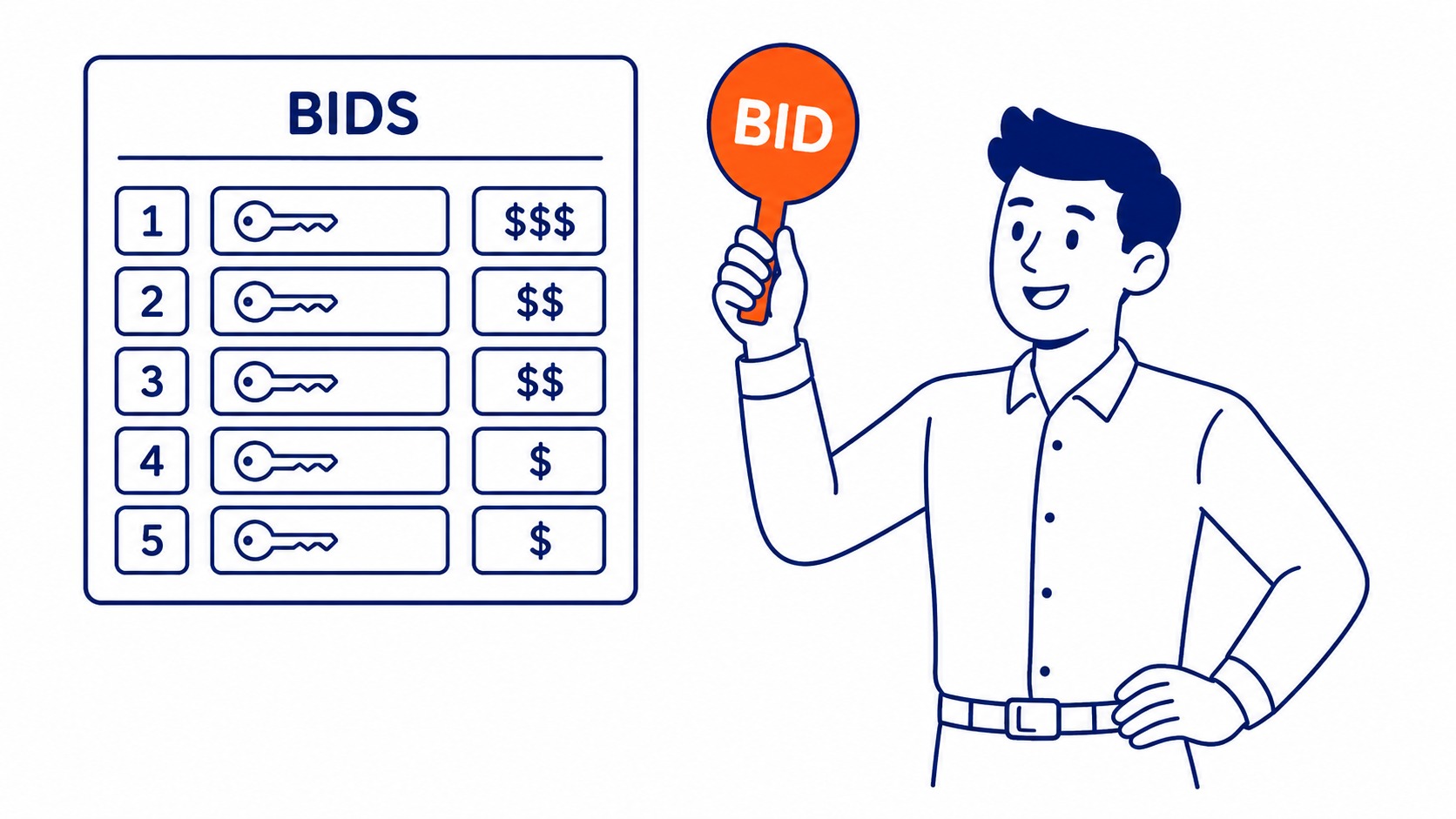
How Keyword Bidding Works in Google Ads
Not as complicated as it sounds.
Every search triggers a real-time ranking calculation. Google evaluates every account whose keywords match the query. The system assigns a rank score to each one. That score equals the maximum bid amount multiplied by the Quality Score.
Quality Score runs from 1 to 10. Three inputs drive it. Keyword-to-placement relevance. Placement-to-landing-page fit. Historical click-through rate. A score of 8 on a $2 maximum beats a score of 3 on a $5 maximum. The ranking math still favours relevance over spend, every single time.
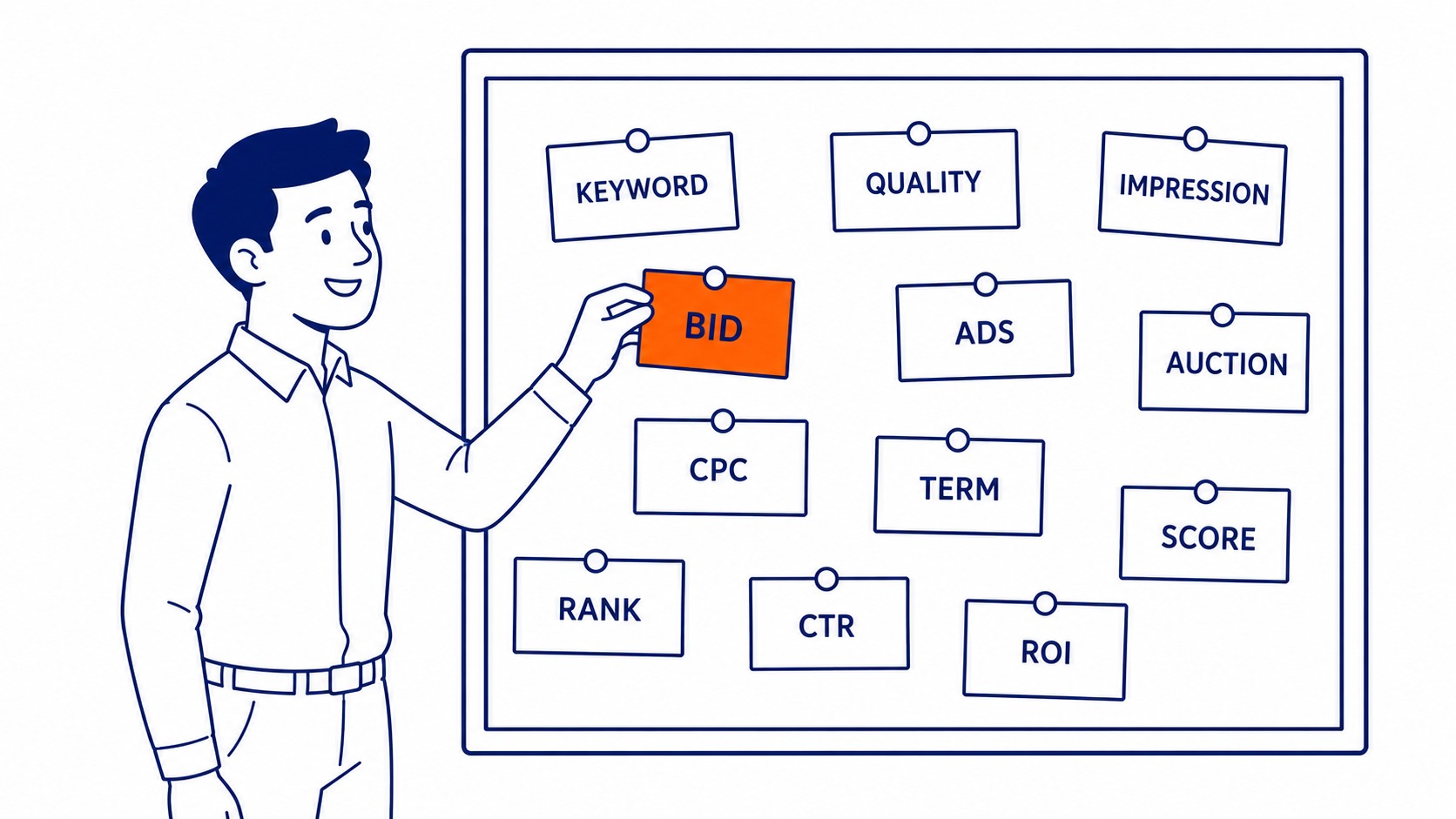
Actual per-visit cost sits below the ceiling in most cases. The platform charges the minimum needed to outrank the next competing advertiser. Nothing more. That is where our Google Ads management team earns its keep, monitoring those amounts across active campaigns so accounts are not overpaying at auction. There is more on Google Ads in the wider guide, auction mechanics included. Newer advertisers usually want an introduction to CPC in Google Ads before touching bid settings.
Manual Bidding vs Automated Bidding
Two paths. Very different trade-offs.
Manual CPC gives advertisers direct control over each term’s rate. You set the maximum amount for each keyword individually. That works well, however, when the account has enough history to know what each search phrase is worth. At scale, though, it becomes labour-intensive. Too many terms to monitor without missing price shifts.
Automated bidding passes the adjustment work to the platform’s machine learning. Device type, time of day, location, and audience signals all feed into real-time adjustments. Smart Bidding options like Target CPA, Target ROAS, and Maximize Conversions sit in this category.

Most accounts start manual. Automated approaches perform better, moreover, once enough performance data builds behind them. Thirty conversions in the last 30 days is Google’s own recommended threshold before switching to Target CPA. Start earlier and the algorithm still guesses rather than optimizes. Bidding is where the degree of control in Google Ads becomes a real decision, not a setting.
What Factors Affect Your Keyword Bids?
Several things pull the number.
Relevance score is still the biggest lever. A term scoring 10 pays less per visit than one scoring 5 at the same maximum amount. Improving placement copy and landing page relevance is cheaper than raising bids. That is, indeed, where real keyword bidding efficiency sits.
Competition also pushes costs higher. More businesses targeting the same search phrase means higher per-visit rates. Niche terms, however, often produce sales at lower cost than high-volume broad phrases. Worth testing before assuming the popular phrase justifies its price.

Revenue value anchors the right spending level. Solid competitor keyword research reveals which terms lead to actual sales. Consider a phrase pulling $200 per qualified lead. $10 per visit is sustainable. At $30 per lead, the math breaks down. That is furthermore the starting point for every maximum-amount decision worth making.
Daily spend also constrains the whole operation. High amounts on a tight daily cap exhaust funds before peak hours. Campaigns go dark mid-morning. Lowering the per-visit ceiling slightly to extend run-time often, consequently, outperforms burning through the daily cap by 10am.
Bidding Strategies Worth Knowing
Several options exist. Most accounts need only two or three.
Maximize Clicks allocates the daily budget toward the highest visit volume within the daily cap. Good for brand awareness and early visibility, though not calibrated for lead cost or sales efficiency.

Target CPA sets a target cost per lead. The system also adjusts keyword bids to hit that number automatically. Works reliably once enough performance history is in place. Without it, the algorithm still makes expensive assumptions.
Target ROAS specifies the return required on every dollar of paid spend. The platform, consequently, calibrates amounts to hit the ratio. Better for e-commerce, specifically, where individual purchase values vary across products.
Manual bidding with enhanced CPC (eCPC) is a middle ground. You set each maximum directly. The system still nudges amounts slightly based on conversion probability signals from each ranking event. Many accounts find this preferable during the early months of a campaign build.
Businesses running Calgary SEO and paid search together also get better results when both channels are planned around the same keyword bidding strategy. To-The-TOP! builds both.
Common Keyword Bidding Mistakes
Most accounts still repeat the same handful.
Bidding on broad terms without negative keywords. Traffic is not the goal. Sales and leads are. Broad match without negatives routes irrelevant visits through and the daily budget evaporates on the wrong audience.
Ignoring Quality Score work. Raising bids is still the expensive path to better placement. Stronger ad creative and better landing pages also cut per-visit cost without touching the maximum amounts. That is where the higher-leverage activity sits.
Setting maximums once and leaving them. Competitor activity, however, shifts the ranking competition constantly. A phrase at $2 in January may already cost $4 by March. Monthly reviews consequently catch these movements before they erode return.
Mixing branded terms with generic phrases in the same campaign. Different lead costs, different margins, different bid logic. Clean separation also makes the data readable. For businesses running SEO services alongside paid search, separating campaigns furthermore makes it easier to see what each channel is delivering on its own.
Frequently Asked Questions About Keyword Bidding
How does keyword bidding work?
Every search triggers an auction. Advertisers whose keywords match the query compete for placement. Ad Rank, the bid amount multiplied by Quality Score, determines who appears and where. Actual per-click cost is usually lower than the maximum set. The platform charges only enough to hold rank above the next advertiser.
What are the two types of bidding?
Manual bidding gives advertisers direct control over each keyword’s maximum amount. Automated bidding uses Google’s machine learning to adjust maximums in real time across signals like device, location, and time of day. Most accounts start with manual control and shift to automated once enough performance data accumulates.
What is the maximum amount you will pay for a keyword if you bid $2 in manual CPC?
$2 per click. That is the ceiling. Google charges the minimum needed to outrank the next advertiser in the auction. On a competitive keyword you might pay $1.87. A quieter one costs less. The $2 maximum is never exceeded.
What are the 4 types of keywords?
Four match types matter here. Broad match covers related searches, even without the exact phrase. Phrase match requires the keyword phrase to appear in order. Exact match triggers only on the specific term. Negative keywords block searches that fall outside the intended buying intent, keeping the budget focused on the right audience.
Contact Calgary SEO Company To-The-TOP!
Questions about anything in this article, or about your own rankings? Talk to a Calgary SEO specialist directly.
Phone: (403) 308-5949
Address: 1509 14 Ave SW, Calgary, AB T3C 0W4
Hours:
Monday to Friday: 10:00 am – 7:00 pm
Saturday: 12:00 pm – 4:00 pm
Sunday: closed
