
How Does Bidding Work on Google Ads?
First Google Ads campaign I ran was for a flooring contractor in 2009. Small daily budget. Tight keyword list. The question that came up right away: “Who decides where my ad shows up, and what does my bid actually control?”
Good question. Most advertisers still ask it.
Bidding on Google Ads is not simply setting a dollar amount. Every search triggers a fresh auction. Your bid is one input. Relevance is another, however. Landing page quality is a third. All three combine into a score that determines position and your actual cost per click.
Here is how that system works, from auction mechanics through Quality Score and Smart Bidding strategies, to matching a bidding approach to your goals.

The Auction Runs Every Single Search
Milliseconds. Every search triggers one.
Someone types “Calgary roofing contractor” into Google. A fresh auction starts. Not once an hour. One per query, though.
Every advertiser targeting that keyword submits a bid. Google evaluates each bid alongside a relevance score. A winner gets the top slot. Runner-up gets second position, still. The whole thing resolves before the results page loads.
That speed matters because no two auctions are identical. The same keyword at 9am Tuesday produces a different result than the same keyword at 7pm Saturday. Device type and time of day affect the outcome. So does location. The algorithm processes all of it in real time, separately for every query.
Your Google Ads campaign does not buy a fixed spot on a results page. It enters a continuous system, competing fresh for every impression. Understanding that distinction still changes how most advertisers think about where to spend budget and why.
Impression count also ties directly to search volume. Low-volume keywords mean fewer auctions, regardless of what your bid is. That is also why keyword research matters before the bidding conversation starts. To-The-TOP! handles the Google Ads management Calgary businesses rely on, and the advice never changes: have your keywords researched before setting any bids.

Ad Rank: What Actually Decides Position
Highest bid does not automatically win.
Two advertisers compete for the same keyword. One bids $5 per click. The other bids $2. Predictable outcome: the $5 bidder wins?
Not quite.
Google uses Ad Rank to determine position. Ad Rank multiplies the bid against Quality Score. Quality Score runs from 1 to 10.
$2 bid. Quality Score 9. Ad Rank: 18.
$5 bid. Quality Score 3. Ad Rank: 15.
The $2 bidder outranks the $5 bidder. And pays less per click doing it.
That is not a glitch, though. It is the design.
Google profits when users click ads that match what they searched. Rewarding relevance over raw spending keeps the auction useful for searchers. Advertisers who write tight, relevant ads earn stronger positions at lower cost.
Even position two does not cost what position one costs. Google calculates the minimum each advertiser needs to hold their slot. That formula uses the Ad Rank of the competitor just below, divided by their Quality Score, plus one cent. A high-QS advertiser rarely pays their maximum bid. That ceiling still rarely becomes their actual cost.
What Quality Score Actually Measures
Three inputs, one number.
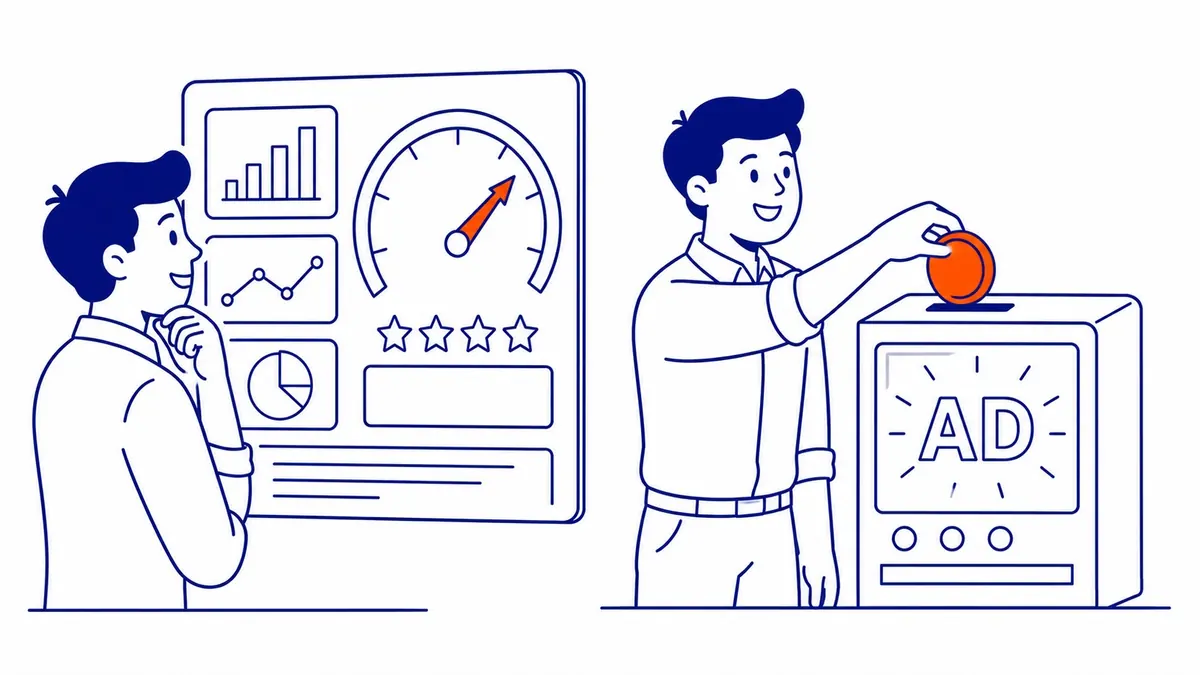
Quality Score (1 to 10) draws from keyword-to-ad relevance, landing page experience, and historical click-through rate. Three separate assessments. Combined into a single score that Google updates as your campaign builds history.
Keyword-to-ad relevance compares the search term to your headline and description. A tight match scores higher. Broad match keywords paired with generic ads pull this number down fast.
Landing page experience reflects what happens after the click. Slow load times, thin content, or a mismatch between search intent and the page all reduce the score. Solid keyword research before writing the ads keeps that chain relevant from query to conversion page.
Historical CTR is still the slowest to improve. New campaigns have no history. Google estimates it based on similar formats and keywords in the same category. Over time, a strong click-through rate builds real signal. The score stabilises. Your effective cost per click also often drops as it does.
Practitioner take: landing page experience is where most Calgary businesses leave points on the table. The ad is fine. Landing pages not built with conversion intent are where the money leaks on every single click. Keyword volume feeds the same score, and the verdict on low search volume keywords catches people out.
Manual CPC Bidding: You Set the Numbers
Full control. More time.
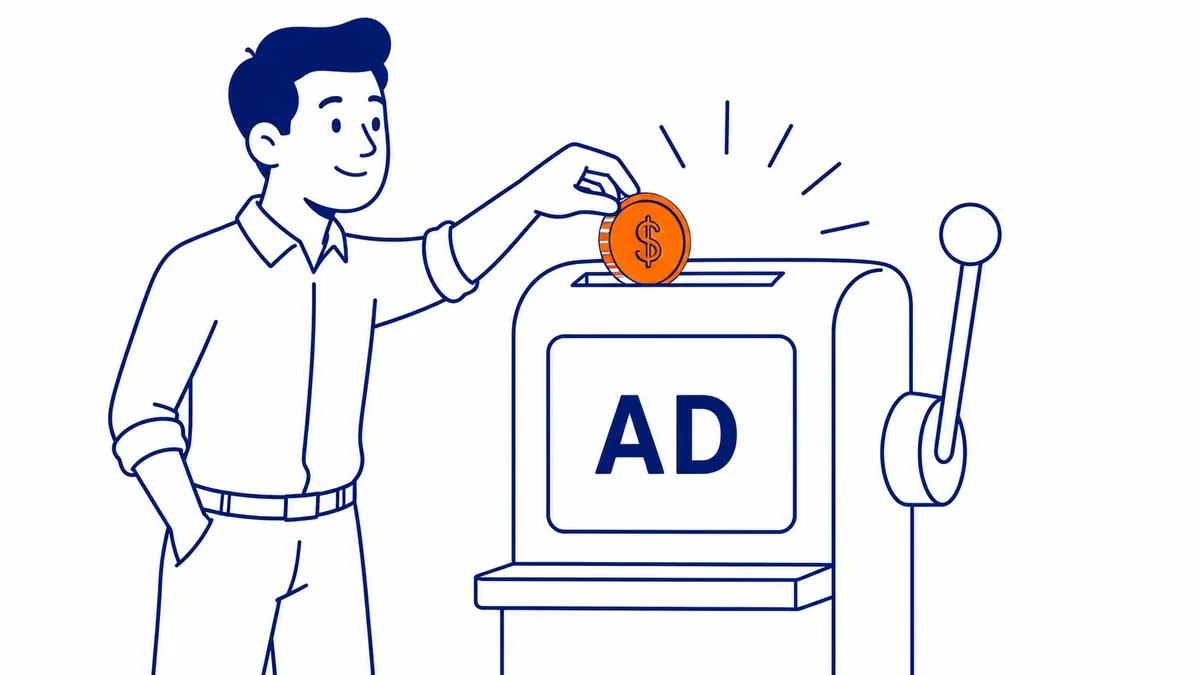
Manual CPC means you set a maximum bid for each keyword yourself. Google does not adjust it. Results come in and you adjust it manually based on what you observe.
That approach suits a few situations. New campaigns with no conversion data, where Smart Bidding has nothing to learn from. Niche keywords with low search volume, where automated strategies do not have enough history to perform reliably. Tightly controlled tests, where seeing individual keyword performance in isolation matters.
Static bids do not respond to real-time auction signals, however. A bid set Tuesday morning stays the same Friday night. Device type, time of day, and audience behaviour all affect conversion likelihood. Manual bids ignore those signals. The auction does not.
Manual CPC is a reasonable starting point for new campaigns. Conversion data changes the picture, though. Moving to an automated approach usually improves cost per acquisition once the data is there. The data, moreover, is what makes automation useful.
One middle option worth knowing: enhanced CPC (eCPC) allows Google to adjust your manual bids slightly up or down based on estimated conversion likelihood. It is not full Smart Bidding, but it adds some real-time adjustment while keeping you close to your set amounts.

Smart Bidding Strategies
Machine learning, your data.
Machine learning adjusts bids at every auction in real time. Google’s name for this is Smart Bidding, a set of automated strategies trained on your account’s conversion history. More conversion data means better predictions. Less data means more guessing, though. The early weeks of any Smart Bidding strategy reflect that.
Five main strategies, though.
Maximize Conversions
Google sets bids to get as many conversions as possible within your daily budget. No specific CPA target required. Useful for campaigns that are new enough that setting a cost-per-acquisition target would be premature.
Spend accelerates early. Google chases volume. Watch daily ad spend closely in the first two weeks.
Target CPA
You name a target cost per acquisition. Google adjusts bids auction by auction, aiming to hit that average CPA across the campaign.
One number matters here: 15 conversions in the last 30 days. Below that, the model is estimating more than learning. Performance stabilises once real conversion history exists.
Target ROAS
Return on ad spend (ROAS) bidding sets bids toward a specific revenue return for each dollar spent. Primarily useful in e-commerce, where conversion values are tracked alongside conversion events.
A 400% Target ROAS means $4 revenue for every $1 in ad spend. Google adjusts bids to favour higher-value conversions. Conversion tracking with revenue values configured correctly is required before this strategy can work.
Maximize Clicks
Google spends your budget to generate as many clicks as possible within your set limits. No conversion signal required. Useful for brand awareness or new sites where traffic volume matters more than acquisition cost.
Clicks are not leads, however. Maximize Clicks brings traffic. Whether that traffic converts depends on what happens on the landing page after the click.
Target Impression Share
You set a target percentage of auctions where your ad appears. Absolute top of page. Top of page. Anywhere on page.
Common use: brand terms. Also useful when a competitor is aggressively bidding on your core keywords and visibility matters. Less relevant for lead-gen campaigns, where acquisition cost drives more value than impression share.
CPM (cost per thousand impressions) is used for awareness campaigns on the Google Display Network. You pay per impression, not per click. CPV (cost per view) is used for video ads on YouTube. You pay when someone watches 30 seconds of your video or directly interacts with it. Skippable pre-roll ads run on CPV. Both are useful where view-through awareness matters more than direct conversions. None of it changes what keywords on Google actually cost once the auction runs.
Choosing a Bidding Strategy That Fits Your Goals
Goal first. Strategy second.
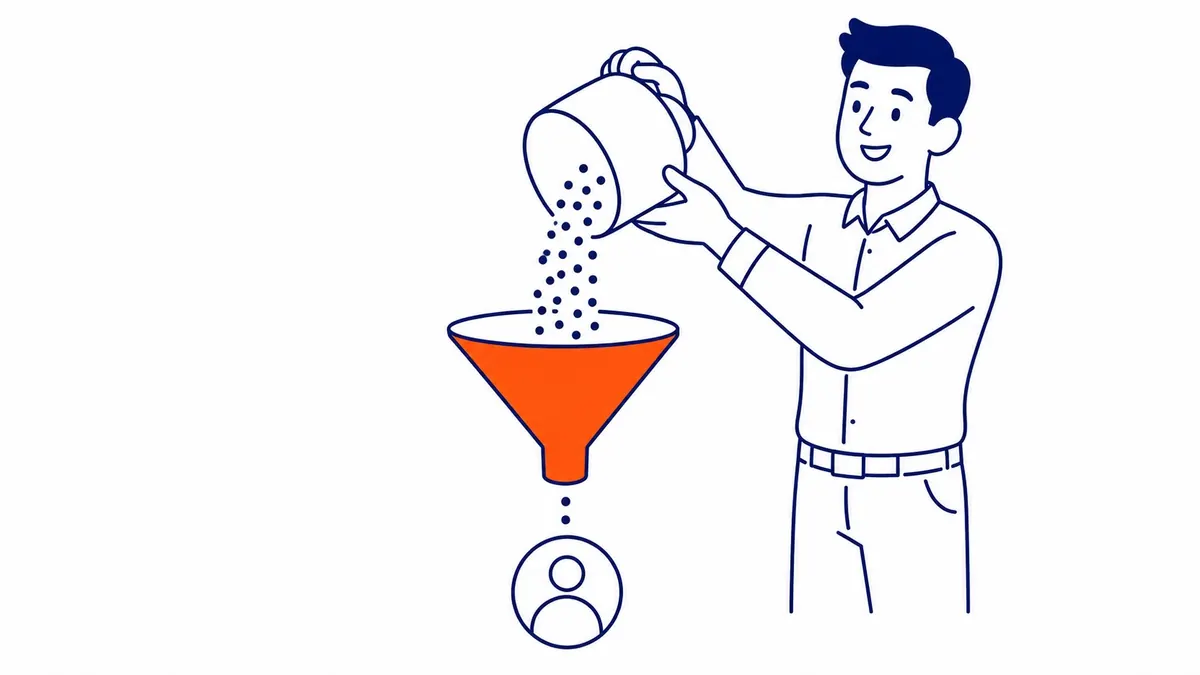
No single bidding strategy suits every campaign. The right choice depends on what the campaign is actually measuring.
Lead generation: Target CPA is the long-term target. Start with Maximize Conversions if the campaign is new. Switch to Target CPA once 15 or more conversions have come through in a 30-day window.
E-commerce with revenue tracking: Target ROAS. Set the target at a ROAS level your margins can sustain. Not an aspirational number.
New campaigns, no conversion data: Manual CPC or Maximize Conversions. The algorithm needs something to learn from before automation helps.
Brand awareness or competitive positioning: Target Impression Share for visibility on your key terms.
One pattern that consistently causes problems, though: switching strategies every few weeks because results look slow. Smart Bidding needs a stable learning window. Resetting it frequently means the model never matures. The first weeks of any new strategy are the most expensive. They are also the most informative.
SEO Company To-The-TOP! coordinates paid and organic so both point at the same audience and search intent. A good SEO expert Calgary businesses trust gives the ads a page worth sending traffic to.

Budget vs Bid: Two Different Controls
Easy to confuse. Both matter.
Budget and bid are separate levers. Conflating them creates expensive problems.
The daily budget sets the maximum Google can spend on a campaign per day. It is a ceiling, not a guaranteed amount, though. Google can spend up to twice the daily budget on high-demand days, then compensate on quieter days. Monthly spend stays close to 30 times the daily budget figure.
The bid determines where you compete in the auction. A large budget with low bids: frequent impressions, weak position. High bids with a tight budget: fewer impressions, stronger position when your ads do show.
Running out of budget mid-day is a signal. Either the bids are too high for the volume you want to capture, or the budget needs to increase to reach more searches through the afternoon and evening.
Ad spend decisions should follow performance data. Not gut feel, though. That holds whether the account runs manual bidding or a fully automated Smart Bidding strategy.
How To-The-TOP! Approaches Google Ads Bidding
Calgary campaigns start with the data.
At To-The-TOP!, our Google Ads management has served Calgary and Canadian businesses since 2007. No junior account managers. The same person who builds the campaign reviews conversion data and sends the monthly report.
Bidding decisions here still come from actual numbers. Industry benchmarks for CPC, historical conversion rates from comparable accounts, and the specific search behaviour in your market. Bid strategy is part of the campaign architecture. Not something set at launch and revisited six months later.
SEO Company To-The-TOP! has managed accounts in competitive Calgary SEO services categories long enough to know which strategies match which campaign types. Worth a conversation if your ads are not converting as expected. Most of those conversations start with keyword bidding and what a click is really worth.
Common Questions About Google Ads Bidding
Is $20 a day enough for Google Ads?
Depends on the industry. Competitive service keywords in Calgary. Legal, dental, roofing, real estate. Those run $5 to $15 per click. At $20 a day, that is one to four clicks. Not enough data for any bidding strategy to learn from, and not enough impressions for a clear read on performance. Lower-competition niches stretch further. The real question is not whether $20 is enough. It is whether $20 generates enough clicks to evaluate whether the campaign is working. In most Calgary service markets, that answer is no.
Is $10 a day enough for Google Ads?
Not in most service markets, though. At $10 a day, impression frequency drops too low for consistent visibility. Useful as a proof-of-concept test before committing real budget. Some Display campaigns run at lower spend. Search campaigns on competitive keywords need more room to produce meaningful data.
What is the best bidding strategy for Google Ads?
Target CPA once conversion data exists. Maximize Conversions before that threshold. Manual CPC for tightly controlled new launches or keyword experiments. No universally best strategy exists. The right one depends on the goal, the data volume, and the margins behind each conversion. Ask this question again every 90 days as the account builds history.
Should I bid for new customers only with Google Ads?
Google Ads does have a new customer acquisition goal in Performance Max campaigns. In standard search campaigns, however, it is not a direct bidding option. Audience exclusions and bid adjustments on remarketing lists can approximate it, though. Worth setting up if returning customer revenue is already high and acquisition cost is the constraint you are trying to manage.
Contact Calgary SEO Company To-The-TOP!
Questions about anything in this article, or about your own rankings? Talk to a Calgary SEO specialist directly.
Phone: (403) 308-5949
Address: 1509 14 Ave SW, Calgary, AB T3C 0W4
Hours:
Monday to Friday: 10:00 am – 7:00 pm
Saturday: 12:00 pm – 4:00 pm
Sunday: closed