What Is an SEO Score and Does It Matter?
Moz gives you a Domain Authority score. Ahrefs gives you a Domain Rating. Semrush gives you an Authority Score and a Site Health Score. Four tools, four different numbers for the same site. Above 80 tends to look healthy on most scales. Below 50 is where improvement conversations start. None of these are Google signals.
Most clients find out about the methodology problem after six months of chasing one number. The score goes up. Rankings do not move. The reason is that these are third-party proxies, not direct ranking inputs. Trajectory matters more than the number on any given day.
What the Score Actually Measures
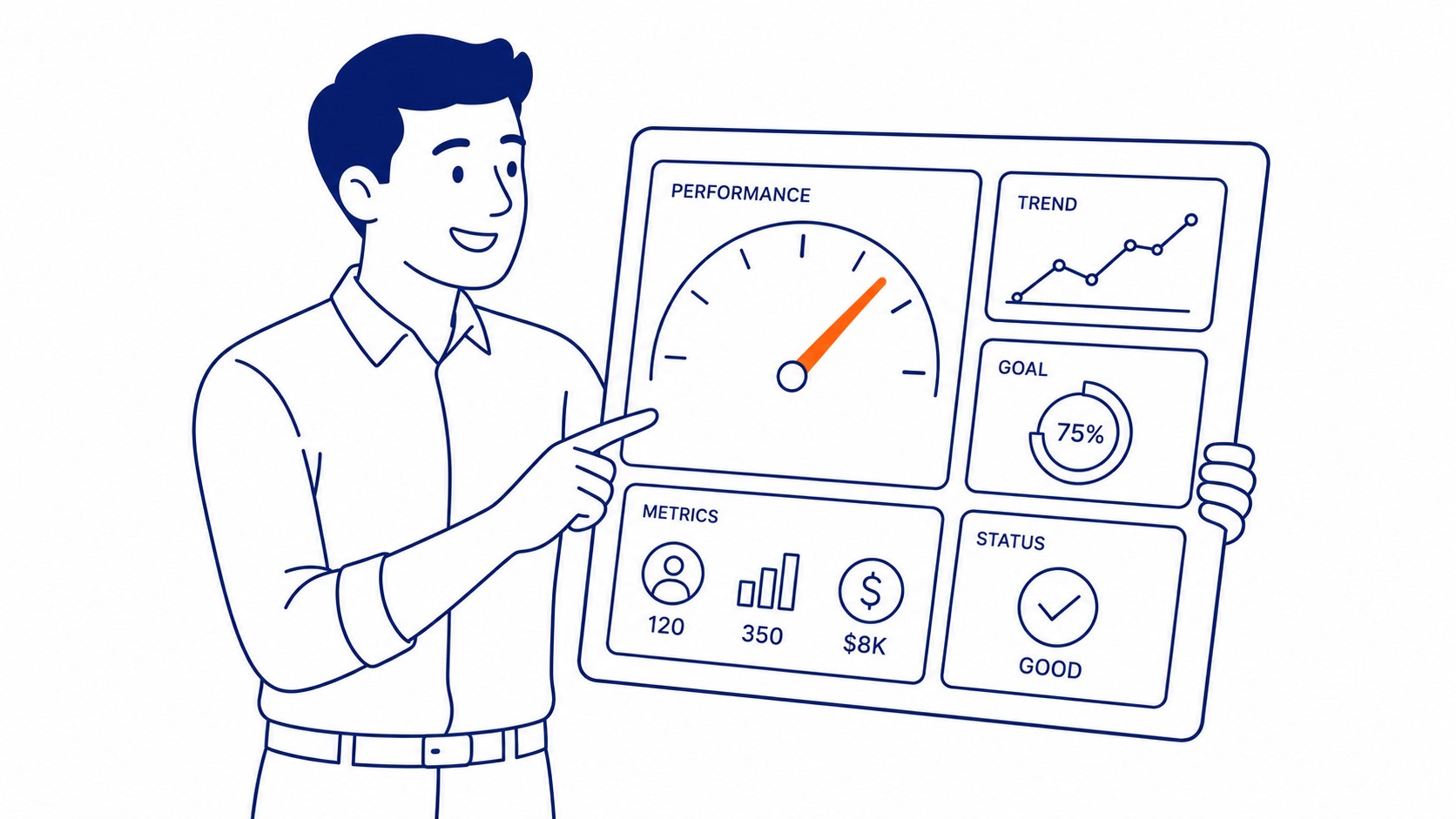
Most tools blend three source categories. Technical health covers crawl errors and page speed. Backlink profile covers referring domains and their authority. Content signals measure keyword optimization and header structure. Internal linking factors in too. The weighting, however, differs between tools, sometimes substantially.
Moz’s version is Domain Authority. DA runs 0 to 100. It is designed to predict ranking likelihood based on Moz’s own backlink index. Not a Google input. Just a Moz prediction. New sites start very low and build over 12 to 18 months.
Ahrefs uses Domain Rating. DR runs 0 to 100 on a logarithmic scale. Practically, moving from 70 to 80 requires far more work than moving from 20 to 30. Numerically identical. Not in practice. DR focuses on backlink strength. That is, however, a different objective than what DA is trying to predict.
Semrush runs two numbers. The Authority Score mixes backlinks with traffic data. Site Health Score is technical only, based on crawl issues found during an audit. That score responds fastest to fixes because it measures something directly actionable. Those crawl issues come out of the method for doing an SEO audit, not the score itself. Authority Score borrows the same idea as DA in SEO, packaged under another name.
What Google Uses (It Is Not This)
John Mueller from Google has been direct about this. Domain Authority, Domain Rating, Semrush’s Authority Score. None of these feed into Google’s algorithm. Google has its own internal signals. None of them are visible to third-party tools. What tools index is what they can see from outside Google’s system.
This matters because new site owners sometimes optimize for DA rather than for rankings. Chasing a third-party score instead of focusing on content quality and real link building is, however, a common misdirection.
A website audit that focuses on real ranking factors rather than third-party score metrics tends to be more useful. Core Web Vitals and crawlability affect positions. Structured data and keyword relevance do too. Score can follow from getting those right, not the other way around.
What Moves the Score
Technical issues drop scores fastest. Broken links, missing meta descriptions, duplicate content, slow page load times. These register quickly in most tools. Fixing them is also the fastest way to see a score move. Content optimization comes second. Title tags and heading structure. Better keyword distribution across a page. These show up in scores within days to a few weeks on most platforms.
Backlinks are the slowest driver. Building quality referring domains takes months. The score gains from link building are real but delayed. New domains may not show up in tool indexes for weeks after you earn them. Each incremental jump at higher DR values requires proportionally more referring domain volume. DR 40 to DR 50 is a heavier lift than DR 20 to DR 30 by a significant margin. Numerically the same gap. Not practically.
Content quality signals are increasingly weighted by tools trying to reflect Google’s own content evaluation. Thin pages and shallow topic coverage pull scores down. Pages that do not address user intent do the same. Adding depth and practical examples improves content scoring over time. Specific data helps too. The keyword research behind each page affects how content scores are calculated. Scores only mean something against a benchmark, so define a good SEO visibility score first.
Different Tools, Different Numbers
Put a site through Moz and get DA 45. Put the same site through Ahrefs and get DR 28. Neither reading is wrong. The tools are measuring different combinations of signals from different datasets. Expecting the same number from both is like expecting Celsius and Fahrenheit to read the same. Same room. Two different scales.
This is why comparing scores across tools is not useful. What matters is tracking your score inside a single tool over time. A DA of 45 moving to 52 over six months is meaningful. Comparing your Moz DA to a competitor’s Ahrefs DR is not.
Competitor comparison works best when done inside the same tool. Pick the platform your agency uses and track against competitors in that system. Trajectory and relative position within a single tool are what matter for benchmarking. Switching tools mid-comparison resets the baseline and makes trend data meaningless.

Reading Your Score Without Overreacting
Scores shift without any input from you. A competitor earns five links this month and your relative position drops. Moz refreshes its crawl index and numbers adjust across the board. Month-to-month movement, therefore, tells you very little. Twelve weeks of sustained decline warrants a look. A single bad month rarely does.
A Calgary SEO engagement should establish a documented baseline score at the start and then track quarterly rather than monthly. Monthly tracking introduces noise. Quarterly review, however, shows real trend direction. Score improvements from legitimate SEO work also take time to compound. Three to 6 months before meaningful movement is the typical window.
Do not build strategy around hitting a specific score number. Build it around the underlying work. Technical fixes first. Then content depth. Quality backlinks over time. Score is a diagnostic output, not a strategic goal in itself. Agencies that report score as a primary KPI are often working backward from a number rather than toward actual rankings. See the SEO blog for more on how each of these components connects to actual search performance.
Frequently Asked Questions
Is a higher SEO score always better?
Higher is generally better, but the competitive context shapes what the number means. Sitting at 65 in a market where competitors cluster around 40 is a strong position. At 80 where competitors average 85, the margin works against you. Absolute number is less useful than relative standing. Trajectory over time, however, tells you more than any snapshot.
Can I improve my SEO score quickly?
Technical fixes respond fastest. Fixing crawl errors and missing meta descriptions can produce score changes within days on tools that update frequently. Page speed improvements show up quickly too. Content optimization shows up within weeks. Backlink improvements are the slowest, typically 3 to 6 months before meaningful score movement from link building shows up in tool data.
Does my SEO score affect my Google rankings?
Rankings, yes. Score, no. Google does not read Domain Authority. It does not read Domain Rating. No third-party score of any kind factors into position decisions. Score is a proxy, generated by tools that index what is publicly visible. Technical health and content relevance drive score improvements. So does link quality. Those same factors matter to Google. The number those factors produce in Moz or Ahrefs, however, does not. Good Google Ads management alongside organic SEO lets you test whether paid and organic complement each other in your specific market.
Why is my score different on different tools?
Every tool crawls the web independently and weights signals differently. Moz sees a DA of 45 on a site that Ahrefs reads as DR 25. Semrush might call it 30. No reading is inaccurate. They are different measurements from different datasets, using different methodologies. Pick one tool for the engagement. Establish a baseline on day one. Track movement against that baseline only.
Contact Calgary SEO Company To-The-TOP!
Questions about anything in this article, or about your own rankings? Talk to a Calgary SEO specialist directly.
Phone: (403) 308-5949
Address: 1509 14 Ave SW, Calgary, AB T3C 0W4
Hours:
Monday to Friday: 10:00 am – 7:00 pm
Saturday: 12:00 pm – 4:00 pm
Sunday: closed
