What Services Do Top Technical SEO Agencies Provide?
A client asked me last month why their new product pages weren’t showing up in search at all. Great content. Careful keyword research. Zero visibility. The answer had nothing to do with writing. A crawl block in the robots.txt file was already quietly hiding the entire folder from Google. That is technical SEO work. It is the part of the job most business owners never see until something breaks.
Technical SEO service sits on the infrastructure side of ranking. Crawlability. Indexation. Site speed. Structured data. Whether a page can compete at all often comes down to code, not copy. A technical SEO agency finds and fixes those issues before they cost you traffic. Here is what that work looks like, service by service.

Site Audits and Crawl Analysis
Every technical engagement starts with an audit. A proper technical SEO audit crawls the entire site the way a search engine would. It flags broken links. Orphan pages. Redirect chains and blocked resources too. Crawl budget matters here as well. Large sites waste it on thin pages and faceted navigation. Duplicate URL parameters eat the rest. An agency worth hiring maps out exactly where that budget is going and where it should go instead.
Log file analysis is the deeper version of this service. It shows what Googlebot actually crawled, not what a crawler tool assumes it crawled. Few agencies offer this service. Fewer still know how to read the output. It is still one of the clearest signals for whether a crawl budget problem is real or theoretical. Log files come later; technical SEO explained is the sensible starting point. Log work is where Onely technical SEO earned its name.

Site Speed and Core Web Vitals
Page speed work sits squarely inside technical SEO service. Largest Contentful Paint. Cumulative Layout Shift. Interaction to Next Paint. Each Core Web Vitals metric affects both rankings and conversion rate. A slow product page loses sales before it loses ranking position.
Fixing this usually means image compression and script deferral. Server response time work often follows. Sometimes a full hosting migration is the only real fix. It is not glamorous work. Still, it ranks among the few technical fixes a client can actually see. Page speed tools show the before number and the after number side by side. Speed also shapes how much a bot gets through, and the short version of crawling in SEO explains that link.

Structured Data and Schema Markup
Search engines rely on schema markup to know what a page actually is, not just what it says. Product schema. FAQ schema. Local business schema and review schema. Each one increases the odds of a rich result in the search listing. A technical SEO agency implements this correctly and validates it, since a broken implementation is worse than no schema at all. Google ignores markup with errors. A client rarely notices until a competitor’s listing starts showing star ratings and theirs doesn’t.

Indexation and Duplicate Content Cleanup
Not every page on a site deserves to be in Google’s index. Filtered category pages. Tag archives. Thin location pages built on a template. These often need a noindex tag. Sometimes a canonical pointing elsewhere. Otherwise, removal outright. Indexation cleanup is unglamorous, invisible work. It is also one of the fastest ways to fix a site with more pages indexed than pages worth ranking.
Duplicate content shows up constantly in ecommerce and multi-location sites. Two URLs, one product, no canonical tag. Search engines split ranking signals between them instead of consolidating behind one. A canonical tag fixes it in an afternoon once someone actually finds it.

JavaScript Rendering and Migration Support
Sites built on modern JavaScript frameworks sometimes render fine for a browser and render as a blank page for a crawler. This is a common gap between what a developer sees and what shows up in Google’s cache. Diagnosing it already takes rendering tools most agencies don’t own, let alone use regularly.
Migration support belongs here too. Site redesigns and platform switches are where rankings die quietest. Domain changes carry the same risk. A technical SEO agency maps every old URL to its new destination. It checks redirect chains. Nothing important gets orphaned in the process, at least not on a job done properly. Skipping this step is the single most common cause of a redesign tanking six months of ranking progress.
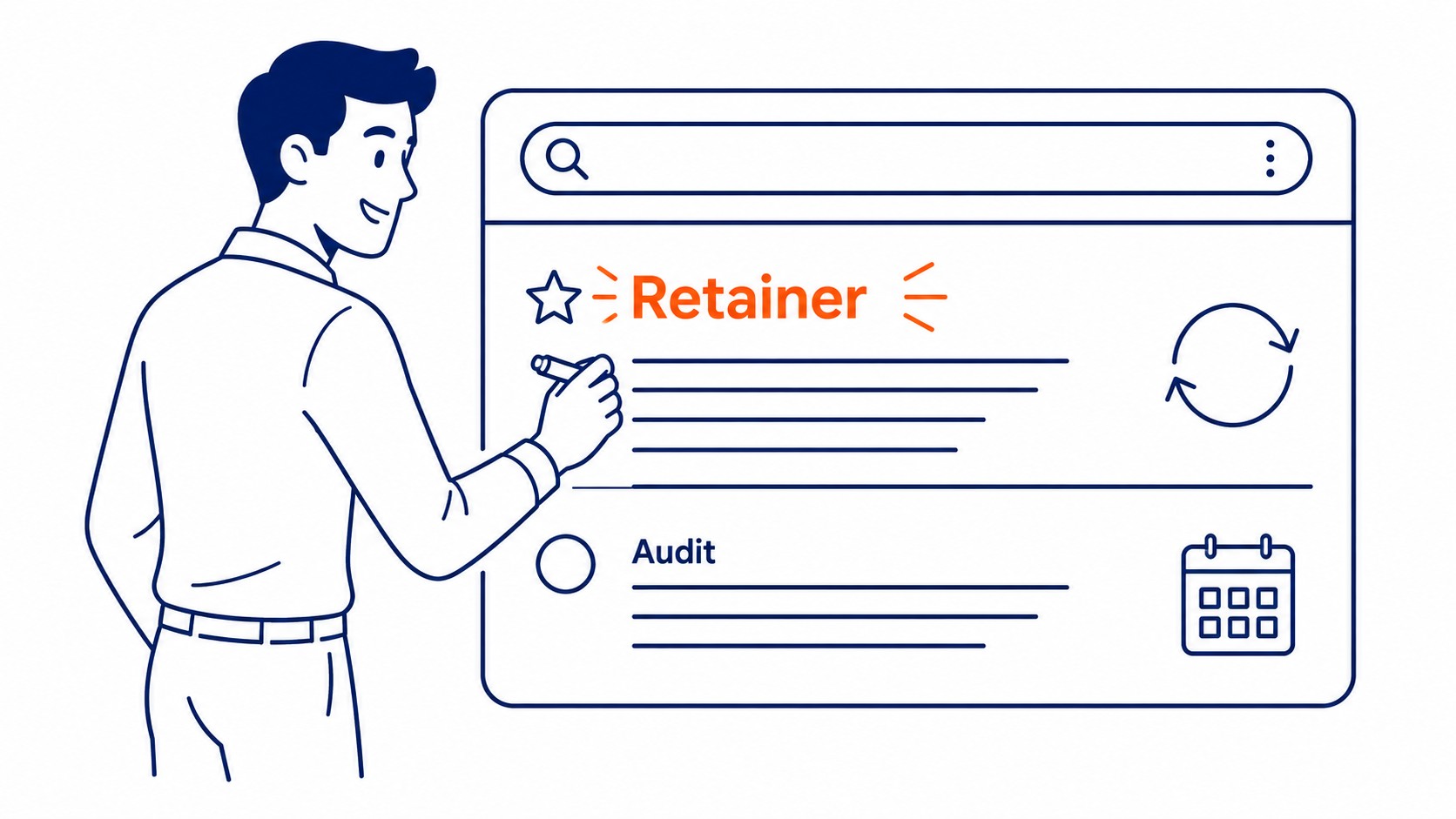
One-Time Audit vs. Ongoing Retainer
Some of this work is a one-time project. A migration audit has a start and an end. So does a Core Web Vitals cleanup or a markup rollout. Other parts need continued attention instead. New pages get added. Templates change. A plugin update quietly breaks a canonical tag nobody checks again for eight months.
Monthly monitoring catches that kind of drift before it compounds. Recurring crawls and a speed check still make up a retainer arrangement. A review of anything newly indexed or deindexed rounds it out. The same logic applies to Google Ads management, a recurring service billed monthly rather than a single project. Site change frequency decides whether a business needs a retainer or a single audit. Platform complexity plays a role too.

What a Real Engagement Looks Like
A first audit for a mid-size site typically runs one to three weeks. Fixing depth versus flagging depth decides which end of that range applies. Most agencies then package these services as a fixed project scope or a monthly retainer once the audit wraps. Pricing instead tends to track how much ongoing change the site sees.
Calgary SEO work in this category tends to start the same way regardless of industry. Full crawl first. Prioritized fix list next. Then either a handoff to the client’s developer or a paid implementation phase. Ask any prospective agency for a sample audit report before signing anything. A blank stare in response says more than any pitch deck will. SEO Company To-The-TOP! provides one on request, no pressure attached.
Technical work rarely gets the attention that content or link building gets. Mostly because it is invisible when it is done right. Nobody notices a site that loads fast and indexes cleanly. They only notice the one that still doesn’t.
Frequently Asked Questions
Does every website need technical SEO service?
Not at the same intensity. A five-page brochure site needs a basic audit and occasional monitoring. Even a thousand-page ecommerce catalogue needs continued technical attention, just more of it. The number of things that can quietly break scales with page count.
How much does a technical SEO audit cost?
It varies with site size and crawl depth. A small business site audit might take a few days. Scale up to an ecommerce migration, and that can run several weeks instead. Ask for scope before price. The two are directly linked.
Can I do technical SEO myself without an agency?
Some of it, yes. Compressing images and fixing obvious broken links doesn’t require deep expertise. Log file analysis and migration mapping usually do. The tools and the interpretation both take practice most site owners don’t have time to build.
How is technical SEO different from content SEO?
Content SEO answers what a page says. Technical SEO asks something else entirely. Can a page be reached at all. Read is a separate question. So is ranked. Both matter. Technical problems tend to cap everything else until they get fixed.
Should technical SEO be a retainer or a one-time project?
It depends on how often the site changes. A static site with rare updates can get by on periodic audits. Frequent template changes or new sections push it toward continual monitoring instead. Small breaks compound fast when nobody’s watching for them.
Contact Calgary SEO Company To-The-TOP!
Questions about anything in this article, or about your own rankings? Talk to a Calgary SEO specialist directly.
Phone: (403) 308-5949
Address: 1509 14 Ave SW, Calgary, AB T3C 0W4
Hours:
Monday to Friday: 10:00 am – 7:00 pm
Saturday: 12:00 pm – 4:00 pm
Sunday: closed
