
How to Use Hreflang Tags for International SEO
An hreflang tag names two things. The language a page is written in. Then the country it was meant for. It can sit in the head of the page, or in your sitemap. An HTTP header works too.
That is the mechanic. It is written up properly elsewhere on this site, inside the international SEO guide. The code list is there. So is x-default. None of it gets repeated here.
What a how-to cannot explain is why hreflang keeps breaking on websites that got it right. Careful ones, run by people who read the documentation and followed it.
Hreflang is not the same kind of instruction as anything else you have ever put on a page.

Every Other Tag Is a Statement. Hreflang Is a Proposal.
You write a title. Then you save it, and the title has changed. Set a canonical and the page names its own preferred address. Add a noindex and the page leaves.
Every one of those is a claim about the page in front of you. Nobody has to agree.
Hreflang says something else. It says this page and that page are the same page, written for a different language or country. That is no longer a fact about your page. Rather it is a claim about a relationship, and a relationship needs two parties.
So a search engine will not take your word for it. Google goes and reads the other page. Then it looks for the same claim, pointing back at you. Find it, and the pair holds. Come up empty, and nothing is holding your annotation up.
Not downgraded. Ignored, as though you never typed it.
You cannot agree with somebody on your own.
Hreflang Pays Nothing for the Part You Did
Nearly every technical job pays out in proportion to the work.
Speed up half your pages and half your pages are quicker. Fix half your broken links and half of them work. Whatever you finished is real.
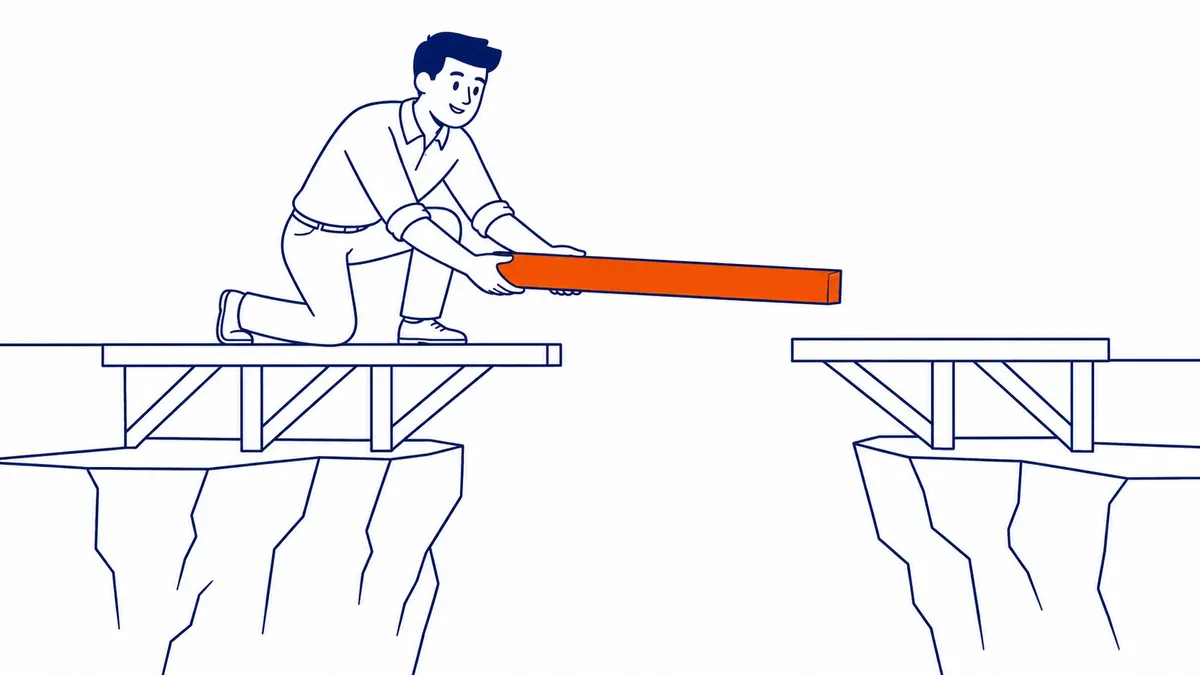
Hreflang does not pay that way. Get the tags right on one page and wrong on its partner and you have not built half a pair. You built no pair at all. What sits on the finished page is markup doing precisely nothing.
A site with a broken half looks exactly like a site that never tried. Nothing goes red. No message arrives, and no penalty either. The pages carry on being served as before.
Nobody failed to understand the tag. Somebody simply typed it in one place.

You Cannot Add Hreflang to a Page
People ask how to add hreflang to a page. Fair enough, since that is how every other tag works. Only nothing exists to add it to. A page cannot be paired with anything by itself. So a tag sitting alone is nothing at all.
Count what happens when you grow. You run four languages. Somebody adds a fifth. That fifth one needs to point at four others. Yet the four already on your site have to change as well. Each must now point at the newcomer.
Add a page and you did not add a page. Instead you edited every page you already had.
Somebody will point at the sitemap. Put every annotation in one file and you never touch a page at all. Fair enough. Only look inside that file. The new entry names the other four. Then all four existing entries gain a line naming the newcomer.
Nothing got spared. The work simply happened in one place.
So hreflang is not a property of a page. It is a property of a set, and the set changes size the moment anybody publishes.

Why the Hand-Written Version Dies
The usual warning is that hand-written hreflang is prone to mistakes. True enough. Also beside the point.
A hand is a per-page instrument. You open a file. Then you change it, and you have touched exactly one thing. It works beautifully for every other tag you own.
Hreflang asks for something a hand cannot do. It asks for one edit landing on every page in the group at once.
Generated implementations survive for that reason, rather than because the software is careful. A sitemap built from a list of pages. Or a plugin holding the group. Then a template writing the markup for every member at once. What they have in common is that one place holds the list.

The One Thing in SEO With a Right Answer
Now for the good news.
Almost nothing in this trade has a right answer. Is the page good enough? Will that keyword be worth a year? Somebody will guess for money.
Hreflang is not like that. It validates or it does not. A machine reads both ends of every pair, then reports back in a language nobody has to interpret. Run it through a website audit and the truth comes back. Correctness here is defined. Rare enough in search engine optimization to deserve saying out loud.
Take the gift. Very little else in your SEO gets graded at all. The global side of SEO stays mostly judgement, hreflang aside. Even the right way to say SEO has no settled answer, which tells you something.

Where the Hreflang Argument Stops
None of this makes hreflang powerful.
Hreflang wins you no position. It was never a ranking signal, and no search engine has claimed otherwise. What it does is decide which of your pages gets shown in a place your website already earned. So it is a switch rather than a lever. Wire it perfectly around a German page nobody wants to read. Then you have a beautifully annotated version ranking nowhere in Germany.
That other job is harder. Whether your content is any good in a market you cannot read lives elsewhere on this site.
Try this before you start. Open the page you were going to tag. Then write down every other page that has to point back at it before your tag counts for anything.
Two, and you own both? Then it is a short job, and it will hold.
A dozen, spread over three sites, half of them maintained by somebody you have never met? Then you were never adding a tag to a page. You were agreeing something with a group, and nothing on your own page settles it.
No statistic about other websites tells you which of those you are looking at. Yours is on the screen.

What To-The-TOP! Tells Calgary Business Owners
SEO Company To-The-TOP! has been doing this work since 2007. International SEO turns up more often than people expect. A store selling into the United States. Then a firm with a French page nobody maintains.
Technical checklists with hreflang somewhere on them turn up often at To-The-TOP!, here in Calgary. Often the first useful hour goes on the list behind the tags. That is where the keyword research starts. The traffic questions as well. Meanwhile a good Google Ads campaign can carry a new market while the slower work settles.
To-The-TOP! is a solo practice. No junior handoffs, and no black hat anything. Positions move over three to six months, and the portfolio shows where that patient work ended up. No guarantees, though.
Call (403) 308-5949 if the list behind your tags has stopped making sense. The list is where SEO across several countries actually lives, tags or no tags.
Common Questions About Hreflang Tags
Do hreflang tags improve rankings?
No. They decide which version of a page gets shown, never whether it gets shown. A page ranking nowhere still ranks nowhere in every language you annotate it in.
What happens if hreflang is set up wrong?
Nothing dramatic, which is the difficulty with it. No penalty arrives. The annotation gets ignored, and your site carries on as it did before.
Should hreflang go in the head, the sitemap, or an HTTP header?
Any of the three works, and the choice matters less than people think. What matters is whether one place holds the full list.
Do I need hreflang if every page is in English?
Sometimes, yes. Run one page for Canada and another for the United States, both saying close to the same thing. That is exactly what hreflang sorts out. One English site aimed at a single country needs none.
Can I add hreflang to one page at a time?
Not in any way that counts. Everything else in the group has to be edited so it points back at the new one. Otherwise your tag does nothing.
Contact Calgary SEO Company To-The-TOP!
Questions about anything in this article, or about your own rankings? Talk to a Calgary SEO specialist directly.
Phone: (403) 308-5949
Address: 1509 14 Ave SW, Calgary, AB T3C 0W4
Hours:
Monday to Friday: 10:00 am – 7:00 pm
Saturday: 12:00 pm – 4:00 pm
Sunday: closed