
Is .com Better for SEO?
For ranking, no. Nothing about ending in .com lifts a page, and the newer extensions carry no handicap either. A Canadian ending does carry a small geographic signal on Canadian searches. That effect is real and modest. It is also written up elsewhere on this site.
So take the ranking answer as settled. Then notice how little it covers. Your domain does almost no work in front of a search engine. Yet it works hard in a place nobody thought to check.

The One Audience With No Opinion
Your domain has several audiences. A crawler is one of them, and it is easily the least opinionated of the lot.
Everybody else holds a view. The receptionist repeating your address down the phone. A customer reading it off the side of a truck. The man who met you once at a service counter. He is trying to find you again a week later, from memory.
Search engines are the only audience your domain has that genuinely does not care. Ad platforms care plenty, which is its own headache when shutting off Google Ad Services.
Where the Comparison Always Gets Staged
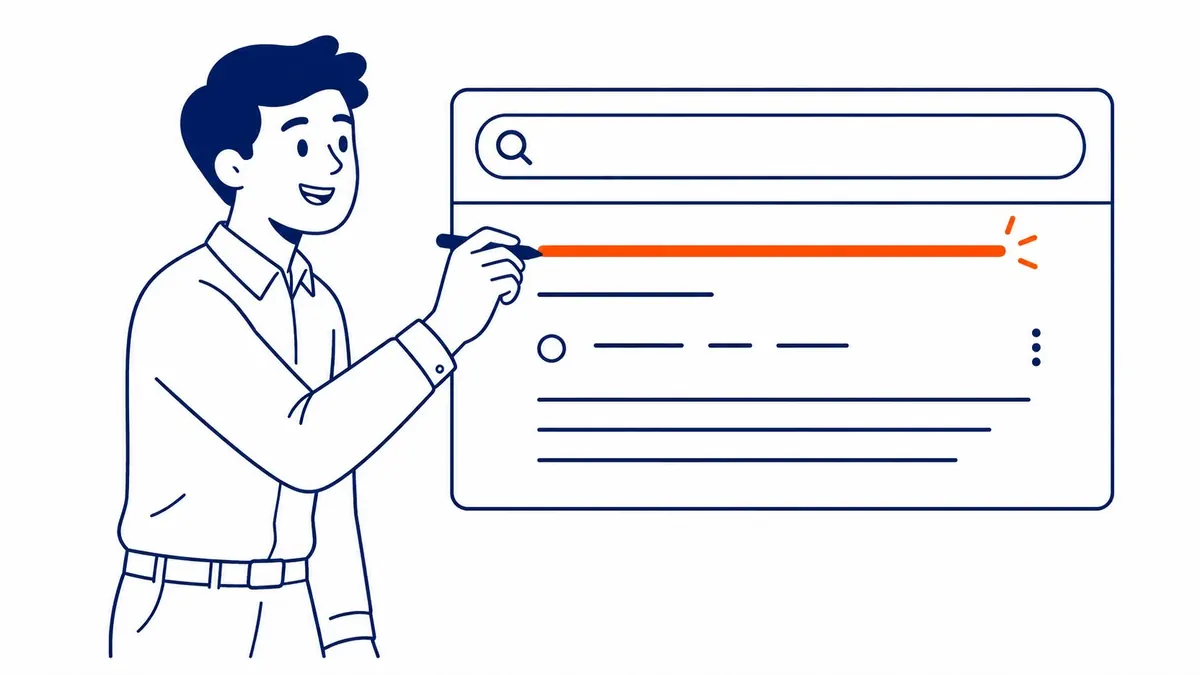
Look at where the .com argument is always held. On a results page. Somebody typed a query. Your listing came back. Now the domain sits under the title in small grey letters.
At that moment your domain has nearly nothing to do. The search already worked. Finding you was the search engine’s job. It did the job. Your reader never needed to know the address at all.
Then there is the other moment. No query. Not one listing. Nothing on the screen to click.
The Ending Hands Add on Their Own
Somebody sits at a keyboard knowing your name and not much else. The mind supplies the name. Then the hands supply the ending.
And .com is the ending they reach for. It is the default. Not chosen, not compared, not weighed against a single alternative. Simply the thing that arrives when nobody made a decision at all. Some browsers even keep a keyboard shortcut that adds .com for you.
That is the position .com actually holds. Never an option on a list. It is what happens when no one picks from the list.

A Wrong Ending Is Not Empty Space
Here is the part every comparison leaves out.
That guess lands somewhere. Your name with .com after it is a real address, and somebody owns it. Could be a registrar’s for-sale page. Maybe a firm in Ohio sharing your name and nothing else. Or a competitor.
So the visitor who guessed wrong did not vanish. They arrived. Just not at your place.
None of that is a search problem. Nobody searched.

Go and Look at Your Own .com
Stop reading for a moment. Open a private window. Type your business name. Then let your fingers finish it the way a stranger’s would. Read whatever comes back.
Whatever loaded is now part of what your name means to somebody who was trying to reach you. And you wrote none of it.
Maybe nothing loaded. A blank screen, a for-sale notice, a parked page full of ads for something unrelated. Then the loss stays small. One visitor at a time. So the usual advice about a Canadian ending holds, no footnote attached.
Or a real business loaded. Out of your trade and out of your country, that stays mild. Sitting in your trade and in your city, the question stopped being about search some time ago. It became a business question wearing a technical costume.
No statistic about other people’s domains tells you which of those you are looking at. Yours is one address bar away.
What an Extension Can Cost, and What It Cannot
It cannot cost you a position. Rankings answer to your content and your links. An ending does not move them. Yet a switch will not rescue them either.
Also, nothing is broken. A website audit turns up no fault here. Your site loads. Pages index as they always did. Everything works as designed.
What the ending costs is quieter than that. It costs you the person who already knew your name. She needed no ad. No ranking either. She was coming to you under her own steam. The easiest customer you will ever get. Then one small habit of the hands delivers her to a page you never wrote.

Choosing a Domain Today
Buy both when both are free. The second one is an annual registration fee and nothing more. Point it at whichever site you actually use. That is a one-time setting, done once and left alone.
Only one available? Weigh what is sitting on the other. Held by nobody? Take the free one and stop thinking about it. Owned by a real business in your trade? Find that out now. Not after the truck is lettered and the cards are printed.
And a fifteen-year-old company on a .ca is in no trouble at all. Plenty of good Canadian businesses live happily there while a stranger holds the .com. Knowing who the stranger is beats not knowing.
Somebody will type your name from memory this week. The ending they add was never up to you.
The Domain Question With To-The-TOP! in Calgary
SEO Company To-The-TOP! has been doing this since 2007. The domain question lands in a first meeting more often than any technical one. Businesses across Calgary usually want to know which ending ranks better. Our answer has not changed in nineteen years, which is roughly why this page exists. To-The-TOP! runs search engine optimization and Google Ads management for companies in Alberta and British Columbia. Rankings we have moved sit in the portfolio, positions and all. One specialist does the work. No junior handoffs. Questions about online reputation management land in those same first meetings. The longer answer, whether a domain name affects SEO, sits on its own page.
Common Questions About .com and SEO
Is a .com domain better for SEO than a .ca?
Not for ranking. A .com wins no position that a .ca would lose. The .ca does carry a small local signal on Canadian searches, which cuts the other way. So the real difference shows up away from the results page, in what people type from memory.
Will switching to .com improve my rankings?
No. A move like that buys a migration and no position, and any domain change carries real risk. Nothing about an ending is worth paying that price for.
Does Google penalize newer extensions like .co?
No penalty applies. Newer extensions rank on the same terms as anything else. Recognition is the weak point rather than ranking. Familiarity does the work there, and Google has no part in it.
Should I buy the .com if my site lives on the .ca?
Usually, while it is still available. Then point it at your real site and forget it. The reason has nothing to do with ranking. It is the person typing your name from memory.
Who is using my .com right now?
Go and look. One glance settles it, and the answer decides more than any ranking factor on the subject ever will.
Contact Calgary SEO Company To-The-TOP!
Questions about anything in this article, or about your own rankings? Talk to a Calgary SEO specialist directly.
Phone: (403) 308-5949
Address: 1509 14 Ave SW, Calgary, AB T3C 0W4
Hours:
Monday to Friday: 10:00 am – 7:00 pm
Saturday: 12:00 pm – 4:00 pm
Sunday: closed