
Do Facebook Reviews Help SEO?
No. Not in any way that shows up in a rank tracker.
Still, the question hides something worth having. Every Facebook recommendation is a receipt from a sale that skipped Google entirely. Read enough of them and you learn which words your customers use for the thing you sell. That part is genuinely useful.
The Ranking Half Takes One Section

Google sorts local results by relevance and distance. Prominence sits alongside those. Reviews feed prominence, and Google means the reviews on your own Business Profile when it says so.
Facebook recommendations live outside that system. No documented path connects them to your position in the map pack. Google’s own local ranking guidance does not mention them anywhere.
Then people try the workaround. Copy the Facebook quotes onto your own site. Wrap them in review markup. Then wait for gold stars beside your listing in the results. That route closed years ago. Google switched off review snippets for businesses displaying reviews of themselves on their own pages.
Other pages here work through what social media does and does not do for search. No need to repeat any of it. What follows is the half that nobody writes down.
A Recommendation Is Addressed to Somebody

Compare how the two documents get written.
A Google review is written into the air. Nobody asked for it. Your customer is talking past you, to a stranger who has not arrived yet. Somebody who might turn up eight months from now, mid-search, comparing listings on a phone.
A Facebook recommendation is a reply. Someone posted a question in a neighbourhood group. Anyone know a decent electrician in the northwest? Your customer typed your name underneath it.
Facebook moved off star ratings back in 2018. Recommendations replaced them, a yes-or-no question with a comment box underneath. Labels on that tab have shifted more than once since. That change matters more than it looks, though.
A star rating is a verdict, delivered to nobody in particular. A recommendation is a favour, done for a named person who asked.
Which means the review landed after the decision, not before it. By the time your name appeared in that thread, the search was already finished. None of it reached Google at all.
Somebody Will Say Their Facebook Page Ranks
Fair objection. It usually does rank, too.
Search your own business name. The Facebook page often sits on the first screen, occasionally above your own site. So the reviews on it are visible in Google. Case closed, apparently.
Look at what got typed, though. Your name. The searcher already had it before a browser opened.
Where did they get it? From the thread. A recommendation handed over a name, and the name turned into a branded search about four minutes later.
So the objection turns into the argument. Facebook reviews do not help you win category searches. They convert category searches into name searches, which you were probably winning already. That is not ranking. Call it demand arriving pre-sorted.
Worth knowing how much of your traffic behaves that way. Search Console separates branded from non-branded once you filter the queries report. Branded impressions climbing while everything else stays flat is a referral pattern. Read it as social proof doing its job, not as search engine optimization doing its job.
The Question Above the Review Is the Real Asset

Scroll up from any recommendation. There is a question sitting above it.
Nobody sanded that question down. Autocomplete never finished it. No tool rounded it into a tidy phrase with a monthly volume printed beside it. It is a person describing a problem in their own words, clumsily, late at night.
That wording is worth collecting. Most keyword research begins with tools, and tools begin with whatever people already typed into Google. Useful, as far as it goes. Yet it can only ever show you the queries that survived contact with a search box.
Group threads hold the other kind. The half-formed version, before the search box trained it. My furnace is making a noise like a coin in a dryer. That exact sentence will never appear in a keyword tool. Some version of it gets typed into Google every January in this city.
Collect enough of them and you have headings. Then FAQ entries. Then, eventually, whole pages that answer a question in the shape it was actually asked.
One Thread, Worked Through

Take a plumbing company in the southeast. A recommendation arrives on their page and it reads plainly enough. Came out the same day for our basement, did not gouge us on the weekend rate.
Three things sit inside that sentence. Same-day response. Basement flooding. Weekend pricing.
Now open the website. The services page offers emergency plumbing. Then round-the-clock availability. Competitive rates after that. Every one of those phrases was written by a marketer, not by anybody who has stood in six inches of water.
Nobody searches competitive rates. People search weekend plumber rates. Or plumber came out same day. Maybe something close to that, spelled worse. Your customer handed over the better phrasing for free.
So the rewrite stays small. A heading about weekend and after-hours pricing. Then a paragraph naming a real range instead of dodging the question. One line about basements, since that is where water ends up.
Nothing clever happened there. A sentence moved off a Facebook page and onto a website, and the website started matching what people type.
Read Who Got Named Beside You
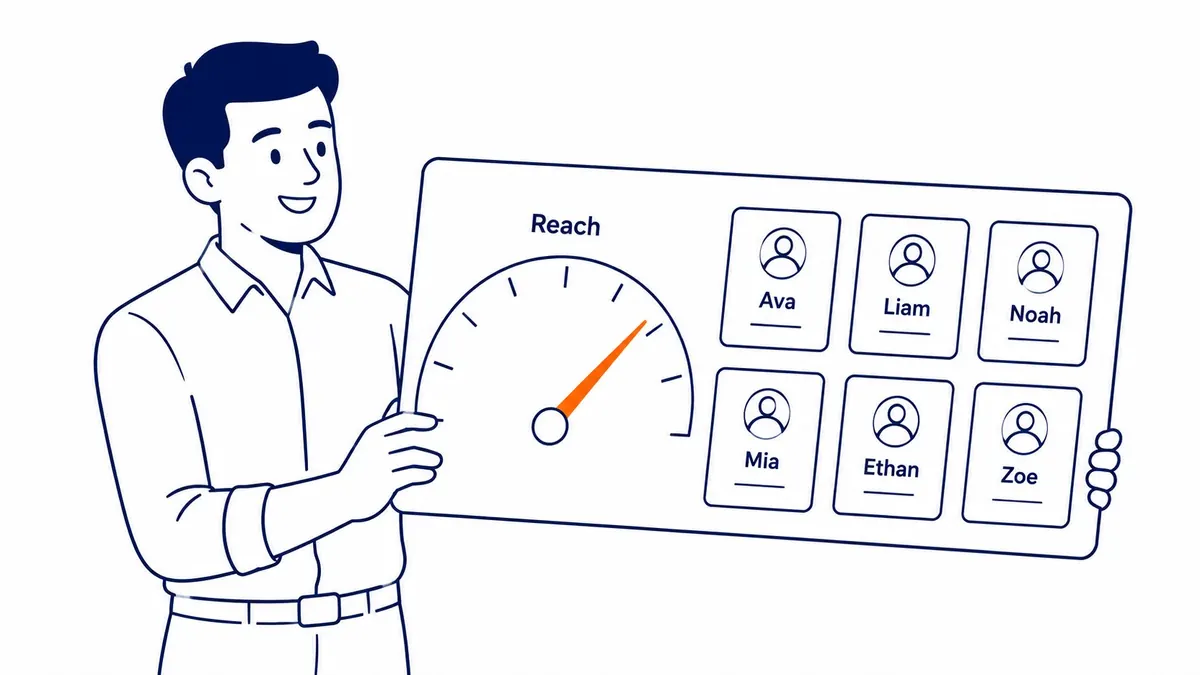
One thread rarely produces one name. Three or four come back, usually inside an hour.
That short list is your real competitive set. Whatever sits in your rank tracker is something else.
Rank trackers show you whoever optimized hardest for a phrase you picked yourself. Threads show whoever people remember unprompted. Those two groups overlap far less than owners expect. Often the memorable business has a thin website and no SEO at all, which is worth sitting with for a minute.
Go look at the ones that keep reappearing. Something makes them sticky. Sometimes a van everybody recognizes on the school run. Often an owner who still answers the phone at supper time.
None of that surfaces in a website audit. It still explains rankings that otherwise make no sense.
What to Do With It on Monday

Open your Facebook page and find the recommendations. Read all of them, oldest first.
Copy each reviewer’s nouns into a document. Not your service names. Theirs. Hot water tank, where your site says domestic hot water systems. Furnace guy, where your site says heating contractor.
Then open Search Console and search those nouns in the queries report. Half will already be pulling impressions. Ranked somewhere around position eleven, taking almost no clicks at all.
Those pages get rewritten first. Swap your vocabulary for the customer’s. Change nothing else, so you can tell later what actually moved.
After that, join two or three local groups and say nothing for a month. Just read the questions. Volume is low. Specificity is the whole point of the exercise.
Meanwhile the same wording can be tested in Google Ads for very little money. Paid search answers within days whether a phrase pulls clicks. SEO takes months to answer the same question. So run the fast test first, then commit the slow one to whatever survived it.
Where the Facebook Reviews Argument Stops

Sample sizes are tiny. A dozen recommendations is a hint. Nobody should call it research.
Whoever posts in a neighbourhood group is not everybody in the neighbourhood, either. It skews by age, by hour of day, by how long somebody has lived on that street.
Groups are private spaces too. Rules differ from one to the next. Reading is fine. Lifting quotes and republishing them is a different matter, and some admins take it badly. Ask before you put anyone’s words on your site.
Then the awkward limit. You cannot really solicit these. A recommendation is written for a friend, so pushing customers to post in threads spends goodwill fast. Google reviews you can ask for outright. This kind arrives or it does not.
Recency matters as well. A thread from three years ago describes a market that has since moved on.
None of this makes the reviews worthless. It makes them qualitative. Treat them as language rather than as data and they hold up fine.
Facebook Reviews and SEO at To-The-TOP! in Calgary

SEO Company To-The-TOP! has handled SEO in Calgary since 2007. Solo practitioner. No junior handoffs, so whoever reads your thread screenshots is also whoever does the work.
Clients raise this one fairly often, usually holding a screenshot from a community group. The screenshot is more useful than they think. Just not for the reason it came in.
Then the work goes where it belongs. Business Profile reviews. On-page vocabulary. The pages already ranking badly for words real customers use. White Hat only, with monthly position reporting, so nothing has to be taken on faith.
Timelines do not change either way. Three to six months before meaningful movement, depending on competition and the state of the site. That has been the answer since 2007.
Phone is (403) 308-5949.
Common Questions About Facebook Reviews and SEO
Do Facebook reviews affect Google rankings?
No. Google’s local guidance points at reviews on your Business Profile, and Facebook recommendations sit outside that set. They can trigger branded searches later on, which is a different mechanism entirely.
Should I ask for Facebook reviews or Google reviews?
Google, given a straight choice. Those feed local prominence directly, and you can send a customer a review link in a text message. Facebook recommendations are still worth having. Expect trust from them, not rankings.
Can I put Facebook reviews on my own website?
Yes, for readers. They build trust and cost nothing to display. Do not mark them up expecting stars in the results, though. Google turned those off for businesses showing reviews of themselves.
What should I do about a negative Facebook recommendation?
Reply once, plainly, then take the detail to a phone call. None of that touches your rankings. It gets read by the reviewer’s friends instead, which is a smaller audience and a much harder one.
Do Facebook recommendations count as backlinks?
No. Links out of Facebook carry a nofollow attribute, so no authority travels down them. Any value arrives as a human who clicks, which is worth more than the link would have been.
Contact Calgary SEO Company To-The-TOP!
Questions about anything in this article, or about your own rankings? Talk to a Calgary SEO specialist directly.
Phone: (403) 308-5949
Address: 1509 14 Ave SW, Calgary, AB T3C 0W4
Hours:
Monday to Friday: 10:00 am – 7:00 pm
Saturday: 12:00 pm – 4:00 pm
Sunday: closed