
Does Accessibility Affect SEO?
Yes, partly. Then the useful half is which part, and almost nobody sorts that out.
The Short Answer, and What This Page Hands Away
The overlap gets described the same way everywhere. A screen reader and a search engine both use your alt text. Heading structure helps each work out what a page holds. Readable formatting keeps visitors reading.

All of it is true. Every bit gets covered properly elsewhere here. So none of it gets repeated. The alt text craft has its own page. So does how user experience feeds into search.
What nobody does is sort the list itself.
Every Accessibility Item Is There for One of Two Reasons
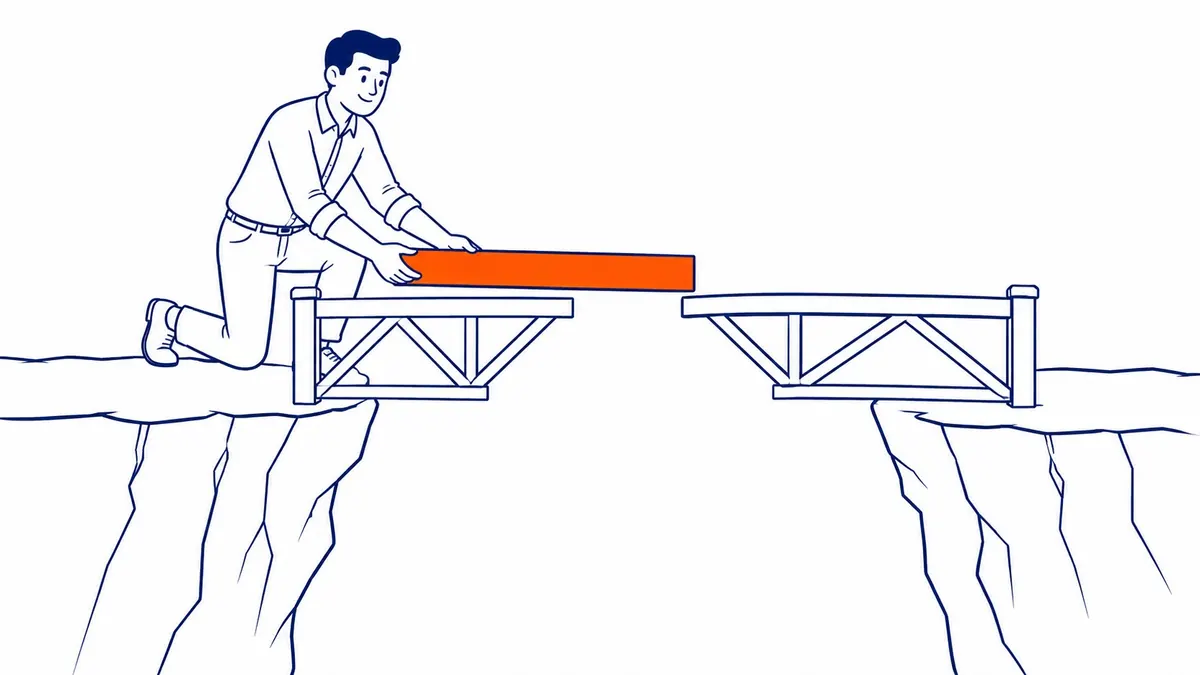
Take the accessibility list you were handed and read it slowly. Not for what each line costs. Instead for what it is for.
Some exist so something can be read. A photograph carrying alt text. Then a transcript under a video. Any link saying where it goes rather than click here. Somewhere on your form, a label attached to a field. Every heading describing the section under it.
Then the rest exist so something can be done. A keyboard route through your navigation. Then a focus outline somebody can see. Buttons big enough to hit on a phone. An error message announcing itself rather than reddening a box.
Both halves matter. Only they are not the same kind of thing.
A Crawler Reads. It Has Never Operated Anything.

Now set a search engine beside those lists.
It reads, which this site has settled elsewhere.
What it never does is one item off the second list. It does not tab. Nothing about it hovers. No colour was ever hard for it to look at, and nothing has got it stuck in a form.
Somebody will say a crawler renders a page now, and some of it scrolls. True enough. Only ask what the scrolling is for. Reaching text that would sit out of view. It was never trying to finish anything.
So the overlap is not fuzzy. There is a line through it.
Everything on the reading half has a counterpart in search. Somebody using assistive software and a crawler meet your page through one channel. Words. Meanwhile the operating half has none, since operating a page is not something a crawler does.
Somebody Will Point at Page Speed

Fair enough, since speed sits on both lists. So does working on a phone.
Only ask how each got there. Speed is on the accessibility list for its own reasons. It is on the SEO list for reasons unrelated to assistive software. Two disciplines, one item, opposite directions.
That is not overlap. Rather it is scope.
Somebody Will Say Google Treats Accessibility as a Quality Signal

Also fair. Accessibility gets discussed in those terms constantly, and this site has said much the same.
Only notice the shape of that claim. It concerns how a page gets assessed. Nothing in it says a crawler operated anything. How much weight that carries sits inside Google, and nobody outside settles it.
The line holds either way.
So the Business Case Funds One Half

Here is where it costs somebody money.
Accessibility work gets justified like anything else. The argument reached for is the one in this page’s title. It helps our SEO.
Watch how far that argument travels. It funds alt text. Transcripts as well. Then heading structure and link text and form labels, since each produces something a crawler can use.
It stops there. Precisely at the line. Sitting on the far side is the custom dropdown nobody can tab into. Also the window with no way out. Then the form failing without saying so.
Nothing about that was a decision. The argument simply ran out where it always would.
The Two Halves Fail Differently

Worse, it stops at the wrong place.
A reading failure costs somebody information. Your photograph goes undescribed. So a person misses what was in it. Often enough they carry on anyway, since the page still says something.
An operating failure costs them the thing they came for. They cannot submit the form. So they leave.
One half of accessibility work is about how well your page communicates. The other is about whether it can be used at all. Only one arrives with a business case already attached.
Somebody Will Say Screen Reader Users Are Searchers Too

This is the part worth sitting with.
Somebody using assistive software types things into Google like anybody else. Then they land on your page, where they either get what they came for or they do not.
Which puts them somewhere better than a ranking factor. They are customers. Whatever the operating half costs, it buys what your website buys anyway. Somebody able to finish what they started.
That was always the stronger reason. It simply does not sound like one.
Where the Accessibility Argument Stops

Nothing above is a claim about rankings in either direction.
Nor is this the business case for accessibility. That case stands without search holding it up, and it belongs to somebody better qualified. Legal obligations belong there too.
Plenty of websites have almost none of the operating half to worry about. A standard theme, nothing built by hand. There the two lists really are one.
Sort Your Own Accessibility List

Take whatever list somebody handed you. A website audit, a report, a note from whoever tested the site.
Then put one question to every line. Is this here so somebody can read something, or so somebody can do something?
Should nearly every line come back reading, your accessibility list and your SEO list are nearly one. Do the work once. Then claim it twice.
Should the reading items be ticked off already, everything left sits on the operating side. Then you have found where the argument stops. Right where somebody gets stuck.
No statistic about other people’s websites settles which of those you are holding. Yours is one list away.
Accessibility and SEO Work at SEO Company To-The-TOP! in Calgary

An accessibility report and an SEO report turn up together often enough here, somebody working out whether one budget covers both.
Part of it does. The reading half is ordinary search engine optimization work. To-The-TOP! handles it in the same pass as everything else. The alt text. Heading structure. Link text. None of it takes long once somebody sits with the list.
The rest is a separate conversation, worth having on its own terms rather than smuggled into a search budget.
To-The-TOP! has been doing this work in Calgary since 2007. One person handles the account, so nothing passes to a junior halfway through. It starts with keyword research. Then the pages, then the patient part. No guarantees, and three to six months before positions move. The portfolio shows the keywords this work has reached. Businesses needing customers sooner often run a Google Ads campaign alongside it.
Common Questions About Accessibility and SEO
Does accessibility improve your Google rankings?
Some of it produces things a search engine reads, so that half is ordinary content work under another name. How much it weighs is not something anybody outside Google can settle. Treat it as worth doing regardless, since it sat on your SEO list already.
Is alt text an accessibility job or an SEO job?
Both, and it is the clearest case there is. The same sentence serves a person who cannot see the image and a crawler working out what it shows. Write it for the person. The search value follows.
Is keyboard navigation a ranking factor?
Nobody outside Google can tell you what weight anything carries. What can be said is what a crawler does, and it does not use a keyboard. So whatever keyboard access is worth, it is not worth that here.
Do I need an accessibility audit before an SEO audit?
No. They answer different questions, and neither waits on the other. An accessibility audit hands you items your SEO work covers anyway. So running both means reading one list against the other.
Which accessibility fixes help SEO most?
The reading ones. Images carrying information, described in the alt text. Transcripts. Headings describing the section under them. Every one produces something readable, so each does two jobs.
Contact Calgary SEO Company To-The-TOP!
Questions about anything in this article, or about your own rankings? Talk to a Calgary SEO specialist directly.
Phone: (403) 308-5949
Address: 1509 14 Ave SW, Calgary, AB T3C 0W4
Hours:
Monday to Friday: 10:00 am – 7:00 pm
Saturday: 12:00 pm – 4:00 pm
Sunday: closed