
Does Trustpilot Help SEO?
Not in the place the question is pointing.
Trustpilot produces one thing that search engines can display. A star rating. Follow that star, and the whole answer turns up on its own. It lands somewhere, and the somewhere is not your organic listing.
So the useful version of does Trustpilot help SEO is a question about placement.
The Stars You Have Seen Were Sitting Beside an Ad

Here comes the objection, and it is the good one. You have seen Trustpilot stars in Google results. Recently, probably. Stars clearly work, then.
They do. Now look one line above them.
Something marked Sponsored sat over most of those. The rest were product listings out of a shop. Neither one was a service page climbing the organic results.
That objection is not a hole in the answer. Rather it is the answer, arriving a bit early. Every star you can remember seeing was in a placement somebody either paid for or sells from.
Google’s Review Snippet Rule Names the Widget

Most businesses meet Trustpilot through a widget. Collect the reviews. Then drop the box onto your home page. Stars now sit on your own site, so stars should follow into Google.
They do not. The reason is published, and it is specific.
Google’s review snippet documentation deals with self-serving reviews. An entity that controls the reviews about itself gets no star feature on its LocalBusiness or Organization markup. Then the policy goes further and names the delivery method. Directly in your own structured data. Or through an embedded third-party widget.
Read that last phrase again. The TrustBox on your home page is the exact case the rule was written for.
Nobody is being punished here. Your listing simply never becomes eligible in the first place. A distinction worth holding onto, because it means no amount of extra reviews changes the outcome. The gate is on the markup type, not on the volume.
Every Placement a Star Can Reach Belongs to a Shop

Trustpilot publishes its own material on where stars show up in Google. Read it closely. The placements are named, and they are narrow.
Review snippets in organic results. Those run on product pages now.
Product ratings in Shopping. Those need post-purchase reviews of a thing that shipped.
Store ratings. Those attach to a merchant account.
Notice what all of them assume. Somebody bought an object. There was a fulfilment. A transaction closed and left a record behind that Google can tie a review to.
Now hold a Calgary law firm up against that list. Or a plumbing outfit. Maybe a bookkeeper working out of a home office. There is no product page. Nothing ships. The placements are not being withheld from those businesses out of spite. They were built around a different transaction entirely, and a consultation is not that transaction.
This is the part that costs people money. A service business signs up expecting stars in organic search. Nine months later the reviews are lovely and the listing looks precisely the way it looked before.
None of that makes Trustpilot a bad product. It makes it a product built around a shopping cart. Every customer of an online shop leaves behind an order number and a shipping date. Google can hang a rating on those. A quote for a roof replacement leaves behind a conversation and a handshake. That is a real transaction with nothing machine-readable in it.
So the eligibility gap has a cause, and the cause is not Google being difficult. Verification is the thing being protected. A rating that anybody could attach to anything would be worth nothing to a searcher.
Store Ratings Are a Google Ads Asset
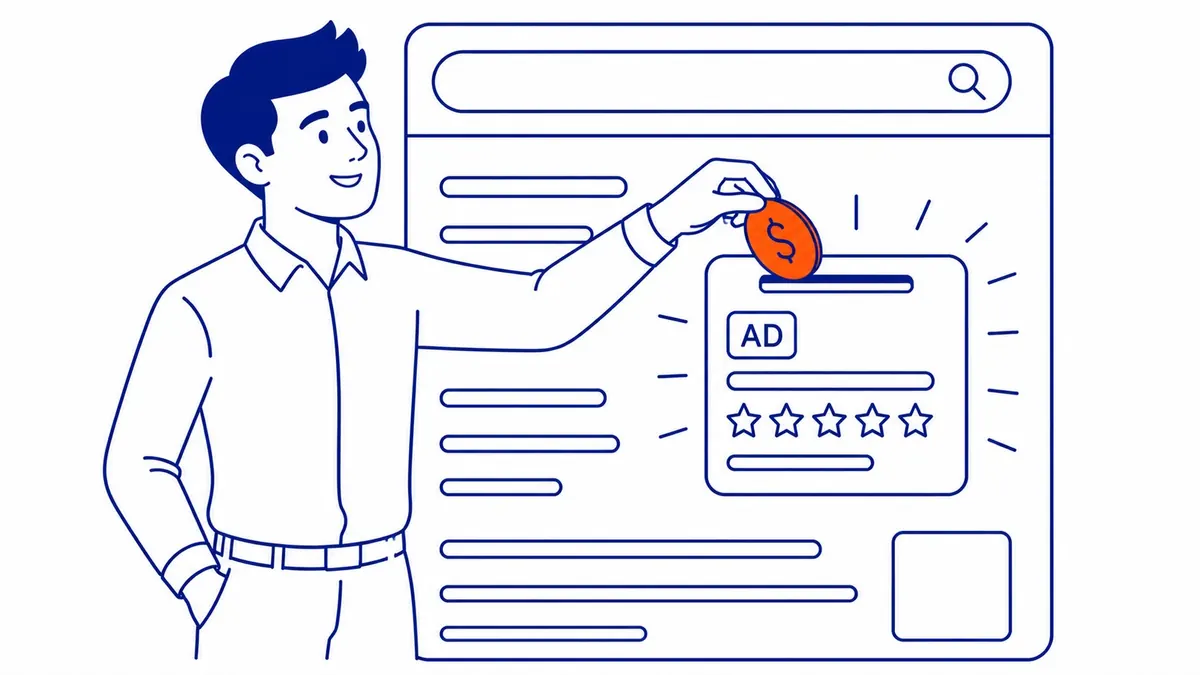
One route does reach a service business. It runs through store ratings.
Trustpilot feeds that system as an approved Google ratings partner. Store ratings themselves live inside Google Ads. Underneath, the arrangement is a data licence. Google buys review data from partners it has vetted, then blends the sources with its own weighting. Your reviews ride in on somebody else’s commercial deal.
Read that carefully, because it is a licence rather than a ranking signal. No part of it touches how Google orders organic results.
Google publishes what the rating takes. A minimum volume of eligible reviews inside a rolling window. Then a composite average above a floor. Do not take those numbers from a blog post, this one included. Open Google’s own store ratings help page. Both the threshold and the window have been revised before, and the old figures are still circulating everywhere.
So the payoff is genuine. Look at where it lands, though. Beside an ad, on a click you paid for.
Nothing wrong with that trade. Only call the thing by its name. You bought an advertising asset that happens to be made out of reviews.
Which Half of the Review Platform You Are Buying

Trustpilot sells two separate things under one logo. Collection is the first. Display is the second.
Collection is the half worth paying for. Invitations that reach the customer automatically once a job closes. A verification step proving the reviewer transacted. Somewhere central to reply from. That machinery genuinely beats emailing customers by hand and forgetting half of them.
Display is the half everybody pictures while signing. Stars in the search results.
Plan structures move around, and the integrations feeding Google sit somewhere inside them. So do not budget from a comparison article written two years ago. Open the pricing page yourself. Then ask the salesperson which tier carries the Google connection, and get that answer in writing before anybody signs.
One question, and it decides whether the invoice makes any sense.
Run the Check on Your Own Result

Five minutes settles this for your business specifically. Better than settling it in general.
Search your company name in a private window. Look at what Google returns and where any stars appear. Check whether they sit on your own result or on a profile hosted somewhere else.
Then search the service you sell, without your name attached. Scroll to the organic block, past the ads. Count the stars down there. On most local service searches you will count zero, and that is the answer to the whole question sitting in plain view.
Finally, open your home page with the widget on it. View the source. Your Trustpilot structured data may well be sitting there, perfectly valid. Valid structured data and an eligible listing are different things.
Somebody Will Say the Profile Link Is Worth It

Your profile carries a link back to your website. Fair enough. Then the argument arrives that the link passes authority.
Check it rather than argue about it. Open the profile, then inspect the code behind that link. Look at the rel attribute on it. Large platforms carrying user-written content usually mark outbound links so they pass nothing along.
The link still has a job, mind you. Somebody reads the reviews and clicks through to you. That is a visit. A visit is worth having and it is not a ranking.
The Review Platform Outranking You Is a Separate Article

Your Trustpilot profile will rank for your company name. Sometimes above your own site, which people find alarming.
Whether that costs you or earns you gets worked through properly elsewhere. Over on the SEO blog. A second telling here would help nobody, so take it as covered.
What Trustpilot Is Worth to a Calgary Business

So does Trustpilot help SEO. It helps the sale, reliably. Search visibility is where the claim thins out to almost nothing for a service business.
Reviews on your Google Business Profile are a different matter and they do move local positions. Same effort, spent where it counts twice. That mechanism has its own page here already.
SEO Company To-The-TOP! has watched Calgary businesses buy review plans since 2007. The plans rarely disappoint anybody on collection. They disappoint months later, once somebody finally checks the organic listing and finds it unchanged.
Our Calgary SEO work starts with what a listing can actually be eligible for. A site audit answers the widget question in about ten minutes flat. Then keyword research decides where the rest of the year goes, which matters far more than any review platform does. Reputation work is worth doing on its own merits. The levers that move a ranking sit inside search engine optimization, a separate job entirely. To-The-TOP! would rather the plan money went somewhere that moves.
Stars beside an ad are a Google Ads management question, and they are worth chasing once the review volume supports them. Underneath that, SEO services runs on a slower clock. Three to six months before meaningful movement shows up. That is the timeline, and no review plan shortens it by a week.
Common Questions About Whether Trustpilot Helps SEO
Does Trustpilot help SEO?
Not your organic rankings. Trustpilot is not a ranking signal and Google does not treat it as one. What it can produce is a star rating. Those stars turn up beside ads and on product pages. Shopping listings as well. A service business gets the profile without the stars.
Do Trustpilot reviews show stars in Google search results?
Only through placements built for merchants. Embedding the widget on your own site does not qualify. Google rules out star features when a business displays reviews of itself. Product pages and store ratings are the routes that work.
Are Trustpilot links good for backlinks?
Treat them as traffic rather than authority. Platforms hosting user-written content generally mark outbound links so no ranking value passes. Open your profile and inspect the link yourself for a definite answer.
Is Trustpilot better than Google reviews for SEO?
No. Google reviews feed local prominence directly, which is a documented part of how local results get ordered. Trustpilot sits outside that system. Given one place to spend the effort, spend it on the Business Profile.
Is Trustpilot worth paying for?
Depends entirely on what you expect back. Plenty of businesses get their money back out of Trustpilot as a collection and reputation tool. Almost nobody gets it back as a way into organic search. To-The-TOP! sees the collection half earn its keep far more often than the search half does. Confirm which plan tier carries the Google connection before signing anything.
Contact Calgary SEO Company To-The-TOP!
Questions about anything in this article, or about your own rankings? Talk to a Calgary SEO specialist directly.
Phone: (403) 308-5949
Address: 1509 14 Ave SW, Calgary, AB T3C 0W4
Hours:
Monday to Friday: 10:00 am – 7:00 pm
Saturday: 12:00 pm – 4:00 pm
Sunday: closed