
How Reviews Affect SEO Rankings for E-Commerce
Stars. That is usually what the question is really about.
Somebody spotted a competitor’s listing carrying a gold row of them. They want the same row. Fair enough. Yet the stars turn out to be the half of this that already has an answer.
The other half is quieter. That is where the SEO actually happens. It concerns what a review leaves sitting on the page afterwards.
The Star Rating Is the Half Already Answered

Sell physical things and you are eligible. Review snippets still run on product pages. Product ratings run in Shopping. Store ratings attach to a merchant account. So the gate that stops a law firm ever showing stars does not sit in front of a shop. That argument got worked through over on whether Trustpilot helps SEO, so take it as settled here.
Then notice what eligibility actually buys you.
One number. Averaged across everyone who bothered. Rounded to the nearest half star. Your 4.6 sits beside somebody else’s 4.7, in a row of listings where almost everybody clears four.
That number can lift a click-through rate. It is not doing the ranking, though. Google picked which ten results to show before a single star got drawn onto any of them.
The ordering there is worth holding onto. Stars decorate a position. They do not win one.
Which leaves the interesting question untouched. What put your product in that row of ten?
Whatever answered that question happened earlier, and it happened in text.
What a Review Leaves Behind on a Product Page

Words. That is the entire mechanism, and it is duller than the stars.
A product page on a store carrying somebody else’s stock is mostly borrowed text. The description arrived from the manufacturer. Forty other retailers received the identical paragraph. Specs match. Even the photography is often the same shoot.
Reviews are the exception on that page. Nobody else selling that SKU has your sentences, because your customers wrote them.
Standard advice here is to rewrite the descriptions. Good advice, also advice with a headcount quietly attached to it.
The Only Copy on Your Store That Writes Itself

Open your product export. Count the rows. Then multiply by however long an original two hundred word description takes somebody who understands the item.
Do that arithmetic before you decide the rewrite is your plan. Two hundred SKUs, fine. Four thousand, and the plan becomes a wish.
Reviews behave differently at that scale. They arrive per order. So the supply of unique text grows as the catalogue grows, instead of shrinking against it. Nothing else on a product page does that.
There is the plain answer to how reviews affect rankings on a store. Less a trust signal than a supply problem. Text, on the one page type where you cannot write enough of it yourself.
Somebody Will Say Every Store Has Reviews Now

True. Widely true. Almost every store on every platform runs a review app of some kind.
That sounds like it cancels the advantage out. It does not, though. Read the objection a second time and it points straight at the real problem.
Everyone has reviews. Nobody has them evenly.
Where the Text Piles Up, and Where It Never Arrives
Review requests fire after an order ships. So they follow purchases. Nothing else.
Your bestseller carries four hundred of them. It also happened to be the product already ranking, which is partly why it sold that well. Meanwhile the item sitting at position nine hundred in your catalogue has none. Not one sentence a competitor could not also publish.
Look at what that distribution does. Your one renewable source of original text pools on the pages needing it least. The pages running on 100% borrowed description get nothing.
Nobody designed it that way. It is simply what happens once the request gets attached to a customer rather than to a page.
New products sit in the worst version of it. A line added last month has no orders behind it, so it has no reviews. No reviews means no original text. Without original text it competes on the manufacturer paragraph alone, against retailers carrying the item for years. Then it does not sell, so it collects no reviews. That loop closes on itself, and most stores never notice it running.
What Review Text Actually Catches

Here is the part you cannot plan for, which is also the point.
Your description says the jacket is water resistant. Then a customer writes that it soaked through in an hour of Calgary drizzle. Somebody else notes it fits over a hoodie. A third mentions the zip sticking below minus twenty.
None of those phrases were in your keyword list. Nobody would put them there. They come out of using the thing, which is a vocabulary you do not have access to before the sale.
So the page ends up matching questions you never wrote for. That is not a strategy anybody can execute deliberately. It is a by-product, and it only accrues to pages that have reviews at all.
Sort Your Own Catalogue by Review Count

Ten minutes, and no tool required.
Export the product list with review counts included. Sort ascending. Then open Search Console and pull the queries for the same period.
Now cross the two lists. You are hunting for products with impressions and no reviews. Those are pages Google already shows to people, running on borrowed text, with nothing of yours anywhere on them.
That list is usually shorter than store owners expect. It is also the only one worth acting on, since chasing reviews across the bottom thousand SKUs helps nobody.
Then move where the request points. Send a post-purchase email built around the product, rather than one generic request per order. Aim it at the items on your list. That is the whole intervention.
The Reviews You Paid For May Not Be on the Page
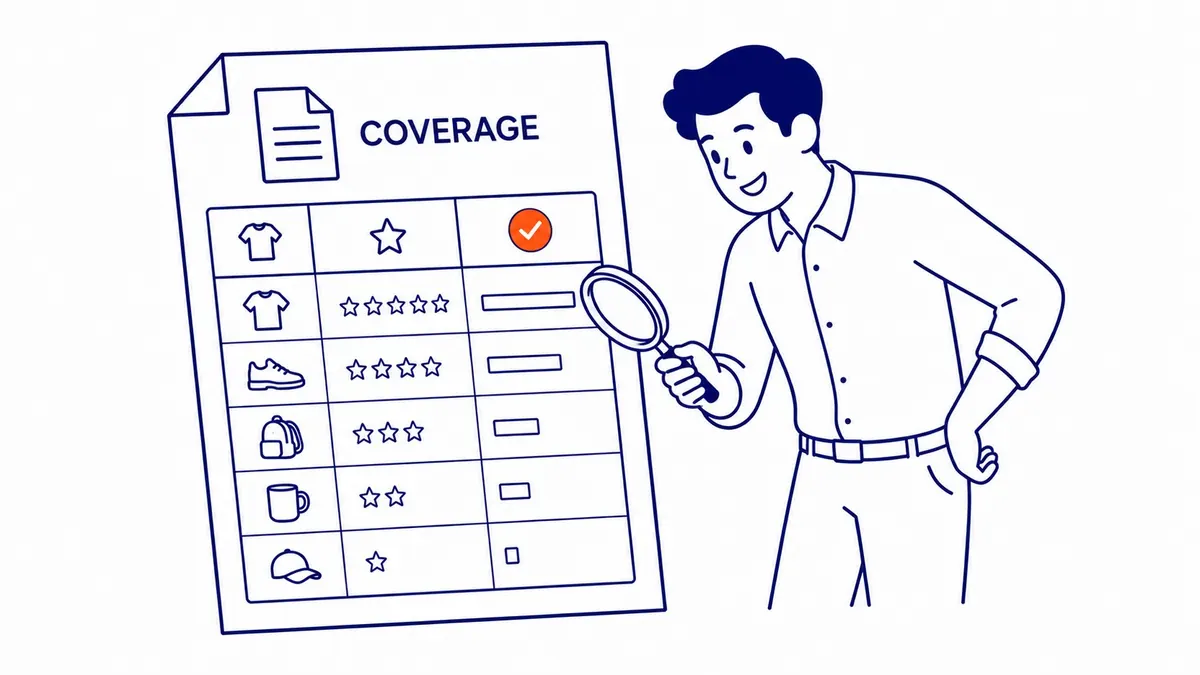
Worth checking before any of the above.
Most stores collect through a third-party app. Some of those apps render the review text into the page HTML. Others load it afterwards in JavaScript, or drop it inside an iframe.
The difference matters more than it sounds. Content inside an iframe belongs to the document the iframe came from, not to your product page. Text appearing only after somebody clicks Load More may never get requested at all. Google does render JavaScript. Still, rendering runs on its own schedule. No crawler owes your page a second pass.
Test it yourself. Open the product page, then view source. Search that raw HTML for a phrase out of one of your own reviews.
Nothing there? Then you have been buying the trust half and none of the search half, for however long the app has been installed. Your star rating may still show, since the schema often comes from a separate feed. The words are the part that went missing.
Where the E-Commerce Review Argument Stops

None of this rescues a page nobody can reach. Reviews add text. They add no links, nor do they fix a category structure burying the product six clicks deep.
Targeting is beyond them too. You cannot brief a customer. Review text lands where it lands, which is exactly why it catches phrasing your description never would. Also why it will never cover a keyword you actually chose.
Then the awkward one. A negative review is still original text on the page. It still matches the query somebody typed. “Runs small” is a phrase genuinely worth ranking for, right up until the shopper reads the rest of the sentence.
What SEO Company To-The-TOP! Tells Calgary Store Owners
Most stores arrive wanting the stars. The conversation tends to move within ten minutes.
Product pages get checked for what is genuinely indexable on them, which is where an SEO audit starts on an e-commerce site. Then keyword research decides which products deserve original copy from a person. That budget is finite. Your catalogue is not. Reviews cover the rest of the shelf.
Some products cannot wait for any of it. A seasonal line with eight weeks of relevance will not rank organically inside eight weeks. So Google Ads management buys that placement outright. No review count required, no waiting on shoppers to write anything.
For businesses doing SEO in Calgary, that split matters considerably more than the review widget does. Reviews sit near the edge of search engine optimization for a store, never anywhere near the centre of it. To-The-TOP! has been telling business owners that since 2007. Still, the stars come up first almost every time.
Common Questions About Reviews and E-Commerce Rankings
Do reviews affect SEO rankings for e-commerce?
Indirectly, and mostly through content. Review text is the only writing on a product page your competitors cannot also publish. They sell the identical item, carrying the identical manufacturer description. Google reads your review text like any other words on the page. Star ratings sit separately and affect clicks rather than position.
Do star ratings in search results improve rankings?
No. A rating can raise your click-through rate once the listing appears. Appearing is decided first, by relevance and authority. Treat stars as a presentation advantage inside results you already earned.
How many reviews does a product page need?
Fewer than most store owners assume. The move that matters is from none to some, since that is where the page stops being pure borrowed description. Volume past that point serves shoppers and conversion more than it serves search.
Do negative reviews hurt a product page?
Not for indexing. The text still counts, and mixed ratings tend to read as more credible than a flawless wall of fives. Commercially it is a different question, since a two star average costs you the sale after the click. Answer the complaint publicly and move on.
Should reviews sit on the product page or a separate tab?
On the product page, in the HTML. A tab is fine when the text is present in the source and simply hidden by styling. Anything requiring a click before the words load risks never being crawled at all.
Do marketplace reviews help my own store?
Not directly. Reviews on Amazon or Etsy build those listings, not yours. Ask the same buyer to review the item on your own store as well. Only that copy lands on a page you control.
Contact Calgary SEO Company To-The-TOP!
Questions about anything in this article, or about your own rankings? Talk to a Calgary SEO specialist directly.
Phone: (403) 308-5949
Address: 1509 14 Ave SW, Calgary, AB T3C 0W4
Hours:
Monday to Friday: 10:00 am – 7:00 pm
Saturday: 12:00 pm – 4:00 pm
Sunday: closed