
How to Cluster Keywords for B2B Blog SEO
The method is already written down. Group your keywords by shared intent. Then pull the results pages for both terms and compare them. Three or more of the same URLs showing up in both sets means one page can serve both queries.
That test is sound. The SEO blog explains it properly elsewhere, so none of it gets repeated here.
Run it across a B2B blog keyword list. Something odd happens. The groups come back clean. Cleaner than any consumer list you have ever sorted.
That is the problem.
Your Cleanest Clusters Sit on Your Thinnest Data

Pull the top ten results for a B2B query with thirty searches a month behind it.
Look at who is sitting there. A vendor blog. One trade association. Two roundups from the same publishers you keep seeing. Wikipedia, sometimes.
Now pull the top ten for a different query in the same category. Same domains. Often the identical URLs, in nearly the same order.
Nothing in that overlap tells you the two queries share intent. It tells you nobody has written a page for either one. Google filled ten slots from what it had.
There is a version of this you can feel. Read one shared page against the query it supposedly matches. Often it never addresses that query at all. It addresses the subject the query belongs to. Both terms got the same answer because neither got a real one. A vacancy, then. Not a signal.
Overlap Rises as Volume Falls

Worth stating plainly, since it inverts the usual instinct.
A high-volume query has purpose-built pages competing for it. Dozens of them, aimed at that exact phrasing. Two queries like that only share URLs when they genuinely share intent. The overlap test earns its reputation there.
Now drop to twenty searches a month. Nobody wrote anything on purpose. The results fill up with category-level content that ranks across the whole subject area. Every query in the category returns it.
So your overlap number measures who holds authority in your category. It does not measure what your two searchers wanted.
The Tool Is Most Confident Where It Knows Least

Somebody will say the tools handle this at scale. Thousands of keywords grouped in minutes, no spreadsheet, no argument.
They do. Clustering software compares result-page overlap far faster than a person can. That part is real, and it is genuinely useful work.
Only look at what the confidence score rests on. Higher overlap reads as a tighter cluster. Yet B2B long-tail terms produce the highest overlap anywhere in your list. So the tool hands back its tightest groups on precisely the terms you understand worst.
The objection was the argument all along.
Intent Labels Do Not Rescue It

The usual fallback is to sort by intent instead. Informational. Commercial. Transactional or navigational.
Try labelling two hundred B2B blog queries that way.
Nearly every one comes back informational. Somebody is researching a process. Or a standard. Maybe a compliance requirement that landed on their desk this morning.
One bucket holding most of your two hundred terms has sorted nothing. Those four labels were built for a market where wanting and buying happen in a single session. Your blog does not serve that market.
Both standard methods degrade together, then. On exactly the same terms.
Cluster Keywords by the Page You Would Have to Write
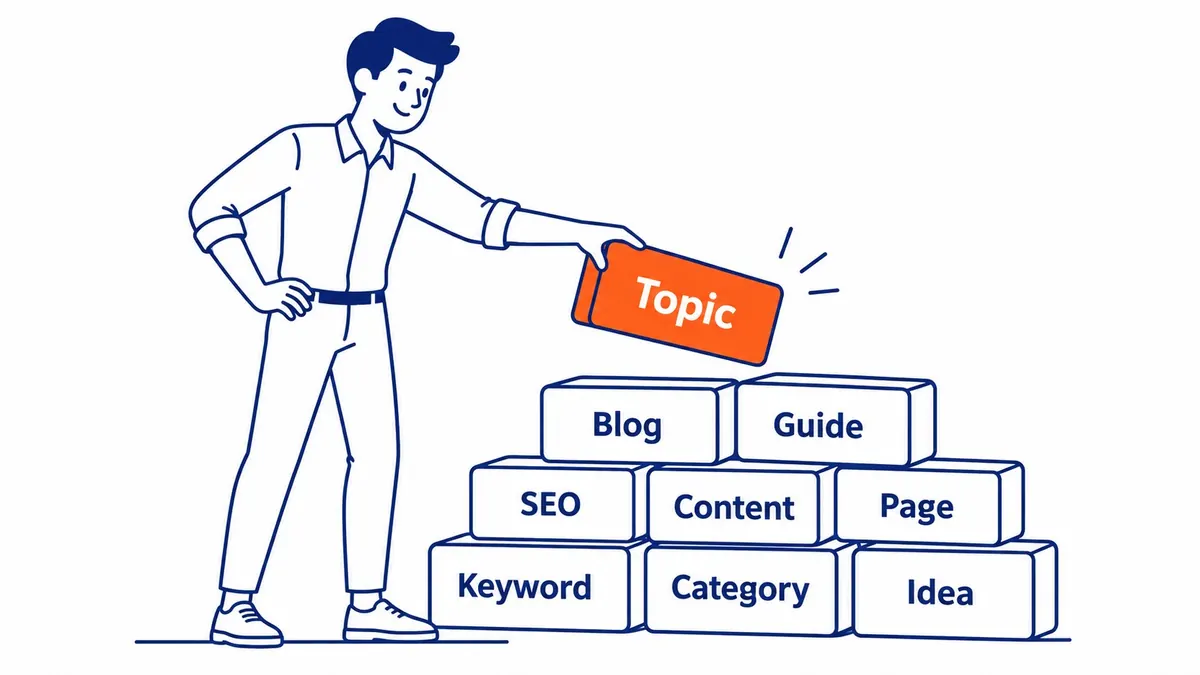
Here is what still works on a B2B blog. It is not a data step at all.
Take your two queries. Draft the headings for a page answering the first. Then ask whether the second query changes any of them.
No change means one page. A new heading means two pages. Any change to the opening sentence means two pages, always.
That is a writing test. You run it in a document, not a spreadsheet. No volume figure enters into it anywhere.
It feels unrigorous. Still, it is built on the only evidence available to you at thirty searches a month. Namely your own understanding of what the question is.
One caution about that test. It rewards whoever knows the subject. A writer who has never sold into your market merges queries your sales people would separate instantly. So the test belongs with somebody who has heard the questions asked out loud.
The Version You Can Run This Afternoon
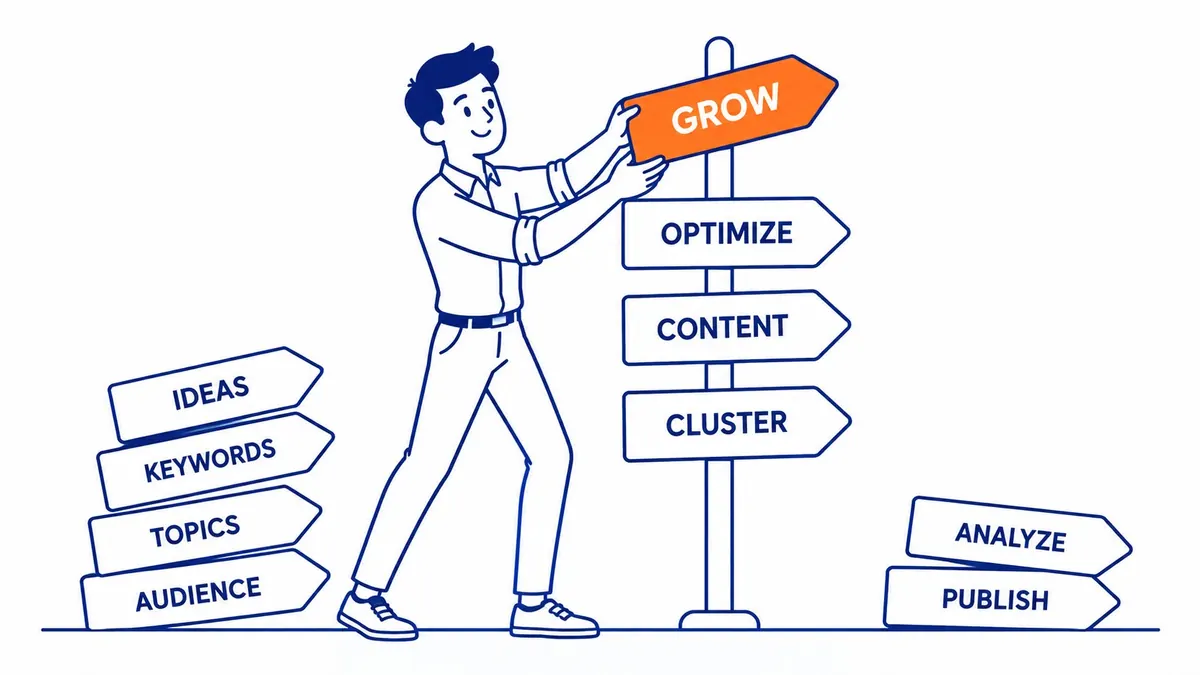
Open the clusters you already built. Pick any two keywords sitting together in the same group.
Search both in Google. Write down every URL appearing in both sets of results.
Then open those URLs and read them. Ask one narrow question about each. Does this page answer the specific query, or does it answer the whole category?
Category pages in the shared set mean your overlap proved nothing. The two terms might still belong together. You simply have no evidence yet, and you had been treating a number as evidence.
Most people find one of two things. The shared URLs are specific pages, which settles the question. Or they are the same category page, counted twice. That second outcome turns up far more often than anybody expects.
Do that for five clusters. You will know within an hour whether your B2B blog plan rests on anything.
What This Changes About a B2B Blog Plan
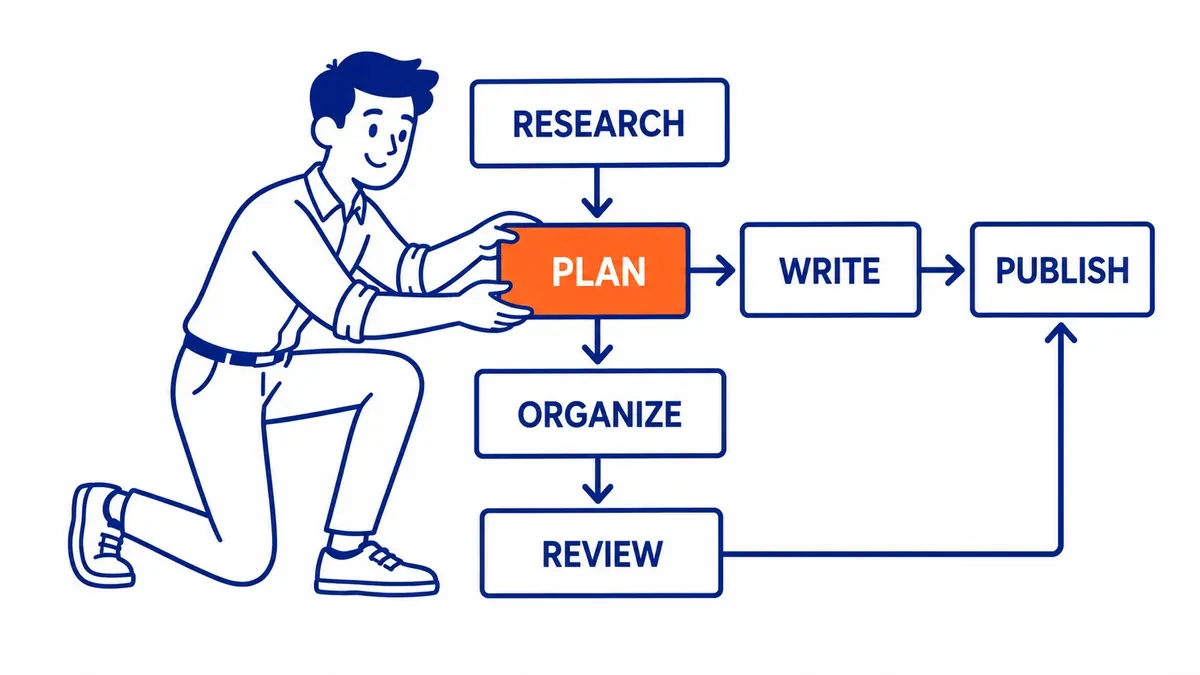
Fewer merges, usually. A B2B blog built from raw tool output tends to arrive with forty tidy groups. Several got merged on the strength of a shared encyclopedia link.
Merged groups cost you pages. A query deserving its own answer becomes a subheading on somebody else’s page instead. Nobody spots the loss either, since the parent page ranks and the report looks healthy.
Splitting too far costs less. Two thin pages can be combined later, once a website audit or Search Console shows they compete for the same impressions. That mistake reverses in an afternoon.
Worth knowing why the merges skew that way. Every automated cluster step is built to reduce your page count. Fewer pages, less writing, a tidier plan to hand somebody. Nothing in that pipeline argues for the extra page.
So when the evidence runs out, split. The asymmetry is not close.
Where the Argument Stops

Plenty of B2B keyword work sits well above the thin-volume line. Product-category terms. Comparison queries with real competition behind them. The overlap test performs there exactly as advertised, so use it.
This complaint is narrow. It is about the blog specifically. Blog terms are where a B2B site’s search volume gets thinnest. So the blog is the one place your clustering method is quietly guessing.
One more thing worth naming. A site with a few years of published pages already holds better evidence than any tool sells. Search Console reports which queries land on which of your URLs. Two terms already arriving at the same page have settled their own cluster question.
Nothing here excuses skipping the research. Bad keyword research produces bad clusters no matter which test you run afterwards.
Keyword Work for B2B Businesses in Calgary

SEO Company To-The-TOP! has been doing this since 2007. Most B2B SEO clients turn up holding a clustered spreadsheet somebody exported. The merges inside it are rarely questioned. Unpicking those merges is usually the first real gain.
Good keyword research comes before any of it. To-The-TOP! runs Calgary SEO campaigns where the clusters get argued about in a document first, then written. Search engine optimization takes months regardless. Three to six before meaningful movement, with no guarantees attached. A Google Ads campaign often runs alongside while the blog pages accumulate. Businesses can look through the To-The-TOP! portfolio to see what that looks like over years rather than weeks.
Common Questions About Keyword Clustering for a B2B Blog
How many keywords should one B2B blog post target?
However many the page can answer without changing who it is written for. Some posts carry a dozen closely related phrasings. Others carry two. The count is an outcome, never a target you set in advance.
Are keyword clustering tools worth paying for on a B2B site?
Yes, for the grunt work. They collapse thousands of terms into something reviewable in an afternoon. Treat the output as a first draft of your clusters rather than a finding. Then check every merge involving a low-volume term.
Should a B2B blog cluster keywords before writing anything?
Cluster loosely, then write. Rigid clusters built ahead of any published page tend to fall apart on contact with the first draft. Search Console data after six months beats every pre-launch grouping decision you could make today.
Contact Calgary SEO Company To-The-TOP!
Questions about anything in this article, or about your own rankings? Talk to a Calgary SEO specialist directly.
Phone: (403) 308-5949
Address: 1509 14 Ave SW, Calgary, AB T3C 0W4
Hours:
Monday to Friday: 10:00 am – 7:00 pm
Saturday: 12:00 pm – 4:00 pm
Sunday: closed