
How to Identify Weak SERP Presence Keywords
Export the query report. Sort by position. Scroll down to where the numbers turn ugly.
That is how most people go hunting for weak keywords. It finds something real. Yet it walks straight past the keywords where you rank well and still barely exist on the page.
The Filter Everybody Reaches For First

The standard method earns a fair hearing, so start there.
Open Google Search Console. Filter the query list to positions eight through twenty. Near misses, all of them. Add a second filter for plenty of impressions and almost no clicks. Now you hold a shortlist any SEO would act on tomorrow.
Nothing wrong with that filter. Most SEO work starts right there. This site covers the setup elsewhere, so none of it gets repeated here.
What follows is the part the filter cannot see.
A Row in Your Report Records Attendance, Not Presence
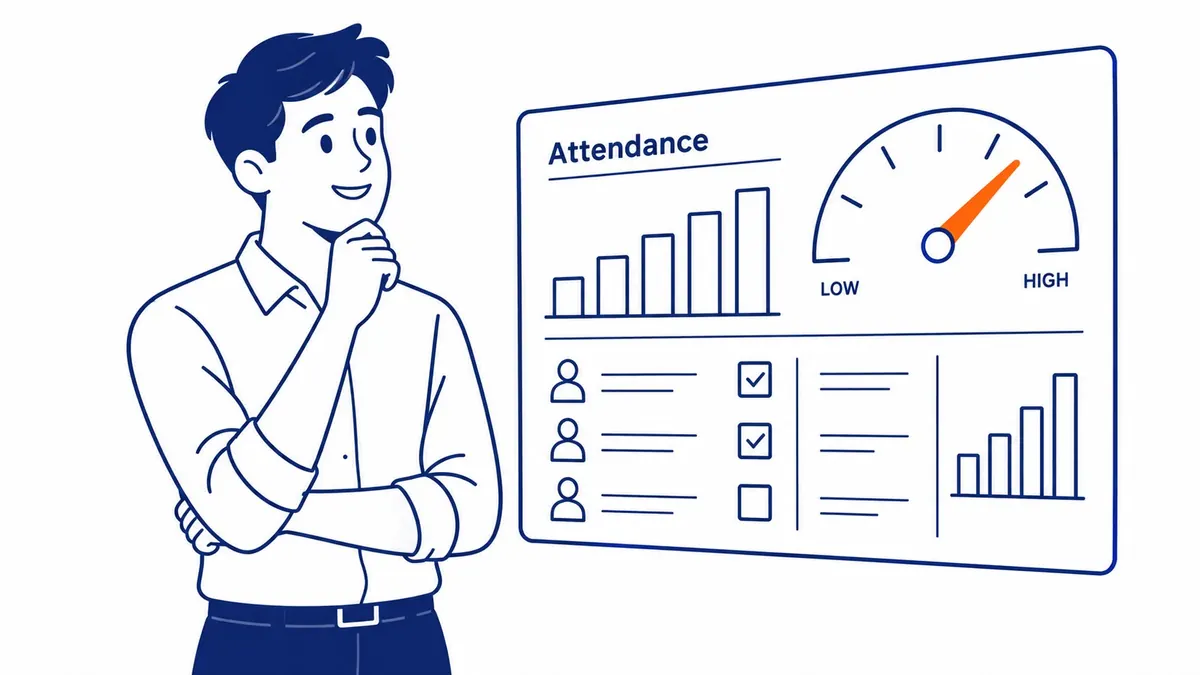
Your export gives one row per query. Position. Impressions. Clicks. Rate.
Four numbers describing a page nobody on your team ever looked at.
Here is what none of the four record. How far down the screen your link sat. What sat above it, collecting the clicks first. How many separate places on that same SERP carried a competitor’s name instead of yours.
Presence is a footprint. A footprint has no row.
Every export flattens the result page into a single field. That field survived from an era when Google meant ten links stacked in order. Search stopped looking like that. Yet the column heading never changed. So the number still gets read as though it described a screen. It stopped describing one years ago.
Somebody Will Say Position Eleven Is Already the Weak List

Fair objection, and it lands in about five seconds. Weak presence just means a bad position. So the position column already found them.
Test that on two keywords.
The first one puts you eleventh. Plain results page, ten blue links, little else on it. You sit near the top of the second screen. One scroll and the searcher meets you.
The second puts you third. Above your link sits an AI Overview. Then four ads. Under those, a map pack holding three competitors and a row of reviews.
Third place. Two thumb scrolls before anybody sees your name.
Position eleven looked like the weak one. On the actual screen, position three was weaker. So the objection turns into the argument. Sorting by position finds weak rankings, which is a different problem wearing the same clothes.
Two Queries at Position Three, Two Different Screens
Hold one number still and watch it stop meaning anything. Position three, twice, same site.
Query A returns a plain page. Your link lands high on the first screen.
Query B returns something else entirely. Shopping tiles first. Then a video row. Below it, a stack of questions people also asked. Your link waits underneath all of that.
Both rows in the report read three.
Your report describes every SERP as though all SERPs were built the same way. They stopped being built the same way years ago. Layout now changes query by query. Nothing in the export records which layout you landed in.
Count Slots and Weak Presence Names Itself

Open the SERP. That is the whole method.
Pull thirty queries you already appear for. Real ones, straight from the report, with demand sitting behind them. Then go look at each page yourself.
Use a private window. Set the location to the city you actually sell in, because Calgary results and Toronto results are not the same page. Check a phone width too. Desktop hides most of this.
Now count. Every place on that page carrying your domain counts as one slot. Count yours. Then count the strongest competitor’s.
Write both numbers beside the query. That is the entire measurement.
One against three is weak presence. Nobody needs a score to see it. The gap shows up inside a single read of the screen. Then you understand why this gets done by eye rather than by export.
What Actually Counts as a Slot

A blue organic link. Obvious enough.
A map pack listing, which on most local searches is the largest thing anybody owns.
An image row or video carousel with your thumbnail sitting in it. A People Also Ask entry that opens into your text. Or a featured snippet lifted off your page. Sitelinks under a homepage listing, often doubling the height of what belongs to you.
Ads matter here as well, though not for organic reporting. For the searcher looking at a screen, an ad sitting above you is somebody else’s presence. Often somebody else’s click as well.
Two things do not count. A mention of your brand on a page you do not control is somebody else’s slot, however flattering the mention. Neither does a listing on a directory that happens to name you eighth in a list of twelve. Those help in other ways. They are not your footprint on that SERP.
Build the Weak Presence List in Two Columns

Two columns. Yours and theirs.
Query down the left margin. Your slot count in the first column. The best competitor’s slot count in the second.
Then sort by the difference. Not by position. Volume does not sort it either. Only the gap between those two columns.
The top of that sort is your weak SERP presence list. Every row names a keyword with genuine demand behind it. You already rank there. Yet you hold almost none of the page. Nothing new got bought to identify it either.
A worked row looks dull, which is a good sign. Say the query is window replacement in your city. You hold one organic link. The competitor holds a map pack listing. Under it, their blue link. Above both, a snippet lifted from their pricing page. Yours reads one. Theirs reads three. Gap of two, while the position column called you seventh and them sixth. Their three slots catch clicks from three places on one screen.
Thirty queries costs about an hour. Almost nobody spends it, which is exactly why the exercise keeps paying.
Where This Way of Identifying Weak Presence Stops

This does not scale. Thirty keywords in an hour is fine, yet four thousand will never get looked at by a human being. Big sites need an SEO sampling rule instead. Twenty queries per service line, checked once a quarter.
Most SEO tools now report SERP features. Some will even flag which blocks appear on a query. That pre-filter genuinely helps. It still samples one location on one day.
Snapshots go stale, too. Google can carry an AI Overview on Tuesday and drop it by Friday. So check a query twice before you rebuild anything around it.
Then the harder limit. Some weak presence is correct. A slot you cannot win, on a keyword that was never going to sell anything, is not a gap worth an afternoon.
What to Do With the Keywords You Just Found

The fix follows the cause. Not the keyword. Four causes cover most of what turns up.
Missing from the map pack on a local query? That points at your Google Business Profile rather than your content. A competitor holding the snippet usually means your page answers the question too late. Move the answer up near the top. Then tighten the heading sitting above it.
No slot anywhere in the question block? Write the sub-answers that block is asking for. One heading each, one short paragraph underneath.
Sometimes the whole site is the reason, and one query just showed the symptom first. Thin pages. Slow templates. Headings that name nothing in particular. A site audit answers that faster than another round of keyword research will.
There is a fourth outcome worth naming, since it comes up often. Occasionally the slot gap points at the wrong target list entirely. You counted weak presence on keywords your business does not really want, because those were the rows the report happened to hold. Then the work belongs back at keyword research rather than anywhere on the result page. Search engine optimization goes sideways when the query list was never checked against what the business actually sells.
Then there are keywords where the organic slots simply are not available. Ads own the top. The pack owns the middle. What survives underneath is a strip almost nobody scrolls to. Paid placement is the practical answer on those, at least while the organic side gets built underneath. That gap is what Google Ads management is for.
SEO Work for Calgary Businesses

SEO Company To-The-TOP! has been reading Calgary search results since 2007. Nineteen years of Calgary SEO, all of it run by the same person. No junior handoff, so whoever counts the slots is whoever does the work afterward.
Slot counting happens before any SEO quote goes out. It runs quicker than a full audit. The traffic story also comes out clearer than a ranking export tends to make it. Petro Management Group Ltd. and Career-Holdings are both reachable as references.
White hat only at To-The-TOP!, which matters more on this exercise than it first sounds. Several of the quick ways to grab an extra slot are the same ways you lose every slot later.
Rankings still take months to move. That is how SEO works. Nothing about it changed since 2007, and anybody promising otherwise is selling something. To-The-TOP! reports positions monthly, so the slot count either moved or it did not. Worth asking about before you sign anything.
Phone (403) 308-5949.
Common Questions About Weak SERP Presence Keywords
How do I know if my SERP presence is weak?
Count how many places on the SERP carry your domain, then count the same for the strongest competitor. One slot against three or four is weak presence, whatever your position column says.
Is a low keyword position the same as weak presence?
No. A low position is one weak link. Weak presence means the page gave most of its space to somebody else, which happens at good positions too.
How many SERPs should I check?
Thirty is a workable first pass for a small site. Pick keywords you already rank for, spread across your service lines, then repeat the exercise every quarter.
Which tools show SERP presence directly?
Most rank trackers now report which SERP features appear on a query. None of them see your screen, so treat the tool as a filter and open the page yourself.
Contact Calgary SEO Company To-The-TOP!
Questions about anything in this article, or about your own rankings? Talk to a Calgary SEO specialist directly.
Phone: (403) 308-5949
Address: 1509 14 Ave SW, Calgary, AB T3C 0W4
Hours:
Monday to Friday: 10:00 am – 7:00 pm
Saturday: 12:00 pm – 4:00 pm
Sunday: closed