
Are Tables Bad for SEO?
The Short Answer, and What This Page Skips
No. Google reads the text inside a table and indexes it like the rest of your page. There is no penalty on the tag. The advice you half remember was written about page layout around 2004, and it stopped applying a long time ago.
So the technical half is settled. Whether cells get indexed. Nested markup, and if it confuses a crawler. How to make a wide table fit a small screen with CSS. None of that gets repeated here.

Underneath sits a question about tables and SEO that hardly anyone puts into words.
A Cell Is a Value With Its Address Removed

Look at one cell on its own. Say it holds $149.
Now read it. It says nothing. The meaning is not in those characters at all. It comes from the row the cell sits in, plus the column heading above it. Position does the work.
Take a paragraph instead. Cut one sentence out of the middle. It still says something, since the grammar travelled with it.
Cut a cell out and you have a number. That is the whole difference, and everything below runs off it.
Every Other Block on Your Page Survives Being Quoted

A heading lifted on its own still names a subject. A list item still reads as a step. Prose carries its own context around with it, because words are doing the naming.
A table gave up that grammar in exchange for compression. Usually a fair swap. Still a swap.
You built a grid where meaning lives in position. Which is fine while somebody has the whole grid in front of them. Less fine the moment they do not.
Which Makes a Table the Easiest Thing to Take

Search results are full of lifted tables now. Comparison boxes. Price rows. Spec lines pulled straight out of somebody’s page and shown before anybody clicks.
Go and search a specification question in your own industry. Then look at what appears above the results.
A table is the most liftable block you own. It is already chopped into pieces, already labelled, already the shape a result box wants. So it travels well.
Then notice which part of it travels. The values do. Whether the column names go with them depends on markup you probably never checked.
That is the whole exposure. Not a ranking risk. A quoting risk, which is a stranger thing to have.
The Sentence Your Table Proves Is Usually Missing

Here is where it costs something.
A table is evidence. Somebody built it because it settles an argument. Costs less here. Faster there. Only this plan includes the thing you need.
Then read the page around it. That claim is almost never written down. The table sits on the page and the reader is left to do the arithmetic themselves.
Which means the page contains the proof and skips the point. Google can read a grid of values. It cannot read your conclusion, since you never typed it.
So write the sentence. One line above the table naming what the table shows. That line is the part a search engine can quote as an answer.
It also tells you something uncomfortable now and then. Some tables turn out to prove nothing at all. You start writing the line. Halfway through you find there is no claim underneath it. That table was decoration.
Better to learn it in a sentence than after a redesign.
Somebody Will Say Layout Tables Were the Real Problem

They were, and that objection confirms the rule rather than breaking it.
Old sites were built out of table cells. Header in one row. Sidebar in a column. Footer in another row. No penalty ever landed on any of them, whatever the forums said at the time.
The complaint was different. A grid claimed a relationship between its cells, and no relationship existed. Position meant nothing. A machine reading that structure learned something false.
Today’s version runs the other way round. Real relationships now, with no words anywhere naming them. Same fault. Opposite end.
Somebody Will Point at the Phone

Fair enough. A wide table on a phone scrolls sideways, or gets squashed into an unreadable stack. Genuinely a problem, and a common one.
Then watch what the small screen actually does. It shows a reader the value while the header column sits off to the left, out of view.
Your visitor gets the cell with its address removed. Same failure as before, arriving by a different route.
Somebody Will Say That Is an Accessibility Job
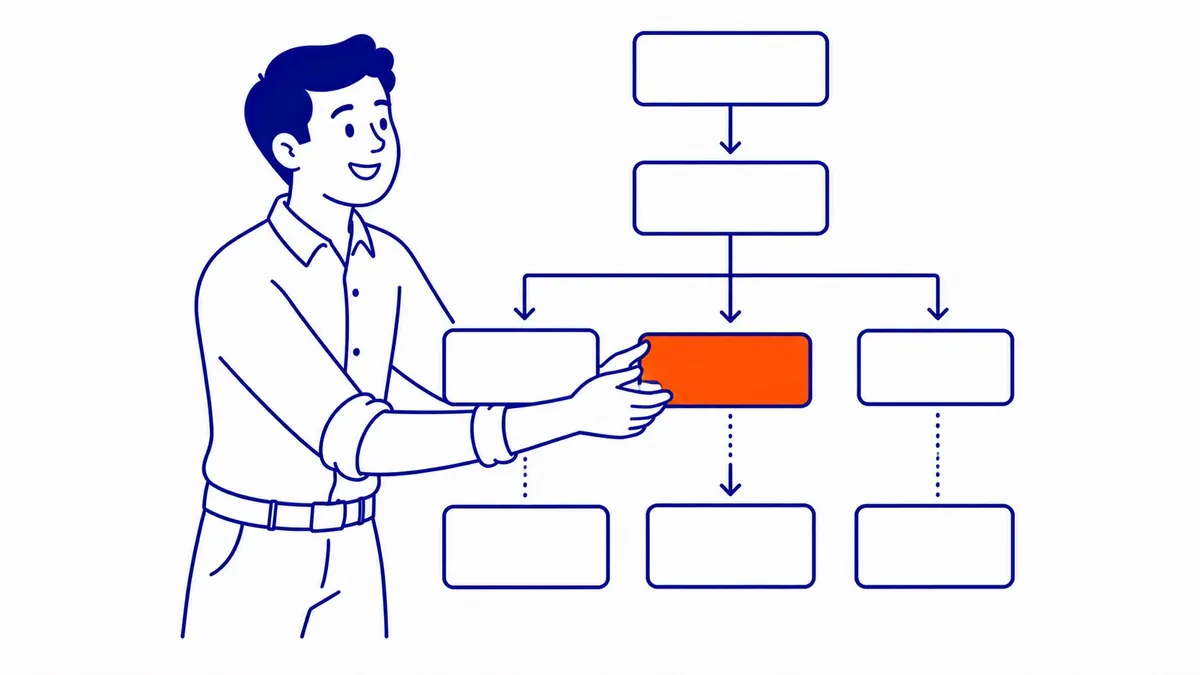
Partly true. Screen readers depend on proper header cells, since they announce a column name before each value. That work carries an accessibility label rather than an SEO one, and always has.
Still, it is the same markup either way. Mark the header row properly and both readers get served at once. Nobody has to pick.
Plenty of tables on business websites use bold text in the first row instead of real header cells. Looks identical to a person. Names nothing to a machine.
Worth checking before you spend an afternoon rewriting the column labels themselves.
What a Table Does Better Than Any Paragraph

Quite a lot, and the case is strong. Six prices across four plans. Nobody wants that as prose. A paragraph comparing five things is unreadable and everybody knows it.
Comparison is the real use. Values that only mean something beside other values.
Then there is the trick prose cannot manage. An empty cell is information. It says the feature is absent, loudly, without a word in it. Writing that as a sentence takes a clause per gap and reads like an apology.
Nothing above is an argument for taking your tables out.
Where the Table Argument Stops

No penalty attaches to the tag. There never was one. Google has been reading HTML tables for a very long time.
Nor is any of this a claim about how table text gets weighted against paragraph text. Nobody outside Google can settle that, so this page will not pretend otherwise.
The claim is smaller than it sounds. A table stores meaning in position. Position is the first thing lost whenever content gets quoted somewhere else. Or shrunk. Sometimes read out of order.
Some tables sit outside all of it too. A dimensions chart on a product page was never carrying an argument. Nothing is missing there.
Copy One Cell Out and Read It Back

Open the page you most want found. Find its biggest table.
Pick a cell somewhere in the middle. Copy what is in it onto a blank line, on its own, with nothing else.
Now read that line back. Does it still say anything?
Should it read as a sentence, your header row and first column are doing their job. Go and worry about something else on the website.
Should it read as a bare number, the meaning is sitting in the grid rather than in the words. Your reader with the full table on a desktop is fine. Everybody meeting that value anywhere else is not.
Then write the missing line above it. Takes about a minute, and it is the only part of this anybody has to build.
Table-Heavy Pages and SEO Company To-The-TOP! in Calgary

Pricing pages. Spec sheets. Service comparison grids. They turn up constantly, usually built by somebody being tidy, which is a reasonable instinct.
To-The-TOP! has been doing this work in Calgary since 2007. Solo, so whoever reads your page is the same person who rewrites it. No guarantees on any of it. Positions tend to move across three to six months, sometimes longer than that.
Most of a first pass goes on reading a website the way a stranger meets one. A website audit finds the pages holding proof and no claim. Then keyword research shows what somebody typed before they landed on the grid.
Businesses across Calgary arrive with a fair question about where their traffic went. Often the answer is dull. Meanwhile search engine optimization works slowly, so a Google Ads campaign covers the months before the organic side lands.
Common Questions About Tables and SEO
Does Google index text inside a table?
Yes. Table text sits in your HTML like any other content and gets read the same way. That part has not been in dispute for years.
Are HTML tables bad for mobile SEO?
The tag is fine. A table too wide for a phone is a usability problem rather than a ranking rule. Fix it with CSS, or split the thing into two smaller tables.
Should I use a table or a list?
Use a table when values only make sense beside other values. A list suits anything where each line stands alone. Sequence belongs in a list, since a reader follows it downward.
Do my tables need schema markup?
Usually not. Most business tables are ordinary content and get read as content. Structured data matters for specific things like products or events, so match the markup to what the page is about.
Are layout tables still a problem?
Rarely, though almost nobody builds that way now. Modern themes handle layout with CSS. Should you inherit an old site built on table rows, the bigger cost is maintaining it.
Contact Calgary SEO Company To-The-TOP!
Questions about anything in this article, or about your own rankings? Talk to a Calgary SEO specialist directly.
Phone: (403) 308-5949
Address: 1509 14 Ave SW, Calgary, AB T3C 0W4
Hours:
Monday to Friday: 10:00 am – 7:00 pm
Saturday: 12:00 pm – 4:00 pm
Sunday: closed