
Do Affiliate Links Hurt SEO?
Affiliate links do not hurt SEO by themselves. Google’s spam policies do not treat affiliate links as a violation in themselves; the trouble starts when a page exists mainly to send clicks to merchants without adding anything of its own, or when the links are set up to pass ranking credit or to show search engines something different from what visitors see. Mark each affiliate link with rel=”sponsored” (or rel=”nofollow”), make sure the page would still be worth reading without the links, and affiliate income does not have to cost you organic rankings.
That answer holds whether you run a full review site or you are a Calgary business adding a few referral links to a blog post. The rest of this page covers what Google’s documents actually say, how the rel attribute works, where redirects and link cloaking cross a line, whether affiliate links count as backlinks for the merchant, and what Canada expects you to disclose. If you are new to the model itself, the guide on how affiliate marketing works in SEO explains the merchant, network and affiliate roles first.

What Google says about affiliate pages
Google addresses affiliate content directly in its spam policies, under a heading called thin affiliation. It defines the problem as publishing content with product affiliate links where the product descriptions and reviews are copied straight from the original merchant, without original content or added value. Pages that come from a program distributing the same content across a network of affiliates can also count as thin, because a results page showing several copies of the same text is a poor experience for searchers.
The same policy then says plainly that not every site in an affiliate program is a thin affiliate. Google lists what good affiliate pages add: additional information about price, original product reviews, rigorous testing and ratings, navigation of products or categories, and product comparisons. That list is the most useful test you can apply to your own pages, because it tells you what Google considers the value a reader cannot get from the merchant’s own product page.
Google’s site reputation abuse policy points the same way. Among the examples it gives of things that are not a violation is “using affiliate links throughout a page, with links treated appropriately.” In other words, Google’s own documents treat affiliate links as a normal part of publishing, provided the links are qualified and the content stands on its own. Its guidance on writing high-quality reviews also acknowledges that reviews often carry affiliate links and asks for first-hand evidence and enough substance in ranked lists for them to stand on their own.
Mark affiliate links with rel=”sponsored”
Google’s page on qualifying outbound links tells site owners to mark advertisements and paid placements with rel=”sponsored”. An affiliate link is a paid placement in this sense, because you are compensated when it produces a sale or a lead. Google notes that rel=”nofollow” was recommended for these links before 2019 and is still an acceptable way to flag them, although sponsored is preferred. You can also combine values, so rel=”sponsored nofollow” is valid if a plugin or theme already adds nofollow.
The reason this matters is link spam. Google’s spam policies list “text advertisements or text links that don’t block ranking credit” as an example of link spam, and Google’s 2019 announcement of the sponsored attribute says that flagging ad or sponsored links with sponsored or nofollow is how a site avoids a possible link scheme action. An unqualified affiliate link is therefore the most direct way the links themselves can cause a problem. The attribute tells Google the link is a paid placement rather than your editorial endorsement, which is what keeps it out of link spam territory. If you want the background on how these attributes differ, the article on how nofollow links behave goes into more detail.
In practice, check the published HTML rather than trusting a setting. Open a live post, view the page source, and confirm that every affiliate link carries the attribute, including links inside buttons, product boxes and comparison tables, which are often generated by a different plugin from the one that handles links in the text.
Redirects, cloaking and tracking URLs
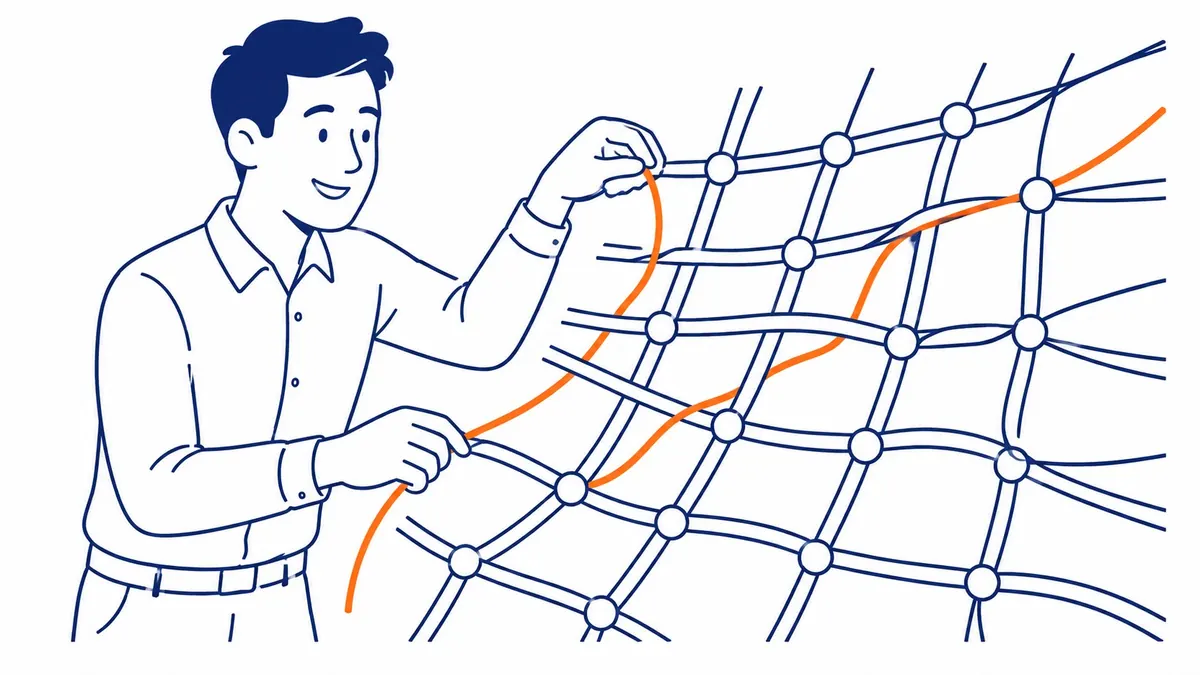
Many affiliate links pass through a redirect, either the network’s tracking URL or a “pretty link” on your own domain such as /go/product-name that forwards to the merchant. A redirect that sends every visitor and every crawler to the same merchant page is not, by itself, against Google’s rules. Google’s spam policies describe legitimate redirects as normal and define sneaky redirects as redirecting maliciously in order to show users and search engines different content, or to show users something that does not meet their original need.
Cloaking is defined the same way: presenting different content to users and search engines with the intent to manipulate rankings and mislead users. So the line is not the redirect or the tracking parameter, it is deception: a crawler and a person seeing different things, or a visitor being sent somewhere that does not match what the link promised. A link-masking script that shows Googlebot a clean editorial link while visitors are sent elsewhere, or that serves different page content depending on the user agent, is the kind of setup that crosses it. If you use a redirect plugin, add rel=”sponsored” to the masked link as well, since the visible URL being on your own domain does not change the fact that it is a paid link.
Do affiliate links count as backlinks?
This is the merchant’s side of the question, and the short answer is that a business should not count them. An affiliate link exists because the merchant pays for the traffic or the sale it produces, which is exactly the kind of link Google asks publishers to qualify with rel=”sponsored”. When affiliates follow that guidance, the links are flagged as paid placements rather than editorial recommendations.
Since Google’s 2019 change, sponsored, ugc and nofollow are treated as hints rather than strict instructions, so Google may still use the information in those links to understand the web. That is not the same as the ranking credit an editorial link carries, and you cannot rely on it. Followed links from independent sites that chose to cite you are the links worth working for. A merchant that requires affiliates to leave links unqualified so that they pass ranking credit is moving into Google’s link spam examples, which include requiring a link as part of a contract without allowing the content owner to qualify it.
Affiliate programs can still help a merchant indirectly. Reviews and comparisons can bring referral traffic and wider awareness of a product, which may in turn lead to genuine editorial mentions. Those are reasons to run a program, but improved rankings from the affiliate links themselves are not.

How many affiliate links is too many?
Google does not publish a number, and any precise ratio you see quoted as a safe limit is someone’s estimate. What Google’s documents give you instead is a standard: the page has to offer original value that the merchant’s page does not, and its links have to be qualified. A long comparison with thirty links can meet that standard, while a 300-word page with five links to products it barely describes does not.
A practical way to judge your own pages is to imagine the affiliate links removed. If the page would still answer the reader’s question, through your testing, your comparison, your price notes or your experience with the product, the number of links is unlikely to be the issue. If the page would have almost nothing left, the problem is the content, and cutting links will not fix it. That judgement, rather than a count, is what separates a useful review from the thin affiliation Google describes.
Disclosure in Canada
Disclosure is a separate obligation from SEO, and in Canada it comes from the Competition Act rather than from Google. The Competition Bureau’s guidance on influencer marketing says anyone promoting a product, service or business interest should disclose all material connections, and it lists payment in money or commissions among them. It also states that linking to or tagging a brand, posting a discount code or linking to an affiliate webpage is unlikely to be enough on its own.
The Bureau’s guidance asks for disclosures that are prominent and visible on all devices without clicking or tapping to expand anything, and it warns that a disclosure buried in a long caption or a profile bio may not be seen. Although that guidance is written with social media in mind, the conservative reading for a blog post is the same: a plain sentence near the first affiliate link, such as “This post contains affiliate links, and I earn a commission if you buy through them,” is clearer than a notice in the footer. Individual programs often add their own disclosure rules, so read the terms of each one you join.

A quick check before you add affiliate links
As an illustrative example, suppose a Calgary renovation contractor writes a blog post on choosing a tile saw and wants to link to three models through a retailer’s affiliate program. The post can earn commissions without creating avoidable SEO problems for the rest of the site, provided it passes a short check:
- The post says something the retailer’s product pages do not, such as which saw suits which job, what the contractor would buy for a basement bathroom, or where the cheaper model falls short.
- Every affiliate link, including buttons and product boxes, carries rel=”sponsored” or rel=”nofollow” in the published HTML.
- Any redirect sends visitors and crawlers to the same destination, with no user-agent switching.
- A clear disclosure sits near the first affiliate link, not only in the footer.
- The service pages that bring in renovation enquiries are kept free of affiliate links, an editorial choice rather than a Google rule, so the purpose of each page stays clear.
Most problems with affiliate links turn out to be problems with the pages around them, and both are visible in a crawl of the site. If you want a second set of eyes on how your links are marked up and whether your content holds its own, a website audit is a sensible place to start. SEO Company To-The-TOP! is a Calgary-based White Hat practice founded in 2007, and one expert does all the client work, with no junior handoffs.

Contact Calgary SEO Company To-The-TOP!
Questions about anything in this article, or about your own rankings? Talk to a Calgary SEO specialist directly.
Phone: (403) 308-5949
Address: 1509 14 Ave SW, Calgary, AB T3C 0W4
Hours:
Monday to Friday: 10:00 am – 7:00 pm
Saturday: 12:00 pm – 4:00 pm
Sunday: closed