
What Is Affiliate Marketing in SEO? How It Works and the Rules That Apply
Affiliate marketing in SEO means using search engine optimization to bring people to content that recommends other companies’ products, and earning a commission when a reader clicks an affiliate link and buys. In the usual arrangement, the affiliate does not stock or ship anything. Their job is to publish reviews, comparisons and guides that rank in Google for the searches buyers make, so that visitors arrive already looking for an answer. SEO supplies the traffic, and affiliate programs turn some of it into income. Google has specific rules for affiliate pages and links, and in Canada the Competition Act expects the commercial relationship to be disclosed, so both come up in this guide.
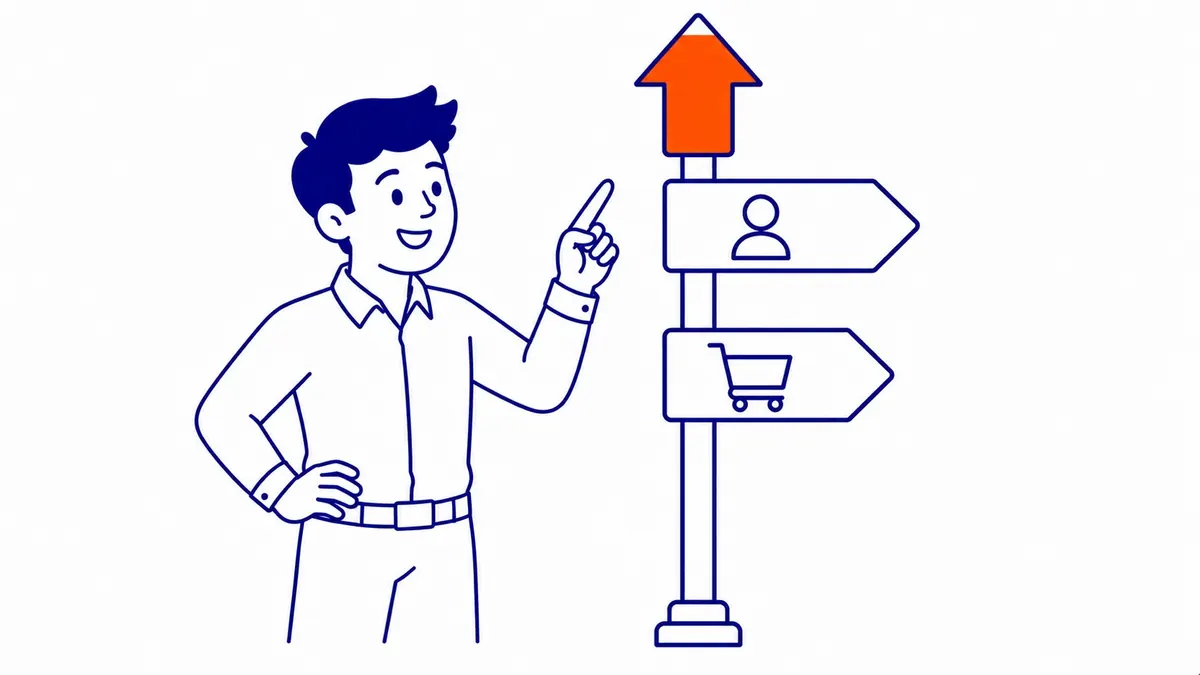
How affiliate marketing works
Three parties are involved. A merchant sells a product or service and runs an affiliate program, either on its own platform or through an affiliate network that handles tracking and payouts for many merchants at once. An affiliate, usually a website owner, blogger or publisher, joins the program and receives links that carry a tracking code. A buyer reads the affiliate’s content, clicks one of those links and makes a purchase, and the tracking code tells the merchant which affiliate sent the sale.
The merchant then pays the affiliate a commission, which might be a percentage of the sale, a flat amount per sale, or a fee for a lead such as a sign-up or quote request. Each program sets its own rates, its own tracking window (how long after the click a purchase still counts) and its own rules about where and how affiliates may promote it, so the program’s terms are the only reliable source for those numbers. Nothing is paid if the reader clicks and leaves without completing the action the program pays for, which is why the quality of the traffic matters far more than the quantity.
The phrase “affiliate SEO” is also used in a second sense. Many SEO software companies and agencies run affiliate programs of their own, paying commissions to people who refer customers to them, and some search results for the phrase are lists of those programs. That is a different topic from the one in this guide, which is about SEO as the traffic source for an affiliate site.
What SEO does for an affiliate site
SEO answers the question every affiliate faces, which is how to put the right page in front of the right reader at the moment they are deciding what to buy. That starts with keyword research organised by intent. Someone searching “best two-person tent for backcountry trips” is close to a purchase, while someone searching “camping” is not, and only the first search is likely to produce a commission. Longer, more specific searches tend to have less competition from large retailers and publishers, which is why newer affiliate sites usually start there.
The page has to match the search. Comparison searches call for comparison articles, “best” searches call for ranked lists with reasons, and problem searches call for guides that solve the problem first and recommend a product second. On-page work such as a clear title, descriptive headings, fast pages and sensible internal linking helps Google understand what each page covers and helps readers move from a guide to the review they need.
Affiliate sites compete in the same results as established publishers, so they also need authority. That comes from earning links from relevant sites, usually because a page offers something worth citing, such as original testing, a useful comparison table or a tool. Buying links for ranking purposes is a violation of Google’s spam policies, and an affiliate site that depends on bought links is building on something Google is actively trying to discount.

What Google says about affiliate pages
Google does not penalise a site for taking part in affiliate programs. Its spam policies (last updated August 2026) state that “not every site that participates in an affiliate program is a thin affiliate.” The problem Google targets is thin affiliation, which it defines as “publishing content with product affiliate links where the product descriptions and reviews are copied directly from the original merchant without any original content or added value.” Sites built from the same template or the same network-supplied content, repeated across pages or domains, fall into the same category.
The same policy lists what good affiliate pages add: “additional information about price, original product reviews, rigorous testing and ratings, navigation of products or categories, and product comparisons.” That list is a practical brief for an affiliate site. If a page offers none of those things and the reader would learn as much from the merchant’s own product page, Google has little reason to rank it.
Google’s guide to writing high quality reviews goes further. It asks reviewers to show evidence of their own experience with the product, explain what sets it apart from competitors, discuss benefits and drawbacks based on original research, and, when calling something the best, say why with first-hand evidence. It also suggests linking to more than one seller so readers can choose where to buy, which is a useful habit for affiliates because it makes the recommendation look less like a sales funnel.
Experience and expertise matter most in some niches. Google’s guidance on helpful content says E-E-A-T (experience, expertise, authoritativeness and trust) “itself isn’t a specific ranking factor,” but that its systems give even more weight to content showing strong E-E-A-T on topics that could significantly affect people’s health, financial stability or safety. Affiliate sites recommending supplements, credit cards or investment products are in exactly that territory.

Tagging affiliate links
Affiliate links are paid links in Google’s eyes, because the site earns money when they are used. In a 2021 Search Central post on qualifying links, Google said that “in general, using affiliate links to monetize a website is fine,” and asked sites in affiliate programs to qualify those links with rel="sponsored", whether the links were added by hand or generated automatically. Its page on qualifying outbound links adds that the older nofollow attribute is still an acceptable way to flag paid links, although sponsored is preferred.
The same 2021 post warned that when Google finds sites “failing to qualify affiliate links appropriately,” it may issue manual actions and its systems may take algorithmic action. Many affiliate plugins and link managers can add the attribute automatically, and otherwise it goes into the link markup, so this is usually a settings check rather than a rewrite. Tagged correctly, the links themselves are not a ranking problem, a question covered in more detail in the guide on whether affiliate links hurt SEO.
| Situation | What to do | Source |
|---|---|---|
| Affiliate link in a review, list or guide | Add rel="sponsored" (nofollow is also acceptable) |
Google Search Central blog, 2021; qualify outbound links |
| Product descriptions copied from the merchant or network feed | Add original testing, comparisons, pricing context or category navigation, or do not publish the page | Spam policies, thin affiliation |
| A “best of” list | Explain why each pick is best for a stated use, with first-hand evidence | Write high quality reviews |
| Any page that earns a commission | Tell readers plainly and close to the recommendation | Competition Bureau Canada |
Disclosure in Canada
The rel="sponsored" attribute is read by search engines, not by people, so it does not tell a reader that you are paid. In Canada that second job falls under the Competition Act. The Competition Bureau’s page on influencer marketing and the Competition Act says anyone promoting a product should disclose all material connections with the business, and it lists “payment in money or commissions” and free products among the connections that may be material.
The same page says that “linking to or tagging a brand, posting a discount code, or linking to an affiliate webpage is unlikely to be enough,” and that disclosures should be as visible as possible and in plain language. The guidance is written for influencers on social media, but its logic carries over to an affiliate website in an obvious way: a short, clear statement near the recommendations, such as “this page contains affiliate links, and the site earns a commission if you buy through them,” does far more than a policy page in the footer. It also tends to help with readers, because most people understand the model and simply want to know.
Affiliate content on someone else’s site
Some affiliates try to skip the slow work of building authority by placing their content on established sites that already rank well, a practice often called parasite SEO. Google’s site reputation policy covers exactly this: third-party content “published on a host site mainly because of that host’s already-established ranking signals,” with the aim of ranking better than it could on its own. One of Google’s own examples is a medical site hosting a low-quality third-party “best casinos” page that is not integrated with the rest of the site.
The same policy says that pages using affiliate links throughout, “with links treated appropriately,” are not a violation in themselves, and that columns, opinion pieces and other work of an editorial nature are treated differently from content placed on a site for its ranking power. Google’s expired domain abuse policy closes a related loophole, buying an old domain to host unrelated content, and it gives “affiliate content on a site previously used by a government agency” as an example. The safe route is the slow one: build authority on a site you own.
SEO or paid ads for affiliate traffic
Paid search can send traffic to affiliate offers, but the economics and the rules both work against it. A commission is often a small share of the sale, and every click costs money whether or not a sale follows, so the margin is thin from the start. Some programs also restrict or ban affiliates from bidding on the merchant’s brand name, so the program terms need checking before any campaign is planned.
The bigger obstacle is policy. Google’s advertising policies treat promoting “bridge” or “gateway” destinations “that are solely designed to send users elsewhere” as abuse of the ad network, so a thin page whose only purpose is to pass visitors to a merchant is not something to build a Google Ads campaign around. Where paid search does make sense, the landing page needs real content of its own, which brings the work back to the same standard SEO demands.
SEO is slower. Organic rankings usually take months to build, and there is no guarantee a page will reach the first page at all. Once a useful page ranks, though, it can keep sending visitors without a cost per click, which suits a business model built on small commissions. For that reason SEO usually makes more sense as the core channel, with paid traffic kept for testing where the program terms and the numbers allow it.

Does affiliate marketing make sense for a Calgary business?
For most local service businesses, affiliate income is a side benefit at best. A useful rule is to add an affiliate link only where you would recommend the product anyway, to a customer asking in person, and where the link helps the reader more than a plain mention would. If the recommendation would change because of the commission, leave the link out.
Here is an illustrative example. A Calgary home renovation contractor might publish a guide to preparing a basement before a renovation, which naturally mentions a dehumidifier and a moisture meter. Linking to those products through an affiliate program, with rel="sponsored" on the links and a one-line disclosure above the list, is reasonable, and the guide earns its place by answering a question the contractor’s own customers ask. Turning the site into a catalogue of tool reviews would pull attention away from the service pages that bring in the jobs, and would put the site in competition with large review publishers it is unlikely to beat.
For someone building an affiliate site as a business in its own right, the same principles scale up. Pick a niche you can review with first-hand experience, research the searches buyers make before they decide, publish pages that add something the merchant’s page does not, tag every affiliate link and disclose the relationship in plain words. Expect months of work before the traffic is steady.
Putting it together
Affiliate marketing in SEO is the practice of ranking useful content in Google and earning commissions when readers buy through the links in it. SEO decides whether the right readers find the page, and the quality of the page goes a long way to deciding whether Google keeps showing it and whether readers trust the recommendation. Google’s own documents set the standard: original value rather than copied merchant text, rel="sponsored" on affiliate links, and no shortcuts through other sites’ reputations. Canadian law adds a visible disclosure for readers.
SEO Company To-The-TOP! has worked on search visibility for businesses in Calgary, Edmonton and Vancouver since 2007, using White Hat methods only. If you are weighing whether affiliate content belongs on your site, or which pages deserve the attention first, a conversation about SEO for Calgary businesses with To-The-TOP! at (403) 308-5949 is a reasonable place to start.
Contact Calgary SEO Company To-The-TOP!
Questions about anything in this article, or about your own rankings? Talk to a Calgary SEO specialist directly.
Phone: (403) 308-5949
Address: 1509 14 Ave SW, Calgary, AB T3C 0W4
Hours:
Monday to Friday: 10:00 am – 7:00 pm
Saturday: 12:00 pm – 4:00 pm
Sunday: closed