
Does Not Having WWW Affect SEO?
No. Right up until the version you dropped stops answering.
That reads like a dodge. It is not. Two completely different setups both get described as not having www, and only one of them is safe. Most owners have never checked which one their own website is running.
The Question Hides Two Setups

Setup one. Somebody types www.yoursite.com. The browser lands them on yoursite.com instead. A redirect did that. Both hostnames answer. One forwards to the other. Google settled this argument years ago.
Setup two. Somebody types www.yoursite.com and gets nothing back. Server not found. No page. Nothing redirects either. And no error you would ever see from your own desk.
The first is fine. Setup two is a quiet leak.
One sentence describes both of them. We do not use www.
Type It In Right Now

Thirty seconds, and you never have to wonder again.
Open a private browser window. Type your address with www in front. Press enter.
Landed on your site? Good, that is the safe one. Check the address bar and see which version it settled on.
Got an error instead? Then you have found something. Keep reading.
Do it in reverse as well. Type the bare version. Then try http rather than https on both. Four addresses in total. All four should end up in the same place.
Nobody Chose the WWW Setting. A Default Chose.

Ask an owner why the site runs without www and the answer is usually a shrug.
Something set it, though. The installer wrote a site address into the database. A host provisioned one hostname onto the certificate. Some developer typed one version into a config file in 2019 and moved on.
Then everything downstream copied it. The sitemap. Every canonical tag. All the internal links. Search Console too.
None of that was a decision about SEO. It was a default, propagated.
Somebody Will Say the Bare Domain Is Stronger

This is the real objection, so take it properly.
The argument runs like this. www is technically a subdomain. It sits below your root, the same way blog.yoursite.com does. Search engines keep some distance between a subdomain and its parent. Therefore the bare domain must be the stronger of the two.
The first half is true. www really is a subdomain label. Nothing in the DNS makes it special.
Now grant the whole argument and watch where it goes. Suppose the root really were stronger. Every site on www would then be running uphill permanently. Look at the largest sites you use daily. Plenty still sit on www. Nobody is bleeding rankings over a three-letter label.
So the objection confirms the answer rather than breaking it. Neither hostname outranks the other. Which is the exact thing that makes the rest of this page matter.
Neutral Is What Makes It Dangerous

Here is the part worth reading twice.
Say dropping www did carry a ranking cost. You would see the damage arrive. Traffic would sag accordingly. You would go hunting. Eventually somebody would point at the hostname.
It carries no cost. So nothing in any SEO report ever points there.
Your rank tracker watches the version you use. Analytics watches the version you use. Search Console, set up the common way, watches the version you use.
The abandoned hostname sits outside every instrument you own. It could have been dark for three years.
The WWW Links Exist Whether You Use It Or Not
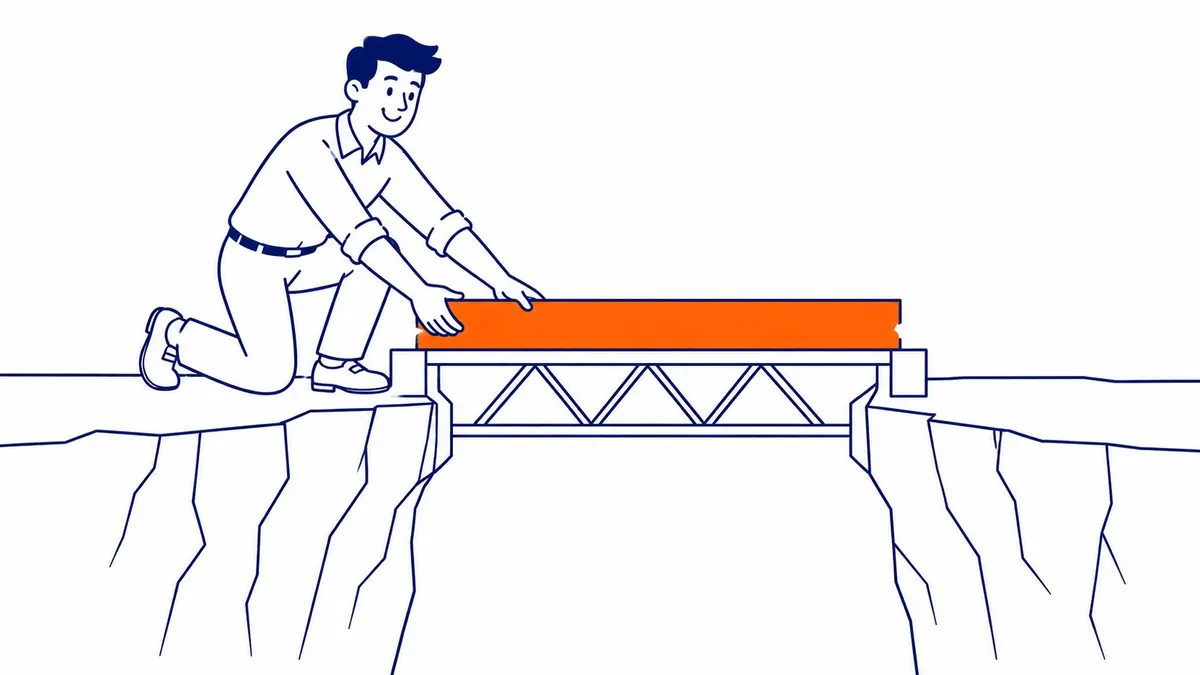
You stopped typing www. Nobody told the internet.
Directory listings from a decade ago wrote it. So did the print ad. Suppliers linking from their partner pages copied whatever your invoice header said at the time. Old press releases. Forum posts. That chamber of commerce profile nobody has touched since the last office move.
Van decal. Business cards. The sign out front.
Every one of those points at a hostname you no longer think about.
Redirect www and all of it still works. Visitors arrive. Link signals consolidate onto the version you kept.
Let www go dark and all of it fails. Not partially either. The link does not pass reduced value. It passes nothing, because nothing loads.
A Redirect Is Not a Copy

Worth being precise here, because owners mix these two up.
Redirects keep the old hostname alive on purpose. It answers, then hands the visitor across. Permanent redirects carry the SEO signals over along with the person.
A dead hostname does neither. It never answers at all.
Keeping that distinction alive costs nothing. One DNS record. A single rule in the server config. Five minutes of work that most sites already have in place and nobody ever verifies.
The Certificate Only Covers What It Lists

Here is a failure that looks like a redirect problem and is not one.
An SSL certificate names the hostnames it protects. Some cover both versions. Others cover exactly one.
Yours might list the bare domain alone. Then https on the www version throws a browser security warning. A full-page one. Red across the whole screen. It fires before your redirect gets any chance to run.
Visitors do not push past that screen. Instead, most back out inside a second.
Your redirect might be configured perfectly. Still, nobody reaches it.
The WWW Redirect Chain Nobody Counts

Say www does redirect. Now count how many hops it takes.
A common pattern starts at http on www. Next hop, https on www. Then https on the bare domain. Three requests before the page even starts loading. All of them run on the visitor’s connection. On their phone. Out where the signal is weak.
One hop is the target. Send http on www straight to https on the bare domain, in a single step.
A site audit flags this as a redirect chain warning. Filed under technical debt, which is where most people leave it. Yet it is faster to fix than to keep ignoring.
What Google Retired, and What That Means

Search Console used to carry a preferred domain setting. You picked www or bare, and Google noted the preference.
That setting is gone. Retired back in 2019.
Its removal gets read as Google losing interest in the question. Read it the other way instead. The setting went away because your own pages already answer it. A canonical tag names the address that counts. Redirects enforce it. Your internal links vote every time one fires.
The preference was never really living in that box. It lives in your markup, and it always did.
The Search Console Half You Are Missing

Two kinds of property exist in Search Console.
A URL-prefix property covers one exact protocol on one exact hostname. Set one up on the https bare version and it reports on that hostname alone. The www version stays invisible inside it. So does http.
A domain property covers the whole domain. Every subdomain under it. Both protocols. www included, whether you use it or not.
Most sites have the first kind, because that is what the setup wizard offered years ago. So add the domain property. It takes one DNS record and about ten minutes.
Then go look at what has been happening on the hostname you stopped watching.
Your Ads Pay For the Extra Hop

This one costs actual money.
Check the final URL across your Google Ads campaigns. Say it still carries www while your site lives on the bare domain. Every paid click then takes a detour before the landing page starts.
You are buying that hop. Some of those visitors leave during it. On mobile especially, over a poor connection.
Point the final URL at the version that answers first. Same for the display URL, which has to match the final URL’s domain anyway.
Switching Later Is a Site Move

Owners sometimes decide they want the other version after all.
Understand what that involves first. Every internal link. Each canonical tag. The sitemap. Structured data. Plus a redirect layer that now runs in the opposite direction. Forever.
No SEO penalty attaches to doing it. There is a re-discovery period while Google works through the change. It gets measured in weeks rather than days.
Which is why the answer to should we switch is almost always no. One exception exists. Your current version is already the broken one.
Where This Lands for a Calgary Business

Across Calgary we see the dark hostname most often on sites that changed hands.
A rebuild in 2021. New developer. A new host and a fresh certificate. The bare domain got provisioned. Nobody thought about www, because nobody in the room was typing it.
Meanwhile the business had been listed in directories since 2009. Every one of those old entries wrote the address with www, because that is simply how addresses were written then.
Twelve years of citations pointing at nothing. Rankings that never dropped, because they never climbed in the first place. That is the first thing To-The-TOP! checks after a rebuild.
Good Calgary SEO work starts at the plumbing before it touches a single word of content. SEO Company To-The-TOP! has been running that order since 2007.
Four Minutes, Today

Open a private window. Test all four addresses.
One of them fails? That is your finding. Send it to whoever manages your hosting. It is a DNS record and a redirect rule, nothing more.
All four landed correctly? Then count the hops on the slowest one.
Next, add the domain property in Search Console and go look at the half of your site you have never seen. Ongoing SEO support from To-The-TOP! turns that into a monthly habit rather than a one-time discovery. The same goes for the rest of the plumbing that quietly decides whether search engine optimization work lands at all.
Nobody sends an SEO alert about a hostname that stopped answering. That is the whole problem with it.
Common Questions About WWW and SEO
Is www or non-www better for SEO?
Neither. Google treats them as two hostnames and ranks the one you point everything at. Pick a version. Redirect the other one to it. Then stop thinking about the choice.
Will removing www from my site hurt my rankings?
Not by itself. The damage comes from what happens to the old version afterwards. Redirect it permanently and the signals carry across. Delete it and every old link pointing there stops working.
What happens if the www version does not load at all?
Then the old backlinks and directory citations aimed at that hostname fail completely. Visitors get an error. No ranking signal transfers, because there is nothing at the other end to transfer it to.
Does www count as a subdomain?
Technically yes. It is an ordinary subdomain label with a long convention behind it. That technical status does not make it weaker than your root domain for ranking purposes.
How do I check which version Google has indexed?
Search for your brand name and read the address on the result. Then open Search Console and add a domain property. That one reports on both versions at once, not only the version you registered.
Do I still need a redirect if I only ever use one version?
Yes. You are not the only person typing your address. Printed material still carries it. So do old listings and other people’s websites.
Does any of this affect Google Ads?
It affects speed and setup rather than quality. A final URL pointing at the redirecting version adds a hop before your landing page loads. The display URL still has to match the final URL’s domain. Call To-The-TOP! at (403) 308-5949 to have the setup checked.
Contact Calgary SEO Company To-The-TOP!
Questions about anything in this article, or about your own rankings? Talk to a Calgary SEO specialist directly.
Phone: (403) 308-5949
Address: 1509 14 Ave SW, Calgary, AB T3C 0W4
Hours:
Monday to Friday: 10:00 am – 7:00 pm
Saturday: 12:00 pm – 4:00 pm
Sunday: closed