
How Companies Build a Post Calendar for SEO
Most businesses that ask how companies build a post calendar for SEO already know they need one. The harder problem is building a calendar that produces rankings rather than just content output.
SEO Company To-The-TOP! has been doing content strategy work for Calgary clients since 2007. That pattern shows up consistently: companies plan content around what feels relevant at the time, publish consistently for a quarter, then wonder why organic traffic hasn’t moved. A calendar existed. Keyword strategy behind it did not.
What Is an SEO Content Calendar?
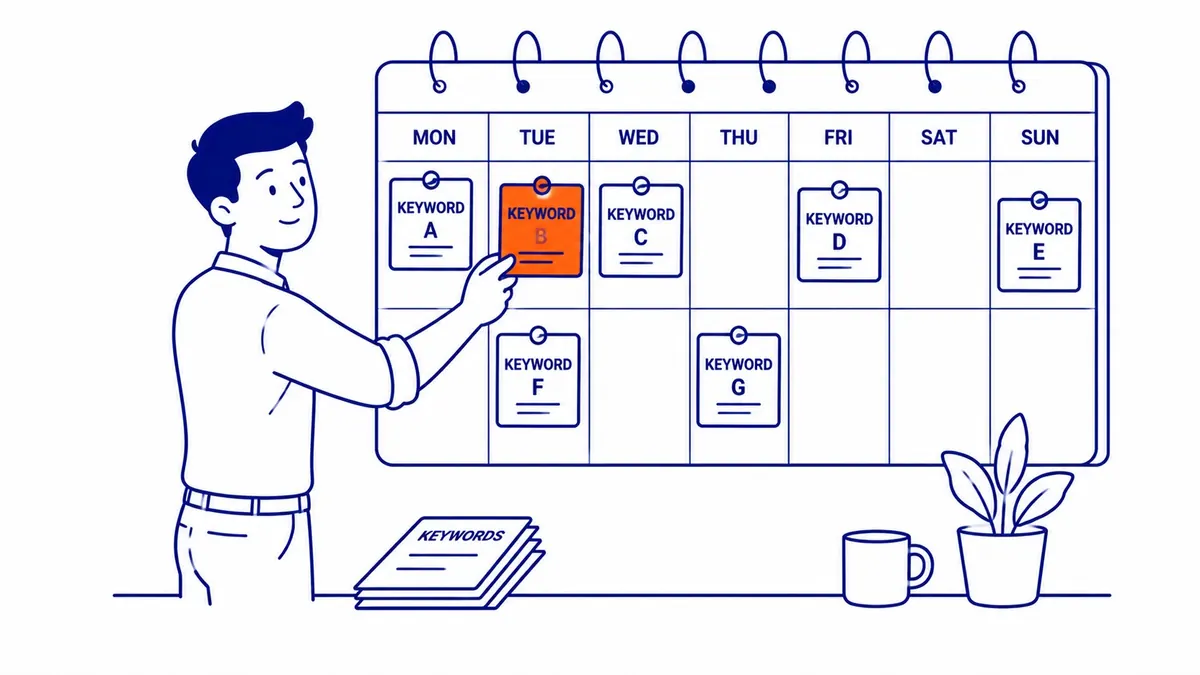
Planning document first. Publication schedule second. An SEO content calendar maps every planned post to a target keyword, a search intent, a publish date, a content type, and an assigned owner. General editorial calendars track what gets published. SEO content calendars track what gets found.
Each entry should answer the same question: which search query does this piece of content match? No clear answer means the post belongs in a different planning system. Dates on the calendar raise the obvious follow-up about blogging frequency for SEO.
Why a Calendar Drives Rankings, Not Just Consistency
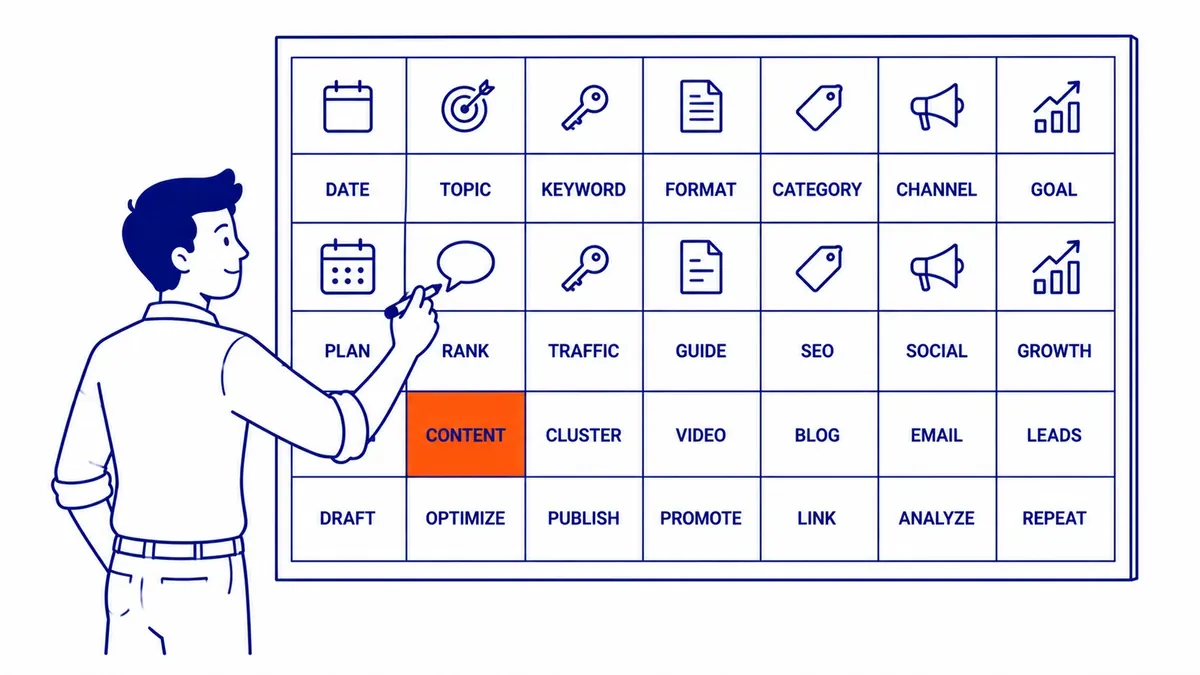
Consistent publishing matters. Search engines crawl sites on a predictable schedule more reliably than sites that go quiet for weeks. Frequency alone won’t move positions, however. The content has to match what your audience is searching for, and has to be more useful than what already ranks.
Two things separate a calendar that builds traffic from one that fills a schedule. Keyword targeting at the topic level: each post gets one primary keyword assigned before the brief is written. Coverage depth across a topic cluster also matters, not just the highest-volume terms. Long-tail queries often convert at higher rates than head terms. Skipping them leaves gaps that competitors fill. Both problems surface the moment somebody goes through the site properly, which is reason enough to book a website audit. They don’t get fixed without a structured calendar to track progress against them.
The keyword research step is where calendar planning actually starts, not where it ends.
How to Build a Post Calendar for SEO Step by Step
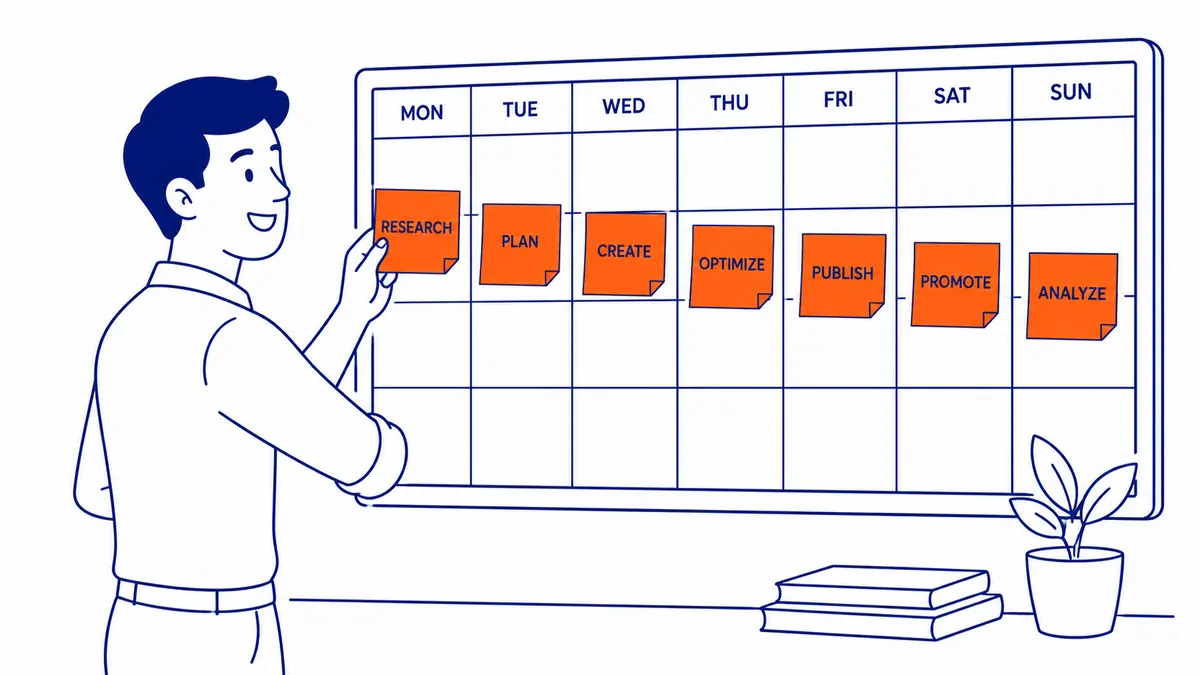
Audit your existing content
Pull every published post into a spreadsheet. Add the publish date, the keyword it was targeting if any, and where it currently ranks. Google Search Console surfaces that ranking data for free. Posts that rank but never got promoted. Others target overlapping keywords. Entire topic areas with no coverage at all. Most businesses find all three when they audit. That gap list becomes the foundation for the new calendar.
Map keywords to topics
Keyword research drives the topic list. Not gut feel, not trending news, not what a competitor posted last month. Run SEO keyword research first, then surface the queries with actual search volume that match your audience’s search intent. Each calendar entry maps to one primary keyword. One post, one keyword. That discipline is what earns positions over time. Trying to target several keywords in a single post dilutes the signal and rarely wins any of them.
Choose content type and posting frequency
Blog articles, how-to guides, comparison pages, case studies. Each content type fits a different search intent. Informational queries want explanations. Transactional queries want service or product pages. Match the format to what the query is actually asking for.
Frequency is a real decision. Two well-researched posts a month beat eight thin ones. Most small businesses can sustain two to four posts monthly without the calendar collapsing. That is the test: not what sounds ambitious, but what the team can maintain for six months straight. Starting at four and dropping to two is a better path than launching at eight and stopping at three.
Schedule around your audience and events
Industry events, seasonal demand shifts, product launches: all of these belong in the content calendar because search volume moves with them. An accounting firm sees estate planning queries climb every February. A roofing company sees demand for roof replacement quotes every April.
Publish content two to four weeks ahead of demand peaks. Search engines need time to index and rank new content before the query volume actually arrives.
Tools for Building Your Content Calendar
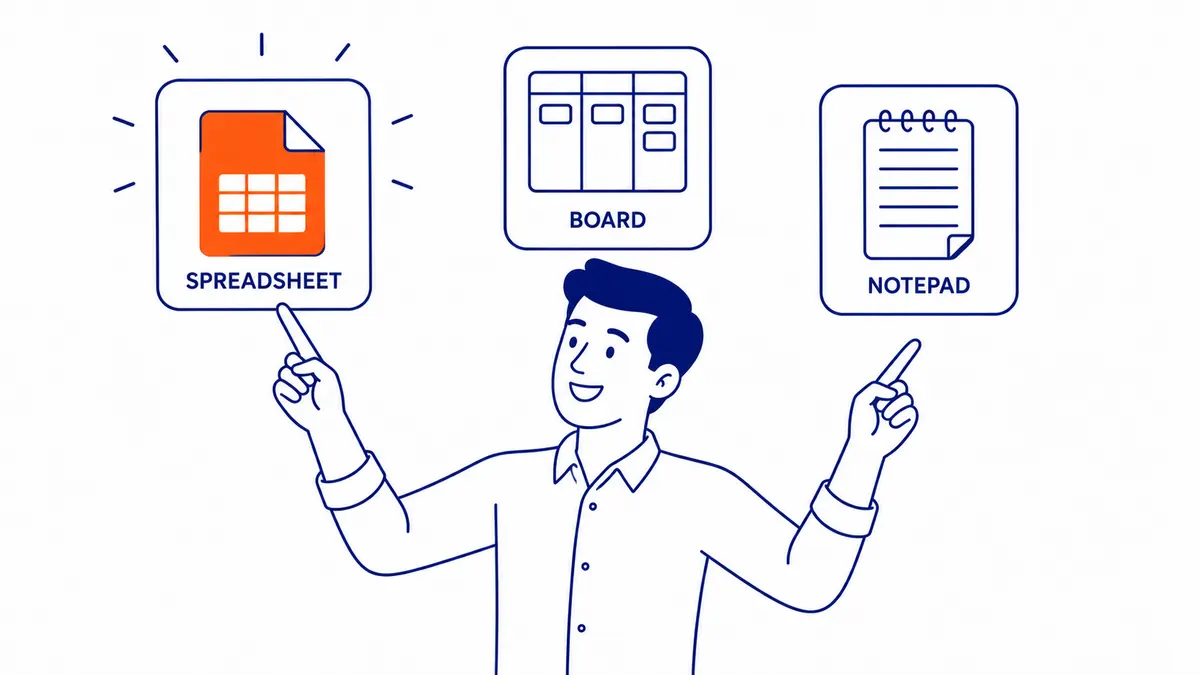
Google Sheets survives longer than most dedicated platforms. Target keyword, content type, assigned writer, due date, publish date: five columns is the minimum for a calendar that functions as a strategy document rather than just a schedule. Teams using Trello or Notion can replicate the same structure. The overhead of a complex platform often outweighs the benefit when a single person manages the content queue.
Habit matters more than the tool. A spreadsheet someone opens every Monday outperforms a complex system nobody checks.
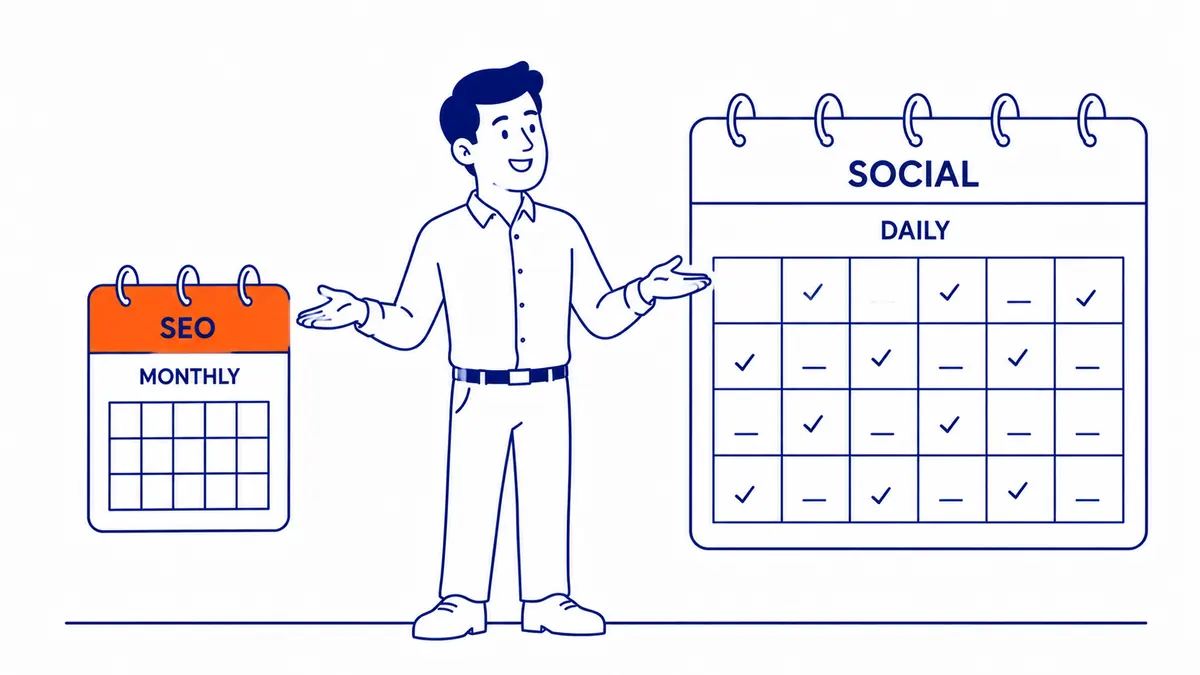
Social Media Calendar vs. SEO Calendar
Two different documents, two different goals. A social media content calendar manages content across Instagram, LinkedIn, and Facebook at a much higher frequency than SEO content. Three to five posts per week is common on social. A social post performs in 24 to 48 hours or it doesn’t.
An SEO content calendar moves slower. Blog posts take months to rank. Each piece is longer, keyword-focused, and structured to match search intent rather than drive engagement.
Both are worth building. New SEO content promoted through your social media strategy picks up early engagement signals that can influence how quickly search engines surface the page to organic visitors. That cross-promotion takes a few minutes per post and costs nothing extra beyond what the content already required. Worth knowing how social media affects SEO before you count on that lift.
Keeping the Calendar Running Month After Month
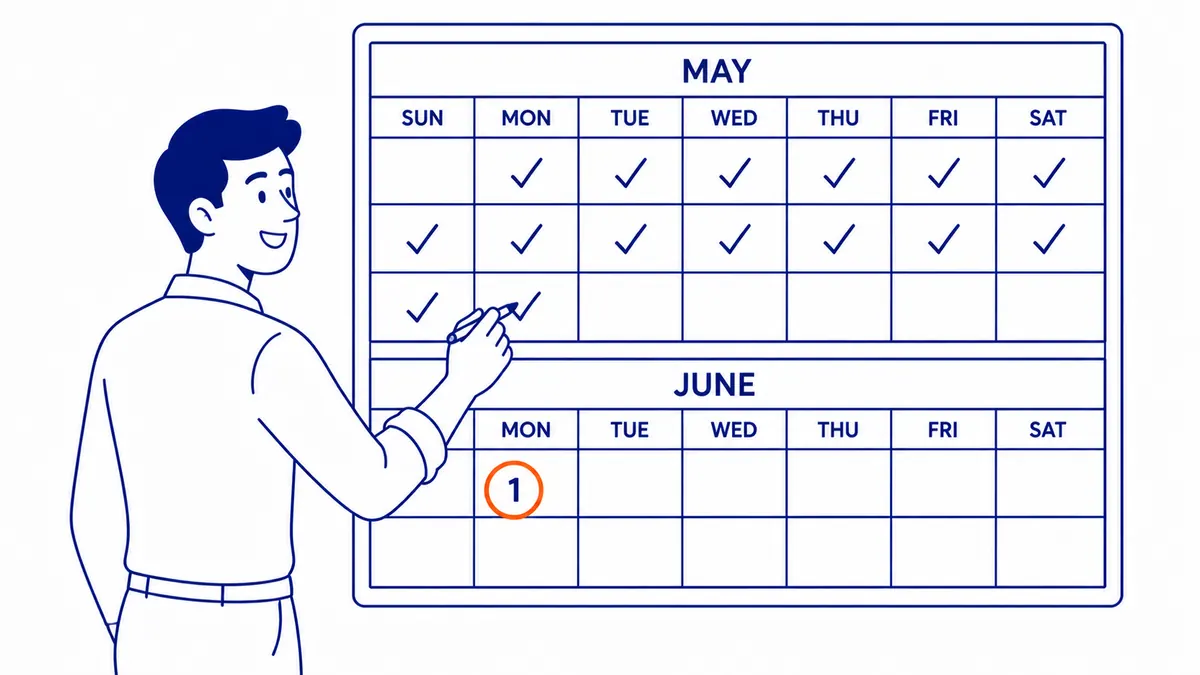
The calendar fails most often at the one-month mark, when the initial ideas list runs dry. Three habits prevent it.
Keep a running ideas list updated throughout the month, not just during planning sessions. Each month, review ranking data from previous content to inform the next batch of topics. Build in a 20 per cent buffer of flexible slots for topics that surface unexpectedly.
Rigid calendars get abandoned. The ones built with flexibility survive long enough to show results. Most ranking gains from content arrive in months three through six; a calendar that collapses at month two never gets there.
Businesses looking to build a content strategy around real search demand will find a plain-language breakdown from our Calgary SEO company. Before committing to an agency, it’s worth reviewing what our local SEO services Calgary package actually includes. That same data-first approach carries over to paid search, where you can read the pricing for Google Ads management we offer.
Frequently Asked Questions
What is an SEO content calendar?
A planning document that maps every piece of content to a target keyword, a publish date, a content type, and an assigned owner. It differs from a general editorial calendar in that every topic traces back to search demand: what your audience is actively typing into Google, not what the company wants to say.
What is the 5 3 2 rule for social media?
A posting ratio for social platforms. Five posts share industry content from other sources. Three posts share your own non-promotional material. Two posts are personal or conversational. The goal is demonstrating value before asking for anything. This ratio guides social media strategy specifically. SEO calendar planning follows a keyword-driven schedule rather than an engagement ratio.
What is the 4-1-1 rule in social media?
Four educational posts for every one soft sell and one direct promotional post. Similar logic to the 5-3-2 rule. Both reflect the same principle: build trust before pitching. For SEO calendar planning, the equivalent idea is that most content should address audience questions directly. Product-focused posts earn fewer organic visits than genuinely helpful ones targeting the right keywords.
How to create a posting calendar?
Audit your existing posts first. Map every gap to a target keyword from your keyword research list. Assign each topic a content type, a publish date, and a writer. Build in a monthly review so ranking data from previous posts informs the next planning cycle. A content calendar only works when every entry traces back to something people are actively searching for.
Contact Calgary SEO Company To-The-TOP!
Questions about anything in this article, or about your own rankings? Talk to a Calgary SEO specialist directly.
Phone: (403) 308-5949
Address: 1509 14 Ave SW, Calgary, AB T3C 0W4
Hours:
Monday to Friday: 10:00 am – 7:00 pm
Saturday: 12:00 pm – 4:00 pm
Sunday: closed