
How Does Social Media Affect SEO?
Clients ask this at least a few times per year. Usually around month three, after posting consistently and noticing that search rankings have not moved at all. The question is logical. Both channels live online. The assumption is that activity on one feeds the other. We have had this conversation more times than we can count at SEO Company To-The-TOP!
The direct answer is no. Not in the way most people mean. Social media does not directly affect search rankings. The indirect effects, however, are real enough to understand and put to work properly.

What Google Has Actually Said
Not speculation at this point. Documented.
John Mueller and Matt Cutts of Google both addressed this publicly. Social signals (likes, shares, comments, follower counts) are not ranking factors in the algorithm. Google confirmed this in 2014 and has restated it several times since. The stance has not shifted.
Practical access problems explain the position. Crawling most social platforms reliably is not possible. Most posts on these platforms are private or semi-private. Twitter’s data feed was briefly licensed to the search engine, then that agreement lapsed. Bing acknowledged using social signals at one point. Even there, the effect is marginal.
Clients still ask because the answer feels counterintuitive. If millions of people share material, why would search engines ignore that signal? Because what matters is what those shares lead to downstream. The sharing events themselves are not the signal.
Where the Confusion Comes From
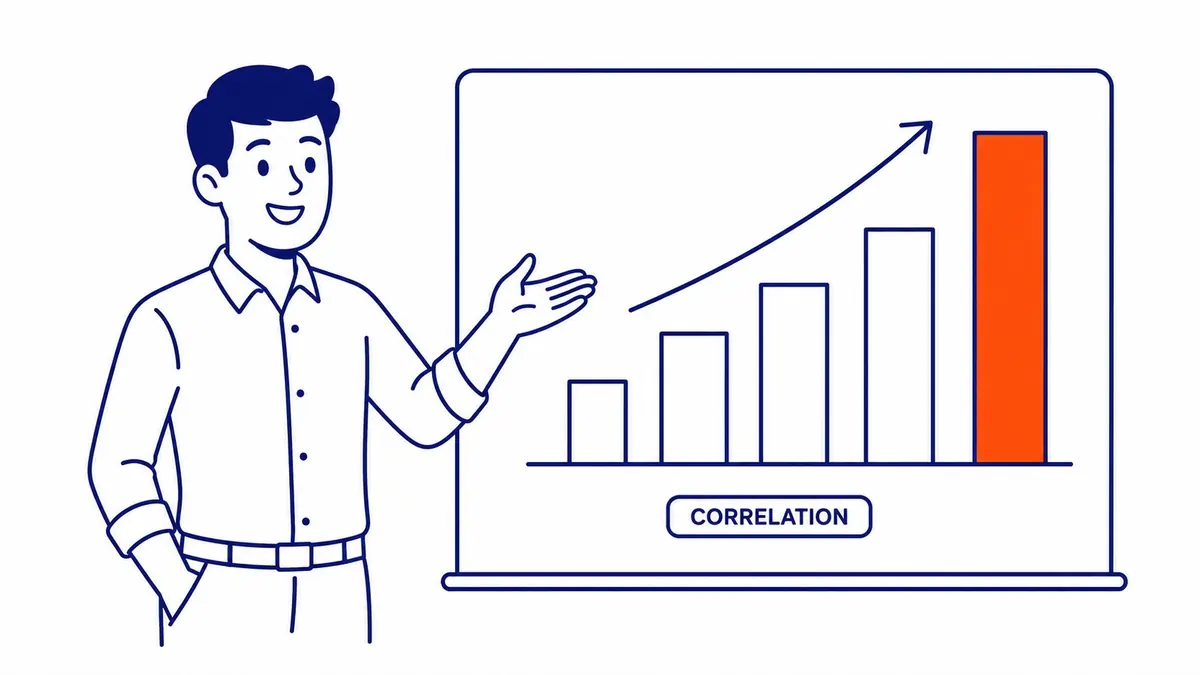
Correlation causes most of it.
Businesses with a strong social media presence often rank well. They also tend to produce more articles, earn more inbound links, and generate higher branded search volume. All of those things affect SEO. Social activity correlates with the real inputs. It is not the input itself.
Studies claiming to show a social-ranking correlation have not isolated the variable. Shares lead to traffic. More visitors means more frequent crawls. Better-crawled pages tend to rank better. The chain is real. Social shares sit upstream of the actual signal, not in it.
What About Bing?
Bing uses social signals more openly than most search engines do. Microsoft confirmed this position. LinkedIn data is especially relevant since Microsoft owns LinkedIn. For businesses targeting Bing, social presence has a more direct relationship with search visibility. Bing handles roughly 6 to 7% of Canadian desktop searches.
For most Canadian businesses, however, Google is the priority. When 90-plus percent of searches run through one engine, the social-signal conversation becomes largely academic.
How Social Media Affects Your Website
Real traffic. Verifiable in Analytics.
A post that gets widely shared sends direct visitors to a page. Search engines crawl pages more frequently when they receive sustained traffic. A page sitting dormant gets crawled less often. One receiving social referrals, then direct visits, then organic visits gets indexed faster. Updates register in days rather than weeks.
Crawl frequency matters more than people realise. Fresh pages sitting unindexed for three weeks do not help rankings. Anything that drives consistent visitors to your website speeds up the indexing cycle. Social media shares, aimed at the right audience, do exactly that.
Dwell Time and Engagement Patterns
Visitors who arrive from social and stay on the page send soft engagement signals. Not direct ranking factors; not exactly irrelevant either.
A page generating consistent time-on-page demonstrates topical relevance through actual user behaviour. Driving followers to a post they have no reason to read does not help rankings. Quality of the social audience matters here. People genuinely interested in the topic produce engagement that means something. A disinterested audience does not.
The Backlink Pathway
More important than the volume itself is who those visitors are.
Publishers, journalists, and bloggers use social platforms as discovery tools. A well-distributed piece on LinkedIn or X gets in front of people who write for industry publications. Those writers link back to original sources. Backlinks follow. This is the most reliable mechanism connecting social media activity to ranking benefit. Not shares as a signal, but shares as distribution that earns real links.
To-The-TOP! has seen this happen on client work. An observation piece shared in a few professional LinkedIn groups generates referred visitors for two weeks. Then a new referring domain appears in Search Console that was not there before. The share triggered the exposure. Then the backlink registered as the ranking event.
Original research earns links this way. Well-framed opinion does too. When your content genuinely adds something, people cite it. Promotional material and product announcements rarely earn links regardless of how widely they are distributed. Spreading weak material widely earns almost nothing from it.

Social Media Profiles in Search Results
Your social media profiles rank. Worth keeping in mind.
Search for almost any established business and the first page of results includes social profiles. Facebook pages, LinkedIn company pages, and Instagram profiles regularly appear for branded queries. This does not show up in your website analytics, but it is real estate your brand occupies on the search results page.
Well-optimized social media profiles help search engines build an accurate entity picture of your business. The Knowledge Graph draws on several sources here. Business name needs to be consistent across platforms. Website URL matters. So do the category field and description. Incomplete or mismatched profiles create gaps in that entity picture. The effect shows up across more query types than just branded searches.
Branded Search Volume and Entity Signals
Active social media tends to lift branded search volume over time. People see your content on Instagram or LinkedIn, remember the business name, then search for it directly. Branded search traffic is a strong quality signal. Search engines read it as evidence that users want a specific business by name.
The effect accumulates slowly. Businesses that go quiet on social for several months often notice a gradual softening of branded search queries, even without any changes to their website or existing SEO work. Going quiet is usually a planning failure, which is what building a content calendar prevents.

YouTube: A Different Case
YouTube is a different situation entirely.
Google owns YouTube. Video from YouTube indexes directly into search results. Ranking a YouTube video is search engine optimization in the same sense that ranking a webpage is. The fact that it lives on a social platform is secondary to the ranking mechanics.
YouTube videos appear in the main SERP for informational queries. They appear in video carousels, in Discover, and in AI-generated overviews. A well-optimized video with a descriptive title, accurate description, and relevant tags can drive organic traffic for years. Pure SEO, in other words.
TikTok videos surface in image and video search results for younger demographics, though not as reliably or at the scale of YouTube. The direction is still worth watching.
Keyword Research Applies to Video
Calgary SEO services in 2026 increasingly include video search. Clients doing SEO keyword research for their blog often overlook the same target keywords surfacing in YouTube search. The logic is identical. Search volume, competition, query intent. Ranking signals differ from the web index, but the strategic thinking is the same.
Businesses pairing Calgary Google Ads management with organic search increasingly treat YouTube as a third acquisition channel. For service businesses in competitive categories, that reconsideration tends to be overdue.

What Social Media Cannot Do for SEO
Worth stating directly.
Likes and comments are not ranking signals in the algorithm. Neither are follower counts or share volumes. A post going viral does not, by itself, improve your position in search results.
Social profiles are not substitutes for backlinks from third-party websites. A link from your own Instagram bio to your website carries no third-party endorsement value. Backlinks represent external credibility in search engines’ ranking models. Self-referencing links do not carry that signal.
Businesses that run into trouble here are the ones treating social media as their SEO strategy. Posting consistently on Facebook does not replace foundational work. A thorough SEO website audit, targeted keyword research, real link building, and on-page work that earns authority over months. Those are the inputs SEO services in Calgary are built around. Social media activity runs alongside that work, not instead of it. Alongside is the operative word, and the ways social media supports SEO are mostly indirect. Video sits in the same bucket, and the verdict on video lands about where you’d expect.
Using Both Channels Without Confusing Them
Two distinct channels. Different logic.
Wider distribution, stronger brand visibility, and the backlink pathway are real benefits from active social media. Just not the direct ranking effects that social media platforms sometimes imply they deliver.
For a Calgary business working both channels, the practical approach is treating social media as distribution and brand awareness. Measure its contribution to SEO through Search Console referral data and branded query growth over time. Not through ranking position changes in the days after a post goes out. That connection is too indirect and too slow to be visible on that timeline.
Search engine optimization in Calgary built around real ranking signals produces results that compound over months. Social media extends reach. The two work better together than in isolation, but only when each is understood for what it actually does. Worth keeping both conversations separate when reporting on results. Mixing them causes misread attribution. A ranking gain after a viral post is usually coincidence; the actual driver is almost always something that happened in SEO two or three months earlier.
FAQ: Social Media and SEO
What is the 5-3-2 rule for social media?
A content ratio guideline for business accounts. Five posts sharing others’ industry content. Three sharing your own content. Two personal or conversational posts. The purpose is keeping your feed from becoming purely promotional. None of these ratios affect search rankings directly. The value is audience-building, which contributes to branded search volume over time.
Is SEO dead or evolving in 2026?
Evolving. The tactics that worked in 2010 (thin content, keyword stuffing, low-quality link schemes) have been penalised for years. What is working now is topical depth, technical soundness, and content that earns links naturally. Search behaviour is shifting with AI-assisted results, but ranking signals still reward page authority and relevance. Businesses still need search engine optimization to be found consistently in organic search.
What is the 80/20 rule for SEO?
Roughly 80% of organic traffic comes from 20% of the keywords a site ranks for. A small set of high-intent, well-placed pages drives the majority of search-driven results. This is why keyword research and prioritisation matter more than publishing volume. Ten well-targeted pages tend to outperform a hundred thin ones over time.
What is the 5-5-5 rule for social media?
Less standardised than the 5-3-2 rule. Various marketers define it differently. Five posts per week is one version. Daily engagement on comments and replies, with five new connections targeted per week. The core idea is consistent, genuine interaction rather than volume alone. None of it functions as a direct SEO signal in the algorithm.
Contact Calgary SEO Company To-The-TOP!
Questions about anything in this article, or about your own rankings? Talk to a Calgary SEO specialist directly.
Phone: (403) 308-5949
Address: 1509 14 Ave SW, Calgary, AB T3C 0W4
Hours:
Monday to Friday: 10:00 am – 7:00 pm
Saturday: 12:00 pm – 4:00 pm
Sunday: closed