
How to Create an SEO Outline
Most outlines are a list of nouns. Keyword research. On-page factors. Common mistakes. Not one of those lines tells you what the page will actually say.
SEO Company To-The-TOP! has been building pages for clients since 2007. The outlines that produce a usable first draft look nothing like the templates. They are made of sentences.
A Heading Is a Label, Not a Plan
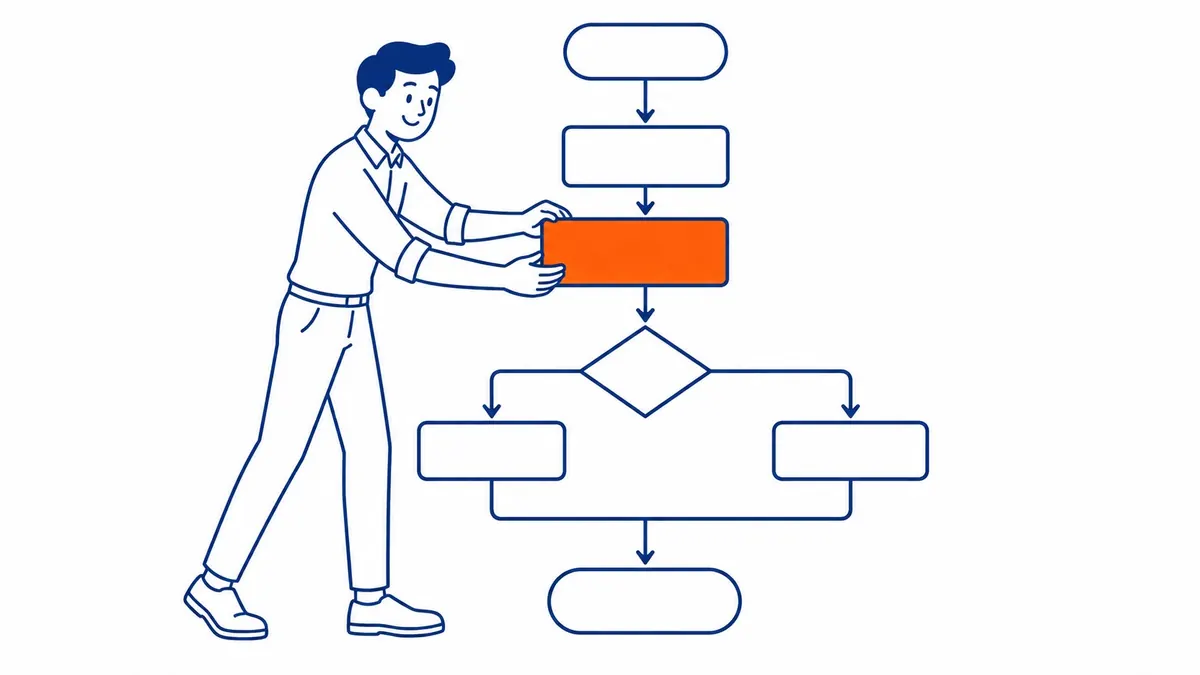
Open any SEO outline template floating around online. It hands you a skeleton. H1 at the top. Five or six H2s underneath. An FAQ block at the bottom.
Templates sell well for a reason. They look like process. Filling one in feels productive. The output looks organized enough to send to a writer. Nothing in it has actually been decided yet.
Fill that skeleton with topic labels and you have written a table of contents for a page nobody has thought about yet.
Here is where it breaks. Why Keyword Research Matters reads like a plan. It is not one. That line commits the writer to nothing at all. Anybody can put four hundred words underneath it. So they do. Vague words, because a vague heading asked for vague words.
Then the page ships thin. Nobody can point at the moment it went wrong. The outline looked fine.
Labels hide the gaps too. A section you know nothing about looks identical to a section you could write from memory. Both are two words long. You find out which is which halfway through the draft, on a deadline.
Write Every Line as a Sentence That Argues
Swap the label for a claim.
Not Why Keyword Research Matters. Something closer to this instead. Most keyword lists get built from search volume data alone, then never checked against what the site can realistically rank for.
Longer. Uglier too. It also does the one thing a label cannot. That line takes a position. You can disagree with it. A writer reading it knows exactly what the section has to establish.
Here is what four lines look like in each version.
The label version. Keyword Research. On-Page SEO. Link Building. Monthly Reporting.
The claim version. Volume data ranks the wrong keywords first. On-page work fails when the page targets a phrase the site has no chance at. Links move a page that already deserves to move. Reporting that counts rankings without demand counts nothing.
Four lines in each version. Only one of them tells a writer what to write.
Do that for every section. Six or eight lines. Each one a full sentence with a verb doing real work.
Then read the list back. Some lines will fight each other. Two will turn out to be the same claim wearing different vocabulary. One will be something you believe but cannot actually support. Better to find that at line four of a plan than at word twelve hundred of a draft.
Headings come afterward. The claim exists first. A heading is just a short handle for it. Write the handle last and it describes something real.
Read Every Line Without the Others
There is a fast test for a finished outline. Take one line. Cover the rest of the list.
Can you still tell what that section will say? A claim survives the test. Yet a label goes blank.
Content Format tells you nothing on its own. Compare it with this. Step-by-step formats suit how-to queries. Comparison tables suit shopping queries. Now the section is decided before anybody starts typing.
Run that test on your own SEO outline before any content gets written. Any line that goes blank is a section you have not thought about yet. Cut it, or think about it. Those are the two options.
Most outlines shrink here. Ten sections drop to six. Then the page gets shorter and says more.
Somebody Will Say Google Only Reads the Headings

Fair objection. Headings do genuine work. They break a page up for skimmers. Also they hand a crawler a map of the sections. Most guides to search engine optimization make that point. It is a correct point.
That objection is exactly why headings get written last.
A heading is a promise about the text sitting under it. Write the promise first and nothing exists to check it against. Reverse the order. Then the payload comes first and the heading nearly writes itself. Accurately, too, since by then you know what you are labelling.
So headings keep their importance. They stay the visible layer. Only the order of operations changes.
An Outline Is Not a Brief

Those two documents get treated as one. Still, they do different jobs.
A brief tells a writer about the assignment. Who reads it. What tone. How long. Which keyword. Context, essentially.
An outline tells a writer what the page will assert. Different information entirely. No brief supplies it.
You can hand somebody a detailed brief and still get a shapeless article back. The brief scopes the work. An outline decides the argument. Skip the second one and the writer invents it alone, halfway through a paragraph, at eleven at night.
Order the Sections by What the Reader Has to Accept

The claims exist. Now they need a sequence. Most outlines default to chronological order. Or to whatever order the competitor happened to use.
Try a different question instead. Which claim does the next claim depend on?
Section five might make no sense to a reader who has not accepted section two. Then section two moves up. Some claims are load-bearing. Others are supporting detail that could sit almost anywhere without damage.
A second reason the order matters. Readers leave. A visitor who bounces at the second heading never reaches the sixth. So the claim your page exists to make belongs near the top, never saved for a finish nobody reaches.
That runs against how most people were taught to write essays. Build up. Then reveal. Search readers arrive holding a question and leave the moment it looks unanswered.
Where the Keywords and the Links Get Placed
An outline is also where the SEO obligations land.
So assign the target phrase to one named section. Not to the page in general. One section, so the writer knows where it belongs and stops sprinkling it across every paragraph. Secondary phrases from your keyword research get the same treatment. One home each.
The same applies to internal links. Decide which section carries which link before a draft exists. A link picked at outline stage sits inside an argument that needed it. Links added afterward get bolted onto whichever sentence had space.
That is the whole difference between four links reading like prose and four links reading like a requirement somebody was handed.
One more item belongs in the plan. The FAQ questions. Pick those from what people actually type, never from what rounds the page out. Four is a working minimum on a blog post. Write them into the outline and they stop being an afterthought stapled to the bottom.
Competitor Headings Are Evidence, Not a Template

Everybody opens the top three results and lifts the H2s. Understandable. It feels like research.
Yet what comes back is the average of whatever already ranks.
Read those pages a different way instead. Note the questions all three answer, since that is your floor. Then note the question none of them answers properly. That gap is the only line in your SEO outline that actually belongs to you.
A page assembled from competitor headings can only win on tiebreakers. Page speed. Link history. Domain age. Fine if you have those. Most Calgary businesses do not, at least not against a national publisher that got there first.
Three competitors covering the same eight questions is still not a template. That is a signal about reader expectation, nothing more. Meeting the expectation is the price of entry. Beating it needs the line none of them wrote.
How To-The-TOP! Builds an Outline for Client Pages

Every SEO outline starts as a claim list. Six to eight sentences, written before a single heading exists.
The client reads that list first. Arguing about a sentence takes minutes. Then arguing about a finished article takes a rewrite. Clients kill sections at this stage fairly often, which is the whole point of showing it.
Keyword targets get assigned per section next. Then the internal links. Headings after those. The draft is the last thing to happen, so most decisions are settled before anybody writes a paragraph.
To-The-TOP! runs the same order for a Calgary SEO page and for a blog post. Also for the landing pages behind Google Ads management. There the outline carries a conversion path on top of the topic.
Common Questions About SEO Outlines
What is an SEO outline?
A plan for a single page, written before the draft. It states what each section will claim. Keyword targets and internal links get assigned at the same time, so the writer is not deciding those mid-paragraph.
How long should an SEO outline be?
Six to eight sections covers most blog posts. Fewer when the query is narrow. Section count should follow the number of things you have to say. Never a word-count quota.
Should I copy competitor headings into my outline?
Read them. Do not copy them. Competitor headings show which questions a reader expects answered. They cannot show what your page knows that theirs does not.
Do I write the title before or after the outline?
Write it first, usually. The title fixes what the page promises. Every claim underneath then has to serve that promise. A title written afterward tends to describe whatever the draft drifted into.
Can AI write my SEO outline?
It produces labels quickly. Those labels come from material already published, so they average the pages you are trying to beat. Use it to catch a section you missed. Write the claims yourself.
How many H2s should a blog post have?
No fixed number. One per claim. Two headings making the same point means one section and a duplicate.
Worth Testing on the Page You Published Last

Pull up something already live on your site. Copy out the headings. Nothing else, just the headings.
Read the list. Look for what the page argues. Not seeing it means the reader who left never saw it either. Two minutes to check. Often it is the first thing a site audit turns up anyway.
Contact Calgary SEO Company To-The-TOP!
Questions about anything in this article, or about your own rankings? Talk to a Calgary SEO specialist directly.
Phone: (403) 308-5949
Address: 1509 14 Ave SW, Calgary, AB T3C 0W4
Hours:
Monday to Friday: 10:00 am – 7:00 pm
Saturday: 12:00 pm – 4:00 pm
Sunday: closed