How to Do Voice Search SEO
We started noticing the divergence around 2018. Clients in Calgary were seeing question-phrase queries generate impressions but minimal clicks in Search Console. “Which SEO company in Calgary has good reviews?” was getting impressions. “Calgary SEO” was getting clicks. Same intent. Different query structure entirely.
Voice search SEO is not a separate discipline from the SEO you should already be doing. Instead, it is a set of targeted adjustments. Most of them address one difference. People speak differently than they type.
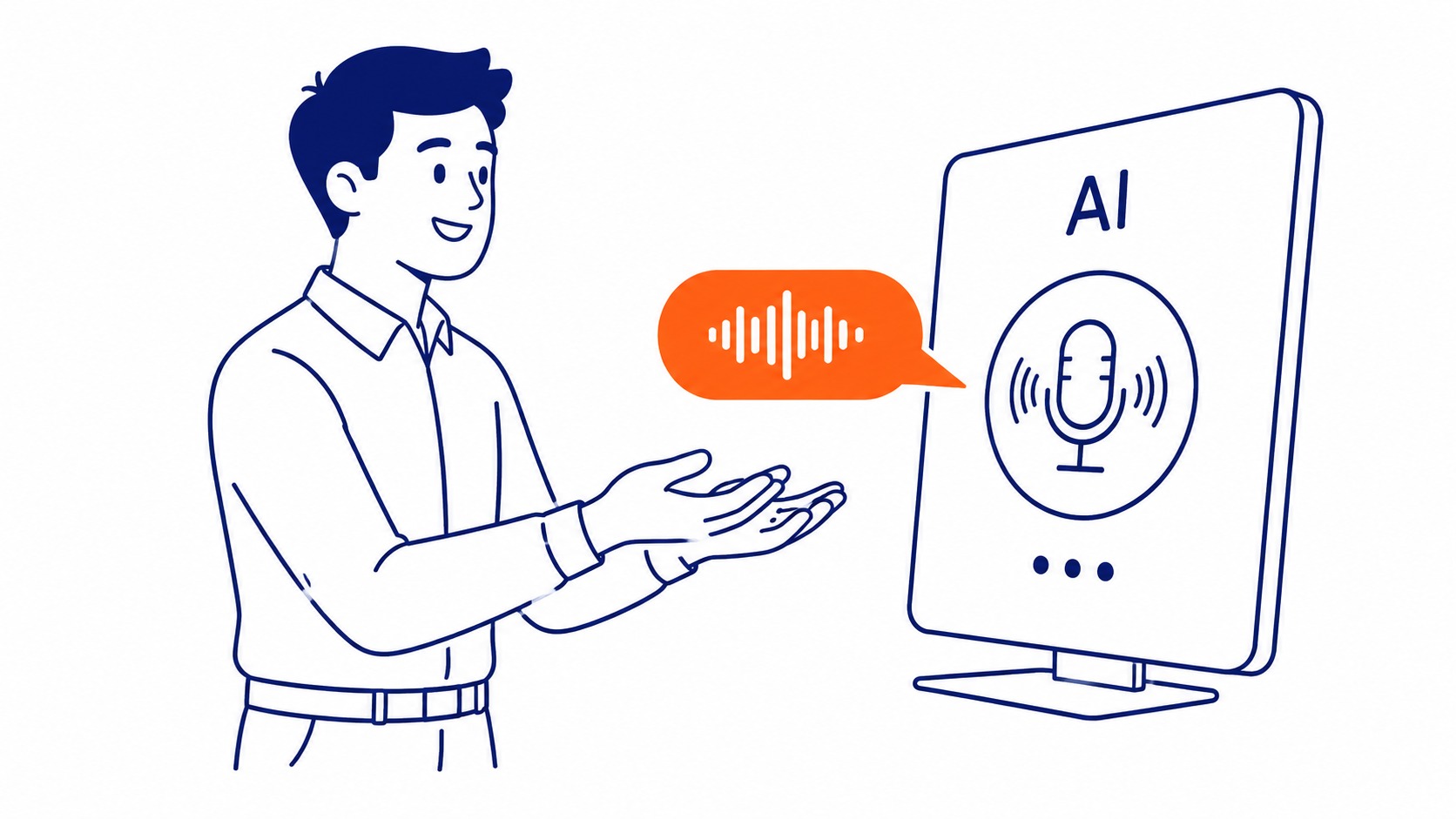
Voice search is organic. It does not respond to Google ad management budgets. Position here is earned through content structure and technical foundations. Those same foundations also feed traditional search rankings. Additionally, working on one strengthens the other.
Voice search users expect a spoken answer. Not a list of results to scroll. One clear response, read back through the device. Your content needs to be structured for that format to be eligible.
Voice Searches Run Differently Than Typed Queries
Not a subtle difference, either.
Typed queries are short. “Calgary SEO.” “Voice search optimization tips.” “Best dentist near me.” Someone speaking to Google Assistant or Siri asks a complete sentence. “Which SEO company in Calgary has the best reviews for small businesses?” Entirely different query structure. Entirely different ranking requirements.

Typed queries average four to five words. Voice queries average seven to nine. That length difference changes what Google treats as the best match.
Verb usage is the other key difference. Typed queries rarely include “is,” “are,” “how,” “what,” “where.” Voice queries almost always start with one. Google reads these question structures differently from fragment keywords. A page optimised for “voice search tips” does not automatically rank for “How do I do voice search SEO for my business?”
Why Typed and Spoken Queries Diverge
Natural language processing is how Google parses a spoken voice search query. Not just keyword matching anymore. Google identifies the intent behind the full spoken question. A page that directly answers a conversational question outperforms a page optimised for the keyword fragment version of the same search.
Question-style headings matter here. “How to do voice search SEO” as an H2 mirrors the spoken query structure. Google identifies the heading as a question. The paragraph below becomes the answer candidate. That structure is what voice search results favour.
What Voice Users Are Actually Searching For
Immediate needs dominate voice searches. Store hours. Phone numbers. Directions queries. Venue recommendations nearby. People ask voice assistants for fast, specific answers. Not background. Context comes second, if at all. The direct response first, then anything else.
Your content that front-loads the answer and adds context below fits this intent pattern better. Pages that build toward the answer over several paragraphs are not voice search candidates. The answer needs to appear in the first paragraph under the heading. Front-loaded answers do the same job for AI overviews SEO, where extraction beats build-up. Front-loading answers is a habit the field of SEO picked up fairly recently.
Conversational Keywords and Long-Tail Phrases
Different research process than standard work.
Standard keyword research builds out terms like “voice search SEO” and “voice search optimization.” Those still matter for traditional rankings. However, voice search adds a dimension on top. Conversational keywords. Full questions that match how a person speaks a query aloud rather than types it.

We tell clients to start with what they hear on introductory calls. What questions come up in the first ten minutes? Those are often the same questions people speak into voice assistants. Introductory calls surface the same patterns every time. “How long does SEO take?” That one lands in the first five minutes. “Is SEO worth it for a small business in Calgary?” Also a regular one. Both are voice search queries worth targeting.
Question Keywords as Base Material
Google’s People Also Ask section is the fastest source. Search your primary keyword. Read the PAA questions. Many of them are exact voice search queries. For example, any question that ends with a noun or a decision is worth building content around.
AnswerThePublic organises question-based keywords by prefix. “How,” “What,” “Can,” “Where,” “When.” Run your main topic through it. Filter for questions where you already have Search Console impressions. Those are voice search wins already within reach.
Our keyword research process for Calgary businesses covers question-phrase variants as part of every campaign. The question phrases that drive voice searches and the intent-rich phrases that drive traditional click-through overlap significantly. Working both is not extra work. In fact, it is the same work done once, with an extra layer of question-format content added to key pages.
Long-tail keywords with local phrases are a separate layer. “Best SEO services near me” and “SEO company Calgary” are different queries. Both carry local intent. Voice devices infer location from the device. A spoken “best SEO company” query in Calgary triggers local results without the user saying “near me.”
Local and Near-Me Voice Queries
A large share of voice queries carry local intent. Google infers location from the device. “Best SEO company” plus user location data still surfaces local results without the user naming a city.
Your content for local pages needs city-name references placed naturally. Not forced insertions. The way a local business owner would phrase the question. Voice search rewards content that reads like it was written for local users, not adapted from a generic template. Similarly, positioning your business within a specific geography rather than writing for a generic audience improves how voice queries match your pages.
A Calgary plumber asking about voice search SEO is a different content target than a general audience. Specific local examples land better in voice results. Generic advisory content does not. Worth knowing what SERP in SEO means before chasing spoken answers. Specific beats generic, which is most of the answer to whether SEO is still relevant.
Featured Snippets: Targeting Position Zero
Voice assistants read one answer. Not a list.
Featured snippets are the boxed answers appearing above organic results on Google. For voice search, they are more than a visibility win. Google Assistant reads featured snippet content aloud when answering a voice query. Siri does the same. Alexa pulls from the same source for compatible queries. Earning a featured snippet means your content gets spoken.
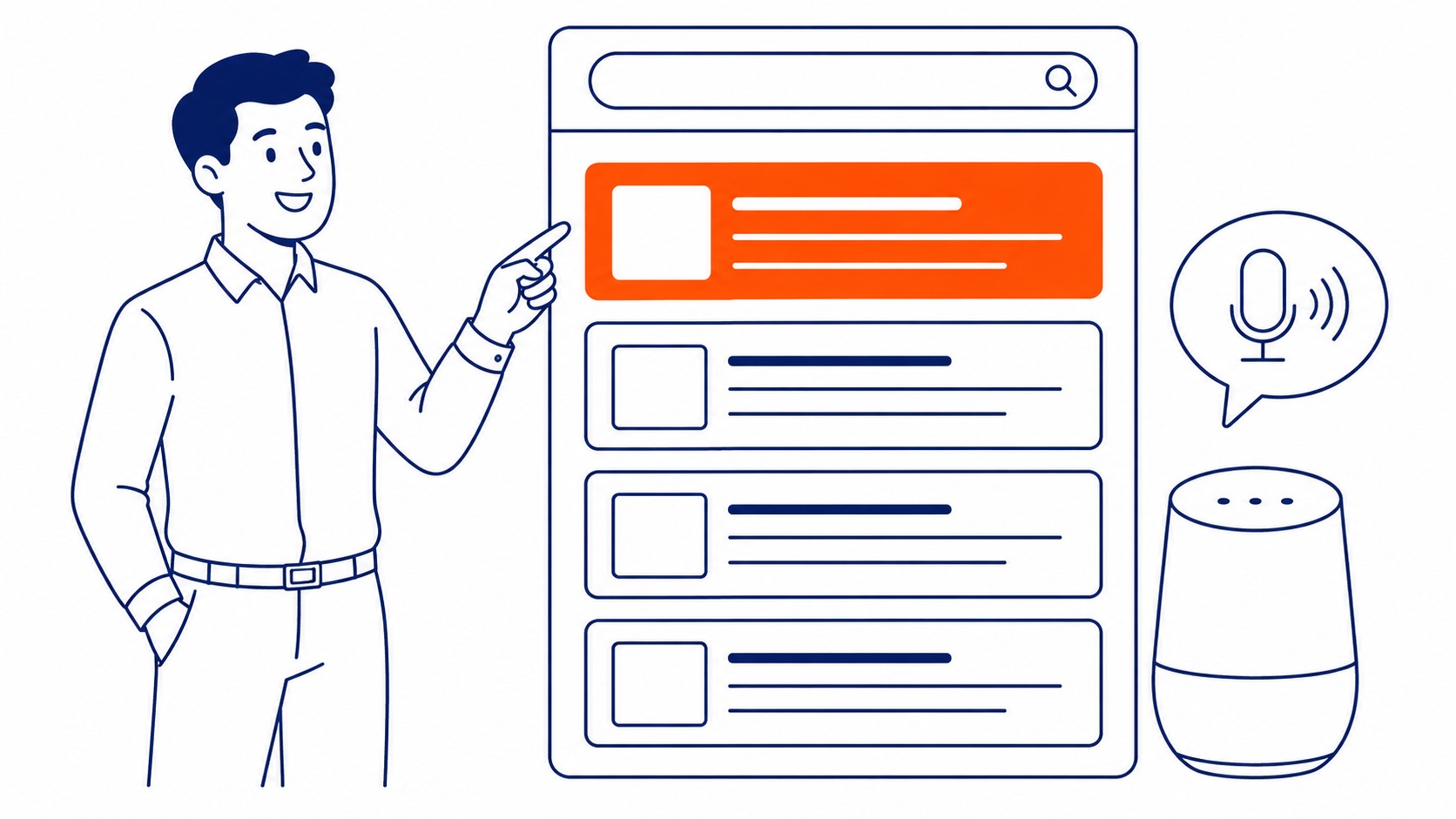
Most voice search answers pull from featured snippets. Not from the organic rank one result. Map pack results don’t feed it either. The snippet. That is where voice search SEO work focuses when targeting answer-style queries. Your content for those queries needs to be formatted to the snippet standard.
How Pages Earn a Featured Snippet
Snippet content runs 40–60 words. Declarative prose. A direct answer to a specific question. Google pulls lists into snippets too, but prose answers work better for voice specifically. Lists sound awkward when read aloud. Prose reads naturally.
Already on page one for a question keyword? Check whether a snippet sits above you. If a competitor holds it, their answer is shorter or cleaner than yours. Restructure your content to match that format. Submit the URL in Search Console for reindexing after the update.
No snippet on the query currently? Format your answer to length. Confirm the page has some domain authority. Then give it time. A well-formatted answer on an authoritative page will move toward the snippet over several months. This is not instant. Three to six months is a realistic window for new content to earn a snippet position.
Structured Data and Schema Markup
Signals that help search engines parse your content.
Structured data does not directly lift rankings. What it does is help search engines read your content faster and more accurately. For voice search, that faster, more accurate reading speeds up snippet selection. Your content becomes a cleaner candidate.

LocalBusiness schema reinforces your contact data for location-based voice queries. In turn, it feeds the knowledge graph. Google uses knowledge graph data to answer “who is” and “where is” voice questions directly. No page reading required. The data comes from structured signals you provide.
FAQPage Schema and Voice Search
FAQPage schema marks up your question-answer pairs explicitly. Each question-answer block gets tagged. Google reads it as a structured Q&A, not just prose. Voice queries that match a tagged question have a cleaner path to a spoken answer from your site.
Add FAQPage schema to any page with a question-answer section. The JSON-LD version is the cleanest implementation. One block per FAQ section. Each question as its own entry. Keep answers under 100 words. Schema markup is one of the lower-effort technical steps in voice search optimization. The implementation is a few lines of JSON in the page header.
Google Business Profile and Local Voice Queries
Most voice queries carry local intent.
Restaurant hours. Phone numbers. Business addresses. Store directions. These are the most common voice search queries. High immediate intent. Very local in scope. Voice devices pull this information from Google Business Profile data first, before the website. Your Google Business Profile needs to be complete before voice optimization at the content level matters.

Local voice search answers come from GBP first. Your content on the website matters for broader question-phrase queries. For location-intent queries (“hours,” “phone number,” “address,” “near me”), a fully complete Google Business Profile is the primary signal.
NAP Consistency for Voice Results
Name. Address. Phone number. All three need to match exactly across every platform where your business appears. Your Google Business Profile, your website, Bing Places, Apple Maps, Yelp. Any mismatch creates conflicting signals. Conflicting signals suppress local rankings and reduce voice search eligibility.
Reviews matter here too. Google includes review counts and ratings when surfacing local businesses through voice. A profile with recent review volume ranks above one that has not been updated. An SEO company in Calgary like To-The-TOP! includes initial GBP setup and the review process as standard campaign steps. Your site visibility and your GBP completeness are two sides of the same local voice search signal. That is how local SEO works. Your business gains voice search eligibility and overall local visibility at the same time.
Page Speed and Mobile Performance
Most voice searches happen on mobile devices.
Smartphones lead the volume. Smart speakers follow. In cars, Bluetooth voice assistants handle most queries. Voice search happens across device types, but mobile is the priority. Mobile-first indexing means Google’s ranking decisions for voice pull from the mobile version of your site, not desktop. Page speed on mobile is therefore a voice search eligibility factor, not just a general performance metric.

Slow mobile load times hurt voice search eligibility. Google factors page speed into ranking. As a result, pages that fail Core Web Vitals on mobile are not the dominant voice search candidates.
Core Web Vitals on Mobile
Run your site through Google PageSpeed Insights. Look at the mobile score specifically. Core Web Vitals failures on mobile hold pages back from voice search positions.
Uncompressed images. Render-blocking scripts. Missing caching. Those three show up on almost every slow site. A website SEO audit surfaces all of them, ranked by impact. Most performance gains come from a small number of targeted fixes. Not a full rebuild. A few specific changes, in order of impact. For example, compressing images alone can drop mobile load time by 30–40% on image-heavy pages.
Building FAQ Content for Voice Queries
Question-and-answer format is most directly compatible.
FAQ pages map directly onto voice query patterns. Each question as its own heading. A short direct answer below it. That structure is exactly what voice assistants look for. It is also what Google uses to populate featured snippet results. Your content organized this way serves both purposes simultaneously.
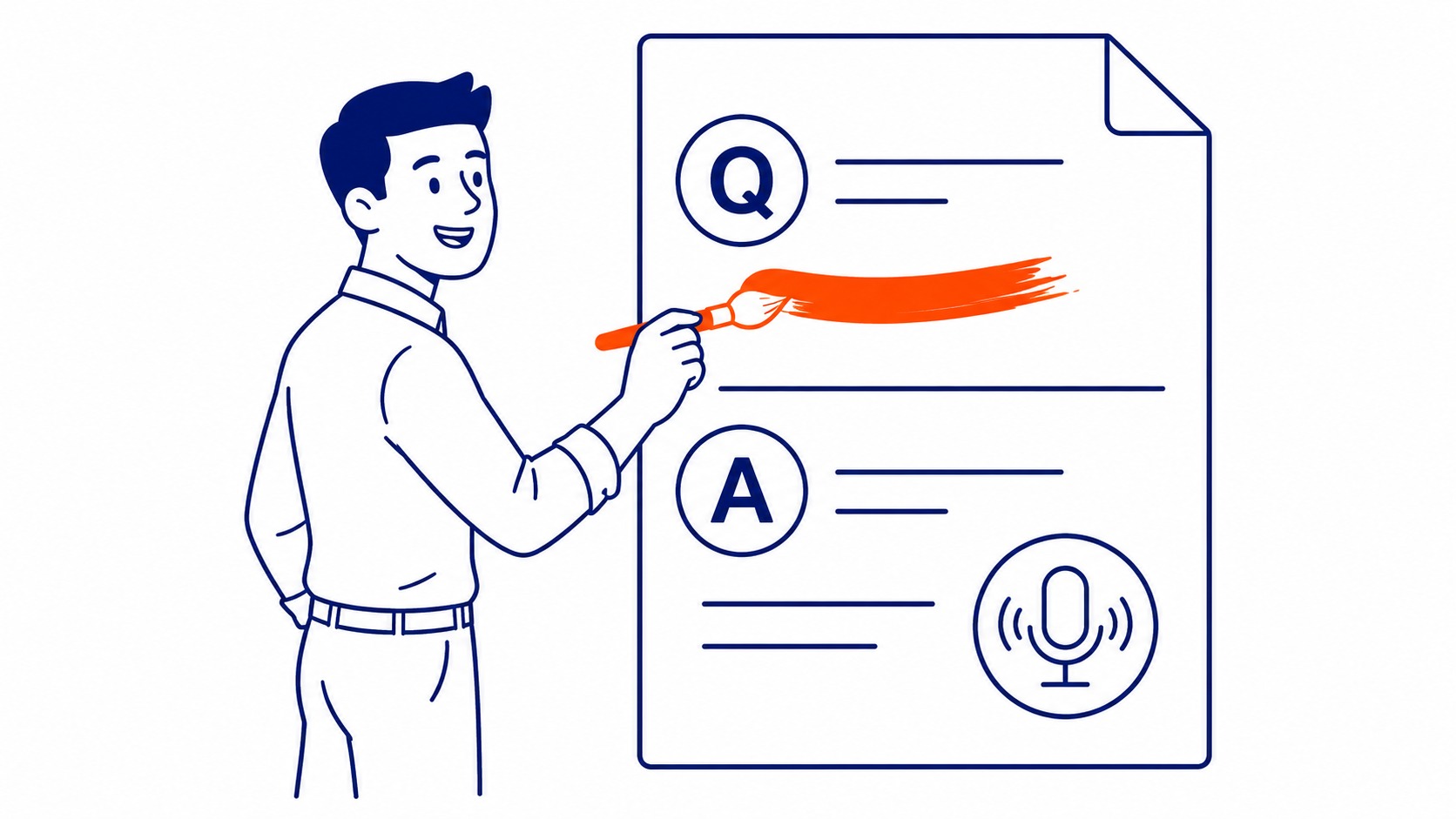
A well-structured FAQ page can win multiple featured snippet positions. One for each question where your answer is the shortest and clearest result on the SERP. For businesses with multiple services, building one FAQ page per service cluster is a practical starting point. Ongoing SEO services in Calgary can handle this buildout systematically, without disrupting existing pages that are already performing.
How Long Should a Voice Search Answer Be?
Aim for answers between 40 and 60 words. Not shorter, and never significantly longer. Voice assistants skip answer paragraphs they cannot read in under ten seconds. A 40-word paragraph reads in about twelve seconds aloud. That is the practical ceiling.
One point per answer. No multi-clause structure. Each sentence is its own complete thought. Read the answers aloud before publishing. If they sound like a broadcast response, they work. Anything that sounds like documentation needs restructuring. For example, “Google Assistant reads the first direct answer it finds. Make that answer yours.” is the right format. “There are many factors involved in voice search answer selection including…” is not.
Tracking Voice Search Performance
Direct data is still limited.
Google Search Console does not label voice queries separately. You cannot isolate voice traffic from organic text traffic in standard reports. There is a usable workaround.

Filter your Search Console query data for queries that are eight or more words long. Filter separately for queries starting with question words. “How,” “What,” “Where,” “Who,” “When.” Those subsets represent a strong proxy for voice search impressions. Pull month-over-month trends on those filtered query sets.
Using Search Console as a Voice Search Proxy
Track impressions for question-phrased queries against a monthly baseline. After you add featured-snippet-format content to key pages, look for impression count jumps on the matching query phrases. Earning a featured snippet reliably moves impressions upward.
Zero-click searches are more common in voice search than in traditional text search. Someone who asks a voice assistant for a phone number and gets it spoken back does not click through. Traffic from voice queries under-represents actual interactions. Still, impressions and impression trends are the more reliable signal for your site’s voice search performance.
Frequently Asked Questions
Common questions from clients.

How to do SEO for voice search?
Target question-based long-tail keywords that match how people speak queries aloud. Structure your content with the question as the heading and a direct 40–60 word answer below. Complete your Google Business Profile fully. Add FAQPage schema markup to question-answer sections. Confirm your site scores well on mobile Core Web Vitals. Those five steps form the practical foundation for voice search SEO.
Is SEO dead or evolving in 2026?
Evolving, not dying. Voice search is one of several shifts changing how search queries reach your pages. AI Overviews intercept some clicks before they reach organic listings. Featured snippets take another share. The local pack runs on different signals but pulls traffic the same way. Pages optimised for those positions still perform. The underlying signals have not changed. Page authority determines which pages surface. Content quality fills the gap. Technical work is the floor below both. For search engine optimization in Calgary, the same fundamentals apply.
What is the 80/20 rule for SEO?
Not a formal rule, but the pattern holds. Around 20 percent of SEO activity drives most of the ranking results. Keyword research and content built around high-intent queries do most of the work. Technical fixes matter, but they matter most once the right content and keyword targets are already in place. That is when results follow.
How do you do a voice search?
Activate your voice assistant on a smartphone or smart speaker. Google Assistant handles voice on Android and Google Home devices. Siri runs on Apple devices. Alexa runs on Amazon Echo hardware. Speak your query as a full natural sentence rather than a keyword fragment. “What are the best SEO services in Calgary?” returns a more targeted result than “Calgary SEO.” Voice assistants parse natural language. Full questions give them more signal to work with.
Contact Calgary SEO Company To-The-TOP!
Questions about anything in this article, or about your own rankings? Talk to a Calgary SEO specialist directly.
Phone: (403) 308-5949
Address: 1509 14 Ave SW, Calgary, AB T3C 0W4
Hours:
Monday to Friday: 10:00 am – 7:00 pm
Saturday: 12:00 pm – 4:00 pm
Sunday: closed