
How to Find Long Tail Keywords: The Research Methods That Work
Most of the search traffic that converts comes from queries nobody predicted. An accounting firm in Calgary starts ranking for “bookkeeper for independent contractors Edmonton.” Never targeted. Never optimized. Just earned because a related page existed and the intent matched. That is a long tail keyword delivering a real client. Three to five words, specific intent, thin competition, and a searcher already at the decision point.
Finding these deliberately, before a competitor does, is what any SEO expert Calgary businesses hire does before writing a single page. The process is not complicated, but it requires more than typing guesses into a keyword tool.
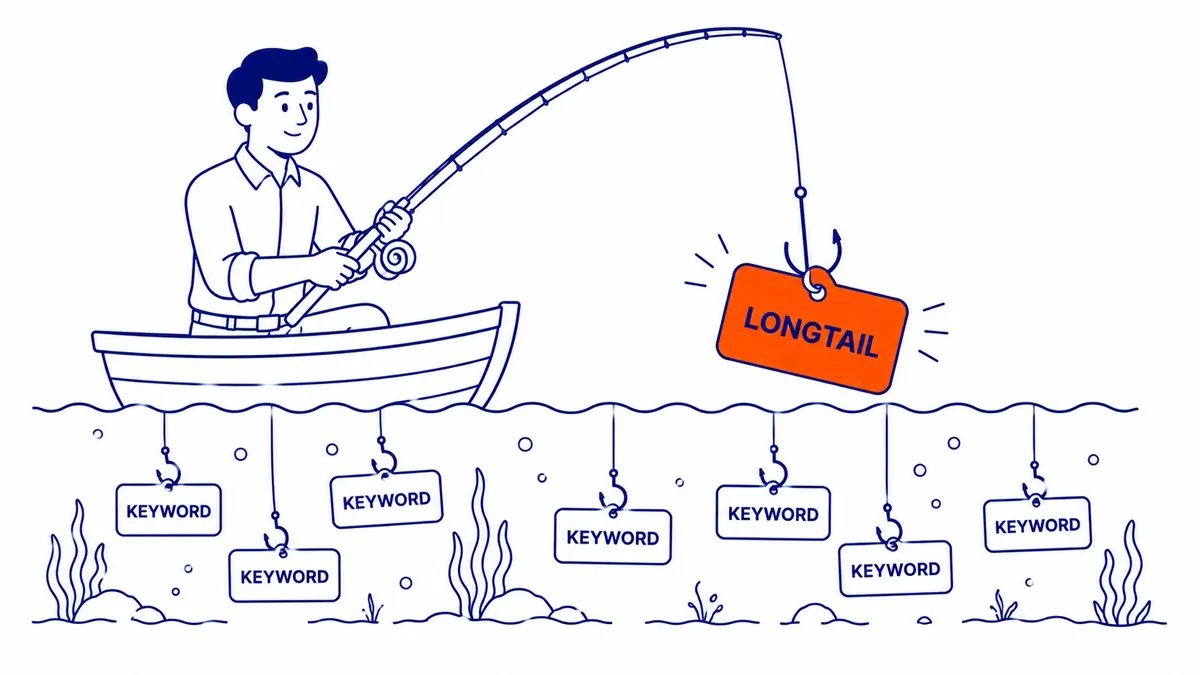
What Are Long Tail Keywords
Three or more words. Narrower intent than a head term. Lower search volume, higher conversion rate, and less competition in the search results. Those three properties together make long tail keywords the most accessible source of ranking wins for most sites that are not already dominant in their niche. The same digging surfaces tight niche terms, which a guide on how to find niche keywords covers.
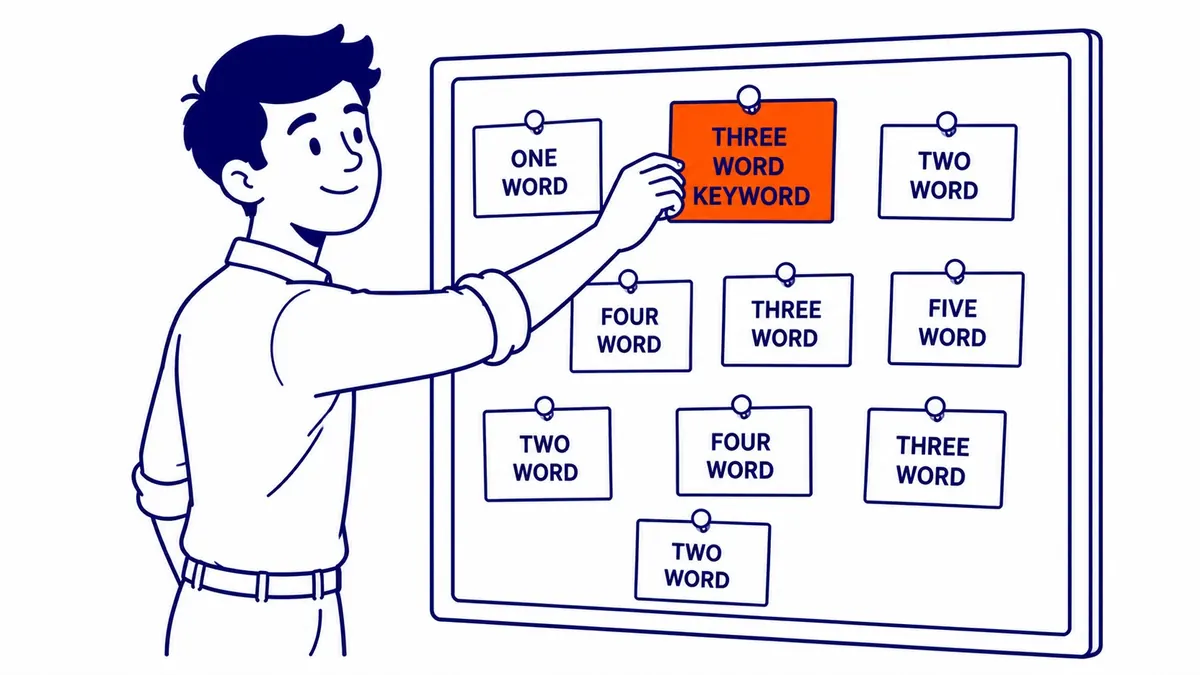
The head term “lawyer Calgary” carries maybe 2,000 searches per month and a dozen established firms spending heavily to rank for it. “Family law lawyer Calgary low-conflict separation” has perhaps 40 searches per month and three or four sites with a dedicated page. Odds of ranking: completely different. Conversion rate of the smaller traffic: usually higher, because the searcher has already narrowed the problem before typing.
Long tail keywords make up roughly 70% of all search queries. Most never appear in a keyword tool because individual volumes are too low to register, but across hundreds of variations they collectively drive more relevant traffic than the obvious head terms most sites are actively targeting. The opportunity sits in the aggregate, not in any one phrase.

Why Long Tail Keywords Produce Results
Competition is the first reason. Head terms like “dentist Calgary” carry two decades of competitive domain history in the top results. Variations like “dental implants Calgary northwest” often have three or four competitors with a relevant page. Existing domain authority goes further against thin competition; a site that cannot crack the top five for a broad term can rank first page for dozens of its long tail variations within months.

Intent alignment is the second reason. Somebody who types a three-word query has already done the mental work of narrowing the need. Closer to a decision than somebody still at the broad “dentist Calgary” stage. Pages that match specific intent convert at higher rates than pages targeting a broad term and hoping the right visitor finds them eventually.
Topical depth is the third reason. A page answering ten related long tail queries around one topic signals expertise to the algorithm. That signal compounds over time, and it outperforms a page over-optimized for one term and thin on the surrounding intent landscape.
Methods for Finding Long Tail Keywords
Start with Search Console. Your existing site already has partial rankings for queries it never directly targeted. The Performance report, filtered to Queries, surfaces hundreds of variations: long tail phrases generating impressions with no dedicated page behind them. Queries with 100 to 500 impressions and a low click-through rate are the first target. The ranking signal already exists on those queries; a dedicated page converts it into real traffic. This is also where the keywords you are already ranking for appear, which shapes which long tail expansions to prioritize first.
Google autocomplete is the fastest zero-cost source after that. Type a root keyword into the search bar and stop before pressing enter. Every autocomplete suggestion is a real query from recent users. The “People also ask” section and the related searches at the bottom of the results page produce additional variations. None of this costs anything, and it surfaces queries that paid tools sometimes miss because they fall below measurable volume thresholds.
For volume and difficulty data, a paid tool like Ahrefs or Semrush is worth the investment once the site has enough scale to act on the findings. Type a seed keyword, filter keyword ideas to a difficulty score below 20 and a monthly volume above 30, then sort by traffic potential rather than raw volume. That filter isolates low-competition phrases with real search activity, which is the same approach behind how to find low-competition keywords generally. Understanding the types of keywords that drive search traffic matters before running this filter; informational long tails and commercial long tails behave differently in conversion, and a page targeting the wrong intent type rarely ranks for the right audience regardless of how well it is written.
Competitor gap analysis is also worth running early. A gap report compares keywords a competitor ranks for against what your site does not. In most industries, a single pass uncovers 50 to 200 addressable long tail variations within the first hour. These are validated targets; a competing site is already ranking for them. The keyword selection process from there is about deciding which gaps to close first based on conversion priority, not just search volume.

Tools Worth Using
Search Console is free and already connected to your site’s actual ranking data. Performance data goes back 16 months, showing impressions, clicks, and average position for every query the site has appeared for. No other tool provides this because no other tool has access to the same underlying data set. For sites with any existing organic traffic, this is where keyword research starts.
Ahrefs and Semrush both produce keyword idea lists from a seed term, ranked by difficulty and traffic potential. Ahrefs’ parent topic feature is specifically useful for long tail work; it groups related variations so you can see whether a phrase needs its own page or fits under an existing one. Both tools are paid, but both pay for themselves on the first campaign if the site is actually acting on the findings.
AnswerThePublic visualizes question and preposition-based variations around any seed term. Useful for FAQ research and surfacing the question forms that people type when they are early in a decision. The free tier limits daily searches but covers a first pass on a new topic cluster well enough to start building content angles.
Google Keyword Planner is free with a Google Ads account. Volume estimates for head terms are reliable; for long tail phrases with volume under 100 per month, it often shows a range rather than a specific number. Use it for validation, not for discovery. That is exactly why our keyword research layers in multiple data sources: no single tool has the full picture on long tail volume.

Evaluating Long Tail Keyword Candidates
Not every low-competition keyword deserves a page. Deciding which ones to keep is what how to choose keywords comes down to. A manual search in an incognito window is still the fastest filter. If the results are Wikipedia, government pages, and large media properties, the query is informational with no commercial application for a service business. Difficulty scores do not catch this pattern; the manual check does, in thirty seconds.
Match keyword intent to page type before building. “Best accounting software for contractors” is informational: a comparison post or guide. “Hire bookkeeper Calgary contractors” is commercial: a service or location page. Building the wrong page type for the query intent rarely produces rankings, regardless of how well the content is written or how many relevant keywords are on the page.
Think also about how many keywords a single page can target before assigning long tails across the site. A well-structured page handles 10 to 20 closely related variations comfortably. Spreading thin targets across too many underdeveloped pages weakens every one of them; concentrated topical depth on fewer pages outperforms scattered shallow coverage on more of them. Page count is a decision you make while doing keyword research for SEO, not after.
Frequently Asked Questions
How long should a long tail keyword be?
Three or more words covers the standard definition, though intent specificity matters more than word count. “Best plumber” is two words but still broad. Something like “best emergency plumber Calgary northwest 24-hour” is long tail by any reasonable measure. Specificity and thin competition define the category; the word count is a rough proxy, not a hard rule.
Are long tail keywords still worth targeting?
More than before. Most content strategies still chase the obvious head terms, which leaves long tail variation territory relatively open. A new campaign keyword analysis typically uncovers 200 to 400 viable long tail variations that competitors have not addressed with dedicated pages. That gap closes slowly in competitive markets, but it still exists in almost every industry served locally.
How many long tail keywords can one page target?
Ten to twenty closely related variations is a realistic range for a well-built page. Closely related means the same core intent with different modifiers, question forms, or location qualifiers. Forcing unrelated long tail terms onto a single page produces a confused page with weak signals on each term rather than strong signals on any of them. Topic coherence first, keyword breadth second.
Contact Calgary SEO Company To-The-TOP!
Questions about anything in this article, or about your own rankings? Talk to a Calgary SEO specialist directly.
Phone: (403) 308-5949
Address: 1509 14 Ave SW, Calgary, AB T3C 0W4
Hours:
Monday to Friday: 10:00 am – 7:00 pm
Saturday: 12:00 pm – 4:00 pm
Sunday: closed