
How to Tell If Your SEO Company Is Working
The quickest way to tell if your SEO company is working is to check your own data rather than its report. Open Google Search Console, filter out searches for your business name, and compare impressions and clicks for the pages the company worked on against the same period before the work started. Then confirm that the changes it describes are visible on your site, that new pages are indexed, and that enquiries from organic search are being counted. If several months pass with no movement on any of those, and the company cannot explain why in terms of your data, that is the signal to act.

Start with access, because every check depends on it
None of the checks below work if you cannot see the accounts yourself. Search Console has a clear hierarchy of permissions: an owner has full control and can add or remove users, a full user can view all data and take some actions, and a restricted user has simple view rights on most data. Google also separates a verified owner, who proved ownership with a token such as a file on the website, from a delegated owner who was added by someone else. The business should be the verified owner, and the SEO company should be a user on the property you own, not the other way round.
The same goes for Google Analytics and, for local businesses, the Google Business Profile. Google’s own guidance on hiring an SEO says to give a prospective provider read access to Search Console and, at that early stage, not write access. If your provider set up these accounts under its own login and is slow to hand over ownership, that is worth settling before you judge anything else, because you cannot evaluate work you cannot see.

Seven checks you can run yourself
These are listed roughly in the order the signals tend to move. Impressions and indexing respond first, positions follow, and enquiries come last, so a check further down the list needs more time before it is fair to judge.
1. Non-branded impressions on the pages that were worked on
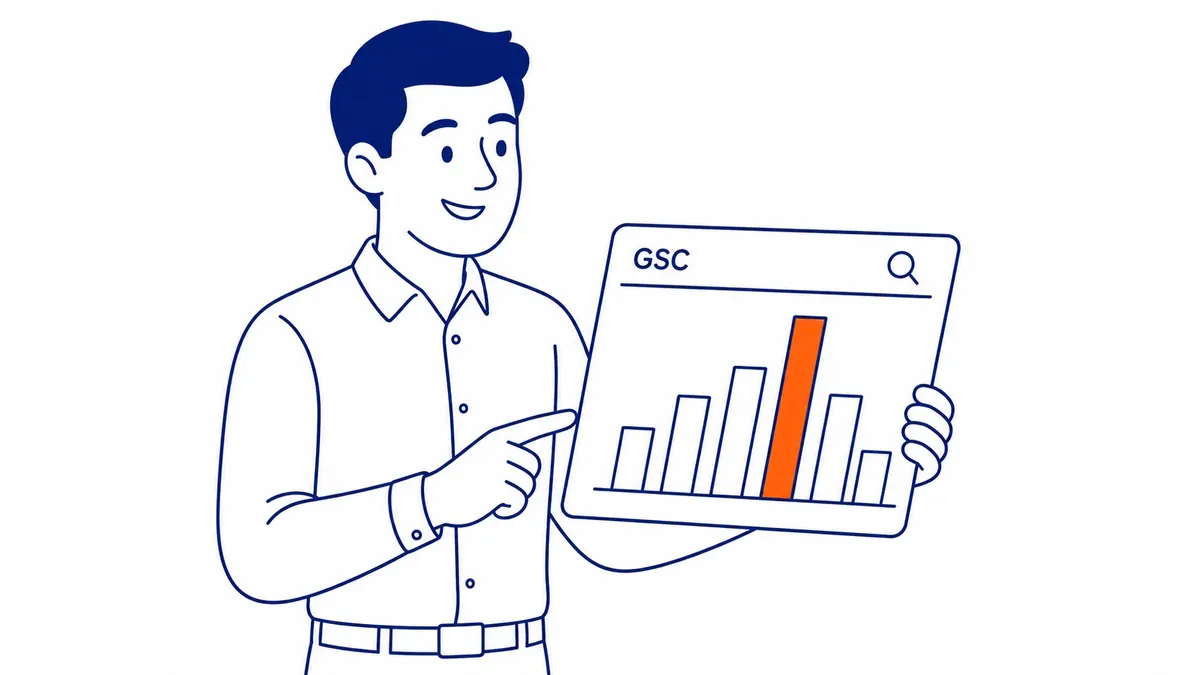
In the Search Console Performance report, add a query filter that excludes your business name. Google documents this method for comparing branded and non-branded totals, with one caveat: anonymized queries are dropped when you filter by query, so the totals are approximate. The split still matters, because people who search your name already know you, and their visits say little about whether SEO is finding you new customers.
Next, switch to the Pages tab and look at the specific URLs your SEO company says it improved or created. Use the date filter’s Compare option to set the last three months against the three months before the work began. Rising impressions on those pages is usually the first sign that Google is showing them for more searches. For a seasonal business, and Calgary has plenty of them in landscaping, roofing, furnace repair and snow removal, compare against the same months a year earlier instead, since a spring rush or a cold snap can swamp any month-over-month trend.
2. Average position, read the way Google defines it
Average position is the figure owners misread most often. Google defines the chart value as the average position of the topmost result from your site, across every query you appeared for. When good work gets a page shown for dozens of new searches, many of them at position 40 or 60 at first, the site average can climb to a higher, worse-looking number even though none of the existing rankings slipped. A company’s own rank tracker can also look better than the reality if it follows only a handful of easy terms.

So ignore the site-wide line and look at the queries that matter to your business, one at a time, in the Queries tab. A move from position 18 to 9 on a service search that people in your area actually type is real progress, even before it brings many clicks. A move from 9 to 4 on a phrase nobody searches is not. Remember too that Google says results depend on the time, place, device and history of the person searching, so a screenshot of your own search is not a ranking report.
3. New and changed pages are indexed
Open the Page indexing report and the URL Inspection tool for the pages the company created or rewrote. A new service page that has not been indexed after a reasonable wait cannot rank, however good it is. Google is clear that some URLs are rightly left out of the index, such as duplicates or pages with a deliberate noindex tag, so the number of “not indexed” pages on its own is not a problem. The question is whether the pages that are supposed to earn traffic are in.
4. The work is visible on your site
One of the questions Google suggests asking an SEO is whether it will share all the changes it makes to your site, with the reasoning behind its recommendations. Turn that into a monthly habit. Ask for a list of changes with the URL of each one, then open a few of those pages and check: is the new title there, did the thin page get rewritten, was the broken redirect fixed? A report that says “on-page optimization completed” without naming pages gives you nothing to verify.
This check matters early, because in the first two or three months the data may not have moved yet. The work itself should still be visible, and its quality is something you can judge before the results arrive.
5. Enquiries from organic search are being counted
Rankings and traffic are only steps toward calls, form submissions, bookings or sales. In Google Analytics 4 the actions that matter are marked as key events (the old “goals” no longer exist), and your SEO company should be able to show you which key events you track and how many came from organic search each month. If nothing is set up, that is the first job, because without it neither of you can tell whether the traffic converts. For a local business, calls and website clicks from the Business Profile belong in the same picture, since many enquiries never touch the website.
If you also run Google Ads, keep paid and organic results in separate columns when you judge the SEO. A good month in Ads can hide a flat month in organic search, and branded ad clicks can take visits that would otherwise have been counted as organic.

6. The traffic matches the people who buy from you
More visitors are only useful if they are the right ones. Look at the queries bringing clicks and ask whether a buyer would type them. To take an illustrative example, a Calgary plumbing company whose new traffic comes mostly from “how to unclog a drain” searches across North America has more visits but probably not more jobs, while a smaller gain on “emergency plumber Calgary” or “hot water tank replacement NE Calgary” is worth far more. Informational articles have their place, but they should support the service pages, not replace them as the main source of growth.
Check the Countries tab as well if you only serve Canada or one region. A spike from outside your market can make a traffic chart look healthy without adding a single customer.

7. The report explains why, and says what comes next
A monthly report should connect what was done to what changed, and admit what did not change. An illustrative weak line reads “Published four blog posts and built six citations.” An illustrative useful one reads “The furnace repair page moved from page two to page one for three local searches after the rewrite and the new internal links; the water heater page has not moved, so next month it gets the same treatment.” which can be checked against your own Search Console, which is the point.

If you are not sure what a report should contain, the guide on how to read an SEO report goes through it section by section.
What should be visible, and when
Google no longer publishes a timeline for SEO, and the right expectation depends on how competitive your searches are, the state of the site and how much work is in scope. The table below is practitioner guidance for a typical small business site, not a promise.
| Time since work began | What you should be able to see |
|---|---|
| Month 1 | Access settled, tracking checked, a written plan, and the first changes listed by URL |
| Months 2 to 4 | Changed and new pages indexed; non-branded impressions rising on those pages |
| Months 4 to 6 | Better positions on specific target searches; clicks starting to follow |
| Months 6 to 12 | More enquiries from organic search, measured as key events or calls |
A competitive service in a large market can take longer at every stage, and a site with technical problems may spend the first months on fixes that show up later. What should not happen is a long stretch with nothing in any row, and no explanation.
Red flags
Google’s own page on hiring an SEO is blunt: “No one can guarantee a #1 ranking on Google.” It also warns against providers who claim a special relationship with Google, offer “priority submit”, or are secretive about what they intend to do. A company that promises a set position by a set date is promising something it cannot control, and the guide on what an SEO company can reasonably promise covers what a fair commitment looks like instead.
Other warning signs are easier to miss. Reports that only show rankings on terms with no search demand, monthly summaries that list tasks but never results, reluctance to give you ownership of your own accounts, and link building the company will not describe in detail all deserve questions. If traffic falls sharply, check the Manual actions report in Search Console as well, since a manual action for unnatural links is the kind of problem that bought links create.

When to raise it, and when to switch
A fair rule is to give the work one full quarter after access and tracking are in place, then look at checks 1, 3 and 4. If the pages are indexed, the changes are visible and non-branded impressions are rising on the worked pages, the work is probably on track even if enquiries have not caught up. If none of those has moved, ask the company to explain it using your Search Console data, not its own dashboard. Sometimes the cause is outside its control, and the guide to reasons SEO stalls covers the common ones, from technical blocks to strong local competitors.
If the explanation does not match the data, or a second quarter passes the same way, it is reasonable to get an outside view before you renew. An independent website audit looks at the site and the accounts directly, so it can tell you whether the problem is the work, the site or the market.
SEO Company To-The-TOP! has worked in Calgary since 2007 as a solo practice, so one expert does the client work from start to finish, with monthly position reporting and a public portfolio of ranked keywords. If you would like a second opinion on your site, or on the reports you are getting now, call (403) 308-5949.
Contact Calgary SEO Company To-The-TOP!
Questions about anything in this article, or about your own rankings? Talk to a Calgary SEO specialist directly.
Phone: (403) 308-5949
Address: 1509 14 Ave SW, Calgary, AB T3C 0W4
Hours:
Monday to Friday: 10:00 am – 7:00 pm
Saturday: 12:00 pm – 4:00 pm
Sunday: closed