
How to Use AI for SEO Without Losing Control of the Work
The short answer to how to use AI for SEO is to hand it the slow, repetitive jobs (brainstorming keywords, clustering queries, outlining, drafting routine sections, writing schema, sorting audit output) and to keep the decisions and the fact-checking with a person. Google documents that appropriate use of AI is not against its guidelines, but it also lists mass-produced AI pages that add nothing for users as scaled content abuse. So the useful question is never “can AI do this?” but “what will I check before it goes live?”, and the rest of this guide answers that task by task, with the checks attached.

What AI does well in SEO, and what it cannot do
Large language models are very good at pattern work on text. Give one a list of 300 search queries and it will group them by topic and intent in a minute, and give it a competitor’s page and it will list the subtopics that page covers. It can turn a plain description of a business into valid-looking structured data, and it can rewrite a clumsy meta description ten different ways. These are real time savings, because they are jobs a person can do but rarely enjoys.

What a model cannot do is know your market. It does not know which of your services earn the margin, which competitors actually take your customers, or that most of your calls come from two quadrants of the city. It also does not measure anything. Google’s own guidance on generative AI content puts it plainly: generative models “don’t retrieve facts, but predict a likely sequence of words based on their training data”, which is why their output can contain made-up statistics, studies and quotes that read as perfectly confident. That single limitation shapes every workflow below, since it means each AI output needs a check that matches the kind of mistake it tends to make.
What Google says about AI-written content
Google’s position has been consistent since its February 2023 post on AI-generated content, which says that “appropriate use of AI or automation is not against our guidelines” and that its ranking systems aim to reward original, high-quality content “however it is produced”. The limit is in the spam policies, where scaled content abuse covers many pages generated mainly to manipulate rankings, and the first example Google gives is “using generative AI tools or other similar tools to generate many pages without adding value for users”. In other words, the method is not the problem, but publishing at volume without adding anything is.
Google’s current guidance page (updated 1 October 2026) adds a detail most AI SEO guides leave out. It says to fact-check and review all AI-generated content before publishing, and that this review also covers title elements, meta description elements, structured data and image alt text, because those can appear in search results. A business that lets a tool write fifty meta descriptions and publishes them unread is outside that guidance, even if every page body was written by hand. The same page suggests telling readers how automation was used where that makes sense for your audience.
Using AI for keyword research
AI is a strong brainstorming partner for keywords, as long as you remember that it guesses at demand and does not measure it. A practical sequence is to list your services, ask the model to expand each one into the questions a customer would type before, during and after choosing a provider, and then ask it to group those questions by intent: learning, comparing or ready to buy. That produces a draft map of pages faster than a spreadsheet session, and it often surfaces questions you had stopped noticing because you answer them every day.
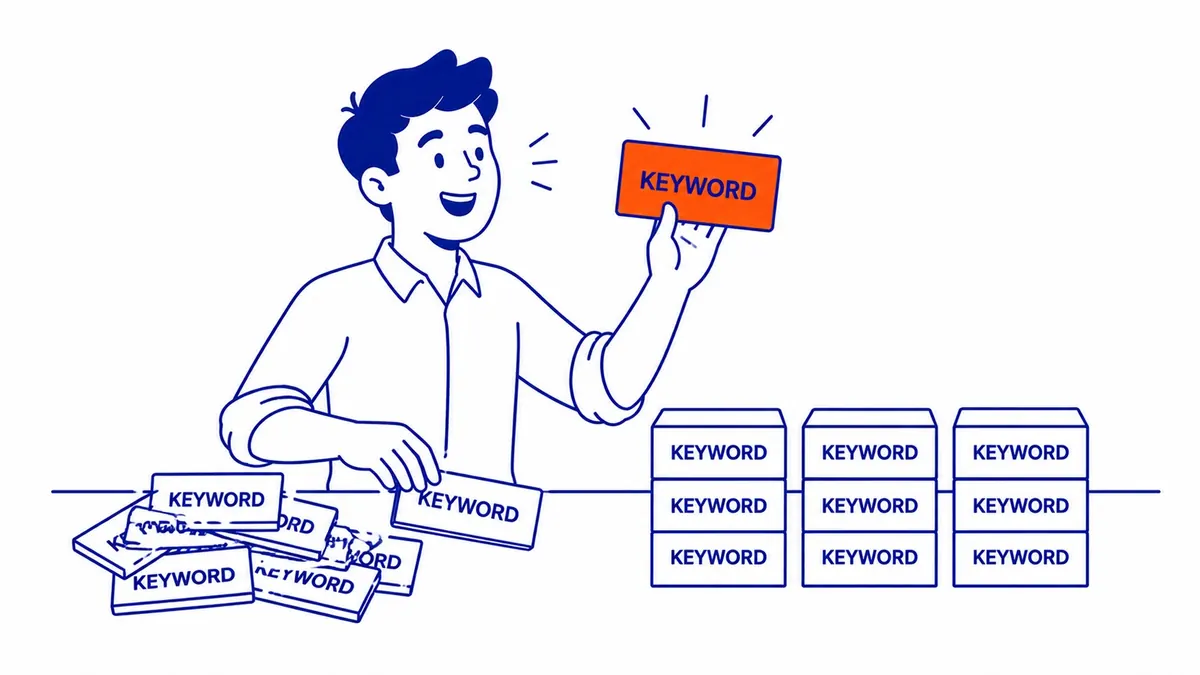
The best input you can give a model is your own data. Export the queries report from Google Search Console and ask the model to cluster the queries, flag the ones where you rank on page two, and suggest which existing page each cluster belongs to. That is information the model cannot invent, because it comes from how Google already sees your site, and it turns a generic brainstorm into a plan for your pages.
Then check the numbers somewhere that measures them. Google’s Keyword Planner gives search volume estimates and lets you choose the location, so a Calgary business can see Calgary or Alberta demand rather than a US figure, and a paid keyword platform adds difficulty and competitor data. Models also tend to suggest broad, high-volume head terms, which are usually the hardest to rank for and the loosest match for a local service business, so push the prompt toward the specific, longer questions people ask just before they pick up the phone. For a business that serves one city, there are a few more ways AI can help with local SEO, such as drafting Google Business Profile posts and replies to reviews for a person to approve. If you want a second opinion on the shortlist, that is what professional keyword research is for.
Using AI to draft and optimize content
Drafting is where most people start and where most of the damage happens. A model will produce a tidy 1,500-word post in seconds, but that post is built from the average of what already exists, so it says what every other page on the topic says. Google’s helpful content guidance asks whether a page provides original information, reporting, research or analysis, and whether it adds substantial value compared with other pages in search results. An unedited AI draft almost never passes that test, because the parts that would pass it are the parts only you know.
A workable split is to let AI build the outline from your keyword map, draft the definitions and background sections, and suggest questions a reader would ask next, and then write the substance yourself: your process, your prices or how you set them, the mistakes you see customers make, and the local detail that changes the answer. Read every claim in the AI-written parts as if a stranger had written it, and delete any number you cannot source.
Canadian businesses have an extra check that US-written guides never mention. Most models default to American spelling, US dollars, US statistics and US rules, so a draft for a Calgary audience can quietly talk about sales tax instead of GST, quote a US licensing requirement, or cite a national survey that does not apply here. Check the spelling, the currency, the tax wording and any provincial rule before publishing, because a reader who spots one American assumption starts doubting the rest of the page.
Using AI for technical SEO
Technical work is a good fit for AI because the output is easy to test. Describe a page and ask for LocalBusiness, Article or Product markup, and the model will usually produce JSON-LD that is close to right. Run it through Google’s Rich Results Test before it goes live, and make sure every value in the markup matches what the page visibly says, since Google’s AI features page and its structured data guidelines both expect markup to reflect the visible text.
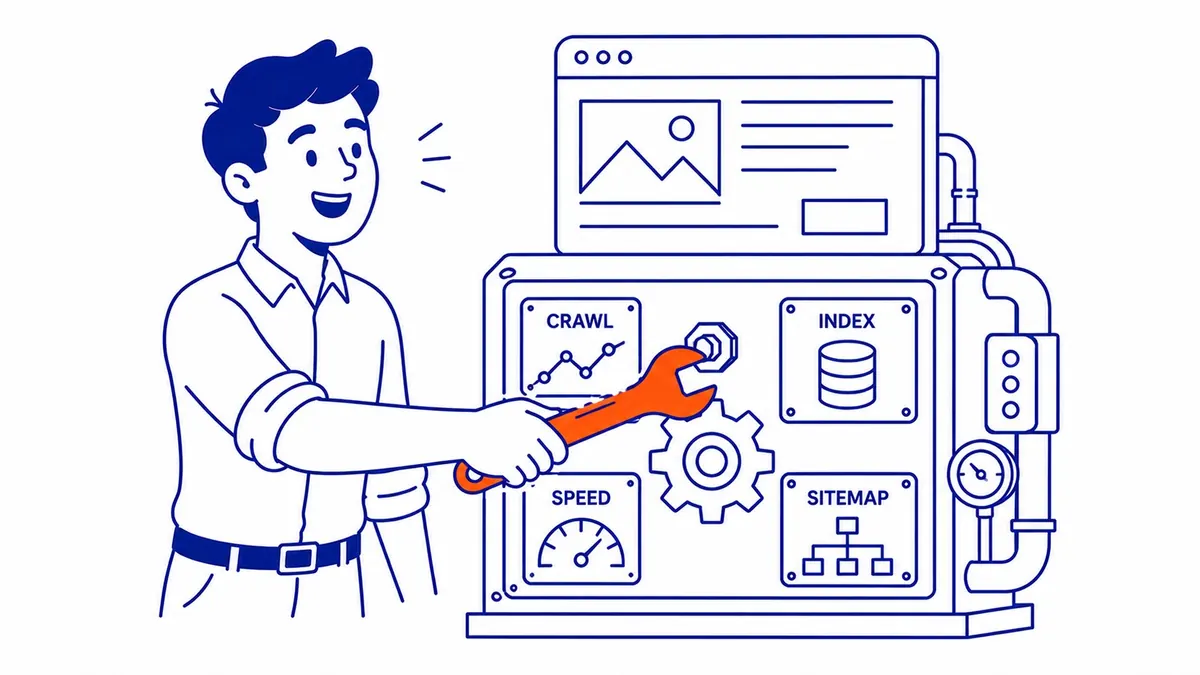
AI also helps with audit triage. A crawler export can run to thousands of rows, and a model can sort redirect chains, missing titles, duplicate descriptions and broken internal links into groups by likely cause, which makes the fix list easier to plan. What it cannot do is crawl the site, see what Googlebot sees, or know which pages matter commercially, so treat its grouping as a draft and confirm each issue against the live site or Search Console before changing anything. The same applies to internal linking suggestions, which are useful as a starting list and risky when applied in bulk. Anything that touches redirects, canonicals or robots rules deserves a person’s review, and a site with deeper problems needs a full site audit rather than a prompt.
Which SEO tasks to delegate, verify or keep
The table below is a decision rule rather than a ranking. “Delegate” means the risk of a bad output is low and easy to spot, “verify” means AI does the first pass and a named check must follow, and “keep” means the judgment is the job.
| Task | Hand it to AI? | The check that follows |
|---|---|---|
| Brainstorming topics and questions | Delegate | Remove off-topic and off-market ideas |
| Clustering a Search Console query export | Delegate | Spot-check a few clusters against the pages that rank |
| Search volume and difficulty | Keep with a data tool | Keyword Planner (set the location) or a paid keyword platform |
| Outlines and routine definitions | Verify | Read for accuracy and for what is missing |
| Titles, meta descriptions, alt text | Verify | Read each one, as Google’s guidance asks for metadata |
| Schema markup | Verify | Rich Results Test, and values match the visible page |
| Audit triage from a crawl export | Verify | Confirm each issue on the live site or in Search Console |
| Facts, statistics, prices, quotes | Keep | Source every figure or delete it |
| Strategy, priorities, which pages to build | Keep | Your margins, customers and competitors decide |
| Publishing many pages at once | Keep | Each page must add something a reader cannot get elsewhere |
AI SEO tools: general assistants and search-data platforms
There are two kinds of tools, and they do different jobs. General assistants such as ChatGPT, Gemini, Claude and Microsoft Copilot are flexible and inexpensive or free at entry level, and they handle brainstorming, drafting, rewriting and markup well. Their weakness is that they work from training data and whatever they can browse, so their volume estimates and competitor reads are educated guesses unless you feed them real data.

Search-data platforms are the established SEO suites and content tools that have added AI features on top of their own keyword databases, rank tracking and site crawls. They cost more, but the AI in them is working from measured data, which is the part a general assistant cannot supply. A sensible small-business setup is one general assistant for daily writing and analysis, plus Search Console and Keyword Planner (both free) for the numbers, with a paid platform added only once SEO has a real budget line. The specifics of prompting one assistant are covered in the guide to using ChatGPT for SEO.
AI Overviews, AI Mode and chat assistants
The other half of “AI for SEO” is being visible in AI answers, and here Google’s documentation contradicts a lot of the advice in circulation. Its page “AI features and your website” says the best practices for SEO remain relevant for AI Overviews and AI Mode, that “there are no additional requirements to appear” in them, and that you do not need new machine-readable files, AI text files or special schema.org markup. To be eligible as a supporting link, a page has to be indexed and eligible to show with a snippet, which is the same bar as ordinary search.
Google also documents that AI Overviews often do not trigger, because they are shown only when its systems judge them additive to classic results, and that both features may run several related searches across subtopics to build a response. That favours pages that answer a specific question clearly and cover the related questions a reader would ask next. For measurement, Google says traffic from AI Overviews and AI Mode is included in the Search Console Performance report under the Web search type, so there is no separate AI report to wait for. ChatGPT, Perplexity and other assistants work differently and change often, so treat any vendor’s promise of guaranteed citations with caution. The practical side of showing up in AI Overviews has its own guide.
Where AI for SEO goes wrong
The most common failure is sameness. When many businesses ask similar models about the same topic, they get pages that say the same things in a similar order, and a page that matches the average has little reason to outrank the pages it resembles. The fix is the human layer described above, and no prompt replaces it, which is also the fair answer to whether ChatGPT is bad for SEO: the tool is neutral, and the unedited output is the risk.

The second failure is invented facts, which hurt more than slow writing ever does, because one wrong statistic or fake quote on a published page undermines the trust the rest of the page is trying to build. The third is volume. Publishing dozens of lightly edited AI pages a month is exactly the pattern Google’s scaled content abuse policy describes, and it leaves a site full of thin pages that compete with each other.
The fourth is privacy, and it is easy to overlook. Pasting customer names, emails, call notes or a CRM export into a public AI tool can raise obligations under Canada’s PIPEDA or, for private-sector organizations in Alberta, the province’s Personal Information Protection Act. This is general guidance rather than legal advice, but the safe habit is simple: strip personal information before anything goes into a prompt, and check the tool’s data settings.
A sensible weekly workflow for a small business
For a business doing its own SEO, a realistic rhythm looks like this. Early in the week, export the last month of Search Console queries and have the model cluster them and flag page-two opportunities. Pick one page to improve or one new page to write, let the model outline it and draft the background sections, then spend your own time on the parts that need your knowledge, and check every fact, title and description before it goes live. Finish by validating any new markup in the Rich Results Test and requesting indexing in Search Console, keeping in mind that a request does not guarantee indexing.

AI shortens the writing and sorting, but it does not shorten the time Google takes to crawl, assess and rank a page, which is still measured in months for most local businesses. The same principle holds in paid search, where in practice Google’s automated bidding and asset suggestions work best when a person sets the goals, the budget and the conversion tracking, which is how Google Ads campaigns are run responsibly.
If you would rather have an expert check where AI fits in your own SEO, SEO Company To-The-TOP! has worked on Calgary search since 2007. It is a solo, White Hat practice, so the person you talk to is the person who does the work, and you can call (403) 308-5949 to talk it through.
Contact Calgary SEO Company To-The-TOP!
Questions about anything in this article, or about your own rankings? Talk to a Calgary SEO specialist directly.
Phone: (403) 308-5949
Address: 1509 14 Ave SW, Calgary, AB T3C 0W4
Hours:
Monday to Friday: 10:00 am – 7:00 pm
Saturday: 12:00 pm – 4:00 pm
Sunday: closed