
Is a Document SEO Friendly?
Yes. Google indexes PDFs. They turn up in results, and a few of them rank perfectly well.
A standard answer waits behind that one, and it is sound. PDFs are poor containers. They read badly on a phone. Updating one means replacing a whole file. Nothing about it carries your navigation. So convert the thing to a web page. All of that advice is correct. None of it gets repeated here.
What nobody looks at is the word sitting in the middle of the question. Document.
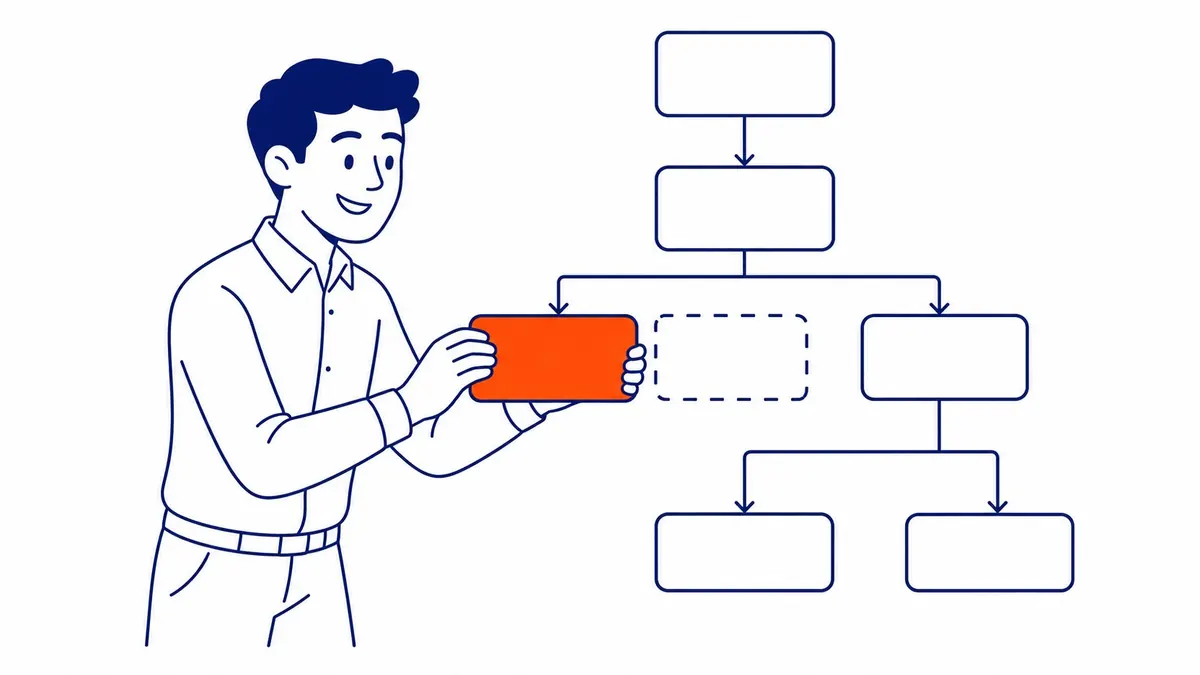
Two Things Get Called a Document
Anybody typing this means one of two things.
Maybe the thing in front of you is a draft. Words in a word processor, headed for the website, not there yet. Nothing about that file ever reaches a reader. What travels is the writing, and the writing gets judged as a page once it lands. So that reading has a short answer, and it is not this one.
The other one is a real file sitting on your website. A price list. Then a proposal. A spec sheet with a download button underneath. That file has an address of its own. A stranger can land on it, alone, having read nothing else. Then it becomes worth arguing about. Pop ups and SEO belong to a different page. Where the words land in it matters too, which is what keyword prominence means.
What Makes a Document a Document
Not the file extension. Something else, and it shows up in every one you own.
A document is made to be handed to somebody.
Look at yours. The proposal carries a client name on the front. Your price list went to somebody who had already asked the price. The spec sheet reached an engineer who knew what the part was for. Somebody commissioned the report.
Each one presumes a hand-off. That is what makes it a document instead of a page. So it got written for a reader who was already there.
Every document in your business was written for somebody you had already met.
One exception turns up, and it is worth a look. The guide written for strangers. A download sitting behind an email form. Watch how that one opens. It tells you what it is. Then it assumes you know nothing, since whoever wrote it knew you did not. So it reads like a page, and it tends to behave like one.
Search Hands It to Nobody
A search visitor has met nobody.
They came off a list of blue links. Nothing was explained to them first. Nobody said your name out loud. No one told them what they were about to open, or why they might want it. They arrived mid-air.
Then the file opens.
Search does not hand your document to anybody. It leaves a stranger alone with it.

Every Document Starts at Sentence Two
The first sentence exists. Only it never got written down.
Instead it got said out loud, by a person, at the moment the thing changed hands. Here is the one I mentioned. This covers the second option we talked about. Ignore the last two pages, they are for the insurer.
That sentence did a great deal of work. It said what the thing was. Also who it was for. Then it said why anybody holding it should care.
Nobody typed it. No need, with the person standing right there.
Then the file goes onto the internet, where nobody is standing anywhere.
So every document starts at sentence two.
Somebody Will Point at the Conversion
Fair enough. Turning a PDF into a page is the standard fix, and it fixes real things. The page behaves on a phone. You can edit it on a Tuesday. It can link somewhere.
Only watch what usually gets converted. The writing moves across. Same opening line. The same assumed reader. Then the same silence where the missing sentence should be.
The format changed. Whoever it was written for did not.
So the page goes up. Every technical complaint gets answered. The thing still lands nowhere, and nobody can quite say why. A page carrying a document is still a document.
So SEO friendly was never a fact about the file. Rather it is a fact about who the writing was aimed at.

What Your Documents Hold That Your Pages Do Not
Now the good half, and it is better than it sounds.
Hardly any document gets written in order to rank. Mostly one gets written because a job needed doing. A customer wanted a number. An engineer wanted a dimension. Somebody had to be told what your process really is, including the parts that go wrong.
Meanwhile your web pages were written to be found. That is what keyword research is for, and it works. Yet it also means those pages start at a search and reason backwards toward something to say.
Your documents started from the other end. So they hold specifics that almost nothing else on your website holds.
One of those two was written because somebody needed the information. Worth guessing which one.

Where the Document Argument Stops
None of this says leave the file where it is. Convert it. The technical case stands up on its own, and a website audit will find the thing sitting there doing nothing. Simply convert it for the reasons the technical people give you. Never expect the conversion to be what ranks.
Some documents were never candidates anyway. A form somebody prints and fills in with a pen. Perhaps a working file. An insurance certificate. Nobody was ever going to search for it. Not everything on your server owes you traffic.

Read Your Own First Line
Open the document you would most like people to find. Then read the first sentence. Only that one, and read it the way a stranger would. Somebody who landed there off a search two seconds ago.
Perhaps it tells them what this is and who it is for. Then your document was written for the web whether you meant it that way or not. All that stands between you and a page is the file format. That is a technical problem, and a small one.
Or it thanks somebody. Names a company. Picks up in the middle of a thought that started somewhere the reader cannot see.
Then you have found the missing sentence. Nobody left it out. It was said out loud, once, to a person who was standing there.
No statistic about other people’s documents tells you a thing about yours. Yours is one click away.

Working With SEO Company To-The-TOP!
SEO Company To-The-TOP! has been doing this work since 2007, and the folder of forgotten files turns up often enough. Every document in it true. Not one of them findable. Most of the job is not the conversion. It is the sentence nobody ever had to write.
Solo expert-led, so there are no junior handoffs on the content that matters. Search engine optimization is patient work. Positions tend to move over three to six months. No guarantees. Businesses wanting SEO in Calgary usually want it sooner. A Google Ads campaign earns its keep while the slower work settles. The portfolio shows where that work ended up. Same thinking applies to the rest of an SEO friendly website.
Frequently Asked Questions
Can a PDF rank in Google search results?
Yes. PDFs get indexed, and they turn up in results. Whether yours ranks well is a separate question. The file format is rarely the half that decides it.
Should I convert my PDFs into web pages?
Usually. A page behaves better on a phone, and you can edit it without replacing a file. Rewrite the opening while you are in there. Move the writing across untouched and you have relocated a document rather than made a page.
Is a Word document SEO friendly?
Nothing about the file you draft in ever reaches a reader. The writing leaves it and gets judged as a page. What you typed it in changes none of that.
Do downloadable documents hurt my SEO?
No penalty arrives for putting a file on your website. Nobody is punished. The cost is quieter than that. Usually it is a visitor who opened something written for somebody else.
What makes a document SEO friendly?
A first sentence written for somebody who has never met you. Everything after that is a technical job, and a short one.
Contact Calgary SEO Company To-The-TOP!
Questions about anything in this article, or about your own rankings? Talk to a Calgary SEO specialist directly.
Phone: (403) 308-5949
Address: 1509 14 Ave SW, Calgary, AB T3C 0W4
Hours:
Monday to Friday: 10:00 am – 7:00 pm
Saturday: 12:00 pm – 4:00 pm
Sunday: closed