
Is SEO Still Relevant in 2026?
We have been running SEO campaigns in Calgary since 2007. “Is SEO dead?” comes up on a pretty reliable schedule: Panda, Penguin, mobile-first indexing, voice search, and now AI Overviews and ChatGPT. Each time, the same question surfaces among business owners and marketers wondering where to direct their budgets. That answer has been the same every time.
SEO is still relevant. What has changed is what doing it well actually requires.
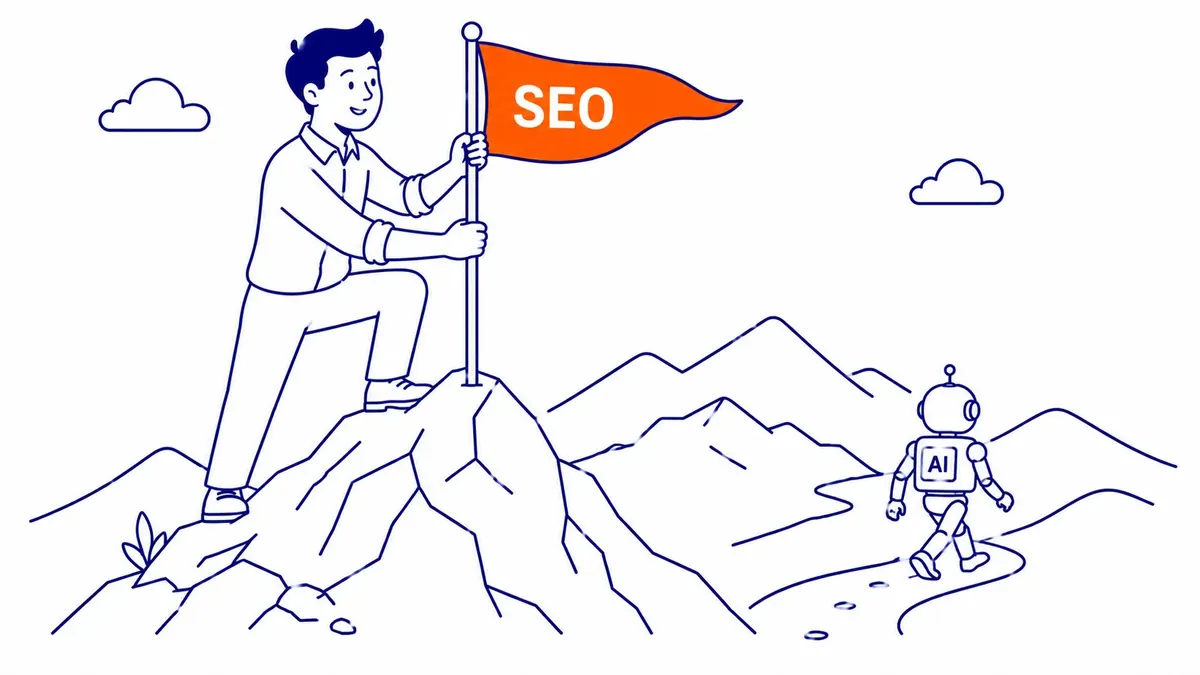
The Question Behind the Question
The concern is understandable. AI Overviews appear above organic results for many queries now. ChatGPT, Perplexity, and voice assistants answer questions without sending users to a website at all. Zero-click searches have increased across most categories. Search behaviour has shifted noticeably since 2023, and anyone paying attention to their Google Search Console traffic data has felt it.
Still, billions of searches happen on Google every day. High-intent queries, someone in Calgary looking for a plumber, a clinic, or an SEO company, still resolve through a list of results. The user reads who shows up. They click. That moment has not disappeared. Pages that appear there are pages that were built to rank there.
That pattern holds in 2026 the same way it held in 2016.
What the Search Results Page Looks Like Now
The surface has changed. AI search tools handle summary answers for many informational queries. Local searches pull up a map pack followed by organic results. Transactional and commercial searches, the ones connected to actual spending, behave largely the way they always have.
The piece on why SEO is important covers the compounding returns that make organic traffic different from any paid channel.
Search engines are still indexing billions of pages. Ranking signals still determine which ones show up. Businesses that rank get found by people actively looking for what they sell. Those that do not rank miss that traffic entirely. Nothing about AI search has changed that basic logic for a local or regional business competing on real purchase intent.
Where SEO Still Drives Real Results
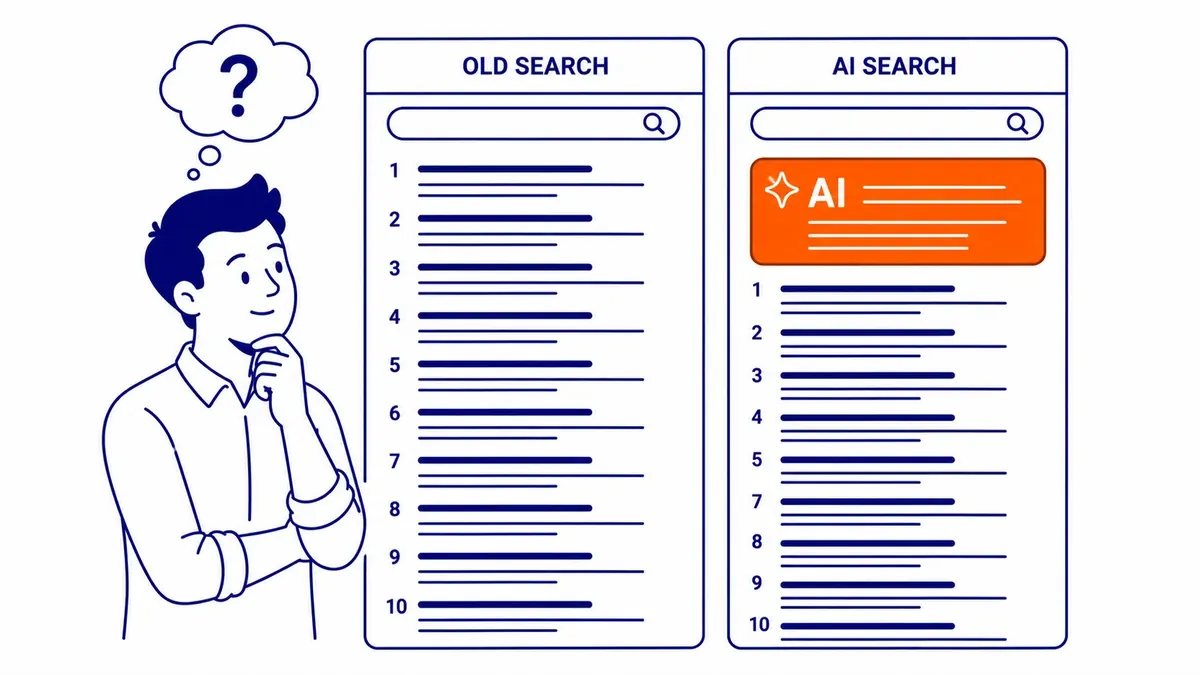
The clearest case for SEO in 2026 is local and transactional search. Trades, professional services, health clinics, specialty retail: all still produce a map pack and organic results. The user is ready to hire or buy. That business gets the call.
The practical case in is SEO worth it works through the cost and timeline questions that follow every relevance debate.
Informational content is more complicated now. AI-generated answers absorb some zero-click traffic that used to reach top-ranked blog posts. Surface-level definitional content, the kind that answers “what is X” in two paragraphs, has taken a hit. Worth knowing before building your content strategy around thin answers to broad questions.
Deeper, more specific content still performs. Service pages, local landing pages, and topic-authority content that goes further than a surface summary are not being replaced by AI. The compression has hit thin, low-effort pages hardest. Pages built around genuine expertise, specific information, and real depth are still ranking and still converting visitors into customers. That distinction matters more now than it did three years ago. Businesses that invested in substantive content before 2023 have mostly held their ground. Those that relied on volume over depth are the ones watching traffic drop.
What AI Has and Has Not Changed
Search Generative Experience, AI Overviews, ChatGPT: each adds a layer between the user and the organic result. Traffic from pure informational queries has dropped on some sites. That is real.
What AI has not touched: the signal system underneath. Google still uses backlinks, topical authority, technical SEO, page speed, Core Web Vitals, and E-E-A-T to decide which pages get cited. Pages that rank well organically also tend to get cited by AI tools. The optimization work required to reach both places is largely the same work.
A site with weak authority does not get cited just because AI search exists. Strong, well-structured sites with authoritative content appear in AI-generated results and hold organic rankings. The discipline is not separable from the outcome. This is one of the clearest things we have observed over the past 18 months of AI search rollout: the signals that matter for traditional search also drive AI citation patterns. The bigger question, whether AI will replace SEO outright, gets a longer treatment of its own. Clients still ask if the work is worth funding, and the answer on AI search has not moved much.
What Has Shifted in Practice
Keyword stuffing ended with Panda in 2011. More recently, the weight has shifted toward E-E-A-T, covering experience, expertise, authoritativeness, and trustworthiness. Google’s helpful content updates have pushed on this consistently since 2023. Pages built to rank rather than to genuinely answer user questions have been losing ground. Marketers who chased volume without depth are seeing that clearly now.
Topical authority carries more weight. Thin, isolated pages on individual topics get less traction than they did five years ago. Sites that cover a subject across a cluster of related pages, with demonstrated expertise behind the content, are holding rankings through algorithm updates. That shift started before AI search changed the landscape. It was already where Google was heading.
Long-tail keywords still drive traffic. Reliably, in most cases. AI tends to absorb broad, surface-level queries. Deeper, more specific questions still land people on pages. Those visitors typically convert at higher rates. Voice search has also changed how people phrase queries; conversational, longer-form search intent is more common now. Pages optimized for natural-language search intent perform better than pages loaded with fragmented keyword phrases.
Technical SEO Has Not Gone Anywhere
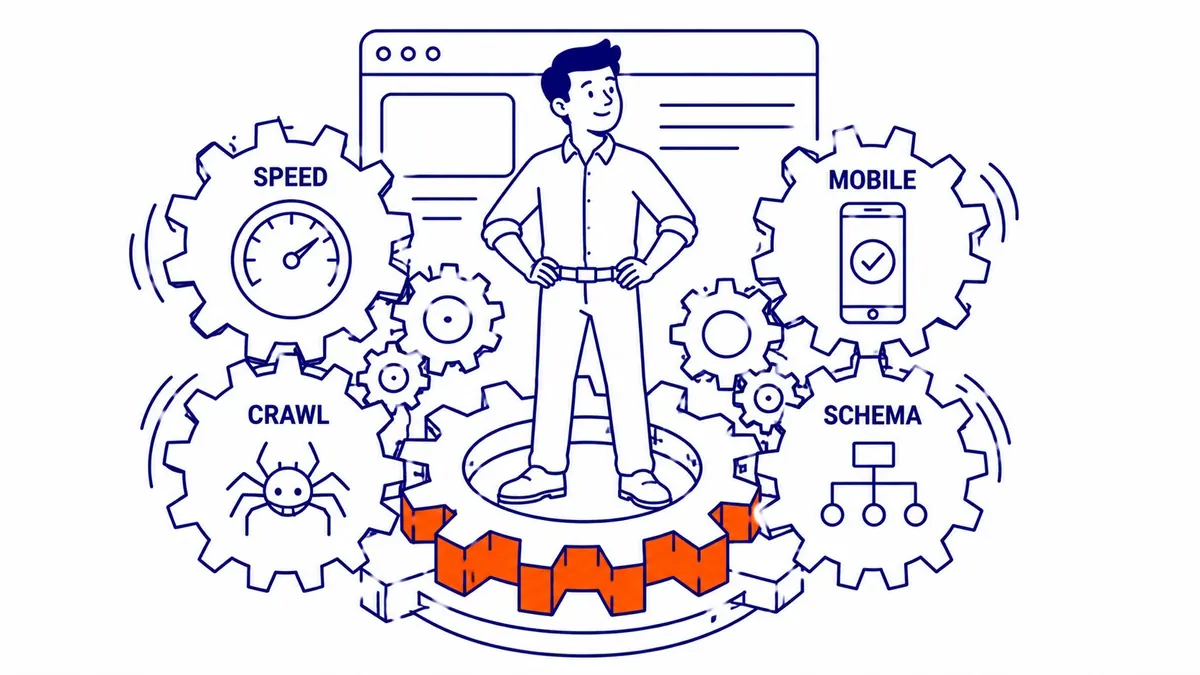
Crawlability. Indexation. Page speed. Mobile performance. Core Web Vitals. Schema markup. Internal linking architecture. Search engines still use all of it. A well-structured site outranks a poorly structured one. That has not changed since 2007.
In some ways, technical SEO matters more now than it did in 2020. AI-powered crawlers index more thoroughly. Structured data helps AI systems extract and cite information accurately. Pages with clean schema markup get cited more often by AI search than pages without it.
Putting the site through proper SEO auditing is worth doing if no full check has been completed in the last 18 months. Most sites that have been live for five or more years carry crawl issues, duplicate content, or outdated schema the owner does not know about. Those issues quietly suppress rankings regardless of how strong the content is. No amount of good writing compensates for a site Google cannot crawl cleanly. Clean markup is also what earns citations inside AI Overviews, so the technical pass pays twice.
What Marketers Are Adapting To
The biggest shift for marketers and SEO specialists is the split between AI-consumed content and website-visited content. Broad definitional queries are increasingly answered by AI without a click. Transactional, local, and high-specificity queries still deliver users to pages.
AEO, answer engine optimization, is gaining traction, widening the scope of our search engine optimization work beyond what the term covered a few years ago. Structuring content so AI systems can accurately extract and attribute it, building topical authority across a cluster rather than single pages, and demonstrating real expertise through specific observations rather than summary-level explanations: those are the practical adaptations that matter in 2026.
The brands holding rankings through this period are the ones with genuine depth behind their content. Not volume. Depth. That has been the consistent signal across every major Google update since 2022. AI search has reinforced it rather than reversed it. Businesses that have not adjusted their digital marketing strategy since 2021 are competing with a playbook that no longer matches the game.
What This Means for a Calgary Business
Most businesses competing for Calgary search are in trades, professional services, health, or specialty retail. Those searches resolve locally. AI-generated answers appear far less frequently for local commercial queries than for broad informational ones. The map pack and organic results for local searches still function the way they always have.
Anyone handling Calgary SEO in 2026, on local seo for service businesses especially, still has to do the keyword research that surfaces the terms people in this market actually search for, keep the site technically clean, hold local citations consistent across directories, and build content around genuine authority. None of that has been disrupted by AI. Search engines reward the same fundamentals they always have: relevance, authority, and a site that loads properly.
SEO Company To-The-TOP! has been running campaigns in this market since 2007. Nineteen years of watching what actually moves rankings here. Tactics have evolved. The underlying logic has not. Build authority. Fix what is broken technically. Produce content that addresses real search intent. Let the compounding work over months, not weeks.
Three to six months before meaningful movement in a competitive market. That is the realistic timeline. If you need traffic while organic rankings build, ask how much Google Ads cost and run paid search alongside the organic work during those early months.

Common Questions
Is SEO being phased out?
Search behaviour is shifting toward AI-assisted answers, but ranking signals still drive which pages get cited in those answers. Page authority, schema markup, and content depth matter more now, not less. SEO has not been phased out. It has become more demanding and more dependent on genuine expertise.
Is SEO dead or evolving in 2026?
Evolving. Panda changed it. Mobile-first indexing changed it. AI Overviews are changing it again. Each shift has adjusted the tactics without eliminating the discipline. What works in 2026 is less about keyword volume and more about depth, authority, and technical quality. That trajectory was already clear before AI entered the picture.
Is SEO even important anymore?
For most businesses targeting Calgary search, yes. High-intent local queries still resolve through Google’s map pack and organic results. Businesses that rank get found. Those that do not miss that traffic entirely, and there is no substitute for appearing where your customers are actively searching with intent to buy.
What will replace SEO?
Nothing is replacing it wholesale. AEO has widened the definition of search engine optimization, and working to that wider definition is the practical adaptation most marketers are making in 2026. Optimising for AI-cited answers, structured data, and topical authority matters more now than it did three years ago. Underlying discipline is the same: understand what your audience is searching for, build pages that answer those queries with genuine depth, fix the technical issues. The game has changed in tactics. Not in logic.
Businesses in Nanaimo SEO, Nanton SEO, and Nelson SEO still rely on organic search for a significant share of their inbound leads.
Contact Calgary SEO Company To-The-TOP!
Questions about anything in this article, or about your own rankings? Talk to a Calgary SEO specialist directly.
Phone: (403) 308-5949
Address: 1509 14 Ave SW, Calgary, AB T3C 0W4
Hours:
Monday to Friday: 10:00 am – 7:00 pm
Saturday: 12:00 pm – 4:00 pm
Sunday: closed