
Meta Keywords in SEO: What They Are and Why Google Ignores Them
Meta keywords are an HTML element that used to tell search engines what a webpage was about. Google announced in 2009 that it does not use the meta keywords field for ranking. Nothing has changed that position since. The code still exists in the HTML specification, but adding or removing it has no effect on where your pages appear in search results.
Confusion about meta keywords usually comes from two places. One: SEO tools still show the field in their interfaces, which implies it matters. Two: the term sounds similar to “SEO keywords,” which absolutely do matter. These are different things. Knowing the difference saves time and prevents misplaced effort. As a company that has been providing Calgary SEO services since 2007, we have watched the meta keywords question resurface every couple of years: the answer has not changed.
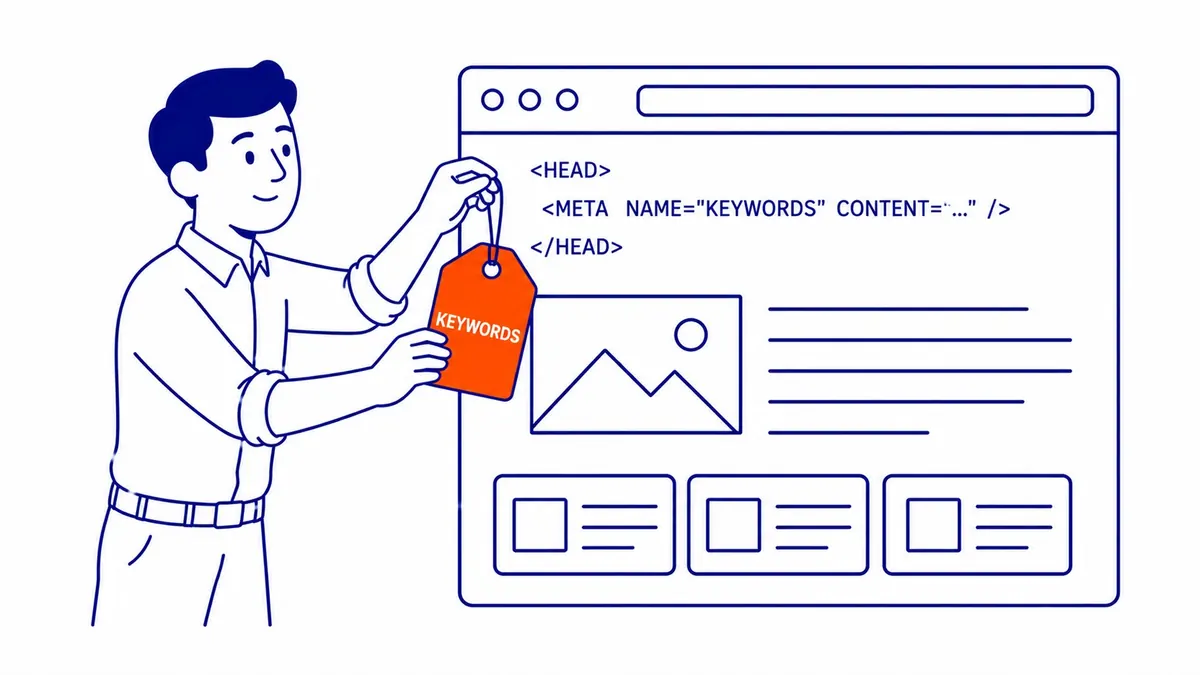
What the Meta Keywords Tag Actually Is
The meta keywords element lives in the HTML head section of a webpage. It looks like this:
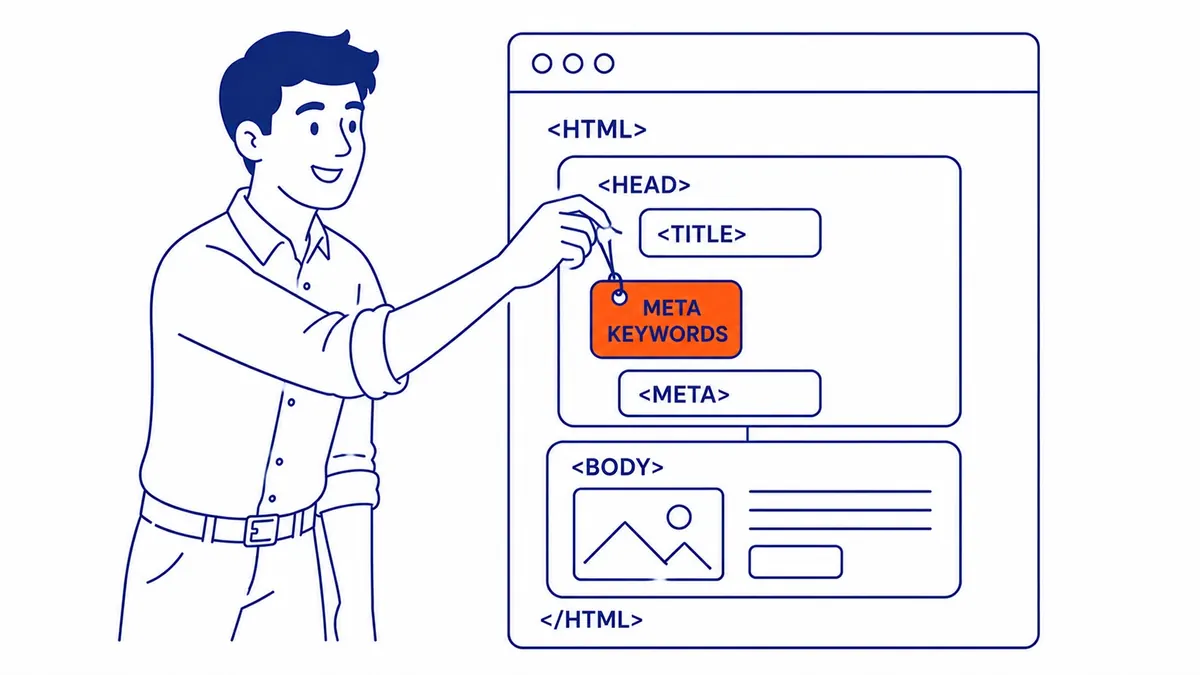
<meta name="keywords" content="seo, search engine optimization, calgary seo, digital marketing">
It was designed to let webmasters declare the topics a page covered, so search engines could index it more accurately. In the mid-1990s, when search algorithms were simpler, this worked. Engines like AltaVista and early Yahoo used meta keywords as a primary signal for ranking.
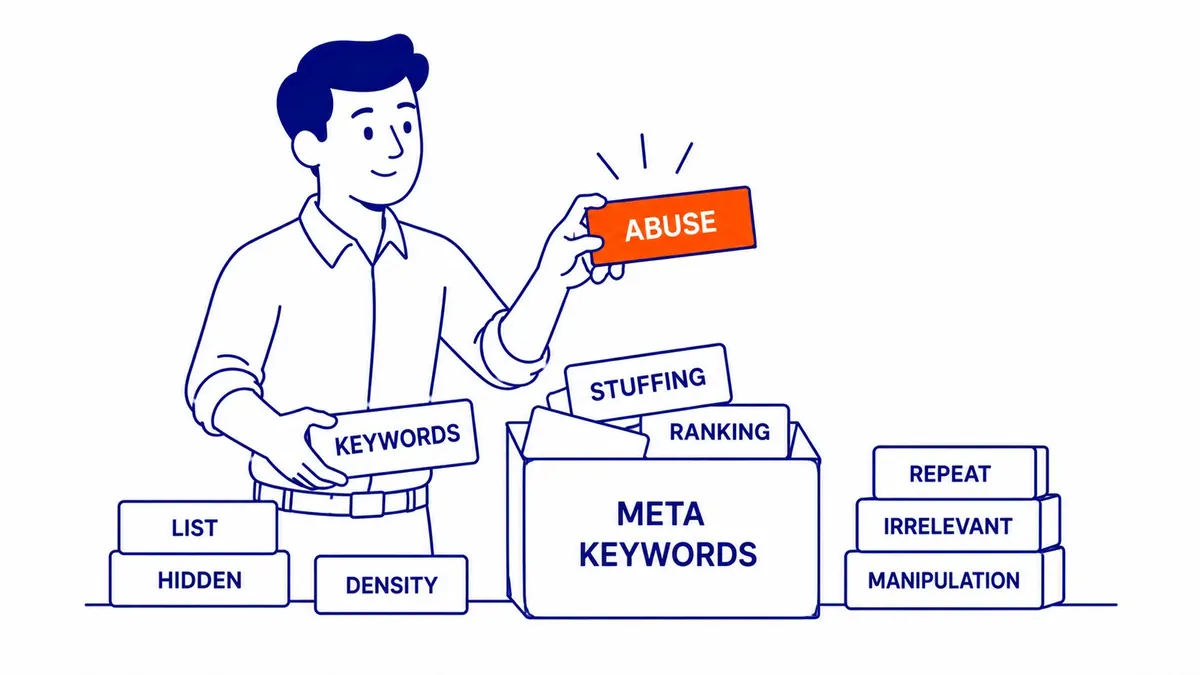
Abuse started quickly. Webmasters stuffed irrelevant, high-volume keywords into the field to hijack traffic from unrelated queries. A page about running shoes might include meta keywords for “free software download” or “celebrity news,” anything with high query volume. No user saw the code. Search engines did. Positions followed.
That behaviour is what ended its usefulness. Google’s engineers figured out early that meta keywords were more often a spam signal than a genuine one. By the time Google published its official statement in 2009, the field had already been functionally dead for years in Google Search.
Why Google Stopped Using Meta Keywords
Google’s stated reason is straightforward: site owners abused the field so consistently that it became a signal with negative predictive value. A populated meta keywords entry was more likely to indicate a spam attempt than to provide useful categorization information.
Matt Cutts, Google’s former head of web spam, confirmed in a 2009 video that Google ignores meta keywords entirely. That statement has been reinforced in various Search Central documentation and blog posts since. No algorithm update has reversed it. Genuinely inert in Google’s search algorithm.
Worth knowing the broader principle: rankings are not based on what you declare about a page. Search engines evaluate what the content actually says, how it is structured, and how other sites link to it. Meta keywords were a self-declaration. Reading the actual text replaced them. That shift happened more than fifteen years ago.
Solid on-page optimization today has nothing to do with meta keywords. It is about content relevance, heading structure, internal linking, and page experience signals. None of those involve this field.
Do Any Search Engines Still Use Meta Keywords?
Bing has said publicly that it treats meta keywords as a “very minor” signal at most. In practice, the effect is negligible. No credible SEO practitioner optimizes for Bing’s interpretation of this field separately from Google. User base too small. Signal weight too low to justify the effort.
Yandex (the dominant Russian search engine) has historically used meta keywords more than Western engines, though its documentation on the current weight is ambiguous. For businesses targeting primarily Canadian or North American markets, Yandex rankings are not a practical consideration.
If your site ranks on Bing and Google, meta keywords have no meaningful role in that performance.
What to Focus On Instead
The signals that actually affect positions on Google and Bing are visible in the page itself:
Title tag. The single most important on-page SEO element. Appears in results as the clickable headline. Should include the primary keyword for the page, clearly and naturally. Google may rewrite it in SERPs if it judges the original version inadequate. Writing a clear, descriptive title that matches the page’s actual content reduces the chance of that happening. Getting that line right is the whole subject of what an SEO title is.
H1 heading. The main visible heading on the page. Should align closely with the title tag but does not need to be identical. One H1 per page. Include the primary keyword.
Body content. Google reads the actual text. Natural use of the target keyword and semantically related terms throughout the content matters. The density does not need to be forced. A page that answers the query thoroughly with genuine expertise will naturally include the right terms.
Description tag. Not a direct search signal, but it appears under your title in search results. Well-written descriptions improve click-through rates, and click-through data influences how Google adjusts positions over time. Write them for users. Target 150 to 160 characters.
Internal links. How your pages link to each other tells search engines which pages are important and how topics connect. A strong local search engine optimization service pays close attention to internal link structure. URL structure, header hierarchy, schema markup, and page speed round out the technical markup factors that affect crawling and indexing.
Meta keywords have no place in any of that. Time spent on this field is time not spent on signals that actually move positions.

Should You Remove Existing Meta Keywords?
Not urgently. Search engines ignore it, so the presence of meta keywords causes no harm. Removing them will not improve positions. Leaving them in will not hurt.
A case exists for removing: cleaner HTML, slightly faster page loads (negligible in practice), and eliminating a field that no longer serves any purpose. If your CMS auto-populates it with something competitively revealing, removing it makes sense. Otherwise, this is low priority work.
Worth checking: if your CMS is publishing hundreds of stuffed terms from an old SEO strategy, clean it up, not because there is a penalty, but because it signals that other outdated practices may exist in the site’s history worth reviewing in a proper website SEO audit.
Frequently Asked Questions
What is the difference between meta keywords and meta description?
Meta keywords are a hidden HTML element that search engines ignore for ranking purposes. The description tag is also hidden in the HTML, but it appears under your title in search results. Neither is a direct search ranking signal, but a well-written description increases click-through rates, which matters for traffic. Of the two, the description deserves attention. Meta keywords do not.
Do meta keywords hurt SEO?
Google does not penalize pages for having meta keywords. Bing does not penalize them either. Neutral is the word. No current evidence suggests that populating this field causes any negative search impact. Competitors stuffing thousands of keywords into it are wasting time, not gaining any advantage over you.
What meta tags actually matter for SEO?
Title tag: the highest-priority on-page signal (technically lives in the HTML head but not a meta element). Description tag: matters for click-through, not directly for rankings. Robots directive: controls whether the page gets crawled and indexed. Canonical tag: prevents duplicate content issues. Open graph attributes (og:title, og:description, og:image): affect how pages display when shared on social platforms. Beyond those, most other head section variants have minimal or no search impact. A fuller rundown of how to use meta tags for SEO sorts the useful from the useless. Paid advertising through Google Ads management is entirely separate from organic page code and is controlled through your ad account, not your HTML.
Contact Calgary SEO Company To-The-TOP!
Questions about anything in this article, or about your own rankings? Talk to a Calgary SEO specialist directly.
Phone: (403) 308-5949
Address: 1509 14 Ave SW, Calgary, AB T3C 0W4
Hours:
Monday to Friday: 10:00 am – 7:00 pm
Saturday: 12:00 pm – 4:00 pm
Sunday: closed