
What Are Entities in SEO?
Distinct, identifiable concepts that search engines recognize regardless of how a user phrases a query. That is the working definition of entities in SEO. Not text strings. No keyword matches either. Things with meaning that exist independently of whatever words describe them. Google moved to entity-based understanding in 2012 when it launched the Knowledge Graph. How rankings work shifted with it.
For a business planning content today, understanding entities in SEO matters. Google does not just read keywords anymore. It maps concepts and recognizes topic relationships. Authority goes to sites that cover a recognized concept completely. Keyword frequency remains a signal. Entity authority is a different layer on top of it, and an increasingly decisive one.
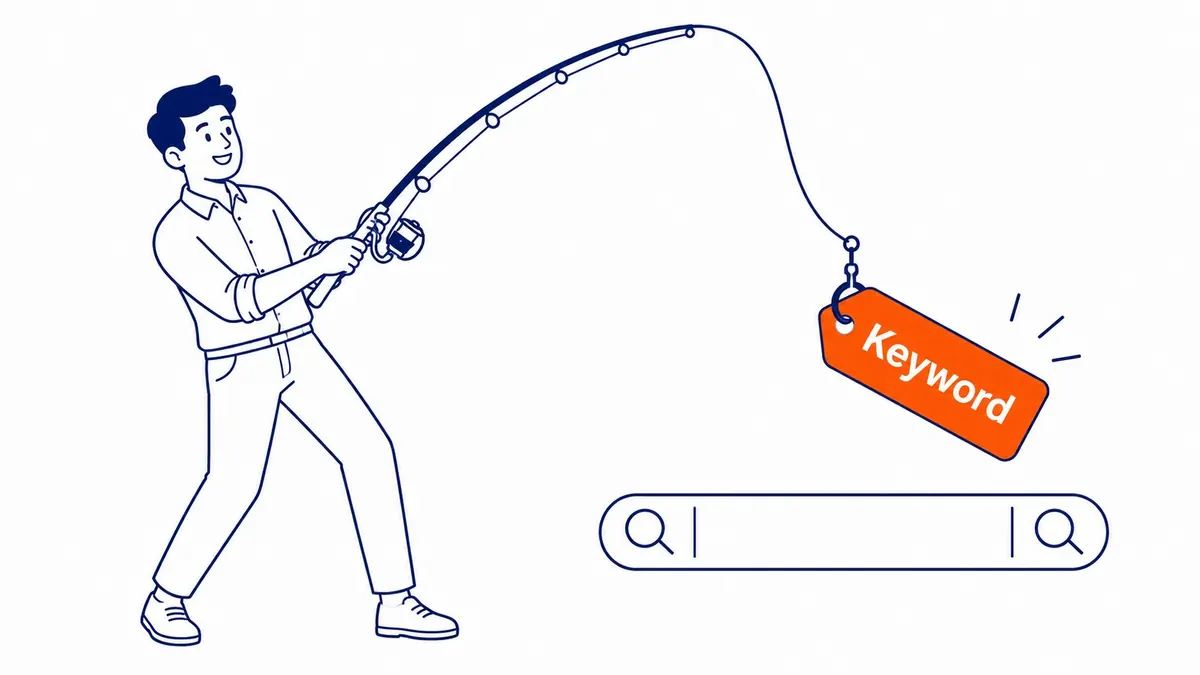
Entities in SEO vs Keywords: The Core Difference
Keywords are the words people type. Entities are what those words mean. The distinction matters more than most SEO content acknowledges.
Type “apple” into Google. It has to decide which concept you mean. The technology company. Fresh fruit. A local orchard. Each is a distinct entity in Google’s database. Singular and identifiable. Connected to a different network of related concepts. The word is a label. Each entity is the thing the label points to.
Traditional SEO targeted the label. Rank for “apple” by writing about apples and building links with anchor text that says “apple.” Entity-based understanding targets the underlying concept. Google looks for signals about which entity a page represents. How authoritative it is. What related concepts surround it. Three separate questions from the old keyword-match model.
Keyword research still matters. It tells you what users type and how often they search. But the underlying target in modern SEO is entity authority, not just keyword frequency. A page that genuinely covers running footwear can rank for dozens of related queries. No exact phrase needed for each one. That kind of reach comes from entity coverage. Keyword stuffing does not produce it.
Three characteristics separate entities from keywords. They are unique and distinguishable. Tesla the company and Tesla the inventor are different entities in Google’s Knowledge Graph. They carry attributes. A product entity has a manufacturer and a price range. Related categories attach to it as well. They exist independently of language. The Eiffel Tower is the same entity whether someone searches in English or French.
Language independence is the practical payoff. A site with strong entity authority around a concept surfaces across varied phrasings and localized versions of a query. The entity it represents stays consistent even as the words around it change. Keyword targeting gets credit only for the specific phrase targeted. Entity authority distributes across the full concept cluster.
This does not mean abandoning keyword research. It means using keyword data to identify what users search for. Then building content that covers the underlying entity, not just repeating a target phrase. The parsing layer under all of that is NLP in SEO explained on its own terms.

Google’s Knowledge Graph Explained
Launched in May 2012, Google’s Knowledge Graph is a structured database of entities and their relationships. Billions of records. Each one a distinct recognized object with attributes and unique identifiers that persist across contexts and languages.
The history starts before 2012. Google acquired Freebase in 2010 from Metaweb. Freebase was a publicly editable database of real-world facts and entity relationships. It had already assigned unique machine IDs to millions of entities. Persistent identifiers that resolve a concept regardless of what words describe it. By 2016, Google had closed Freebase and migrated its structure to an internal knowledge graph, with ongoing data synced through Wikidata.
Wikipedia is the dominant source shaping entity recognition. Google trusts its structure. Lead sections and infoboxes feed the Knowledge Graph. So do internal links connecting related concepts. A brand or concept with a Wikipedia article gets a cleaner entity signal than one that exists only on its own site. The Wikipedia format reveals how Google expects entity information to be organized. Who or what it is. Key attributes. Relationships to other recognized objects. External references verifying claims.
Knowledge Panels are the visible output of this recognition. Those structured boxes on the right side of Google search results. A business with a confirmed Knowledge Panel has achieved formal entity recognition in Google’s database. Ranking for a keyword and being recognized as an entity are not the same thing. The Knowledge Panel represents a different and deeper level of authority.
Schema markup accelerates entity recognition. Organization schema. LocalBusiness schema. Product schema. Each gives Google machine-readable signals about which entity a site represents. Without schema, Google infers entity identity from surrounding text signals. That is slower and less precise. With it, the declaration is explicit. The recognition still depends on corroborating signals from external sources. But schema removes ambiguity about what a site is claiming to be.
Wikidata is accessible where Wikipedia is not. Notability thresholds for Wikipedia are strict. Adding a Wikidata entry requires verifiable information and at least one external reference. Notability standards are lower. Businesses that cannot qualify for a Wikipedia article still have an option. Wikidata provides an entry point into the same entity database Google draws from for Knowledge Graph associations.

How Entities in SEO Affect Rankings
Entity signals influence rankings in ways keyword density never could. Not because Google replaced keywords. It added a layer that reads authority and meaning rather than text frequency.
Salience is the first mechanism. Google research identified factors that increase how prominently an entity registers within content. Position matters. Concepts mentioned in headings and opening sentences carry stronger signals than those buried in body text. Mention frequency matters too, though differently from keyword density. Entity centrality matters as well. How connected a recognized concept is to other concepts in the document. Google assesses this similarly to how PageRank works, applied to entity relationships within a page.
Topical authority is the second mechanism. Entities do not exist in isolation. A financial planning firm that covers concepts tied to the financial planning entity builds recognition. Retirement accounts. Tax strategy. Investment vehicles. Google recognizes comprehensive coverage of a topic’s concept network as an expertise signal. Thin content on high-volume keywords does not build the same recognition.
Disambiguation is the third mechanism. The word “bank” could mean a financial institution. A riverbank. Blood banks too. Google resolves ambiguity by reading the surrounding entity cluster in the content. A page covering the financial institution entity discusses lending products and deposit accounts. Interest rates and account types complete the signal. That removes ambiguity. Optimizing within the right entity cluster produces relevance across a broader set of queries without targeting each one individually.
AI search amplifies all of this. AI-generated answers pull entity-associated information from structured sources. Established entity signals make a brand more likely to appear in AI-generated results. One that appears only as keyword-optimized text competes at a disadvantage. Featured snippets and knowledge cards draw from entity-recognized sources. The shift toward AI search has made entity authority more valuable, not less.
Local search also uses entity signals for disambiguation. A plumbing company mapped as a local entity shows up differently in map pack results. One that only has optimized website text does not carry the same signal. Consistent address data and a recognized service area contribute to that local entity recognition. An established Knowledge Graph association adds further weight. The signals accumulate over time. Entity strength also decides what AI Overviews mean for rankings on any given query. Entity signals are easier to follow once you have a definition of brand mention for SEO.

How to Optimize for Entities
Entity optimization is not a separate practice from SEO. It is what good SEO has always been moving toward. The tactics are familiar. But the frame around them is different.
Schema markup is the clearest starting point. Organization schema identifies a brand by name and website URL. Social profiles and location complete the declaration. LocalBusiness schema adds geographic specificity. Product schema marks up offerings with prices and availability. Each is a structured declaration telling Google which entity a site represents. Placement matters as much as markup type. Organization schema belongs on the homepage. Product schema goes on product pages. Article schema goes on blog posts. Placing schema types incorrectly reduces the signal quality.
Wikipedia citations matter even without a Wikipedia article. Not every business qualifies for its own Wikipedia page. Notability thresholds are strict. But brands mentioned within Wikipedia articles about related topics gain entity association through those citations. A Calgary SEO company appearing in a Wikipedia article about Western Canadian digital marketing history picks up that entity reference. Getting cited is more accessible than getting a dedicated article.
Wikidata entries are accessible for most businesses. A verifiable record with an external reference and consistent attributes builds Knowledge Graph association independently of Wikipedia. Add the entry. Populate key attributes. Link to the official site. The process takes less than an hour for most businesses with any verifiable online presence.
Topic clusters build entity authority across a site. A pillar page covers a broad concept. Supporting pages go deeper into related concepts. Schema markup. Topical authority. Citation strategy. Competitive gap analysis. Keyword research identifies which of those matter most for a given cluster. The internal linking architecture between pages tells Google the site covers the broader entity from multiple angles. That coverage pattern builds topical authority. A single page with the right phrases does not produce the same effect.
NAP consistency is foundational for local entities. The business name and address should appear identically across every directory and citation source. Phone numbers too. Inconsistent records create conflicting signals about which entity a business represents. Those conflicts suppress local rankings and weaken Knowledge Graph association over time. Audit NAP data before expanding content.
Brand mentions in authoritative editorial contexts carry more weight than expected. A reference in a news article or industry publication, without a hyperlink, still signals entity relevance. Google processes text, not just links. Genuine link building in contextually relevant publications builds backlink authority and entity recognition at the same time.
Internal anchor specificity reinforces entity signals across the site. Link from an SEO strategy page to a schema markup page with ‘schema markup’ as the anchor. That tells Google the two entity clusters are related. Generic anchors miss that signal entirely.
At Calgary SEO company To-The-TOP!, entity optimization is woven into every SEO services engagement from the audit stage forward. Schema implementation. Topic cluster architecture. Citation consistency. These signals translate keyword rankings into durable organic visibility. Running Google Ads management in parallel lets clients cover paid results while entity authority builds through organic.
Frequently Asked Questions
What is an entity in SEO?
A distinct, identifiable concept that Google can recognize as a unique thing. Not a keyword or phrase. The actual concept the keyword refers to. Google’s Knowledge Graph stores billions of recognized objects and tracks their attributes and authority signals. Entity recognition is how search engines understand meaning rather than just matching text strings to documents. Any brand or person can qualify as an entity once Google has sufficient signals to identify it. Places and specific products qualify the same way.
How do entities differ from keywords?
Keywords are what people type into a search bar. Entities are what those words mean. A keyword is a text string. An entity is a concept with unique identity that persists across languages and contexts. “Calgary SEO company” is a keyword phrase. SEO Company To-The-TOP! is an entity. Google uses keyword signals to understand what users are searching for. Entity signals identify which results genuinely represent what they mean.
Does entity SEO replace keyword research?
No. Keyword research remains the practical foundation for understanding search demand and competitive positioning. Entity optimization adds a layer on top. Knowing which phrases matter comes first. Then entity signals determine whether content is recognized as authoritative on the underlying concept. Both layers are active in Google’s ranking systems. Keyword data tells you where the demand is. Entity authority determines whether your content gets credit for that demand.
How does schema markup help with entity recognition?
Schema markup gives Google machine-readable attributes about which entity a page or site represents. Organization schema declares this site is this brand, with these social profiles and this location. Without schema, Google infers entity identity from surrounding text signals. That is slower and less precise. With schema, the declaration is explicit. Google still corroborates it against external sources. But schema accelerates Knowledge Graph association and reduces ambiguity about what a site is claiming to be.
What tools help identify entity gaps?
Google’s Natural Language API processes any piece of content and surfaces which entities it detects. SEMrush and Ahrefs identify semantic coverage gaps by mapping which entity concepts competitors have addressed. Google Search Console shows which queries already pull impressions, revealing concept associations Google has already formed around the site. Running an entity gap analysis as part of an SEO audit points at specific coverage gaps. No more guessing at what to write next.
Contact Calgary SEO Company To-The-TOP!
Questions about anything in this article, or about your own rankings? Talk to a Calgary SEO specialist directly.
Phone: (403) 308-5949
Address: 1509 14 Ave SW, Calgary, AB T3C 0W4
Hours:
Monday to Friday: 10:00 am – 7:00 pm
Saturday: 12:00 pm – 4:00 pm
Sunday: closed