
What Is B2B SEO?
B2B SEO is search engine optimization for a company that sells to other businesses rather than to consumers. The goal is the same as any SEO: to appear in Google’s organic results when a potential customer searches for what you supply. What changes is the buyer. A B2B purchase usually involves several people, a longer sales cycle, specialist vocabulary and far fewer searches, so B2B search engine optimization puts more weight on precise keywords, detailed product and service pages, and measuring enquiries rather than traffic. The technical work underneath is identical to ordinary SEO.

How B2B SEO differs from B2C SEO
Google’s documentation does not describe separate rules for business-to-business sites. Its SEO Starter Guide gives the same advice to every website, and nothing in its crawling or ranking documentation treats a business audience differently. The differences are all on the customer’s side of the screen, and they change which pages you build and how you judge whether they are working. The table sets out the ones that matter most in practice.
| Typical B2C pattern | Typical B2B pattern | |
|---|---|---|
| Who decides | Usually one person, often the one who searched | Often several people; the searcher may be a researcher reporting to a manager or committee |
| Sales cycle | Minutes to days | Weeks to months, with quotes, approvals and sometimes tenders |
| Search volume | Often hundreds or thousands of searches a month for a core term | Often a handful to a few dozen, sometimes too few for keyword tools to show |
| Vocabulary | Plain words | Trade terms, part numbers, standards and certifications, alongside plain words from non-specialists |
| What a conversion looks like | A sale, booking or call | A quote request, a spec sheet download, a call to sales, a sample request |
| Value of one visitor | Usually modest | One enquiry can be worth a large contract, so a small number of right visitors can justify the work |
| Pages that do the work | Category and product pages, reviews, local pages | Detailed service, product and application pages, comparison and specification content, industry pages |
These are tendencies, not rules: a small firm buying office supplies behaves much like a consumer, and the more people and money a purchase involves, the more the B2B column applies. The last row is where many B2B sites fall short. A consumer can decide from a short page with a price and a photo. A business buyer usually has questions about capacity, standards, lead times and service area that a short brochure page does not answer, and an unanswered question is a reason to try the next result.

Who actually types the search
In a consumer purchase, the person who searches is usually the person who buys. In a B2B purchase the two are often different people. A manager or owner decides that something needs to be sourced, and someone else, a coordinator, an engineer or an office manager, is asked to find out what is available and roughly what it costs. That researcher is not shopping for themselves. They are gathering facts they will have to report back to someone who may never visit your website at all.
This is the most useful idea in B2B SEO, because it tells you what a page has to contain. The researcher needs to come away able to say what you do, who it suits, which standards or certifications you meet, where you deliver or work, and what drives the price. If your page answers those questions, the researcher can carry your name into the meeting where the decision is made. If it only says “contact us for a quote”, they will often take the names of the suppliers whose pages did answer, because they have a deadline and two other tabs open. You do not have to publish a full price list to pass this test. A typical range, a minimum order or the three factors that move the price is usually enough for a researcher to report back.
A quick way to check your own market is to think of the last significant purchase your business made, such as software, equipment or a contractor, and name the person who first searched for it and the person who signed. If they were different people, your customers probably work the same way, and your pages should be written for the researcher. If they were the same person, you are likely selling to small firms where the owner researches and buys, and B2B SEO starts to look much like ordinary SEO.

What B2B SEO work involves
The work falls into the same five areas as any SEO program, but each one leans differently when the buyer is a business.
Keyword research. B2B keyword research has to cover two vocabularies. Google’s SEO Starter Guide makes the general point: people who know a lot about a topic search with different words from people who are new to it, and its example is “charcuterie” versus “cheese board”. In B2B the gap is wider. The engineer searches for the standard or the part number, while the coordinator sent to research may search for a plain description of the problem, and both matter. Keyword tools often show zero or tiny volumes for these terms, so the better sources are your sales team’s emails, the questions customers ask on the phone and, once the site has some visibility, the queries in Google Search Console. Some tools also handle low-volume terms better than others, and the comparison of which keyword tools have the best B2B features covers the differences.
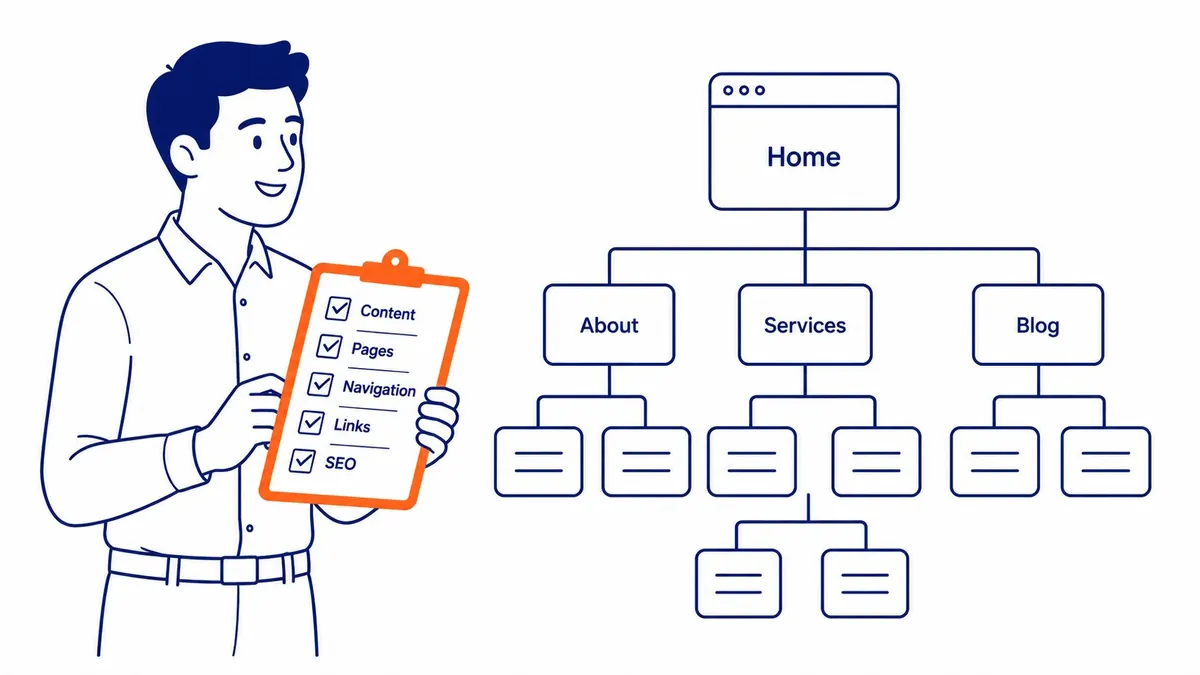
Technical SEO. Google has to be able to crawl and index your pages, understand how they relate and show them properly on a phone. B2B sites have a few recurring problems here: product catalogues hidden behind logins or search boxes that crawlers cannot use, specification sheets published only as PDFs with no page around them, and dozens of near-identical product pages that compete with each other. None of this is different in kind from consumer SEO, but it is common on industrial and distributor sites built years ago.
Content by buying stage. Because the sales cycle is long, a B2B site needs pages for each stage: early pages that explain a problem and its options, comparison and specification pages for the shortlist, and service or product pages for the final decision. It helps to group related B2B keywords into clusters so that each page owns one topic instead of several pages competing for the same search. Google’s guidance on helpful, people-first content applies here with some force, since a page written by someone who has done the work is easier to trust than a page assembled from other suppliers’ brochures.

Links, mentions and local presence. Links from industry associations, suppliers, distributors and trade publications carry the kind of relevance a B2B site can actually earn, and mentions in the same places send referral visits and make the name familiar to buyers. Local presence matters more than many B2B firms assume. Google’s Business Profile guidelines allow a profile for a business that has a physical location customers can visit or that travels to customers where they are, and they exclude virtual offices, as well as co-working offices unless the office has clear signage, receives customers during business hours and is staffed by the business’s own people during those hours. A Calgary fabrication shop that receives customers, or a service company whose crews work on client sites across Alberta, can usually have a profile. A purely online software firm with no staffed office usually cannot, and should not try to invent one.
Measurement. With low search volumes, traffic is a poor yardstick, because a few extra visits can be noise and a single visit can become a large contract. Set up the actions that matter as key events in Google Analytics 4 (quote requests, calls, spec sheet downloads), then follow those enquiries through to your sales records where you can. Search Console shows which queries your pages appear for, which is often the first real evidence of the vocabulary your buyers use.

Why SEO matters for B2B, and when it is the wrong channel
When a business needs a supplier it has not used before, someone usually searches for one, and the researcher described above is often working from a Google results page. If your company is not there when they look, you are not on the list they take back to their manager. SEO also keeps working between campaigns, so a page that answers a buyer’s question well can bring enquiries for years after it was written, provided it is kept current.
There are cases where B2B SEO is not the best use of money, and it is worth saying so plainly. If your whole market is a few dozen companies whose buyers you could name, direct sales, trade shows and industry associations usually reach them faster than any page can. If you need enquiries this quarter, SEO is too slow on its own, because it takes months to build visibility. And if nobody searches for what you sell because the category is new, you may have to create demand elsewhere before search can capture it.
Paid search fills some of those gaps. Pay-per-click in B2B markets can put a company in front of searchers within days and test which terms bring real enquiries, which then informs the SEO work. The two channels share keyword research and landing pages, so running them together is often more efficient than treating them as rivals.

How long B2B SEO takes and how to measure it
SEO results take months rather than weeks, and B2B adds its own delay, because the enquiry a page produces may take further weeks or months to become a signed order. Google does not publish a timeline for SEO results, so treat any timeframe you are given as an estimate based on your site, your competition and the scope of work, not a promise. The article on how long SEO takes explains the stages most sites go through and what decides the pace.
In the meantime, measure the things that move first. Usually, indexing and impressions in Search Console come first, positions for the trade terms that matter come next, and enquiries come last, although the order varies from site to site. A Canadian buyer also tends to ask practical questions a page should answer before the first call: whether prices are in Canadian dollars, whether they include GST (and, for buyers in British Columbia, PST), where you deliver or work, and how long lead times are. Answering them on the page lets a researcher report back without a phone call, so the enquiries that do arrive are more likely to come from buyers who already know you fit.

B2B SEO and SEO Company To-The-TOP!
SEO Company To-The-TOP! was founded in Calgary in 2007 and is a solo practice, so the person who reviews a B2B site is the person who does the work, with no junior handoffs. The technical and on-page work is the same White Hat SEO any site receives, and the reporting tracks positions monthly. If you are comparing providers, the guide on how to choose a B2B SEO agency lists the questions worth asking any of them, and the overview of SEO companies that specialize in B2B shows what that specialization looks like.
For businesses in Calgary, Edmonton, Vancouver and across Alberta and British Columbia, a useful first conversation with any SEO provider is about who your buyers are and what they search for, and only then about pages. Where enquiries are needed before organic search can deliver them, Google Ads can run alongside the SEO work on a shorter timeline. With any provider, To-The-TOP! included, ask for the management fee and the ad spend as two separate numbers before you compare offers. To talk through what your site needs, call (403) 308-5949.

Contact Calgary SEO Company To-The-TOP!
Questions about anything in this article, or about your own rankings? Talk to a Calgary SEO specialist directly.
Phone: (403) 308-5949
Address: 1509 14 Ave SW, Calgary, AB T3C 0W4
Hours:
Monday to Friday: 10:00 am – 7:00 pm
Saturday: 12:00 pm – 4:00 pm
Sunday: closed