
When to Push and When to Flow in SEO
Two clients, same month, same problem. One rewrote a page that had climbed from position nineteen to position nine. The other left it alone. Guess which one still sits on page two.
Push means intervention. You rewrite, you build links, you publish, you fix. Flow means restraint. The work stays done and the page ages without your hands on it.
SEO Company To-The-TOP! has watched this decision go wrong since 2007. Rarely because somebody did nothing. Almost always because somebody could not stop.

What Push and Flow Actually Mean
Neither word describes a strategy. Both describe timing.
Pushing looks like effort. New content ships. Outreach goes out. Somebody rewrites title tags on a Tuesday afternoon because rankings dipped on Monday.
Flowing looks like nothing at all. The site sits. Rankings wobble. Somebody still bills you for the month. That is why flow makes clients nervous, and it is why the advice gets ignored right up until the damage shows.
Both are work. Only one of them is visible.
The trap is that push feels responsible. A business owner watching a competitor climb wants somebody doing something, anything, today. Restraint reads as neglect from the outside. It usually is not.

Signals That Say Push
Certain situations reward force. They share one trait. Google has already made up its mind about the page, so more waiting changes nothing.

A Page Stalled on Page Two for Ninety Days
Impressions arrive. Clicks do not. The page has sat between position eleven and position eighteen for three months without drifting either way.
That page has plateaued. Google knows it exists and has settled on where it belongs. So move it, or accept the position.
Push here, and push hard. Expand the thin sections. Earn two or three genuine links. Answer the questions the page skipped the first time around.
Something on the Site Broke
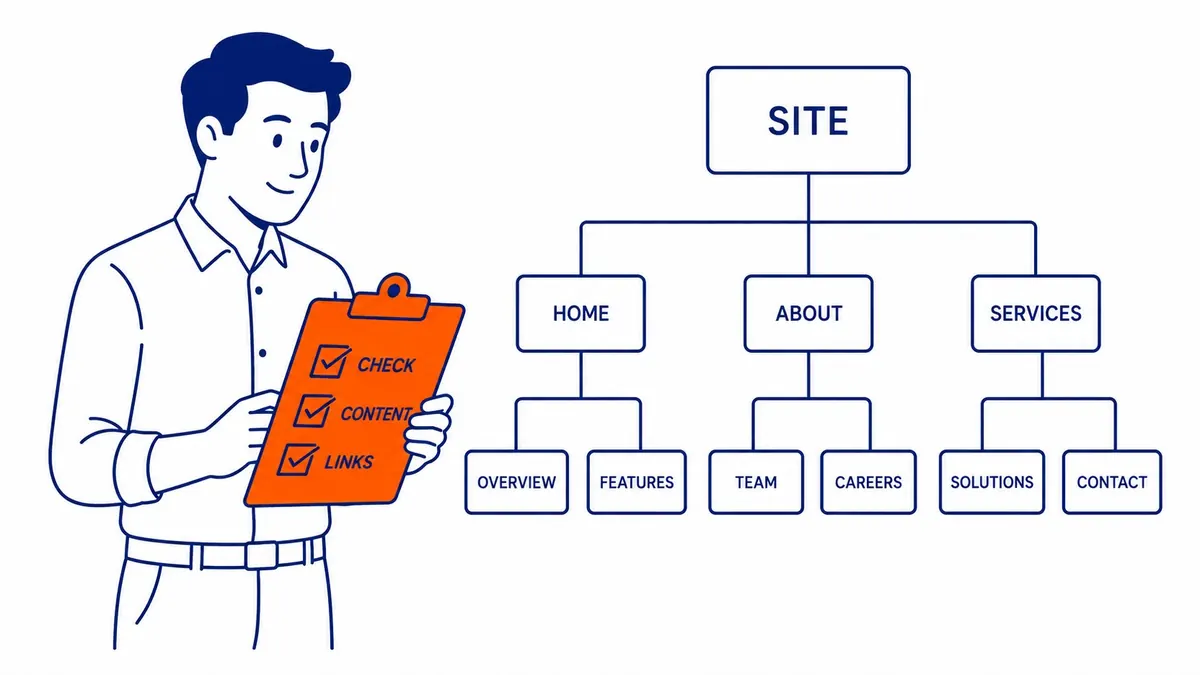
A noindex tag shipped with the redesign. Canonical pointing at a dead URL. Server throwing 500 errors at Googlebot every night around three in the morning.
Nobody flows through this. A quarterly site audit catches most of it before rankings register the damage. Emergencies never wait for the retainer calendar, even when the invoice cycle says otherwise.
Two more situations qualify. A manual action in Search Console demands work the day you find it. So does a commercial keyword driving real revenue with no page on your site pointed at it.

Signals That Say Flow
Restraint costs nothing. It also returns more than most of the work we bill for. That makes it the hardest thing on this list to sell.
The Page Is Already Climbing
Position nineteen last month. Position twelve now. Nothing about that page needs your hands on it.
Google is still working out where the page belongs. Rewriting mid-climb hands it something different to judge. You throw away the signal accumulating in your favour, then wonder why the page settled lower than it had been heading.
Clients hate this advice. It sounds like laziness dressed up as expertise. We give it anyway, and the ones who take it stop paying us to undo our own work.
Google Is Mid Rollout
Core updates take weeks to finish rolling out. Rankings measured inside that window mean very little.
Let the rollout complete before diagnosing anything. Traffic read on day four of a core update has told us the wrong story more than once. We have the invoices to show what acting on that story cost.
The Cost of Pushing at the Wrong Moment
Churn carries a price. Most people never see the invoice for it.
Rewrite a climbing page and the clock restarts. Change forty title tags in one afternoon, then learn nothing about which change mattered. Attribution dies the moment everything moves together.
Link velocity spikes read as manipulation. Panic publishing buries the pages that were working underneath pages nobody asked for.
None of this arrives as a penalty. It arrives as another quarter with no movement. Penalties at least tell you what you did.

Normal Movement Versus Real Decline
Rankings bounce. Position six on Monday. Nine by Thursday. Then back to seven by the weekend. Search results do that every week of the year.
Decline reads differently. Impressions fall alongside the position. The drop holds through three consecutive weeks. Competitors you had never tracked now sit above you.
Check for the second before you act on the first. Most panic rewrites are answering noise, and noise does not answer back.
The tell is impressions. Position alone lies to you, because the tools sample from locations and devices that have nothing to do with your buyers.

What We Never Wait On
Technical breakage. Manual actions. A competitor outranking you on your own brand name. Those three get pushed on the day they surface.
Everything else can usually hold another month. Some of it should.
Fresh keyword research belongs in the push column too. A page targeting nothing cannot flow anywhere.

How Long to Let a Page Flow
Eight weeks minimum after publishing. Twelve on a competitive keyword. That is our rule, not Google’s.
Google crawls the page. Ranks it provisionally. Then watches what searchers actually do with the result.
Touch the page in week two and none of that finishes. Our Calgary SEO retainers build the waiting into the schedule. People expecting weekly deliverables find that strange at first.
Some businesses cannot wait out a flow period. Paid campaigns under Google Ads management cover the gap, then taper off once organic holds position.
Nineteen years in, the pattern holds. The clients who grow fastest are rarely the busiest ones. They are the ones who still know which month to do nothing. Before you touch anything, know what a title change does to rankings.
Common Questions About Push and Flow in SEO
Is it bad to change a page while it is ranking?
Depends entirely on direction. A climbing page, leave alone. Pages flat for three months have already shown you their ceiling, so changing them costs nothing you were not losing anyway.
How do I know if my rankings dropped or just moved?
Watch impressions rather than position. Position wobbles weekly and means little by itself. Impressions falling three straight weeks alongside the position is a real decline.
Should I stop SEO once I reach page one?
Position one gets rented, never owned. Competitors keep publishing whether you do or not. Flow does not mean abandon. It means you stop rewriting what already works.
Does publishing more content always help?
Volume is the most common way to push in the wrong direction. Ten thin pages dilute a site. One page that answers the query completely will outrank all ten of them.
Should I push harder on link building?
Push on links after a page stalls, not before. Links accelerate a page Google already treats as relevant. Aimed at a page with no topical footing, they accomplish very little. Our SEO blog works through that trade-off in more depth. Bad links are a different call, and disavow in SEO has its own timing. There is also when to stop SEO, which owners ask sooner than you would think.
Contact Calgary SEO Company To-The-TOP!
Questions about anything in this article, or about your own rankings? Talk to a Calgary SEO specialist directly.
Phone: (403) 308-5949
Address: 1509 14 Ave SW, Calgary, AB T3C 0W4
Hours:
Monday to Friday: 10:00 am – 7:00 pm
Saturday: 12:00 pm – 4:00 pm
Sunday: closed