
Why Does SEO Take So Long? The Real Reasons Behind the Delay
Why does SEO take so long? Because three separate things have to happen before a change shows up as visitors, and only one of them is in Google’s hands. Google has to crawl and process the change, and its own documentation says crawling alone “can take anywhere from a few days to a few weeks.” The page then has to overtake pages that already have years of content and links behind them. And the work itself has to get done, which on most small business sites takes longer than anyone planned. For anything competitive, a wait of months is common, so the useful question is which of those three is holding a particular site back.
This article is about the reasons. If you want to know how long each stage usually takes and what to check in Search Console along the way, the companion guide on how long each stage usually takes covers the timeline itself. Google no longer gives a months-long range for SEO results on its “Do you need an SEO?” page, so any article that quotes one as Google’s guidance is out of date.
The delay has three sources
Most explanations of slow SEO are a list of reasons in no particular order, which makes it hard to know what to do about any of them. It is more useful to sort the delay by who controls it, because the fix depends entirely on that. Some of the wait belongs to Google, some belongs to the competition, and some belongs to the business and whoever is doing its SEO.
| Source of delay | Who controls it | Where it shows up | What shortens it |
|---|---|---|---|
| Google’s processing: crawling, indexing and re-ranking | Google, within limits | URL Inspection and the Page indexing report in Search Console | Clean technical setup, a sitemap, internal links to new pages |
| The competition’s head start: pages that already rank and already have links | Nobody directly | Impressions without clicks, positions stuck on page two or three | Better pages, earned links, and choosing first targets that are winnable |
| The pace of the work: pages written, fixes made, links earned | The business and its SEO provider | Long gaps between changes, a backlog of unfinished fixes | Doing the work in a sensible order and actually finishing it |
The third row is the one people least like to hear about, although it is the one a business controls most directly. A plan that calls for twenty new service pages, a set of technical fixes and a Google Business Profile clean-up does nothing until those things exist, and in practice the content and approvals take longer than the plan assumed. Before blaming Google for the delay, it is worth checking how much of the plan is actually live.

Google has to find and process every change
Google’s guide to how Search works describes three stages: crawling, where Googlebot fetches the page; indexing, where Google analyses it and decides whether to store it; and serving, where it chooses which stored pages to show for a search. Each stage has its own wait. Google says that “Googlebot uses an algorithmic process to determine which sites to crawl, how often, and how many pages to fetch from each site,” so a new or changed page is not picked up the moment it is published. When you ask Google to recrawl a page, its help page warns that crawling “can take anywhere from a few days to a few weeks.”
Being crawled does not mean being indexed either. Google states that “Indexing isn’t guaranteed; not every page that Google processes will be indexed,” and it lists low content quality, robots rules that block indexing and a site design that makes indexing difficult as common reasons. Requesting indexing in Search Console can speed up the crawl, but Google is clear that the request does not guarantee indexing. Once a page is indexed, its position for a search still has to settle, and Google’s SEO Starter Guide says some changes can take effect in a few hours while others take several months, adding that you “likely want to wait a few weeks to assess whether your work had beneficial effects.”
One explanation that does not apply to most businesses is crawl budget. Google’s crawl budget guide is written for sites with more than a million unique pages that change about weekly, or more than 10,000 pages that change daily, and it says that if your pages are crawled the same day they are published, you do not need to read it. A 40-page service business site in Calgary is not waiting because Google has run out of crawling capacity for it. If its pages are slow to be crawled or indexed, the cause is more likely a technical problem, weak internal links to the new page, or Google deciding the page is not worth indexing yet.
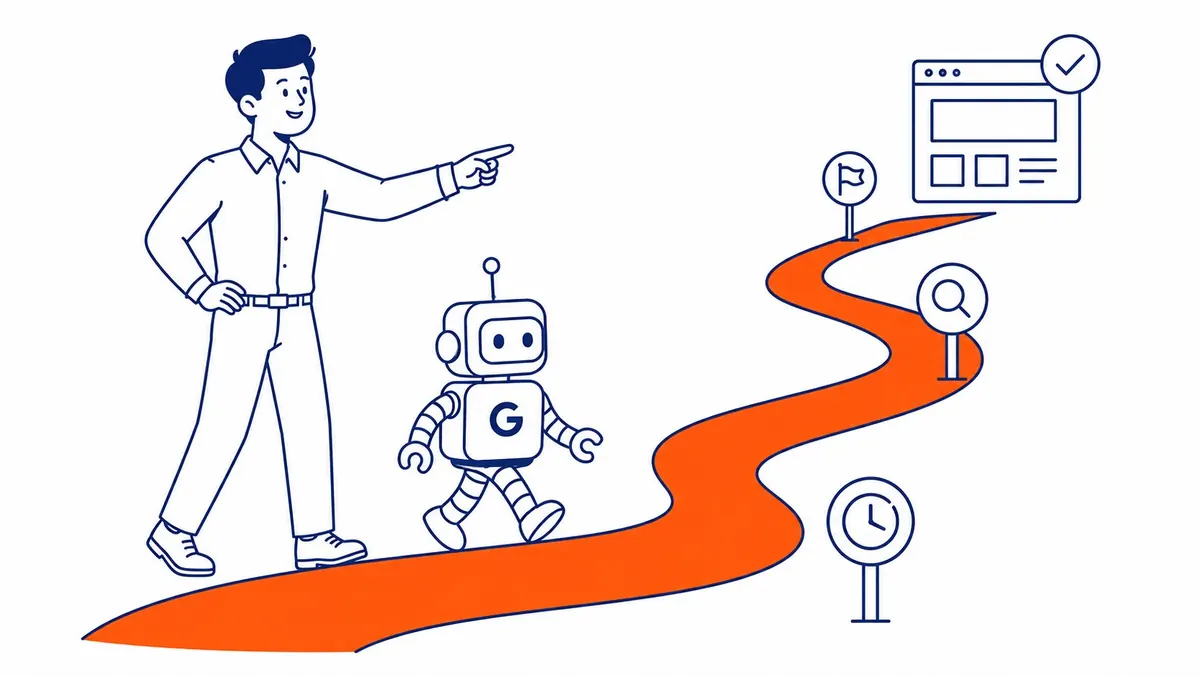
Competition sets most of the pace
Once Google has processed a page, it has to decide whether the page deserves to rank above the ones already there, and those pages are not standing still. Google describes link analysis systems, including PageRank, that “understand how pages link to each other as a way to determine what pages are about and which might be most helpful in response to a query.” A competitor that has been publishing and earning links for ten years has a lead that a new page cannot erase in a few weeks, however good the new page is.
Consider an illustrative example of a furnace repair company in Calgary. A search like “furnace repair Calgary” is likely to show established heating companies, directories and lead-generation sites, many of which have had pages on that exact topic for years. A narrower search, such as a particular furnace brand in a particular quadrant of the city, usually has fewer strong pages in front of it, so the same work is likely to show results there first. The only way to know is to look at each results page, but it explains why two businesses doing the same amount of work can see very different speeds.
Map results add their own pace. Google Business Profile Help says local results are based mainly on “relevance, distance, and popularity,” and popularity includes things like reviews, which accumulate over months rather than days. That is why map results move on a clock of their own, driven as much by the Business Profile as by the website.

Content and links build up slowly, and shortcuts backfire
The two things that close a competitive gap, useful pages and links from other sites, both take time for reasons that have little to do with Google. Good pages take research and writing, and links come when other people decide to mention a business, which happens at the pace of their decisions rather than yours. A site that answers its customers’ real questions over a year builds a body of work that one burst of activity cannot match.
The obvious shortcuts make the delay worse. Google’s spam policies define link spam as “the practice of creating links to or from a site primarily for the purpose of manipulating search rankings,” with “Buying or selling links for ranking purposes” as the first example. The same policies describe scaled content abuse as producing many pages mainly to manipulate rankings rather than to help people. Either can lead to a site’s pages ranking lower or being removed from results, which turns a slow climb into a recovery job.
There is also a slower kind of change that catches site owners out. When a site has a quality problem across many pages, fixing one page is not the same as convincing Google that the whole site has improved. Google’s page on core updates says that some changes can take effect in a few days, but it could take several months for its systems to learn and confirm that a site as a whole is now producing helpful, reliable content. A site cleaning up years of thin or duplicated pages should expect that kind of wait, which is another reason to fix the worst pages first rather than everything a little.
Why Google Ads is faster, and why it does not speed up SEO
Paid search feels fast because it skips the ranking contest. Once a Google Ads campaign’s ads are approved, they can start entering auctions for its keywords as soon as the campaign is live, because the placement comes from the ad auction rather than from earned rankings. The trade-off is that the clicks stop when the spending stops, while organic rankings keep working for as long as the pages hold their positions.
A common hope is that spending on ads will help organic rankings along. It will not. Google’s “Do you need an SEO?” page states that “Advertising with Google won’t have any effect on your site’s presence in our search results.” What ads can do is bring in enquiries while the organic work builds, and the search term data they produce can show which services and phrases actually lead to calls. That is the real reason many service businesses run Google Ads alongside SEO for the first months, as a separate channel rather than a shortcut.
The same page carries a warning worth repeating: “No one can guarantee a #1 ranking on Google.” Any provider who promises a ranking by a date is promising something Google itself says nobody can deliver, and the delay is often where those promises fall apart.

How to tell slow from stuck
A slow campaign and a stuck one look the same in Google Analytics, because both show flat traffic. They look different in Search Console. The table below is a practitioner’s working guide, not a Google schedule, and it assumes the site has no manual action or security issue in Search Console, which would need fixing first.
| What Search Console shows | What it usually means | What to do |
|---|---|---|
| Changed pages show a last crawl date before the change | Google has not seen the work yet | Check internal links to the page, the sitemap, and request indexing |
| Pages listed as not indexed in the Page indexing report | Google may not have crawled them yet, may have crawled them and chosen not to index them, or something blocks them | Read the reason Google gives, then fix the block, the duplicate or the thin content |
| Impressions rising on specific queries, few clicks | Normal progress: the page is ranking, but not yet high enough to earn many clicks | Keep going, and compare positions on the same queries month to month |
| Positions on the same queries unchanged for several months after the work went live | Stuck rather than slow: the page may not match what searchers want, or the gap is too wide | Compare the page with what ranks, check the intent, and reconsider the target |
Seasonal demand can make a working campaign look stuck. To continue the illustrative example, a Calgary furnace repair company will usually see fewer searches in July than in January, so its impressions and clicks can fall in summer even while its positions improve. Average position on a fixed set of queries, compared across months, is a fairer measure of progress than traffic alone for that reason. If positions are not moving at all after the work has been live for a reasonable time, it is worth going through the usual reasons SEO stalls before adding more content.
What actually shortens the wait
Nothing makes Google crawl, index and re-rank on a schedule, but a few things remove avoidable delay. A technical audit at the start can find the problems that would otherwise hold back every page that follows, such as blocked pages, broken redirects or duplicate URLs, and fixing those first means later work is not wasted. Matching each page to what searchers actually want matters as much, because a well-written page aimed at the wrong intent can wait a long time and never move.
The choice of first targets matters too. Specific, lower-competition searches that are close to what customers buy give a site its first rankings and its first real data, and that data shows which pages to build next. Finishing the plan in a sensible order, rather than starting everything at once, keeps the third source of delay under control, which is the one a business can do the most about.
Planning around the delay
SEO takes time because Google has to process every change, because the pages already ranking have a head start, and because the work itself takes time to finish. None of that is a sign that something has gone wrong, as long as you can see the stages moving in Search Console. When a stage stops moving, the cause can usually be found, and that is a better use of time than waiting longer.
SEO Company To-The-TOP! has worked on SEO for Calgary businesses since 2007, and one specialist does the client work from start to finish. If you would like a second opinion on whether your site is slow or stuck, you can read more about SEO for Calgary businesses or call (403) 308-5949 to talk it through.
Contact Calgary SEO Company To-The-TOP!
Questions about anything in this article, or about your own rankings? Talk to a Calgary SEO specialist directly.
Phone: (403) 308-5949
Address: 1509 14 Ave SW, Calgary, AB T3C 0W4
Hours:
Monday to Friday: 10:00 am – 7:00 pm
Saturday: 12:00 pm – 4:00 pm
Sunday: closed