Why Is the PPC Concave?
The production possibilities curve is concave because opportunity cost rises as you move along it. Each extra wagon costs more wine than the wagon before it did. That is the answer. It will pass an exam.
A word on the acronym first, though. Two different things get called PPC, and this website is mostly about the other one.
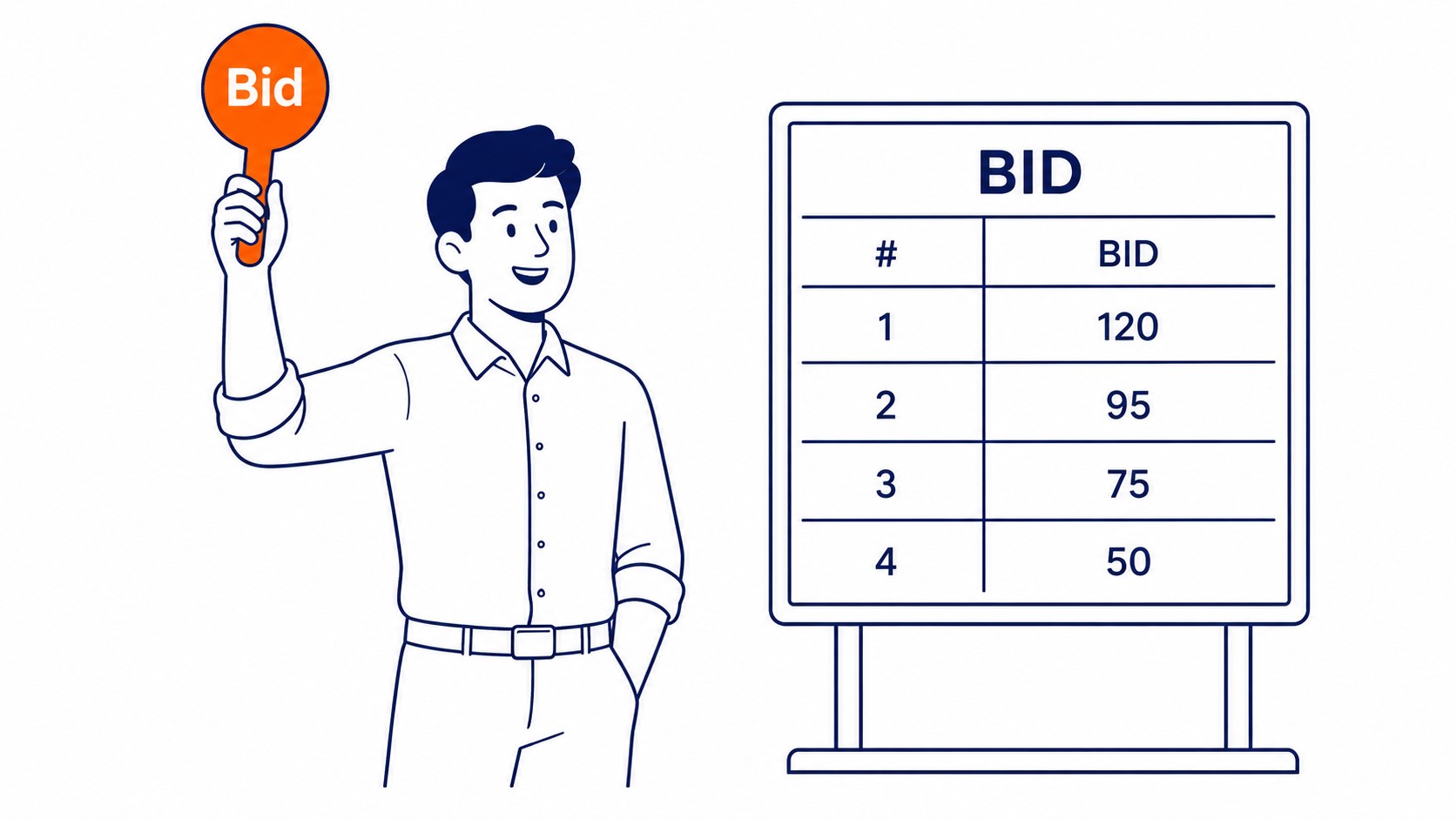
Two Different Things Get Called PPC
One PPC is a billing model in advertising, most familiar from paid search. Somebody clicks. The advertiser pays. Nothing about it is a curve.
The other is the production possibilities curve. That is the one with the bowed-out shape, the one you came for. Everything below is about that.
So back to the exam answer. Increasing opportunity cost. Correct, and almost every textbook stops there.
Almost none of them say why the cost increases. That part is more interesting than the shape. They skip a point inside the PPC too, which has its own answer. How trade moves the PPC gets skipped in the same breath.
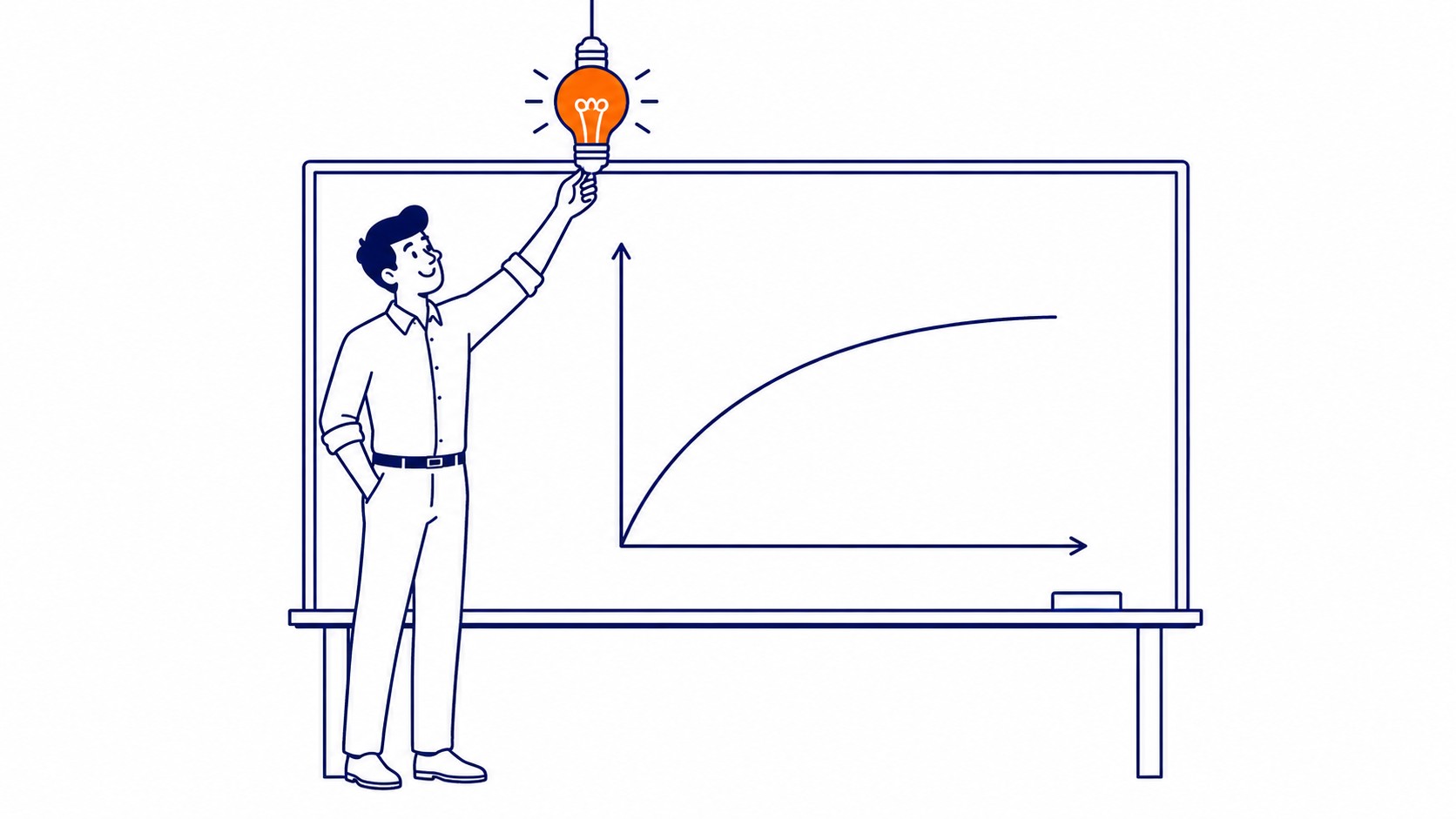
The Curve Is Concave Because Your Resources Are Not Alike
Give an economy two goods to make. Wine and wagons.
Vines want a slope facing the sun. Wagons want a flat workshop near a road. Neither piece of land is much use to the other job.
The people split the same way. A grower who reads a vineyard by eye spent years learning to. Nothing about that helps him cut an axle.
Here is the whole of it. Your resources are not interchangeable, so moving one across does not deliver the same value it delivered before.
A hillside makes a poor workbench.

You Moved Your Worst Grower First
Start with everybody in the vineyard. Nobody is making wagons at all.
Now you want one wagon. Who do you move?
You move the worst grower you have. Obviously you do. Nobody hands over their best.
So that first wagon costs almost no wine. The person who built it was barely producing any.
Then you want another. You move the next worst. A little more wine goes, though still not much.
Keep going. The tenth wagon costs more than the second. Then the fiftieth costs more again.
Eventually the only people left on the slope are extraordinary at wine. Every one you take now is expensive. Ruinously so, near the end.
That rising bill, drawn on a graph, is the bow.
Two things put it there. Your resources differ. Then you moved them in the sensible order, worst first.
Take away the difference and the curve goes straight. Remove the sensible order instead and you fall inside it.
So the shape is not a law of nature. It is a picture of somebody doing the easy things first.
A Straight Line Would Mean Something Worse
Picture the alternative for a second. A straight line running from one end to the other. Constant opportunity cost. Every wagon costs the same wine as the last one.
What has to be true for that?
Every resource has to carry the same trade-off. Not equally productive in absolute terms. Simply facing the same exchange rate, so whoever you move gives up the same wine per wagon.
Then nobody is the obvious one to move first. The order stops mattering entirely, since each swap costs you exactly what the last one did.
A straight-line frontier is an economy with nothing to sort.
Read that again, because the usual telling has the tone backwards. It presents the bow as bad news, a cost that keeps getting steeper. Yet the flat case is the poorer one.
What the Bow Is Actually Worth
Take a pencil to your own graph. Draw the straight line joining the two ends of the curve.
That chord is roughly what you get by moving people in no particular order. Grab whoever is nearest. Send them over.
Your curve sits above it.
Everything between the line and the curve is the payment for putting the right person in the right place. Nothing else put it there.
So the bow is not a cost at all. It is a bonus. Better still, it is the part of the graph you earned.
An economy with nothing to sort collects none of it. No sorting problem, so no gain from solving one.
So Cost Is a Position, Never a Number
One more thing falls out of this. It is the part worth carrying away.
Ask what a wagon costs. There is no answer.
It costs whatever wine the next person out of the vineyard was making. That depends entirely on how many you already moved.
The word cost, used here, is a slope. A slope only exists somewhere.
Two economies can hold identical curves. Then they face completely different prices for the same wagon, purely because they stand in different places on it.
There is no average price to pay. Only the price where you stand. Ad budgets price the same way, which is the short answer to how PPC helps your business.
Where the Concave Curve Stops Helping
None of this makes the rising bill pleasant. The pain at the end is real, since you really are giving up your finest grower. Nothing in this argument denies that. It only says you feel it because you already banked the bargains.
And the curve prices moves. It never picks one. Ask what the next wagon costs and you get an answer. Then ask whether you should want a wagon at all. Nothing on the graph will say.
Also worth stating plainly. Not every frontier is concave. Truly adaptable resources give you a straight line. That is a real case rather than a trick question.
Check the resources before assuming the shape.
The Same Shape in a Marketing Budget
Different field, same arithmetic. At SEO Company To-The-TOP! we watch Calgary owners run into this exact wall.
A marketing budget is a fixed set of resources. Money and hours, mostly. Move some across and the same thing happens.
The first hours you pull out of a channel are the hours doing the least. They cost you almost nothing, so the swap feels free. Move more and it stops feeling free. Eventually you are pulling the one thing that was working.
Finding out which hours those are is what a website audit is for.
So the question owners ask has no answer as a number. How much should I shift into ads? It depends on where you are standing.
The first thousand dollars you move and the last thousand you move are not the same thousand.
So the Calgary SEO work at To-The-TOP! runs on that logic. So does the keyword research underneath it. Meanwhile Google Ads management sits on the same curve, priced by where the account already is. Our portfolio shows where that work ended up. To-The-TOP! has been pricing that trade-off since 2007.
Almost nobody gets a flat exchange rate. Not in a real economy, and not in a marketing budget either.
Common Questions About the Concave PPC
Why is the PPC concave and not a straight line?
Opportunity cost rises as you move along it. Resources are not equally suited to both goods, so shifting them across costs progressively more. A straight line would require every resource to carry the very same trade-off.
What does concave mean on a PPC graph?
The curve bows outward, away from the origin. Slide along it toward one good and the slope steepens. That steepening slope is the rising opportunity cost, drawn.
Is a concave PPC the same thing as increasing opportunity cost?
They are two descriptions of one fact. Increasing opportunity cost is what happens. The concave shape is what it looks like once somebody draws it. Neither causes the other.
When would a PPC be a straight line?
Only when opportunity cost stays constant. That needs every resource to face the same trade-off between the two goods. It is uncommon across a whole economy. Yet it turns up often enough in simple classroom models with one input.
Does a concave PPC mean the economy is being inefficient?
No. Every point sitting on the curve is efficient, whatever the shape. Inefficiency shows up as a point inside the curve, where resources sit idle or badly matched to the work.
Contact SEO Company To-The-TOP! in Calgary
Questions about anything in this article, or about your own rankings? Talk to a Calgary SEO specialist directly.
Phone: (403) 308-5949
Address: 1509 14 Ave SW, Calgary, AB T3C 0W4
Hours:
Monday to Friday: 10:00 am – 7:00 pm
Saturday: 12:00 pm – 4:00 pm
Sunday: closed
