Why SEO Is Important for Small Business
SEO is important for a small business because many customers look for a product or service on Google before they pick up the phone, and appearing in those results, in the map listings or the ordinary links below them, gives a business the chance to be considered for the work. It also keeps working when the advertising budget pauses, because a page that ranks does not charge for each visit. For a business without a large ad budget or a well-known brand, search is often the most direct way for strangers with a need to find it.

That does not make SEO equally important for every business, and the reasons below are worth checking against your own situation before you commit time or money to it. The last sections cover when it matters less and where a small business should start.
SEO meets people at the moment they need you
Most advertising interrupts people who were doing something else. Search works the other way round, because the person has already typed the problem into Google and is looking for someone to solve it. A homeowner searching for a furnace repair on a cold January morning in Calgary does not need persuading that they want a furnace technician. They need to find one they trust, and they usually choose from the handful of businesses they see first.
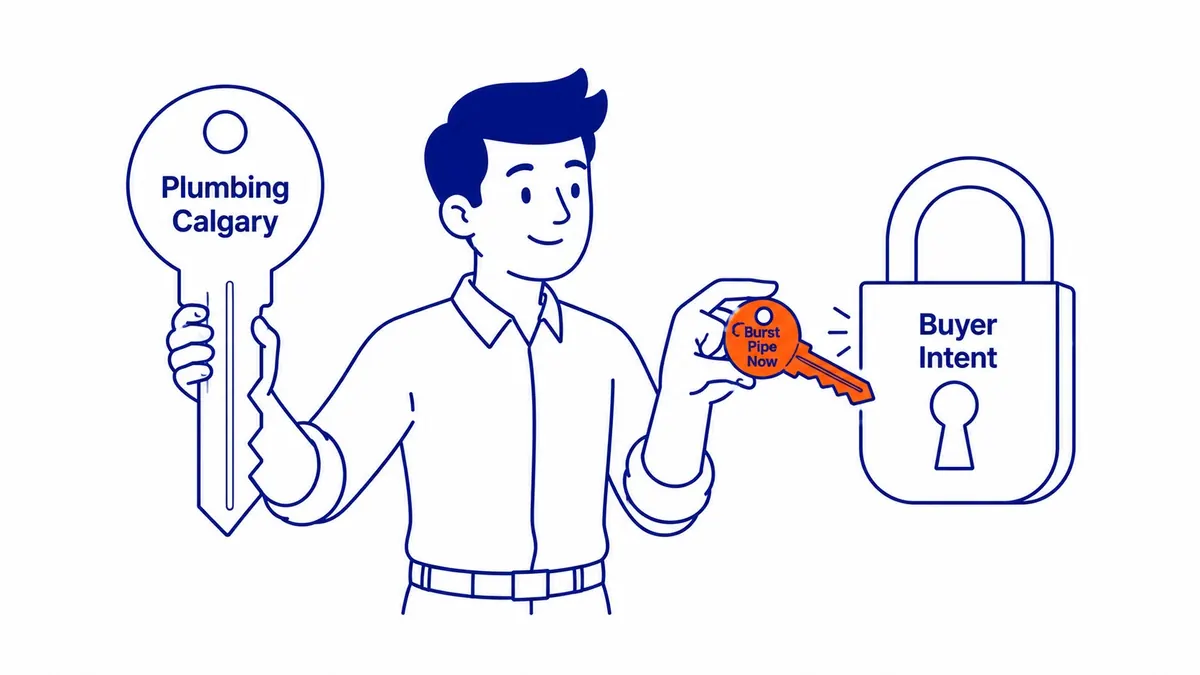
SEO is the work that helps your pages become one of those choices. Google says its best practices should make it easier for search engines, not just Google, to crawl, index and understand your content, and it adds plainly that there are no secrets that will automatically rank a site first. In practice that means making sure Google can read your site, that each service has a page that matches what people search for, and that the site gives Google reasons to trust it. Careful keyword research matters here, because owners often describe their services in trade language while customers use plainer words. A plumber may think in terms of “plumbing services”, while the people ready to book search for something like “burst pipe repair” or “emergency plumber near me”.

Local search decides who gets found nearby
For any business that serves a city or a region, the local results are often where the decision happens. Google’s Business Profile help page says that local results are mainly based on relevance, distance and popularity. Relevance is how well your profile matches the search, distance is how far your business is from the person searching, and the prominence section of the same page says that Google considers how many websites link to your business and how many reviews you have, and that more reviews and positive ratings can help your local ranking.
Distance is the factor small business owners tend to underestimate. Calgary is a large city by area, so a clinic in the far south may struggle to show prominently in the map results for someone searching from the northwest, even with a strong profile, because distance is one of the factors Google weighs. You cannot change where you are, but you can improve the information Google uses to judge the other two: a complete and accurate profile with the right categories, a website whose service pages back up what the profile claims, and a steady flow of genuine reviews. Service-area businesses such as trades and mobile services have their own rule to follow, because Google tells businesses that do not serve customers at their address to remove the address from the profile and set a service area instead.
This is why local SEO is often the most important part of SEO for a small business. A national company with a bigger budget does not automatically win a local search, because Google is weighing how relevant and how close each business is as well as how well known it is.
Trust is built over time and is hard to copy
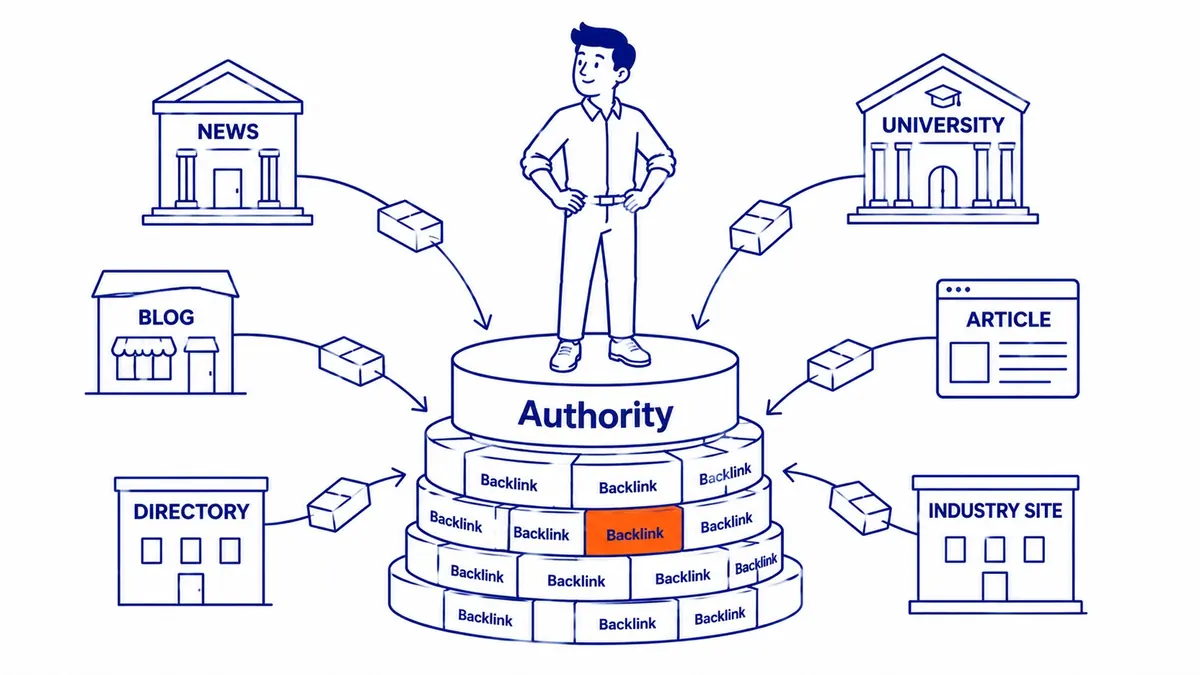
Rankings depend partly on signals a competitor cannot buy overnight. Links from other reputable websites, reviews from real customers and a body of useful pages all take steady work to earn, which is why a competitor cannot simply copy them. A local news story, a membership page from an industry association or a mention from a supplier is the kind of relevant link worth earning, while buying links for ranking purposes and low-quality directory links are both listed as link spam in Google’s spam policies.
The same work also helps people who never use Google to find you. A customer who hears your name from a neighbour will often search for it before calling, and a website that loads properly on a phone, explains your services clearly and shows recent reviews is far more likely to turn that referral into a booking. SEO done properly usually improves the site for every visitor, which is why the technical, content and authority work are best treated as one job rather than three separate projects.
Rankings keep working when the budget pauses
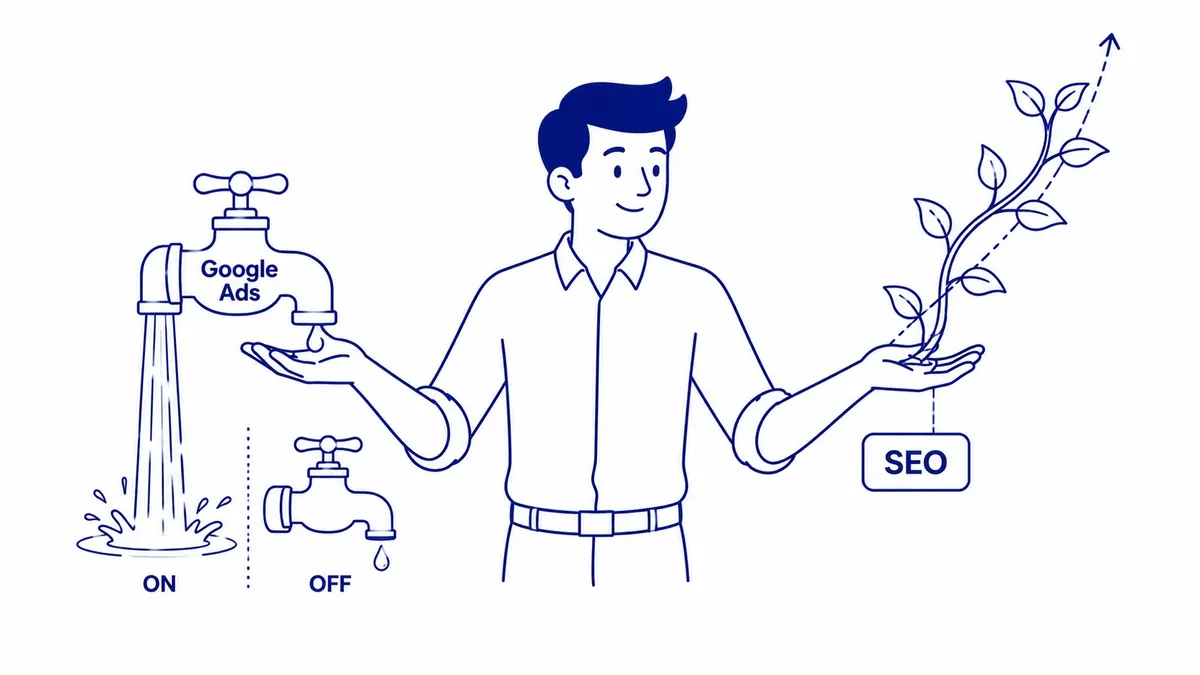
Paid search and SEO do different jobs, and a small business usually benefits from understanding both. Google Ads can put a business near the top of the results soon after its ads are approved, and Google says most ads are reviewed within one business day, although the auction decides each position and none is guaranteed. That speed makes it useful for a new business, a seasonal push or a service you need to test quickly. The trade-off is that a campaign charged per click costs money for every visit it sends, and the visibility stops the moment the campaign does.
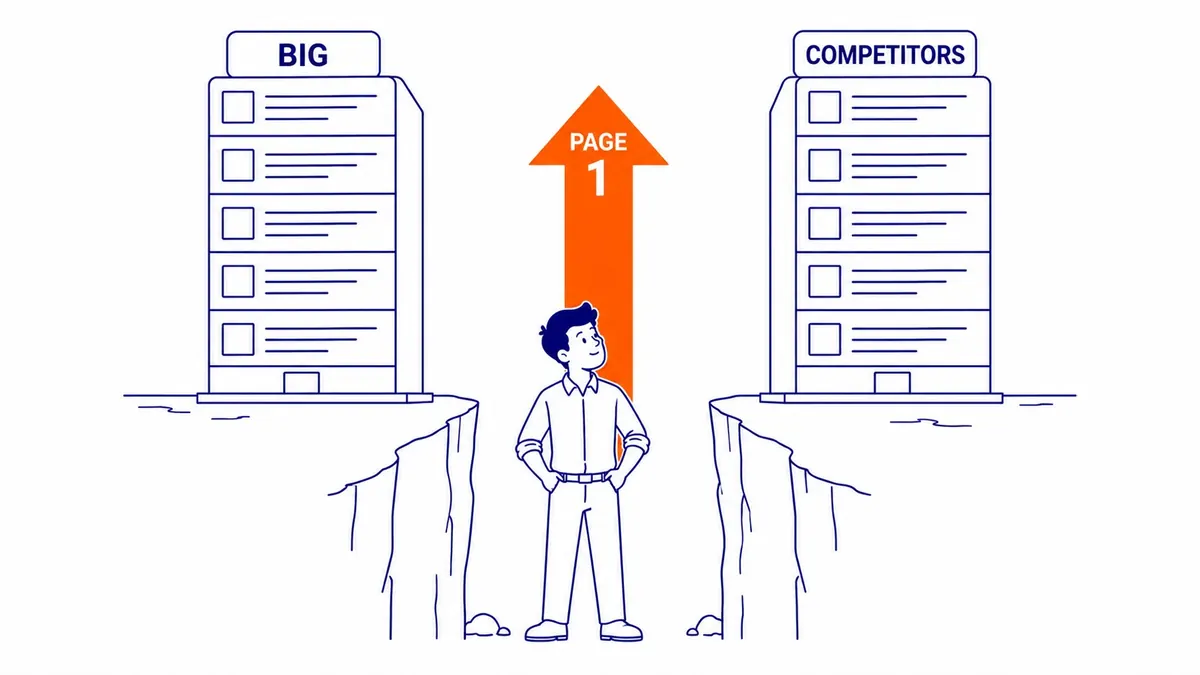
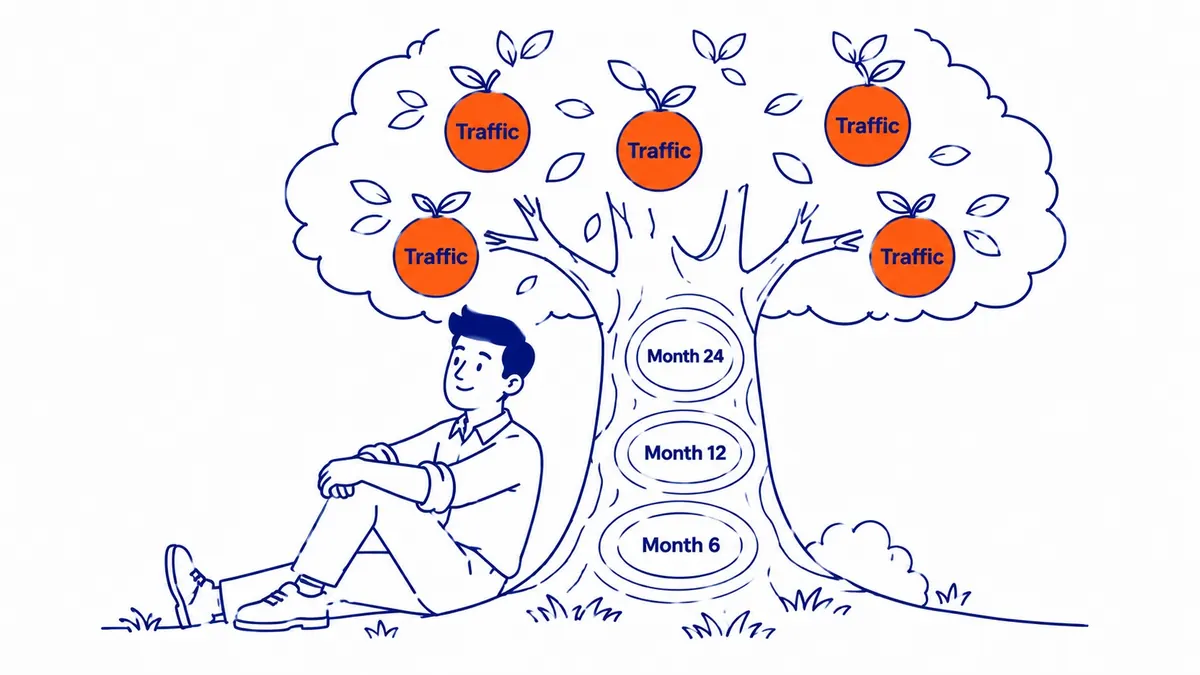
An organic ranking behaves differently. Lasting gains usually take months of work, although a single change can show sooner or make no visible difference, and anyone who promises a fixed date is guessing, so it is worth reading about how long SEO usually takes before setting expectations. Once a page ranks, though, visits from it carry no charge per click, and a page that holds its position can keep bringing in visits long after the work that earned it, provided it is kept up to date and competitors do not overtake it. For many small businesses the sensible plan is to use ads for demand they need now while SEO builds the visibility they would otherwise have to keep paying for.

Is SEO still important with AI search?
Many owners now see an AI-generated summary at the top of Google and wonder whether ranking still matters. Google’s own guidance answers this directly: it says the best practices for SEO remain relevant for AI features such as AI Overviews and AI Mode, and that there are no additional requirements or special optimizations needed to appear in them. Google says those features surface relevant links to help people find information, and that a page must be indexed and eligible to appear in Search with a snippet before it can be shown as a supporting link.
What has changed is the shape of the results page rather than the fundamentals. A clear page that answers a real question, on a site Google can crawl and trust, is still the best way to be included, whether the searcher clicks a classic link, a map listing or a source in an AI summary.
When SEO matters less
SEO is important for most small businesses, but it is not the first priority for all of them. The quickest test is to ask three questions. Do your customers search for what you sell, in words you could rank for? Does the decision happen on Google or Maps, or somewhere else such as a tender list, a marketplace or a personal referral? And is a customer worth enough over time, through repeat work or referrals, to justify months of effort before results show?
| Type of business | How important SEO usually is | Typical reason |
|---|---|---|
| Local trades and home services | Very important | People search when something breaks, and the map results often decide who they call |
| Clinics, dentists, counsellors, salons | Very important | Searches are usually local, and where clients return, each new one is worth more over time |
| Professional services (law, accounting, consulting) | Important | Buyers often research before they call, and trust signals carry weight |
| Ecommerce and online-only shops | Important, and competitive | Competing with national sellers usually comes down to strong product and category pages |
| Referral-only B2B with a few dozen possible buyers | Often lower | The buyers may never search; direct relationships and a credible site matter more |
| A one-off event or a short-lived offer | Lower | SEO takes too long to pay off; ads or direct promotion suit the timing better |
If your answers point to lower importance, a clean, accurate website and a complete Business Profile may be enough for now, and the budget can go elsewhere. If they point the other way, the question becomes whether SEO is worth the money for a business your size and how to pace the work.
Where a small business should start
With a limited budget, the order of the work matters more than the size of it. A sensible first step is to check whether Google can crawl and index the site, which pages already have some visibility and what is broken, and a site audit gathers all of that in one place. Next comes choosing a small number of searches that bring paying customers, making sure each of those services has a page that answers the search properly, and completing the Google Business Profile so that it matches the site. Links and reviews follow, and they take the longest.
Google’s own guidance notes that hiring an SEO can potentially improve a site’s visibility and save you time, and it is equally clear that no one can promise a first-place ranking. SEO Company To-The-TOP! has worked on search in Calgary since 2007 as a solo practice, so the person who looks at your site is the person who does the work. If you would like a second opinion on your site, or on an SEO proposal you already have, call (403) 308-5949.
Contact Calgary SEO Company To-The-TOP!
Questions about anything in this article, or about your own rankings? Talk to a Calgary SEO specialist directly.
Phone: (403) 308-5949
Address: 1509 14 Ave SW, Calgary, AB T3C 0W4
Hours:
Monday to Friday: 10:00 am – 7:00 pm
Saturday: 12:00 pm – 4:00 pm
Sunday: closed