
Which SERP Features Are Available for My Keywords?
Nineteen years of keyword research in Calgary, and the same question keeps coming up: why does a competitor show up with a box at the top of the search results page when my site ranks above theirs? That box has a name. Several names. The SERP has gotten complicated since 2007, and what loads now depends on the query, the device, the searcher’s location, and signals Google processes in milliseconds.
Not every query triggers them. Knowing which SERP features your keywords qualify for is different from knowing your rankings. Often a more useful task. A page ranked third with none of these elements above it gets more clicks than one ranked first with a rich result and an AI Overview at the top.
A deeper breakdown of what a SERP is in SEO covers how the results page itself is structured before diving into which elements appear for specific query types.
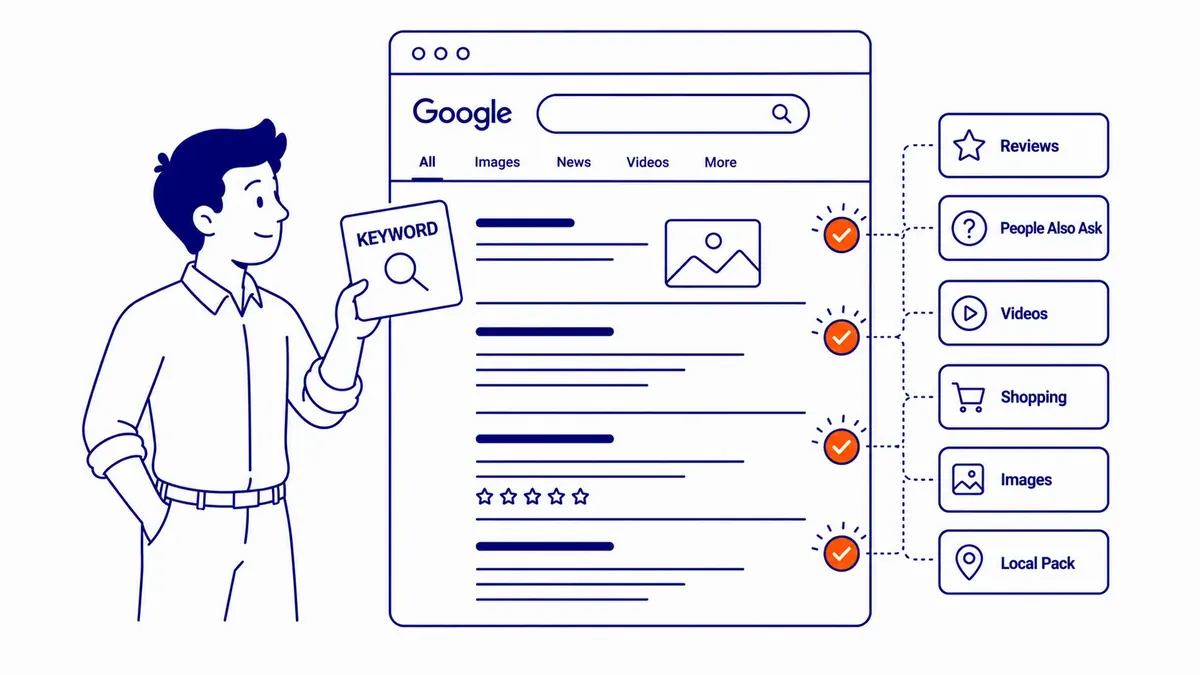
What Counts as a SERP Feature
Standard organic links are the plain blue links. Google has added elements around them for years. Featured snippets. Local map results. Image pack results. A video carousel. AI Overviews. Knowledge panels. People Also Ask boxes. Top Stories. Each one occupies real estate that used to belong to organic results.
Every element appears for a reason. Query intent drives the result category. “Calgary SEO company” often shows map listings. A question about what a featured snippet is may itself trigger one. That second case happens, fairly often actually. The interesting fight now is AI Overviews and organic clicks competing on one page.
What the Most Common Result Types Are
Four categories account for most of what business owners notice on competitive queries. Some can be targeted directly. Others require awareness. Knowing both changes how you prioritise content and set expectations with anyone tracking the site.
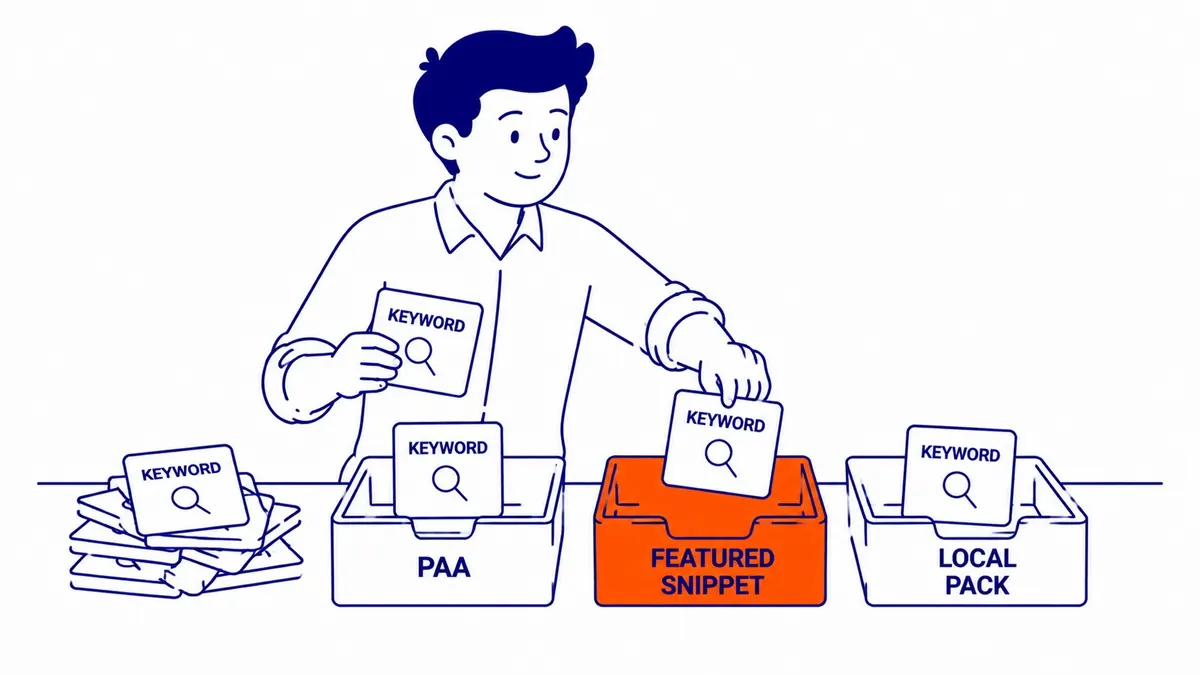
Featured Snippets
Position zero. An excerpt pulled from a page and placed above standard listings. The format varies: paragraphs, numbered steps, data tables. Question-format queries trigger a featured snippet most reliably. How-to searches, what-is questions, step-by-step instructions. Transactional and local queries typically do not produce them.
Ranking in the top five is a prerequisite. Rarely does a featured snippet pull from beyond page one. If a competitor already owns one for your primary informational queries, they appear above every organic listing. The second ranking below still earns some clicks; the gap depends on the query. Content structured to answer a question clearly, under a matching heading, is what tends to earn these positions.
Local Pack
Three business listings below a map. Near-me queries and category searches with an implicit location signal produce one. Rank inside the local pack and the listing appears before standard blue links. Google Business Profile completeness, review count, and citation consistency across directories drive placement more than page authority does.
Search a phrase like Calgary SEO expert and the split shows up immediately: a business can hold strong organic rankings and still not appear here. Businesses with inconsistent directory listings or thin profiles miss it even with solid page-one results. The two ranking systems are largely separate.
Image Pack
A horizontal row of images appearing mid-page, between organic listings. Triggers on visual queries: product searches, recipes, DIY guides, interior design. The images link to the image search index first, not directly to the source page. Accurate alt text and descriptive file names improve the chances of appearing in an image pack. Worth optimising for if the queries you are targeting carry a visual intent signal.
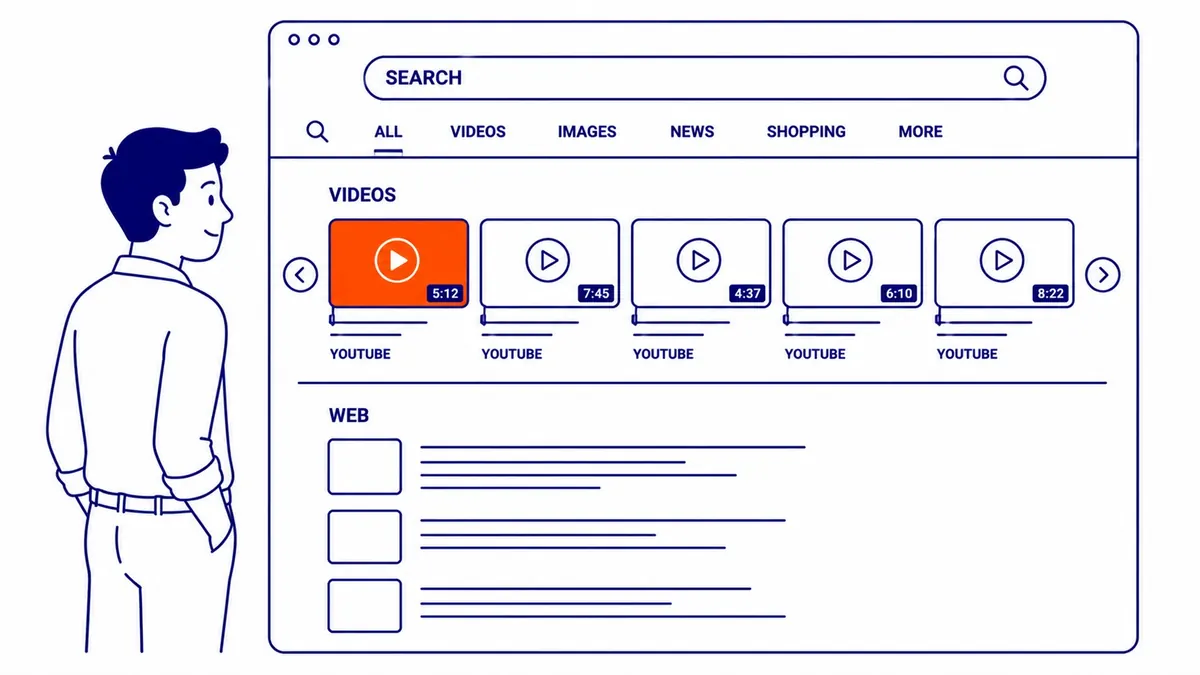
Video Carousel
YouTube results in a horizontal carousel. Appears when the query calls for demonstration rather than text: how-to searches, product comparisons, tutorials. A video carousel appearing for your primary queries means YouTube is competing for those clicks. Standard text rankings do not compete for those carousel positions directly. Video is a separate strategy entirely.
AI Overviews
Synthesised answers placed at the very top of search results. Pulled from multiple sources. Attributed with citations. AI Overviews arrived in Canadian search results in late 2024. We have seen measurable drops in click-through rates on queries where they dominate. Pages cited inside them do get traffic. Not as much as a featured snippet generates, but measurable. Keeping page authority strong and structured data current is the sensible response. The guide to schema markup in SEO covers which structured data types influence which result types.
The bigger shift is not the direct click loss. It is the way AI Overviews push everything else down the page. The map pack that used to appear near the top now sits further down. Organic results earn fewer above-the-fold impressions. Worth monitoring through Search Console impression data.
Knowledge Panel
The box on the right side of results for branded searches. Businesses, public figures, organisations. Data pulls from the Knowledge Graph, Wikidata, and Wikipedia. For most small and mid-size businesses, a standalone knowledge panel is not currently in reach. Worth knowing the threshold even when it is not a near-term target. Competitors with stronger brand signals may already have one.
How to Find What Your Keywords Trigger
Manual checking is still the fastest method for a handful of terms. Search in incognito from the target location. Note everything that loads before standard results. Do this for each priority query before building the content plan. Assumptions based on search volume alone lead to misread traffic forecasts regularly.
At scale, tools like Semrush and Ahrefs surface which result types are active for each query in their databases. Search Console does not label result types directly. The impressions-to-clicks ratio is the signal: high impressions paired with low clicks usually means an element is answering the query without generating a click. That pattern surfaces clearly during a website audit for SEO that checks each page against the queries it targets, and it is worth flagging early in any campaign.
For keywords where a featured snippet is already claimed, the calculation changes. There is still value in first-page organic placement below it. Click share is reduced, however. Knowing this before targeting a query prevents misread expectations on traffic projections. Whether the campaign is built around our SEO services or a narrower local push in Calgary, checking the SERP for each target query is standard practice in keyword research here at SEO Company To-The-TOP!
What This Means for an SEO Strategy
Not every query deserves equal priority. Which result types are active changes the return on ranking. A local pack keyword where a strong Google Business Profile already drives map pack visibility offers more leverage than one dominated by an AI Overview pulling from Wikipedia.
For queries where result types push organic listings well down the page, run a search for Google Ads on the same term and the case for paid placement makes itself. Paid placements appear at the top, before those elements. For some queries, that is the faster path to visibility while organic authority accumulates. Running both together, SEO and paid, is sometimes the right call.
Straight answer: the result types that appear for any given query depend on the query, and they change. The only reliable method is to check directly, monitor Search Console data, and factor result type presence into decisions.
Worth asking any SEO services provider how they account for these elements in their traffic forecasts.
Businesses in Sundre, Surrey, and Sylvan Lake compete for SERP features like the map pack and featured snippets alongside standard organic rankings. The same list now includes earning a spot in AI Overviews, which follows its own rules. Spoken queries pull from those same features, which is where the steps to do voice search SEO start.
FAQ
SERP features: do they replace organic results or add to them?
Both, depending on the type. Featured snippets pull from an existing organic result. The page is still ranked; the snippet gives it additional visibility above position one. Other types like AI Overviews and the local pack are independent of the organic list. They add elements without displacing standard results. Either way, they change how clicks distribute across the whole page.
Knowledge panel: how do you earn one?
Business knowledge panels come from the Knowledge Graph, pulling from Wikidata, Wikipedia, and a verified Business Profile. A properly categorised profile linked to your website helps. Wikipedia articles, if accurately sourced, are the other major trigger. Most local businesses do not qualify. Brand searches may instead generate a profile sidebar, which serves a similar function for local visibility.
People Also Ask box: can it be optimised for?
The approach is similar. An answer is pulled from pages that address those questions directly and clearly. If a PAA question matches content on your page and you answer it in a tight paragraph under a matching heading, you are in contention. PAA boxes also expand when clicked: each answer generates new related questions. Target one question cleanly and the chain produces ongoing impressions across related queries.
Contact Calgary SEO Company To-The-TOP!
Questions about anything in this article, or about your own rankings? Talk to a Calgary SEO specialist directly.
Phone: (403) 308-5949
Address: 1509 14 Ave SW, Calgary, AB T3C 0W4
Hours:
Monday to Friday: 10:00 am – 7:00 pm
Saturday: 12:00 pm – 4:00 pm
Sunday: closed