
Is SEO Part of Digital Marketing?
One question that comes up regularly when businesses start thinking about their online presence: where does SEO fit? Is it the same thing as digital marketing, or something separate? Most people asking it sense the two are connected. They just want clarity on how.
SEO sits inside digital marketing. One discipline within a much broader category. That distinction shapes where you put your budget, which channel you prioritize first, and how you let your different online activities reinforce each other.
This article answers that question directly. Then it covers where SEO sits inside the mix, what the three main practice areas actually involve, and why the compounding economics change the picture for most businesses over a two-year window.

Digital Marketing Is the Umbrella
Worth fixing the mental picture first.
Digital marketing covers every activity that promotes a business through a digital channel. Search. Social channels. Email. Paid advertising. Video. Affiliate programmes. All of it falls under that umbrella. SEO is the piece specifically concerned with organic, unpaid search visibility. Your site’s position in search results, earned without paying for each placement.
Paid advertising buys placement. SEO earns it. That distinction sets them apart operationally, even though both live inside the same broader category. Businesses running a complete online strategy typically work more than one of these channels at once, because each captures a different moment in the buying cycle. Running both under one plan is what SEO SEM marketing describes. That overlap runs deeper than it looks; email marketing quietly props up the search side too.
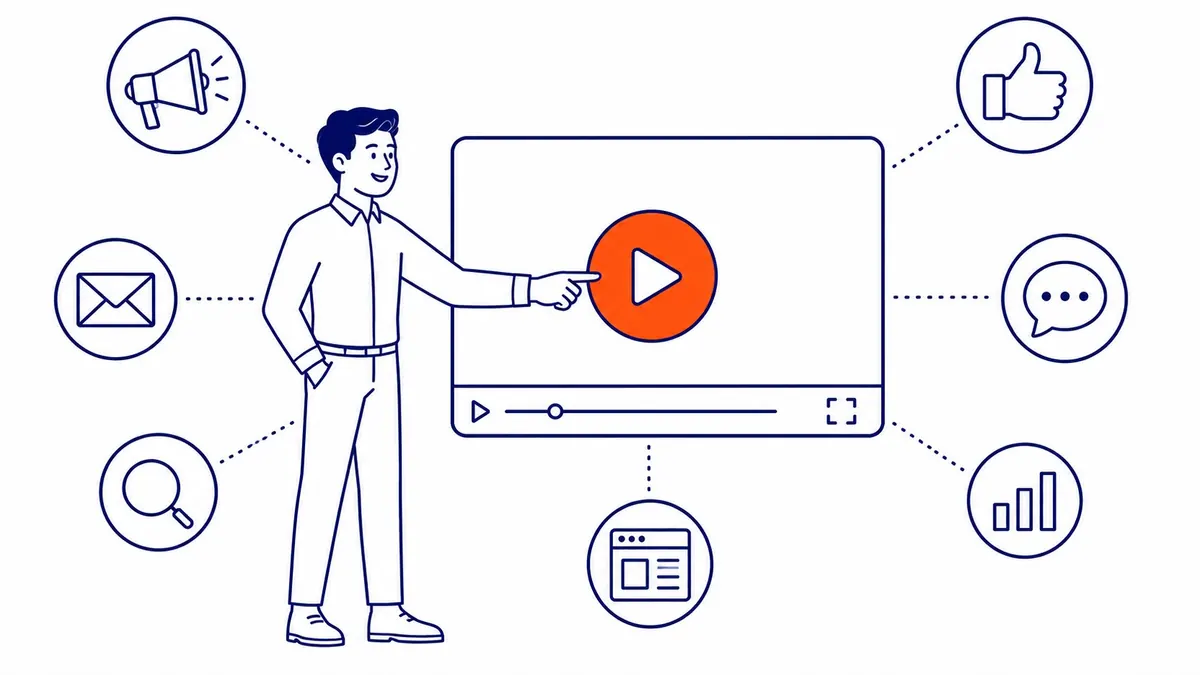
What Digital Marketing Actually Includes
More channels than most people expect.
Understanding what fills this category helps clarify what SEO handles and what it does not.
Search Engine Marketing and SEO
Search engine marketing (SEM) covers both paid and organic search activity. SEO sits on the organic side. Calgary Google Ads management sits on the paid side. Both reach the same search engine results pages through entirely different mechanisms. Organic traffic costs nothing per visitor once rankings are earned. Paid ads generate visits on every click, but charge on every click too. Over a 12-month horizon, the cost-per-acquisition math typically favours the organic channel for businesses willing to give it the time to build.
Social Media Marketing
Social media marketing runs on platforms like Facebook, Instagram, LinkedIn, and YouTube. It drives brand awareness and reaches audiences where they spend their attention. Social activity does not directly determine where pages rank in search results. Content shared widely through social channels is more likely to earn backlinks from other sites, which do affect rankings. Still, the ranking mechanics are separate. Running active social media campaigns will not fix a site with unresolved technical SEO problems.
Email Marketing and Content Marketing
Email marketing reaches existing subscribers directly. Content marketing produces articles, guides, and videos to attract and retain audiences across multiple channels. Both support SEO when executed with discipline. It pays to have your keywords researched before the content gets written; pieces built on the right terms attract organic traffic to your site and earn links from other websites. Email campaigns drive engagement signals that can support your site’s authority over time. Neither channel, however, replaces the core work of making your pages visible to people actively searching for what you offer.
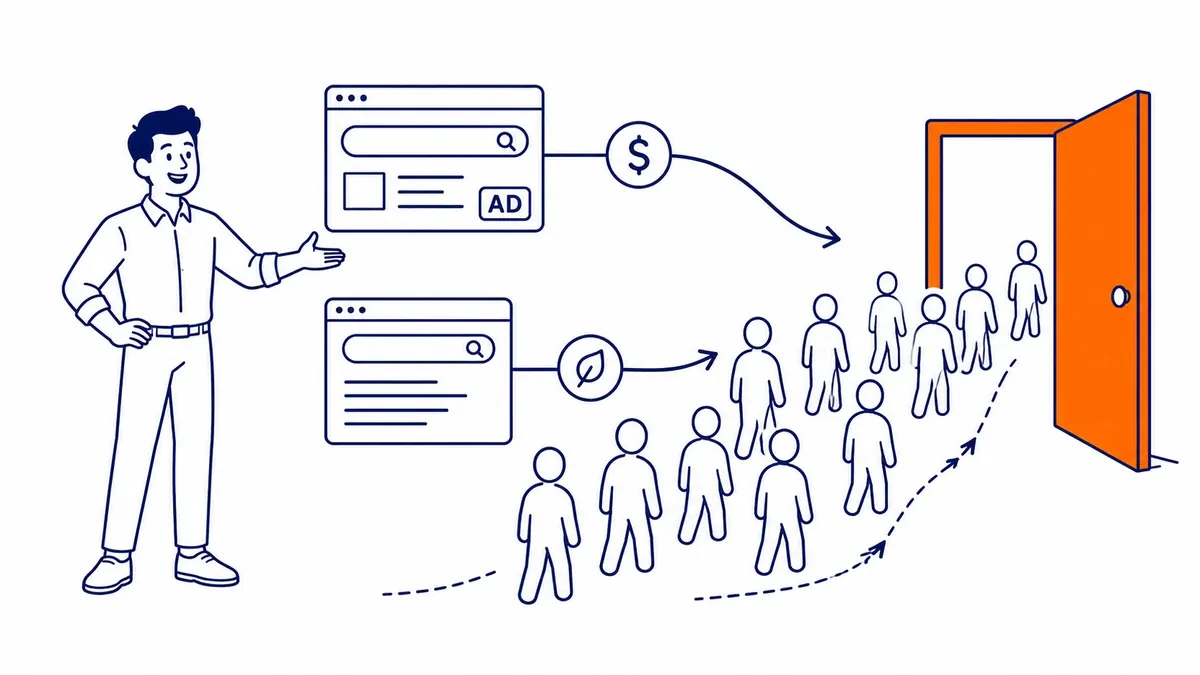
Where SEO Sits in the Mix
Three distinct practice areas.
SEO has three main areas of work. Getting all three right is what moves your site up in search engine results pages (SERPs) over time.
Technical SEO
Crawlability. Indexation. Site speed. Mobile performance. Core Web Vitals. Structured data. These are the technical conditions search engines need to properly access and evaluate your site. Without this foundation in order, the rest of the work struggles to produce search rankings regardless of content quality. An SEO web audit identifies which issues are suppressing your site and ranks them by impact. Most sites have at least a handful running quietly in the background: broken pages, slow load times, crawl blocks.
On-Page SEO
On-page SEO covers everything done within your website’s pages to communicate relevance to search engines and usefulness to users. Title tags. Meta descriptions. Heading structure. Internal linking. Content quality. User experience. These signal what each page is about and whether visitors are likely to find it genuinely helpful.
Keyword research sits at the centre of this. Finding the actual search terms your potential customers type into search engines, then matching your site’s content to those queries, is the core of on-page work. Your website needs to answer what people are looking for, not just what you assume they want.
Off-Page SEO and Link Building
Off-page SEO deals primarily with backlinks. Links from other websites to your site function as credibility signals in the eyes of search engines. More links from reputable sources generally means stronger domain authority. Stronger authority translates to higher search rankings over time. Link building is the deliberate process of earning those links. It is also where businesses consistently underinvest, then wonder later why visibility has not moved. Plenty of owners fund all three without ever pinning down what SEO means.
How These Channels Work Together
Not competing. Feeding each other.
SEO and the other channels reinforce each other when they run together. Content built around solid keyword research attracts organic traffic and earns backlinks from other sites. That same content makes email campaigns more effective too; subscribers get something useful to click through to. Social media amplifies content reach, which accelerates link acquisition and brand recognition in your market.
Google Ads campaign management and SEO share intelligence worth using. Keyword data from paid campaigns reveals which search terms actually convert, not just which ones generate clicks. That sharpens the keyword research behind your site’s organic content. Paid and organic efforts should inform each other, not operate in separate silos.
Businesses treating SEO as an isolated activity, separate from the rest of their online strategy, miss the compounding effect. Authority built over six months makes every new page on your site more visible from the day it launches. That visibility feeds back into social engagement, email list growth, and conversions across all channels.
Why the Compounding Effect Changes the Economics
The argument paid channels cannot match.
Paid ads generate traffic until the budget pauses. Social reach fluctuates with algorithm changes and posting frequency. Email lists decay without consistent acquisition. SEO, by contrast, builds domain authority over months and holds it. Pages that earn strong search rankings keep delivering traffic without an ongoing per-click cost.
The Realistic Timeline
Three to six months before meaningful movement. That is the realistic timeline. Companies expecting faster results should run paid advertising to bridge the gap while organic rankings build. Both serve a purpose. Over a multi-year horizon, however, the cost efficiency of SEO compounds in ways paid advertising simply cannot replicate.
To-The-TOP! SEO Company has been doing this work in Calgary since 2007. Nineteen years. Clients who invested in search engine optimization early still have pages ranking and delivering leads today. That long-tail return does not happen with paid channels. The economics look very different over a two-year window than over a two-week one.
Local SEO adds another dimension for service businesses. Showing up in the local map pack and organic results for city-specific searches delivers higher-intent visitors than most other acquisition channels. People searching for a nearby service are already close to a decision. Those clicks convert at rates most other sources cannot reach.
Is Organic Search Still Relevant in 2026?
The question comes up every year now.
AI-generated summaries have changed how some results display in the SERPs. More queries now receive partial answers inside the search results page before anyone clicks through. Click patterns have shifted for some informational query types. Organic search as a meaningful traffic channel has not disappeared, however.
Users ready to purchase, book, or contact a local service business still generate substantial click traffic to ranking pages. Businesses researching which Calgary SEO services suit their situation still click through to read the detail. Your site needs to be there when those searches happen.
Practitioners updating their approach to account for E-E-A-T signals, structured data requirements, and evolving SERPs are still producing results. The ones recycling 2020 tactics without adapting are not. Worth asking any practitioner you hire how their approach has shifted in the last two years.
Common Questions
Direct answers.
Is SEO part of digital marketing?
SEO sits inside digital marketing as one of its primary channels. The broader category is digital marketing. SEO is the discipline focused on organic search visibility. A business running this channel alone is running one component of what a complete digital marketing operation covers. The two terms are not interchangeable.
What category does SEO fall under?
Search engine marketing (SEM) is the most common category label for search-related activity. SEO falls within SEM on the organic side. Search engine optimization is also classified broadly as a subset of digital marketing. The taxonomy varies by source, but organic search always sits inside the larger marketing discipline. Not a separate field: a specialization within one.
What are the 4 types of digital marketing?
No universal list applies. Four categories appear consistently across industry frameworks: search marketing (which covers SEO and PPC), social media marketing, content marketing, and email marketing. Some frameworks add display advertising, affiliate marketing, and influencer marketing as additional categories. The four-type framing is a useful simplification, not a rigid taxonomy.
Is SEO dead or evolving in 2026?
Evolving. AI overviews and SERP layout changes have reshaped how results display, not eliminated organic search as a traffic source. Page-level authority, technical health, content depth, and backlinks still drive where your site ranks. E-E-A-T signals carry more weight than they did three years ago. Structured data matters more, not less. Any investment in SEO services your business makes today should reflect how the discipline has adapted, not what worked in 2020.
Contact Calgary SEO Company To-The-TOP!
Questions about anything in this article, or about your own rankings? Talk to a Calgary SEO specialist directly.
Phone: (403) 308-5949
Address: 1509 14 Ave SW, Calgary, AB T3C 0W4
Hours:
Monday to Friday: 10:00 am – 7:00 pm
Saturday: 12:00 pm – 4:00 pm
Sunday: closed