What Is Content SEO? A Calgary Specialist’s Plain Guide
Content SEO is the work of writing and structuring pages so search engines can rank them and real people actually want to read them. That is the short version. I have been working as a Calgary SEO expert for local businesses since 2007. The longer version is what most guides skip.
Here is the pattern I see on nearly every new client site. Plenty of pages. Almost none of them written for a search anyone performs. The owner paid good money for a polished, professional-looking website. Brochure copy fills every page. Meanwhile the analytics show a flat line where organic traffic should be. Nothing wrong with the design. The problem sits in the words. They were chosen for the boardroom instead of the search box.
So this guide is the version I wish someone had handed those owners years ago. Long, yes. Content SEO is the single highest-return thing a small business can do online, though, and it deserves more than a 1,200-word skim. To-The-TOP! has built and ranked pages through three major algorithm eras. The principles below are the ones that survived all of them.
What content SEO actually is
Start with what it is not. Not stuffing a keyword into a paragraph until the thing reads like a robot wrote it. That trick died years ago. It took a lot of cheap rankings down with it.

So here is the real definition. Content SEO means making pages that earn rankings because they answer a real query well. Articles. Service copy. Landing pages. Guides. The work covers all of it. People use “content seo” and “seo content” interchangeably across the industry. Let me settle it plainly. SEO content is the page itself, the thing you publish. Content SEO is the discipline of producing and organizing that material so it ranks. One is the noun. The other is the verb. People argue about this distinction far more than it deserves.
What matters is the idea underneath. A search engine has one job. It does that job billions of times a day. Someone types a question. Google tries to hand back the page that answers it best. Your page either is that answer or it is not. Everything you do to make your page the better answer counts as content SEO. The topic you pick. Your word choices. How deep you go. The structure. Even the trust signals around it.
I tell clients to picture a single searcher. A homeowner in Calgary, nine on a January night, types “furnace not blowing hot air.” That person does not want a corporate mission statement. They want to know why the furnace is cold and whether they can fix it before morning. Write a clear, genuinely helpful page about that exact problem, and the click follows. Then the trust. Eventually the service call. Run a slick “Our Services” page that never names the problem, and you get nothing.
That is content SEO in one example. Match the page to the moment of need.
There is a second layer most people miss. The blog is not the whole of it. Service pages count. So do location pages, product descriptions, frequently asked questions, homepage copy, even image captions. Every word on the site is potential content. Search engines read all of it. When I audit a site, I do not start with the blog. The money pages come first, because that is where weak copy costs the most.
So when someone asks me what content SEO is, the straight answer runs like this. An ongoing job. Making sure every page on your site has a reason to exist in search. Something worth ranking. A clear push toward the next step. Skip any of those three and the page is just taking up space.
One more distinction is worth nailing down, because clients trip on it. SEO content is not a special category of writing that lives apart from your normal pages. A well-written service page is seo content. So is a genuinely useful blog post. The label only means the page was built with a search query in mind from the start, rather than written first and optimized as an afterthought. Query first, words second. That order is most of what separates pages that rank from pages that just sit there. Get it right and the optimization becomes obvious. Backwards, and you spend months retrofitting relevance onto copy that was never aimed at a searcher. That order is also SEO copywriting in plain terms, if you want the narrower version. It also explains why unique content matters in SEO more than volume ever did.
Why content is the part of SEO that compounds
Content compounds. Nothing else in SEO does, not like this. Spend a dollar on Google Ads and the click ends when the budget does. Publish a page that ranks and it can pull visitors for years, often without another dollar spent.

That is the case for content. It is the strongest case in marketing. I have a Calgary client whose guide page, written in 2019, still brings in leads every single month. The cost was a few hours of writing and one round of edits. In return, five years of qualified traffic, and counting. No ad campaign does that.
Now the plain part, because hype is exactly what this industry oversells. Content is slow. It does not compound on day one. That page from 2019 earned almost nothing in its first three months. Search engines have to find it, trust it, watch it prove useful before they rank it well. That waiting period is real. Any agency promising instant results is either lying or about to get you penalized.
Paid search has its place. I run plenty of it. Sometimes a client needs leads this week, not next quarter, and that is exactly when Google Ads earns its keep. The Google Ads management Calgary clients count on from us fills that gap while the content builds underneath. The two are not enemies. Ads buy you the top of the page today. Content earns you the top of the page for free tomorrow. Run both, then taper the ad spend as the organic rankings climb. That is the smart play.
Think of it as renting versus owning. Ads are rent. You pay every month. The moment you stop, you are out. Content is equity. It takes longer to build. The early months feel like nothing is happening. Then one day you own an asset that works while you sleep. Most of my longest-standing clients started skeptical of that timeline. None of them want to go back to renting.
There is a compounding effect beyond the single page too. Thirty strong, well-linked pages outrank a site with three. Search engines read the whole site as a body of expertise. Each good page lifts the ones around it. Content SEO rewards patience for that reason, and punishes the publish-once-and-quit approach. The businesses that win are still writing in year three.
So the budget question answers itself. Money but no time? Run ads. Time but no budget? Write. A bit of both, and you do what we do for clients: ads for the cash flow now, content for the equity later. One feeds the other.
Worth saying plainly: I am not anti-advertising. Half of what To-The-TOP! does is paid search. It pays for itself when the targeting is tight. The point is sequencing. Spend on ads where speed matters. Invest in content where durability matters. Never mistake one for a replacement of the other. The businesses that treat content as a cost to cut in a slow month are the ones still paying for clicks five years later, wondering why nothing ever compounded. Multiply that across languages and markets and you have an introduction to international SEO.
Content SEO, technical SEO, and off-page: where each one sits
Three buckets. That is how SEO breaks down. Content is one. Technical is the second. Off-page authority is the third. Confuse them and you spend money in the wrong place, which I see constantly.

Content SEO covers the words and the meaning. Topics. Keywords. Depth. The structure of the writing. Above all, the answer you give the searcher. Most businesses can influence this bucket the fastest, because it does not require a developer. You can rewrite a thin page this afternoon.
Technical SEO is the plumbing. Can search engines crawl the site, render it, index it without tripping over broken code? Is it fast on a phone? Does the URL structure make sense? Is there schema markup telling Google what each page is? Technical work stays invisible to visitors. A brilliant page on a broken site never gets read, though. When clients ask what a full search engine optimization service covers, this is the layer they tend to forget exists.
Off-page is everything that happens away from your site. Backlinks from other sites. Brand mentions. Reviews. The general sense across the web that your business is real and trusted. You cannot fully control off-page. Anyone selling you a thousand backlinks for fifty dollars is selling you a penalty. Authority gets earned, slowly, mostly as a byproduct of content good enough that other people choose to link to it.
Here is the part the three-bucket diagram never shows. They overlap. Content sits in the middle. Good content gives technical SEO something worth indexing. It is also the thing off-page authority gets built around, because nobody links to a thin page. Flawless technical SEO and zero backlinks can still rank, if the content is the best answer to the query. Perfect plumbing and empty pipes win nothing.
So when a Calgary business asks me where to start on a limited budget, I almost always say content first. Technical issues matter. We fix them. A fast, perfectly coded page that says nothing is a fast page that ranks for nothing, though. Content is the part with a pulse.
One caveat from nineteen years of this. If the technical foundation is genuinely broken, if Google cannot crawl the site at all, content will not save you. We handle the technical fix first in that case. The order depends on the diagnosis. Most sites, though, are technically fine and starved for decent copy. That is the common case by a wide margin. Content decides whether any SEO landing page earns a position at all. Owners often ask me whether blogging helps SEO before they ask anything about the plumbing.
Search intent: the thing most content SEO gets wrong
Intent is where rankings are won or lost. Not keywords. Forget word count. Intent. After nineteen years, this is the single concept I wish every business owner understood before writing a word.

Search intent is the reason behind the search. Two people can type nearly the same words and want completely different things. “Furnace repair” might be someone ready to call a technician tonight. “How does a furnace work” is someone curious, maybe a student, probably not buying anything. Same topic. Opposite intent. A page that confuses the two ranks for neither.
The industry sorts intent into four buckets. Worth knowing, because Google sorts them too. Informational. Navigational. Commercial. Transactional. Let me walk through each with how it actually shows up.
Informational intent is the question. “What is content seo.” “Why is my furnace short cycling.” “How long does SEO take.” The searcher wants to learn, not buy, at least not yet. The right page is a clear, thorough answer. A guide. An article. A how-to. Sell too hard here and you lose them, because they are not in a buying mood. They are in a learning mood. The business that teaches them well is the one they remember when the buying mood arrives.
Navigational intent is someone looking for a specific place. “To-The-TOP SEO Calgary.” “Facebook login.” They already know where they want to go. You rank for your own navigational searches by being findable, keeping a clean homepage, not making people hunt.
Commercial intent is the comparison stage. “Best SEO company in Calgary.” “Composite versus cedar decking.” The searcher leans toward a purchase but still weighs options. These pages need to compare fairly. Address objections. Build confidence. Reviews, comparisons, and detailed service pages live here.
Transactional intent is ready to act. “SEO services Calgary pricing.” “Buy furnace filter 20×25.” The wallet is out. The page needs a clear offer. A clear price range where possible. An obvious next step. Bury the call to action here and you have wasted the hardest intent to earn.
Here is the practitioner move that separates ranking pages from invisible ones. Before writing anything, go search the keyword yourself. Look at what already ranks. Google has already decided what intent that query carries. The top results tell you. All listicles on the first page? Google wants a listicle. All calculators? A thousand words of prose will not crack it. I have watched clients spend weeks on a beautiful guide for a keyword where Google only ever ranks product pages. The guide never had a chance. Its intent was wrong from the first sentence.
Match the intent or do not bother. That rule alone would fix half the content I am asked to rescue.
There is a trap inside intent worth naming. Intent shifts over time. Google notices before you do. A query that wanted a buying page two years ago might now pull mostly guides, because searcher behaviour moved. This is why I re-check the results page for important keywords every so often, not just once. The intent you optimized for in 2023 is not guaranteed to be the intent ranking in 2026. Search engines adjust to how people actually click. Your page has to keep up or quietly slide.
Keyword research that earns its keep
Keyword research is where content SEO starts. Not with writing. With listening. You are trying to learn the exact words your customers use, which are almost never the words your business uses internally.
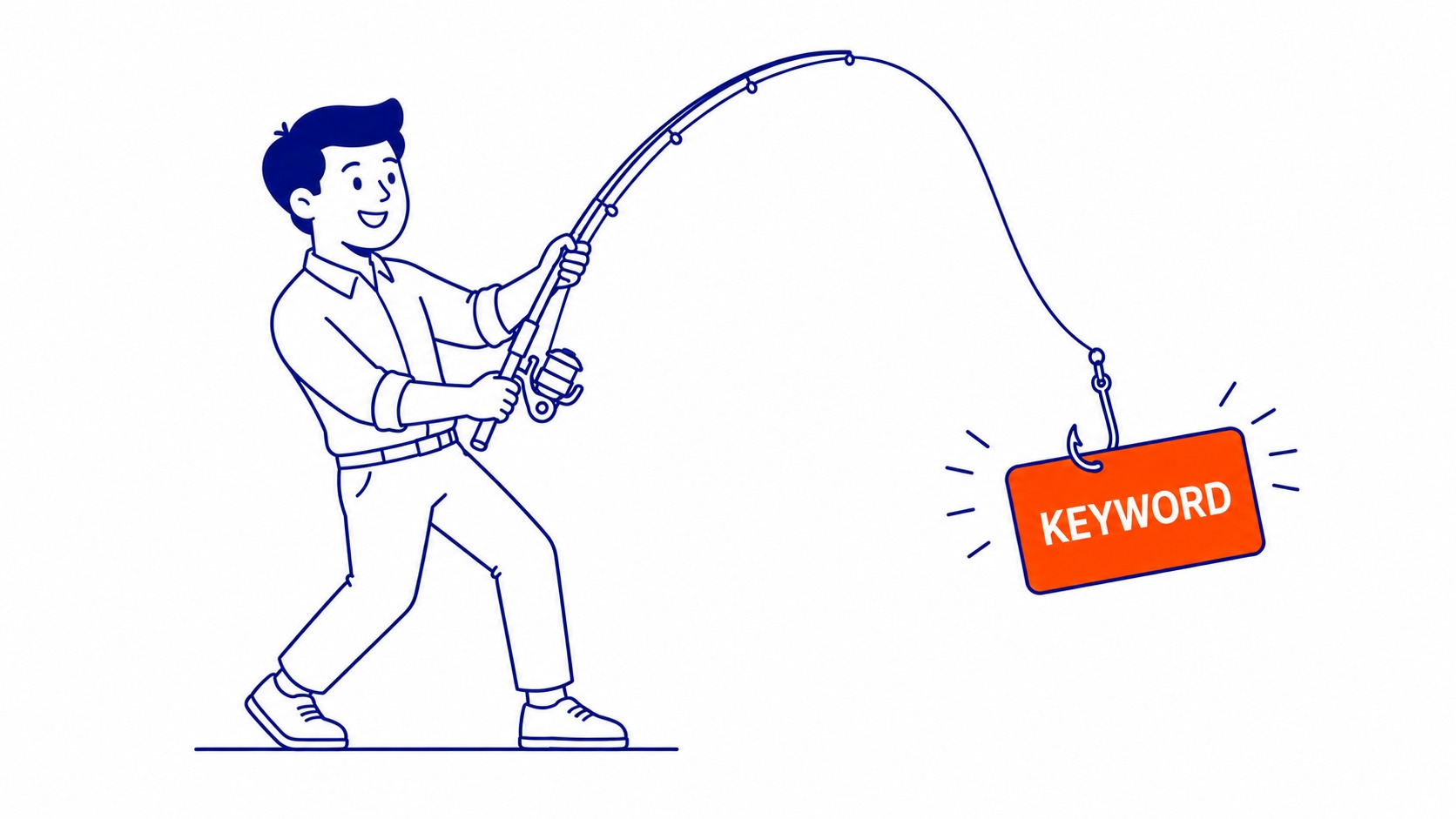
This gap kills small-business content. A roofing company calls it “membrane systems.” Their customers search “flat roof leak repair.” A law firm writes about “family law dispute resolution.” People search “how much does a divorce cost.” When the page speaks the company’s language instead of the customer’s, the customer never finds it. Good keyword research closes that gap.
Let me define the terms quickly, since they get thrown around loosely. A keyword is the phrase someone types. Search volume is how many people type it per month. Keyword difficulty is roughly how hard it is to rank for, based on who already ranks. Volume, difficulty, intent: those three numbers are what you weigh on every keyword. Our keyword research process for Calgary clients lives or dies on getting that weighting right.
Then there is the head-versus-tail distinction. It matters more for a small business than almost anything else. Head keywords are short and broad. “SEO.” “Furnace.” Enormous volume. Brutal difficulty. Vague intent. Tail keywords, the long ones, are specific. “Affordable SEO services for Calgary contractors.” Lower volume. Far less competition. Razor-sharp intent. The searcher who types eight words knows exactly what they want.
My straight advice to nearly every small business stays the same. Chase the tail. You will not outrank Wikipedia for “SEO,” and you do not need to. Rank for a hundred specific phrases your actual customers type, and you win the only traffic that ever turns into money. Volume is a vanity number. Fifty searches a month with buying intent beats fifty thousand with none.
How do you find these phrases without a five-hundred-dollar tool subscription? A few ways. I use all of them. Google’s own autocomplete, the suggestions that drop down as you type, is real search data, free. The “People also ask” boxes and the “related searches” at the bottom of the results page are gold. That is literally Google telling you what else this audience wants. Your own sales calls and support emails are a goldmine most owners ignore. The questions customers actually ask are the keywords you should target word for word.
Paid tools speed this up. We run them for clients: the Google Keyword Planner, Ahrefs, Semrush, a handful of others. They give you volume and difficulty numbers. Variations you would never have brainstormed on your own. A clear view of what competitors already rank for, too. Worth the money once you are doing this at scale. Not necessary to start. I built ranking pages for years before those tools existed, using nothing but the search box and a notepad.
The output of all this is not a spreadsheet of keywords. It is a map. A list of topics, each tied to a real query, each sorted by how winnable it is and how valuable the resulting traffic would be. That map becomes the plan for every page you write. Skip it, and you are writing in the dark, hoping someone searches for whatever you happened to publish.
A shortcut I lean on: look at what your competitors already rank for. The sites beating you have, in effect, done expensive keyword research you can read for free. Run their domains through a keyword tool and you see the exact phrases sending them traffic. Some of those will be queries you can win and they cannot defend. Others reveal gaps, topics they cover and you have ignored entirely. This is not copying. It is reconnaissance, and it shortens the path to a keyword map that reflects real demand rather than guesswork. Every serious campaign I run starts with a hard look at who is already winning.
Picking topics: writing for the searcher, not the business
Now the hard part. Choosing what to write about. Ego and strategy collide here, and ego usually wins, which is exactly why so many sites fail.

The most common content mistake I have seen in nineteen years? A business writing about what it finds interesting instead of what its customers search for. Picture a manufacturer who wants a page about its forty-year company history. Lovely story. Nobody searches for it. That same manufacturer’s customers type “how to choose industrial valve sizing,” and there is no page for it. The history page is for the owner. That sizing page is for the search engine and the buyer. Guess which one earns revenue.
So topic selection comes straight off the keyword map, not off a brainstorm in a meeting. Each topic should trace back to a query real people perform, with intent that fits your business. If nobody searches it, it is not a content SEO topic. It might still belong on the site for other reasons. Do not expect it to rank, though, and do not be surprised when it does not.
There is a structural idea here that lifts everything: topical authority. Search engines reward sites that cover a subject thoroughly, not just once. One page about furnace repair is fine. Fifteen interlinked pages tell a different story. Furnace repair. Replacement cost. Short cycling. The strange noises. Cover that whole cluster and Google concludes the site genuinely knows furnaces. The whole cluster ranks better because of the depth around it. A focused site usually beats a scattered one for that reason, even with fewer total pages.
The way to build that is the topic cluster. Pick a broad subject you want to own. Write one strong pillar page covering it widely. Then write a series of specific pages. Each one goes deep on a single sub-question. They all link back to the pillar, and to each other. Done right, the cluster becomes a web of pages that reinforce one another. Google reads the structure and concludes you are an authority on the subject. That conclusion is what ranks you.
For a Calgary service business, the cluster usually maps to services and locations. A plumbing company might own “drain cleaning” as a pillar, with pages for the specific problems, the specific neighbourhoods, the specific fixtures. Each page is winnable on its own. Together they are a moat.
One discipline saves a lot of wasted effort. Before you commit to a topic, make sure you are not already covering it on another page. Two pages chasing the same query do not double your chances. They split them, and often both lose. I will come back to this trap later, because untangling it is half of what a content audit fixes.
A useful test before committing to any topic: can you say something the top results do not already say better? If the answer is no, you are about to publish the tenth identical page on a crowded query. Tenth place is not a ranking anyone celebrates. The pages that break through bring something the others lack. A local angle. First-hand experience. A clearer explanation. Real data. Sameness does not rank, because sameness gives the search engine no reason to prefer you. Find the angle only you can write, or pick a different topic. Angle first and keywords second is the short version of SEO writing.
What a well-optimized SEO content page actually contains
Time to get concrete. So what does a page that ranks actually look like, element by element? I will walk it top to bottom the way I do in an audit, because the order matters.

The title tag comes first. This is the clickable headline that shows in the search results. It carries real ranking weight. Get your primary keyword in it, near the front, and make it something a human wants to click. “Furnace Repair in Calgary, Same-Day Service” beats “Home.” I see the homepage of grown businesses with a title tag that literally says “Home.” It makes me wince every time. Free real estate, thrown away. Title tags are the single most undervalued element on most sites.
The meta description sits under the title in the results. It does not directly affect rankings. What it does affect, heavily, is whether anyone clicks, and click-through is a signal. Write it like ad copy. One or two sentences. The keyword included. A reason to choose your result over the nine others on the page. Leave it blank and Google writes its own, usually badly.
The URL deserves a quick mention, because it is easy to get right and easy to ignore. Keep it short. Readable. Descriptive. The keyword sitting in it where it falls naturally. A URL that reads /furnace-repair-calgary tells a searcher and a search engine what the page is before they ever open it. Strings of numbers and codes tell them nothing. While you are at it, work your primary keyword into the first hundred words of the body. Into a subheading or two. Anywhere else it genuinely fits. Not crammed. Just present, so there is no doubt what the seo content is about.
Headers structure the page. Your H1 is the on-page headline. One per page. It carries the main keyword. The H2s and H3s then break the page into scannable sections. They should read like a logical outline of the topic. Good headers help two readers at once. The human skimming on a phone. And the search engine working out what the page covers. They also win you a shot at featured snippets, those answer boxes at the top of some results, which tend to pull from cleanly structured sections.
The body copy is the substance. Substance is the word. Depth matters, but not padding. A page should cover the topic completely enough that the searcher does not need to open another tab. That is the real standard, not a word count. If “what is content seo” can be answered well in 1,800 words, do not stretch it to 3,000 with filler. Needs 9,000 to do it properly? Write 9,000. Cover the subject, then stop.
Readability carries more weight than people expect. Short paragraphs. Plain language. Sentences a busy person can parse on the second floor of a parkade with one bar of signal. Walls of text lose readers. Lost readers are a signal search engines notice. Write the way you would explain it to a smart friend who is not in your industry. Jargon is not expertise. Clarity is.
Images and video earn their place when they help. A diagram that explains a concept faster than words. Or a photo that proves the work is real. Every image needs alt text, the written description that tells search engines and screen readers what the image shows. Alt text is also an accessibility requirement, not just an SEO nicety. Writing it well is simply doing the job right. Skip it and you lose image search traffic and fail real users at the same time.
Internal links from this page to your other relevant pages do two jobs. They guide the visitor onward. And they pass ranking signals around your site. More on that next, because internal linking is so undervalued it deserves its own section.
Last, the call to action. Every page should make the next step obvious. Call us. Get a quote. Read the related guide. A page that informs perfectly but never tells the reader what to do next is a leak. Plug it. Nine elements, all of them work, which is the real question behind the value of SEO content writing.
Site structure and internal linking
Structure is the part nobody sees and everybody feels. How your pages connect shapes two things. The way search engines understand your site. And the path visitors take through it. Get it wrong and even great pages underperform.

Picture your site as a pyramid. The homepage sits at the top. Below it, your main category or service pages. Under those, the specific pages. Information flows down the pyramid in clean tiers. Links connect related pages across it. A flat pile of three hundred pages with no hierarchy confuses Google about what matters. Set against that, a clear pyramid tells Google exactly which pages are your most important, because those are the ones everything else links toward.
Cornerstone content is the term for those top pages, the ones you most want to rank. Your pillar pages. The big, comprehensive guides. Your primary service pages. One rule is simple and almost nobody follows it: your cornerstone pages should receive the most internal links from the rest of your site. If your best page has two links pointing at it and a minor blog post has forty, you have told Google the blog post matters more. Fix that, and rankings often move within weeks, no new content required.
Internal linking is the lever here. It is the most underused tool in content SEO by a mile. Every time you link from one page to another with descriptive anchor text, you pass a little authority and a lot of context. Link from your tail pages, the specific ones, up to your head pages, the broad ones. Then link related pages to each other so the cluster holds together. The anchor text, the actual words you link, should describe the destination. “Learn about our keyword research process” tells Google what the linked page is about. “Click here” tells it nothing.
Now the trap I promised earlier: content cannibalization. This happens when two or more of your pages target the same keyword and intent. You think you are doubling down. In reality you are splitting your own signals, and Google, unsure which page to rank, often ranks neither well. I see this constantly on sites that blogged enthusiastically for years without a plan. Five posts all chasing “Calgary SEO tips,” all mediocre, all competing with each other. The fix is to consolidate them into one strong page and redirect the rest. Rankings usually jump once the cannibalization clears, because the authority finally points at one target instead of five.
The related problem is orphaned content. These are pages with no internal links pointing to them, stranded, reachable only by someone who already has the URL. Search engines find them harder. They rank them lower, because the site itself appears not to care about them. Every page worth keeping should have at least a few internal links leading to it. If it does not deserve a single link from anywhere else on your site, ask whether it deserves to exist at all.
Structure is unglamorous. It is also where I find the fastest wins on an established site, because the content is already there. Those pages just are not connected in a way that helps them rank.
The content types that pull their weight
Not all seo content is built the same. Different formats serve different intents. Matching the format to the job is half the battle. Here are the types that actually earn their keep for a local business.

Service pages are the workhorses. For a Calgary business, these are usually the most valuable pages on the site, because they catch commercial and transactional intent, the searches closest to a sale. One page per service, written to genuinely answer what a buyer of that service wants to know. Not a thin paragraph under a stock photo. Most of the SEO services work I do for clients starts here, fixing the money pages before touching the blog. A strong service page converts the traffic the blog sends.
Location pages matter for any business serving a specific area. A page targeting “SEO in Calgary,” and another targeting a specific neighbourhood or nearby city, can each rank for their local searches. The mistake is making them near-identical with the city name swapped, which Google reads as thin, duplicated content. Each location page needs genuinely local detail to earn its ranking. Real specifics about that area, not a find-and-replace job.
Blog posts and guides catch informational intent, the top of the funnel. The furnace homeowner searching at nine at night. These pages rarely sell directly. That is fine. Their job is to bring in the searcher, build trust, feed them toward the service pages through internal links. The 2019 guide I mentioned earlier is a blog post. It has never sold a thing on its own. What it has done is send five years of qualified readers toward the pages that do.
Frequently asked questions are quietly one of the best content types going. They map perfectly onto how people actually search and how voice assistants read answers aloud. Real questions. Clear answers. Featured snippets, won. Long-tail queries, captured. Objections get handled before a sales call ever happens. A good FAQ section earns far more than its length suggests.
Product pages, for anyone selling online, carry transactional intent. They deserve real copy, not a manufacturer’s spec sheet copied across every competitor. Original description. Plain detail. The questions buyers actually have. A product page that reads like every other listing for the same item gives Google no reason to pick it.
Video earns a place when it shows something words cannot. A repair walkthrough. Maybe a finished project. Some process worth seeing for yourself. It also pulls in YouTube and feeds people who would rather watch than read. Pair it with a written transcript or summary so search engines can read what the video says, since they still parse text far better than footage.
Comparison pages and listicles deserve a mention too, because they catch high-intent commercial searches. The “best X in Calgary,” the “X versus Y,” the “top five ways to” queries. People at that comparison stage are close to buying. A fair, genuinely useful comparison earns trust at the exact moment it matters. The catch is that these only work when they are candid. A comparison that paints every option except yours as terrible reads like a sales pitch. Readers smell it instantly. Be straight about the trade-offs and you become the source people return to.
The lesson across all of these stays the same. Pick the format the intent demands, not the format you feel like making. A how-to query wants a guide. Buying queries want a service or product page. Force the wrong format onto a query and even excellent work will not rank.
When not to create content
This is the section every other guide leaves out. Sometimes the right move is to write nothing. Knowing when not to publish has saved my clients more wasted effort than any writing tip I could give.

Start with the page that should be a redirect, not a rewrite. Got an old page ranking for a query, and tempted to write a brand-new page for the same query? Stop. You will cannibalize yourself. Improve the existing page instead. If you must consolidate several, merge them into one and redirect the old URLs to it. A redirect preserves the ranking history you already earned. Start a fresh page and you throw that away, beginning from zero. I have watched businesses tank a perfectly good ranking by replacing the page that earned it with a shiny new one at a different URL.
Then there is the topic already owned, top to bottom, by someone with vastly more authority. Government sites, Wikipedia, three national brands with millions of backlinks. A brand-new page from a small Calgary business is not going to crack that, no matter how good. Pick a more winnable angle. A narrower, more specific version of the topic where the giants have not bothered to go. Fighting for a keyword you cannot win is just a slow way to waste a month.
Watch for the publish-for-the-sake-of-publishing trap. Somewhere a content calendar told a business to post weekly. So it posts weekly, whether or not it has anything worth saying. The result is a graveyard of thin, pointless posts that actively drag the site down. Search engines judge a site partly on its overall quality. Twenty strong pages beat two hundred weak ones. If a post has no keyword behind it and nothing genuinely useful to say, not publishing it is the better decision. Quality over cadence, always.
There is also the page that should not be content at all. Some things belong in a quick contact form, a phone call, a simple tool. Not a 2,000-word article. Forcing every business goal into a blog post is a reflex worth resisting. Ask what the searcher actually wants. Sometimes it is a sentence and a button, not an essay.
And sometimes the straight answer is that the existing page is fine and your time is better spent elsewhere. Not every page needs constant fiddling. A page that ranks well and converts does not need to be rewritten because you are bored of it. Leave the winners alone. Fix the losers. The discipline to do nothing where nothing is needed is rarer than it should be.
Restraint is the thread through all of this. Content SEO is not a volume game. It is a relevance game. More pages is not the same as better rankings. The businesses that understand when not to write usually outrank the ones that never stop.
I would rather a client publish six pages this year that each earn their place than sixty that clutter the site and dilute it. Fewer, better, and properly connected to one another. That has been the winning formula on every Calgary site I have turned around, without exception. Resist the urge to fill the calendar for its own sake. When a page does earn its place, a content brief template for SEO keeps it focused.
Measuring, maintaining, and refreshing your content
Publishing is the start, not the finish. Content SEO is ongoing. The maintenance is where a lot of the real gains hide. Pages decay. Markets shift. The work is never quite done. That is not a sales pitch, just how search works.

Measure the right things first. Traffic is the vanity metric. On its own, that number tells you almost nothing. What you want to know is narrower. Which pages bring visitors. What queries those visitors searched. Whether any of it turns into leads or sales. Google Search Console shows you, for free, exactly which queries earn you impressions and clicks. Analytics shows what people do once they land. Together they answer the only questions that matter. Is this page working? If not, why? A monthly look at those two tools tells you where to spend your next hour.
Then there is the metric most owners obsess over and should mostly ignore: rankings on a single keyword. Position bounces day to day. It varies by location and device. On its own, it tells you very little. I would rather a client watch conversions and total organic traffic than refresh a rank tracker for one phrase. The goal was never to rank. Leads were the goal. Rankings are a means. Confuse the means for the end and you make a lot of bad decisions.
Now the part almost nobody does. It produces some of the fastest wins I deliver: refreshing existing content. Old pages lose ground over time. The information dates. Competitors publish something better. Search intent shifts under the page. Your instinct is to write something new. Usually the better move is to update what already ranks. I had a client page slipping from third to eighth over a year. We did not rewrite it. Instead we updated the statistics, added two sections answering questions that had become common since publication, refreshed the internal links, and republished. It went back to second within a month. A refresh beat a rewrite, at a fraction of the effort, because it built on ranking history instead of discarding it.
That is the maintenance reality. The pages you already have are usually a bigger opportunity than the pages you have not written. A content audit, looking at every page and deciding to keep it, improve it, merge it, or remove it, is some of the highest-return work in content SEO. When we run a full site audit for a Calgary client, the refresh-and-consolidate list almost always outperforms the write-new list for the first few months. You are fixing assets you already paid for.
Content decay is real. It is quiet. No alarm goes off when a page starts slipping. It just slowly earns less, month after month, until someone notices the traffic is down and nobody knows why. The businesses that schedule regular reviews catch the decay early. Those that publish and forget watch their old wins erode without ever understanding the cause.
Promotion, authority, and backlinks
Writing the page is half the job. Getting it seen is the other half. It is the half most small businesses neglect entirely. A brilliant page nobody links to or shares is a brilliant page nobody finds.

Promotion starts the moment you publish. Share the page where your audience already is. Email it to your list. Post it to the social channels that fit your business. Mention it in your next newsletter. None of this directly moves rankings. It puts the page in front of humans, though, and humans are who eventually link to it, cite it, send it to a friend. Early traffic also tells search engines the page is alive, which helps it get crawled and indexed faster.
Backlinks are the heavyweight off-page signal. They remain one of the strongest factors in ranking. A backlink is a link from another website to yours. Search engines read it as a vote of confidence. The more credible the site doing the linking, the more that vote counts. A link from a respected industry publication outweighs a hundred links from spam directories. Quality crushes quantity here, and it is not close.
One number puts the quality point in perspective. I have seen a single editorial link from a respected local news site do more for a client’s rankings than two years of low-grade directory submissions combined. Authority is not a volume dial you turn up. It is a reputation you accumulate, one credible mention at a time. A handful of real ones outweigh a warehouse of junk. That is also why link-building scams keep working on people. The promise of a thousand links sounds better than the truth, which is that you need maybe ten good ones.
Now the warning, because this is where businesses get burned. You cannot safely buy your way to backlinks. The offers flooding your inbox, promising hundreds of links for a flat fee, are selling you a link scheme. Link schemes get sites penalized, sometimes severely. To-The-TOP! has always been a White Hat shop. We earn links rather than buy them. None of our clients has been penalized for it in nineteen years. The slow, slow road is the only one that holds up.
So how do you actually earn links without buying them? Mostly by deserving them. The single best link-building tactic is publishing content good enough that people choose to reference it. Original research. A genuinely useful tool. Or a guide more thorough than anything else on the topic. Beyond that, the legitimate tactics still work. Get listed in real local and industry directories. Earn mentions in local press. Contribute genuine expertise to publications your audience reads. Build relationships with related non-competing businesses. None of it is fast. All of it lasts.
Notice the loop. Good content earns links. Links build authority. Authority helps your content rank. Content sits at the centre of off-page SEO just as it sits at the centre of everything else. You do not build authority and then add content. Instead you build authority by adding content worth linking to. That is the whole game. There is no shortcut around it that does not eventually blow up.
Content SEO myths worth ignoring
The field is full of advice that was true once, or never true, and refuses to die. Some of it actively hurts the sites that follow it. Here are the myths I spend the most time talking clients out of, several of them straight from Google’s own guidance.

Keyword stuffing is the oldest zombie. The idea that repeating your keyword forty times helps you rank. It did, briefly, fifteen years ago. Now it does the opposite. Search engines read it as the spam it is. The page reads like nonsense to humans, who leave. Use your keyword naturally, a handful of times where it fits. Modern search engines understand synonyms and context perfectly well. Trust that. They are not counting repetitions. Search engines stopped counting a long time ago.
Meta keywords are dead. They have been dead for over a decade. There is an old HTML tag where you could list your keywords, and businesses still pay people to fill it in. Google ignores it entirely and has said so plainly. Stuffing the meta keywords tag does nothing but waste your time and occasionally hand competitors your keyword list. Leave it alone.
Two smaller myths deserve a quick burial. The first is that social media likes and shares directly boost rankings. They do not. Google has been clear that social signals are not a direct ranking factor, though the traffic and visibility social brings can lead to links that do count. The second is that an older domain automatically outranks a newer one. Age alone does nothing. A ten-year-old domain with thin pages loses to a one-year-old domain with genuinely useful ones every time. What helps is the trust and links a site accumulates over years, not the calendar date it was registered. Correlation gets mistaken for causation, and another myth is born.
The word-count myth refuses to die: the belief that longer always ranks better, that every page must clear 2,000 words. Not true. Google has said directly that content length is not a ranking factor. Some queries want a long, thorough guide. Others want a quick, direct answer, and padding those out with filler makes them worse, not better. Length should follow the topic and the intent, never a quota. The right length is exactly as long as it takes to answer the query well.
Here is one that confuses a lot of people: E-E-A-T. Experience. Expertise. Authoritativeness. Trustworthiness. It matters. Worth understanding, too. It is not a direct ranking factor you can dial up like a setting, though. Google does not score your page’s “authoritativeness” with a number. It is a concept describing the kind of content their systems try to reward, demonstrated through genuinely knowledgeable, accurate, well-sourced writing. You earn it by being a real expert who writes plainly, which, conveniently, is also just good content. There is no E-E-A-T checkbox to tick.
And the current one, the question in every meeting this year: does AI-written content rank? It can. Plenty of sites get in trouble doing it, though. Google’s position is that it judges content by quality and usefulness, not by whether a human or a machine typed it. Genuinely helpful AI-assisted content is fine. Here is the problem, though. Most mass-produced AI content is thin and generic. Indistinguishable from a thousand other pages. Exactly what search engines are built to filter out. AI is a useful tool in the hands of someone who knows the subject and edits hard. It is a fast way to publish forgettable pages in the hands of someone who does not. The tool is not the issue. What matters is the thinking behind it.
The common thread through every myth stays the same. Search engines have spent two decades getting better at one thing. Rewarding the pages that genuinely help the person searching. Every trick that tries to game that, instead of just doing it, eventually stops working. Stop looking for the hack. Be the better answer.
How content SEO has changed since 2007
I have watched this field change from the inside since 2007. The arc tells you where it is going. Tactics that worked when I started would get a site penalized today. Understanding that evolution is the best protection against chasing yesterday’s trick.

When I began, content SEO was crude. So was Google. Keyword density was the obsession. People literally calculated the percentage of a page that should be the target keyword, stuffed it in, and ranked. Exact-match domains ranked on the name alone. You could buy links by the thousand and watch a thin site climb. It worked. And it produced an internet full of garbage, which Google then spent the next decade cleaning up.
The cleanup came in waves. Each one reset the rules. Panda, in 2011, went after thin and low-quality content. A lot of sites that had gamed their way up vanished overnight. Penguin went after the spammy link schemes. Hummingbird, in 2013, shifted Google from matching keywords toward understanding meaning, which was the beginning of the end for keyword stuffing. Each update pushed in the same direction. Away from tricks. Toward genuine quality. The businesses that had built real content rode it out. Those that had gamed the system got flattened.
The biggest shift over nineteen years is the move from keywords to intent. Early Google matched the words on your page to the words in the query, more or less literally. Modern Google understands what the searcher means. It recognizes synonyms. Context, it grasps. It judges whether your page actually satisfies the need behind the search. That is why the intent section earlier in this guide matters more than any keyword tactic. The machine got smart enough to tell the difference between a page about a topic and a page that genuinely answers it.
Now the current wave, the one reshaping the field as I write this. AI overviews, those generated answers Google increasingly places at the top of the results. Conversational search through AI assistants. The rise of what the industry now calls generative engine optimization, or GEO, which is content SEO adapted for being cited by AI systems rather than just ranked in blue links. Those mechanics are shifting again. Zero-click searches, where the answer appears without anyone visiting a site, are a genuine concern for traffic now.
Here is what nineteen years has taught me to tell clients who panic about each new wave. The fundamentals do not change. A human reads your page. An AI summarizes it. Either way, the underlying requirement is identical. Be the clearest, most trustworthy, most genuinely useful answer to the question. AI systems cite the same authoritative, well-structured content that ranks well organically, because they are trained on and pull from the same signals. The format of the answer is changing. What earns the answer is not. Every era I have worked through rewarded the same underlying quality, just measured by smarter machines each time.
So I do not chase the trend of the month. I build content good enough that it survives whatever comes next, the way the 2019 guide has survived every update since. That is the only strategy that has held up across nineteen years. I would bet on it holding up across the next nineteen.
The realistic timeline, and what content SEO costs
Let me end where most agencies refuse to start: with straight numbers and timelines. This is the conversation that loses sales for the people who tell the truth and wins clients for the people who lie. I would rather lose the sale.
Content SEO is slow. There is no version of this where you publish in March and lead the rankings in April. A new page typically takes three to six months to find its level, sometimes longer in competitive markets. Search engines need time to find it, trust it, watch it prove useful against everything already ranking. Anyone who promises faster is either misunderstanding the process or misrepresenting it. I have seen both. The second one usually comes with a contract you cannot get out of.
Here is what the real timeline looks like on a typical Calgary client site. The first three months feel like nothing is happening, and that is the hardest part to sit through. Pages get indexed. Early impressions trickle in. The occasional long-tail query starts converting. Big keywords, though, have not moved yet. Months four through six are where the line usually turns, where the pages built early start ranking and traffic begins a real climb. By months seven through twelve, if the work has been consistent, the content compounds. The cluster gains authority. Early pages pull steady traffic while the new ones build behind them. Month eight looks nothing like month two. That is the pattern, over and over, across years of client work.
Consistency is the variable that decides which version of that timeline you get. The clients who see month eight pull away from month two are the ones who kept publishing and refreshing through the quiet early stretch. Those who published a burst of pages, saw nothing in month two, and quit never reached the part where it compounds. Content SEO punishes the stop-start approach more than almost any other channel, because momentum is part of how authority accrues. A steady page a month for two years beats twenty pages in one frantic week and then silence. The tortoise genuinely wins this one.
On cost, the straight answer is that it depends, and I will not pretend otherwise. It depends on your market’s competitiveness, the state of your current site, how much content the gap requires. A local service business in a moderate market needs far less than a company fighting nationally. Here is what I can say plainly. Content SEO, priced fairly, is among the best returns in marketing precisely because the asset compounds. The page you pay for once keeps working for years. That is the opposite of an ad spend that ends the day you stop paying.
Then the question every owner eventually asks: do it yourself or hire someone? Straight answer, both are valid, and it comes down to time and skill. The principles in this guide are learnable. A motivated owner with hours to spare can absolutely do their own content SEO, especially at the start. What you are really buying when you hire is time, and the judgment that comes from having done this across many sites. Knowing which battles are winnable. Which pages to fix first. What to ignore when the next trend lands. That judgment is most of the value, and it is the part that takes years to build. Our portfolio of ranked client keywords is public for exactly this reason, so you can see the pattern of results before you decide, rather than taking a promise on faith.
One last plain note, because it is the one that matters most. There are no guaranteed rankings. Anyone who guarantees a number one position does not control Google. Google is the only one who decides. What a good content SEO process gives you is not a guarantee. It is a steadily improving asset, built on sound principles, that earns better results over time and keeps earning them long after the work is done. That is what nineteen years has actually delivered for the businesses that stuck with it. Not magic. Just the compounding return of being, page by page, the better answer.
Frequently Asked Questions
Is SEO content the same as content marketing?
Related, not identical. SEO content gets written specifically to rank in search engines, built around a query someone actually performs. Content marketing is the broader practice of using content to attract and keep an audience across every channel, search, social, email, video, all of it. Here is the cleanest way to think about it. SEO content is the slice of your content marketing aimed at the search box. Good content usually serves both at once. The two start from different questions, though. One asks what people search. The other asks what your audience wants, wherever they are.
How long before content SEO moves rankings?
Three to six months for most pages, sometimes longer in a competitive market. The first few months feel quiet while search engines find the page, trust it, test it against everything already ranking. Real movement on the bigger keywords usually shows up around months four through six, and the content keeps compounding from there. Anyone promising rankings in weeks is selling something I would walk away from. Slow is not a flaw in content SEO. It is just how earning a lasting ranking works.
Can I do content SEO myself, or should I hire someone?
Both are legitimate. Everything in this guide is learnable. A business owner with time and discipline can do their own content SEO, particularly early on. What hiring buys you is time back, and the judgment that comes from doing this across many sites. Knowing which pages to fix first. Which trends to ignore. More time than budget? Start yourself. Time worth more spent running the business? Hire it out. There is no shame in either, and plenty of our clients did their own for years before handing it over.
Does AI-written content rank?
It can, with a real catch. Search engines judge content on quality and usefulness, not on whether a person or a machine produced it. Genuinely helpful, well-edited AI-assisted content is fine. The trouble is that most mass-produced AI content is thin and generic, exactly what search engines are built to bury. AI is a useful tool for someone who knows the subject and edits hard. It is a fast way to publish forgettable pages for someone who does not. The technology is not the deciding factor. Expertise and effort behind it still are.
How much content does a small business actually need?
Less than the panic suggests, but more than one page. You do not need two hundred blog posts. What you need is a strong page for each core service. Location pages where you serve distinct areas. A focused set of guides or FAQs answering the questions your customers actually ask. Twenty genuinely useful, well-linked pages beat two hundred thin ones every time. Quality and relevance win this, not raw volume. Start with the pages closest to a sale, then build outward only where real searches justify it.
What is the difference between content SEO and on-page SEO?
They overlap heavily, and people use them loosely. On-page SEO is the technical and structural optimization of an individual page. Title tags. Headers. The URL. Internal links. Alt text. Where the keyword sits. Content SEO is the wider discipline of producing and organizing the actual writing so it ranks. It includes much of on-page SEO. Beyond that, it covers topic selection. Search intent. Depth. Quality. Think of on-page SEO as optimizing a page that exists. Content SEO is deciding what should exist in the first place, then making it worth ranking.
Contact Calgary SEO Company To-The-TOP!
Questions about anything in this article, or about your own rankings? Talk to a Calgary SEO specialist directly.
Phone: (403) 308-5949
Address: 1509 14 Ave SW, Calgary, AB T3C 0W4
Hours:
Monday to Friday: 10:00 am – 7:00 pm
Saturday: 12:00 pm – 4:00 pm
Sunday: closed
