
How Ad Rank Works in Google Ads
We audit a lot of Google Ads accounts. One pattern repeats more than any other. An advertiser has the highest bid on the page. Their ad still sits in position four. A competitor holds position one and pays less per click to get there. That is ad rank at work. Not the highest bid. The best combination of bid and quality, shaped by context.
Understanding that gap matters. It explains why raising your bid does not always move your ad’s position. Understanding the full calculation also shows how you can move up without raising your bid at all.
Google does not run one auction per day. It runs a fresh auction on every single search. Ad rank recalculates in real time, every time a query matches your keywords. No fixed positions. Zero carry-over. Each search stands alone.
The Ad Auction Runs in Real Time
Fresh calculation. Every search.
A user types a query. Google checks which advertisers are bidding on matching keywords. It reviews bids and scores from each account. Extension data and context signals get checked too. Then it runs the auction and assigns positions. That process, however, takes milliseconds.

No permanent ranking exists. A keyword delivering position one this hour may still slip to position three by afternoon. The position shown in your account is an average across thousands of individual searches, not a live figure. Bids drive most of that movement, and the detail on Google Ads sits in its own guide. Costs move the same way, which is why what CPC in Google Ads means is an average.
That context shapes everything else.
What Goes Into Your Ad Rank
More factors than most advertisers realize.
Five inputs, not just bid
Five things go into the ad rank calculation. Your bid. The keyword Quality Score. Expected impact of your ad extensions and assets. Ad rank thresholds for the positions on that search. The context of the search itself.
Each input runs independently. A strong bid does not rescue weak quality. High score, however, also cannot overcome a bid below the threshold. Both sides, therefore, have to clear the bar.
Context signals
Context covers device and location. The exact query matters too. So does time of day. What other ads are competing at that moment also feeds in. The same keyword on mobile and desktop can produce different ad ranks. That same keyword from Calgary and Edmonton also produces different positions.
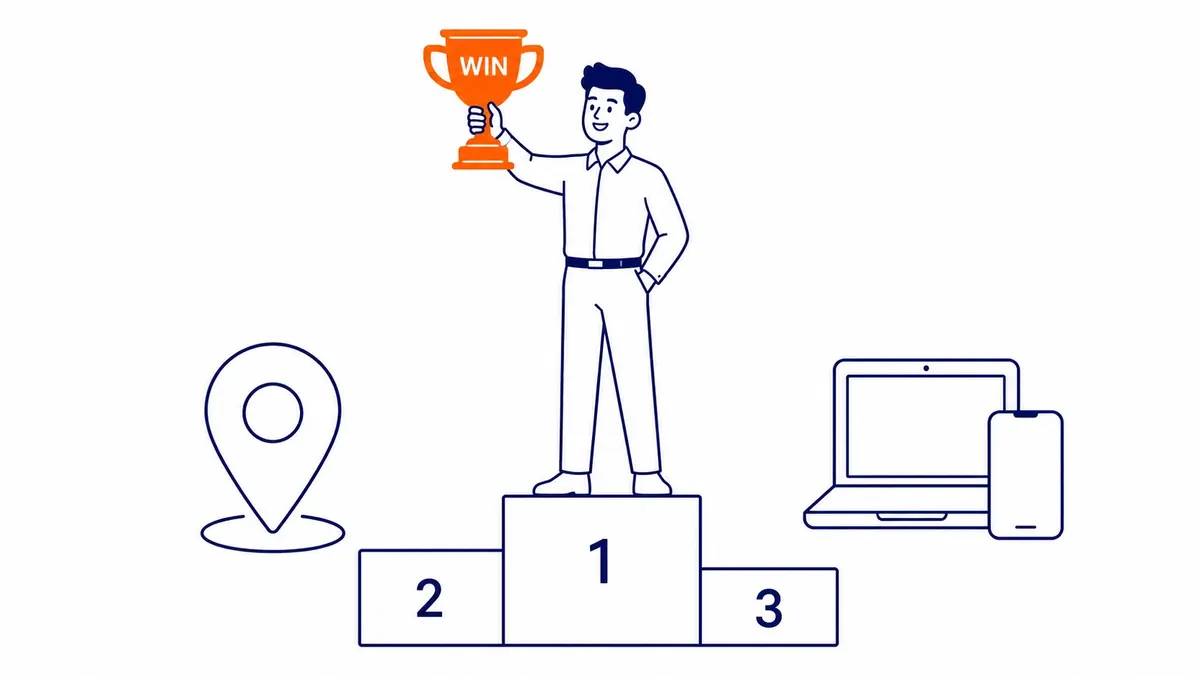
Position fluctuating throughout the day is almost always context shifts. The auction recalculates every time someone searches.
Quality Score and Its Three Components
Three signals. One number.
Quality Score runs 1 to 10 per keyword. Three components feed it. Expected CTR. Ad relevance. Landing page experience. Each component gets rated on a three-point scale. Below average. Average. Above average. Together these ratings become the score.
Expected CTR
Expected CTR is Google’s prediction of how often users will click your ad for a given keyword. Historical account data and current query patterns feed this prediction. Ad groups built around tight keyword themes produce ads that closely match the query. That match also lifts expected CTR.
Ad copy that mirrors the search query also helps. Your ad needs to look like the right result for what the user typed.
Ad relevance
Ad relevance measures how closely your ad copy matches the intent behind the search. A keyword about Calgary roofing triggering a generic home services ad rates below average. Keep each ad group to one theme. Then write ad copy that speaks directly to the specific keyword.

Good SEO keyword research separates intent clusters before the ads are written. Intent cluster separation is, indeed, what drives score improvement in well-structured campaigns. Keeping each cluster in its own ad group is the mechanical reason scores improve over time.
Landing page experience
Landing page experience is where ranking problems hide most often. Google evaluates the page after the click. Load speed matters. Content relevance also matters. Navigation matters too.
An ad promising HVAC installation that lands on a generic homepage rates below average on page experience. Match the landing page to the ad. The promise in your ad and the content on the page need to match.
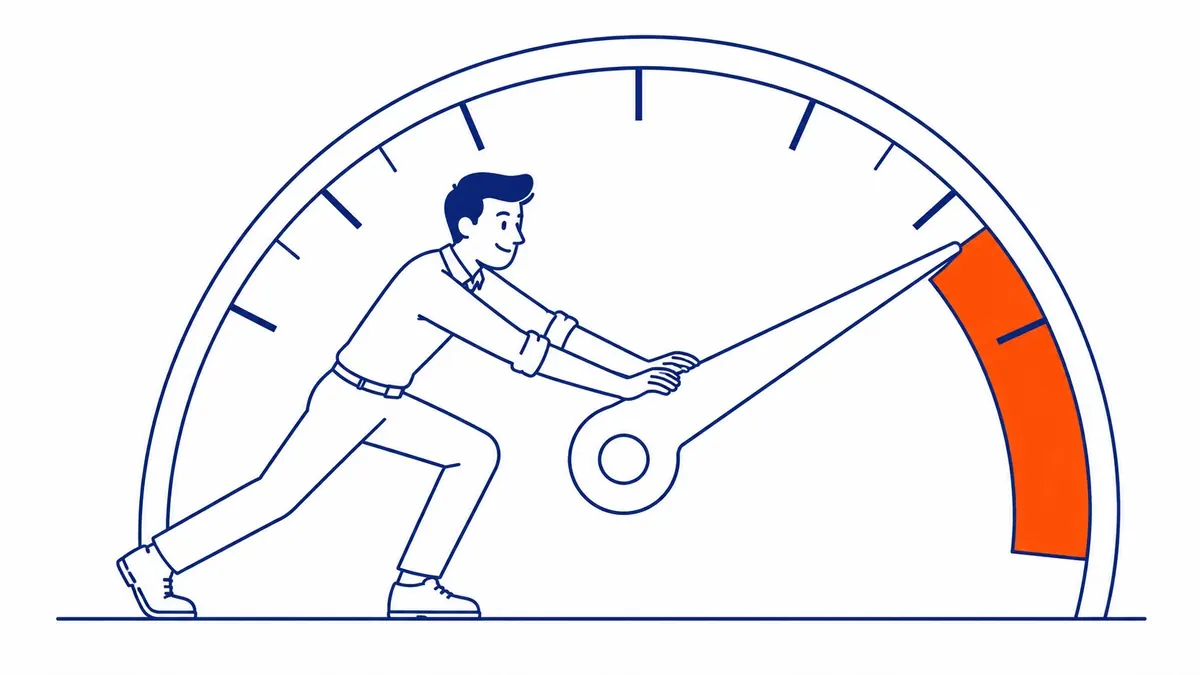
A score of 8 or above on a keyword you are spending on is where the ranking benefit starts showing. Below 5 on a main keyword is still worth investigating before adding more budget.
Ad Rank Thresholds
A floor that catches every advertiser eventually.
Ad rank thresholds are minimum values your ad must reach to appear at a given position. Google sets different thresholds for top-of-page versus bottom-of-page. Your rank may, however, be high enough to show but not high enough for the top positions.
How thresholds shift
Thresholds shift based on query competitiveness. More competitive searches, however, have higher thresholds. Higher-quality competing ads push the threshold up further. The floor also moves based on who else is in the mix.

Raising your bid can clear a threshold. Improving Quality Score can also clear it, at lower cost per click. The accounts where thresholds become a persistent problem are almost always running broad ads on competitive keywords with mismatched landing pages.
A site audit of your account structure often still surfaces the specific keywords causing threshold failures faster than watching spend reports.
Extensions and Assets: The Free Rank Lift
Easy gains. Often ignored.
Ad extensions add information without requiring a higher bid. Google also considers the expected impact of those extensions in this calculation. Two ads with identical bids and identical scores can end up in different positions based purely on extensions.
The ad with sitelinks and callouts beats the bare-text ad. We still see that gap regularly between accounts competing in the same auction.
Which extensions matter most
Sitelinks point users to specific service pages. Callout extensions also address common questions. Structured snippets list service types. Location extension adds the physical address for local searches. Call extension adds a phone number for high-intent searchers. Each one improves expected impact in this calculation.

Add every extension that fits the campaign. Not having them is leaving free rank lift on the table. The whole job, setting up extensions in Google Ads, takes an afternoon at most.
Why the Lower Bidder Wins
Not counterintuitive once you see the math.
Ad rank is roughly bid multiplied by Quality Score, with other factors layered in. Take two advertisers. One bids $3, score is 9. The rival bids $5, score is 4.
$3 x 9 = 27.
$5 x 4 = 20.

Position goes to the $3 bidder. They also pay less per click to hold it. That is the practical benefit of maintaining strong quality ratings on your main keywords.
Accounts we inherit that are overpaying for clicks almost always have weak scores on their highest-spend keywords. Raising the bid was still the attempted fix. Improving quality, however, would have been the cheaper path.
What this means for your campaigns
Quality comes first in our Google Ads management work. A better position follows. Lower cost per click follows too. That is, indeed, where the durable gains live in paid search.

More than 19 years of running Google Ads campaigns in Calgary, and the same pattern repeats. Raising bids was the instinct. Improving quality was the answer.
FAQ: Common Questions About Ad Rank
How is ad rank different from Quality Score?
Different things at different levels. Quality Score is the 1-to-10 diagnostic shown per keyword in your account. Ad rank is the real-time value Google calculates in each auction to determine position. Quality Score is one input into ad rank. Bid matters. Extensions matter. Context and thresholds round out the calculation. One lives in your dashboard. The other decides where your ad appears every time a search runs.
Can you see your ad rank in the interface?
Not visible directly. Google does not display the raw value. The interface shows Quality Score per keyword. Impression Share and average position columns are also there. Together those signals tell you whether the ranking is competitive for your keywords. Low impression share on a term you are spending on often signals a ranking issue with threshold placement.
Does ad rank change throughout the day?
Recalculates continuously. Every search runs independently. The ranking shifts based on who else is bidding. Context signals also matter. Your quality and bid position at that moment round out the picture. A keyword delivering position one at 9am may show position three at noon when competitors increase their bids. Budget exhaustion in competing accounts also shifts the landscape as the day runs.
What is the fastest way to improve ad rank without raising bids?
Extensions first, then landing page experience. Add every relevant extension to the campaign. Then audit the landing page for load speed and content relevance. These two changes lift expected impact and page experience scores over weeks of accumulated data. The ranking improves. One theme per ad group. Specific ad copy per keyword. Expected CTR improves. No new spend needed.
To-The-TOP! SEO Company is a Google Ads management company serving Calgary-area businesses. For organic search visibility alongside paid campaigns, our local SEO Calgary work handles the search engine optimization that ads cannot buy. Want to know where your account stands before committing? A website audit covers both paid and organic signals. Call (403) 308-5949.
Contact Calgary SEO Company To-The-TOP!
Questions about anything in this article, or about your own rankings? Talk to a Calgary SEO specialist directly.
Phone: (403) 308-5949
Address: 1509 14 Ave SW, Calgary, AB T3C 0W4
Hours:
Monday to Friday: 10:00 am – 7:00 pm
Saturday: 12:00 pm – 4:00 pm
Sunday: closed