
How AI Can Help With Local SEO: 4 Ways That Actually Matter
Calgary businesses are asking about AI tools more than they were two years ago. The question is almost always the same one. Can this actually help, or is it noise?
Straight answer? Both. Four areas where AI genuinely improves local SEO work. A couple where it still does not. That is what this post covers.

Still, AI is changing the labour-intensive parts of local SEO, not the strategy itself. For local searches, where someone in Calgary types “plumber near me” or “dentist open Sunday,” search engine optimization is still a months-long effort. AI speeds up specific tasks inside that effort. Not the timeline.
Local operators need to understand that distinction before paying for AI-powered SEO tools. Some of those tools are genuinely useful. Others are expensive ways to automate work that did not need doing in the first place.
At SEO Company To-The-TOP!, we have been doing Calgary SEO since 2007. We use AI tools where they save real time. This is what we have found.
Way 1: AI Speeds Up Keyword Research for Local Searches
Not by a little, either.
The old workflow involves pulling search volumes manually. Mapping competitor keyword gaps. Hunting long-tail near-me variants. Digging through PAA boxes for local questions. A thorough SEO keyword analysis pass on a new local business client takes several hours of focused work.
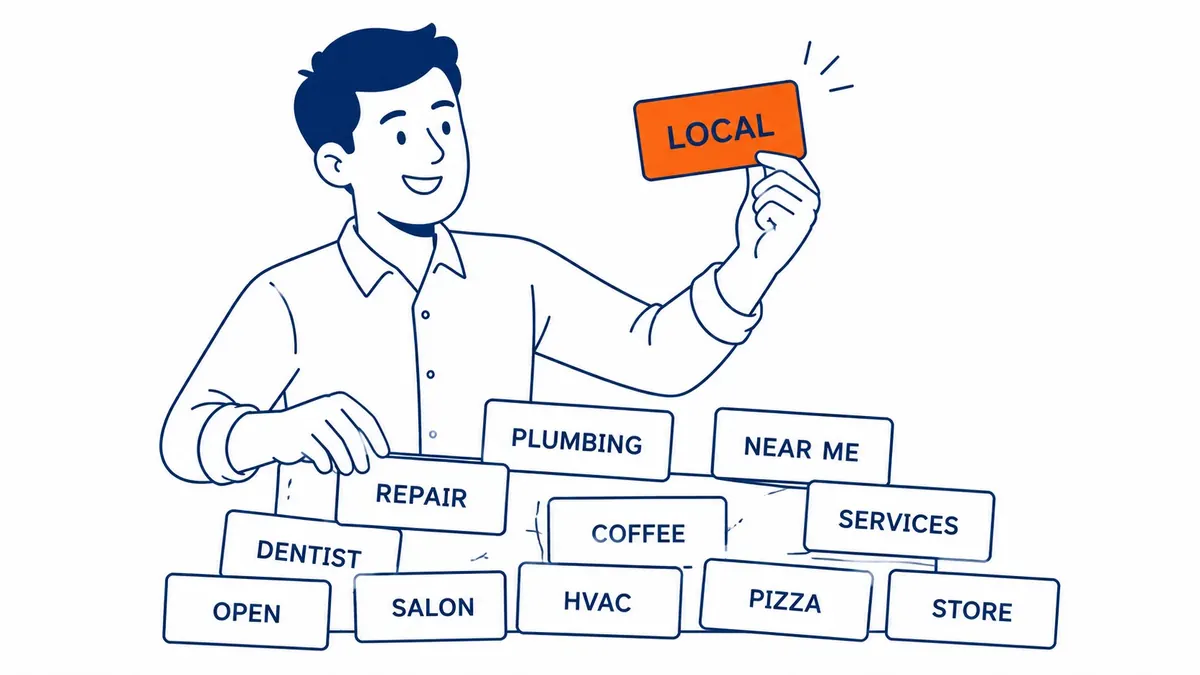
AI tools compress that first pass. ChatGPT generates a working list of local keyword variations in minutes. Semrush’s AI features pull neighbourhood-level search data quickly. The output is not perfect. A specialist still needs to review it. However, the time savings are real. Arriving at 60 candidate terms in 15 minutes instead of three hours changes the economics. Small businesses on limited budgets can now afford real keyword coverage.
60. That is the kind of scale AI makes realistic.
For your local SEO, that translates to more keyword coverage without proportionally more time. A business that could afford to research 20 terms can now test 50 and cut what does not convert.
AI handles the volume work in keyword research. A specialist applies the local lens. Those two things work together; neither replaces the other.
AI won’t tell you that a particular Calgary neighbourhood searches differently from another. Or that a service category sees a seasonal spike here that does not appear nationally. That knowledge comes from experience. AI generates the list; the strategist narrows it to what will actually move rankings in this market.
Way 2: AI Helps You Manage Reviews Without Sounding Like a Bot
Reviews matter more than most businesses realize.

Google uses them as a local ranking signal. Customers read them before calling. Responding to every review takes time most business owners simply do not have. Your business sitting on 200 unanswered Google reviews is leaving both rankings and reputation on the table.
AI tools can draft review responses at scale. The draft usually needs editing. But going from a blank screen to an 80% draft cuts the time per response significantly. A business owner can work through 30 pending reviews in an afternoon rather than a week.
One thing kills this approach fast. A response that sounds like it came from a bot. Reviewers notice. Prospective customers notice. The workflow that actually helps has three steps. AI drafts the response. A human reviews it for tone. The business owner approves before posting. That filter is what makes the whole approach worth using.
Businesses with strong review profiles get stronger local rankings, which is why reviews belong in any serious Calgary SEO services plan. Responding to reviews is not just reputation management; it also signals to Google that your business is actively engaged.
Sentiment analysis is the other application. Some AI platforms scan your review text and surface recurring patterns. If a dozen reviews in 90 days mention “hard to reach by phone,” that is a signal for your business. Not just for reputation, but for what is suppressing your average star rating and, by extension, your map pack position. Owners still ask whether responding to reviews helps SEO or only helps reputation.
Way 3: AI Surfaces Content Ideas Rooted in Local Search Intent
This one takes a bit of setup to explain properly.

Local search intent is granular. Someone typing “emergency plumber open now in Edmonton” wants someone on the phone right now. The person typing “best plumber Edmonton” is still gathering information. Those two searches need entirely different pages. The page that converts the first visitor will not rank for the second query.
AI tools trained on search data, Surfer SEO and Semrush’s content features among them, can map user intent at the keyword level. That tells you what kind of page to build. Transactional service page for buyer-ready searches. FAQ content for research queries. Local landing pages for location-specific terms. Getting the page type wrong wastes months of SEO effort.
For local clients, the practical value is this. AI generates a list of questions your local customers are asking at each stage of their buying process. Those questions become the content your site answers. High-quality content still wins in local search. AI lowers the barrier to producing enough of it.
Any search engine optimization company Calgary businesses can trust will build content around what people in this market are actually searching for. Search engines reward pages that answer the specific question behind the query. AI makes the research step faster. The writing, however, still needs local specificity that only comes from someone who knows the market.
ChatGPT is genuinely useful for content briefing at this stage. Not for writing the final page, where local nuance matters. For mapping the topic landscape and identifying question gaps, it saves real time. The local specifics still come from the business owner and the specialist. Service area nuance. Neighbourhood references. Actual pricing from real jobs. AI generates the framework; humans add what makes it local.
Way 4: AI Monitors Your Google Business Profile and Local Listings
Most local businesses check this far too rarely.

Google Business Profile accuracy is a direct local ranking factor for your business. Hours. Service categories. Address. Any unnoticed change can affect local search visibility for weeks. A customer-suggested edit that goes live incorrectly. Holiday hours left up past the holiday. A category flag from a competitor report. All of it can move rankings.
AI-powered monitoring tools flag GBP changes in real time. BrightLocal has features built around this. Moz Local does too. Per alert, the time saved is modest. Over months, consistently catching listing changes before they affect rankings adds up considerably.
NAP consistency is the related piece. Every directory listing must show identical information about your business. Any mismatch between those platforms also sends conflicting signals to search engines. AI systems can now scan dozens of directory listings and surface discrepancies in minutes. That used to require a manual SEO site audit that most local businesses never got around to completing.
Inconsistent citations suppress map pack rankings by sending conflicting signals about the business. These AI monitoring tools, moreover, catch new mismatches as they appear rather than waiting for an audit cycle.
For operations running lean, this kind of monitoring often falls through the cracks. These tools make it routine. A quarterly audit is not enough when listings change on a schedule no one controls. Monthly or real-time monitoring is where the value actually sits.
What AI Still Cannot Do in Local SEO
Worth being direct about this.

AI does not understand your market the way a specialist with 19 years of local experience does. It does not know which algorithm update hit Calgary service businesses differently from Vancouver. Earning backlinks from local news outlets also requires relationships that AI cannot build. Neighbourhood business associations and verified-member directories require time and genuine local presence.
Three to six months before meaningful local movement. That is, indeed, still the realistic timeline for search engine optimization. AI speeds up specific tasks inside that timeline. It does not shorten the timeline itself.
The businesses doing well in local SEO pair AI tools with specialist judgment. AI where it saves time. Human experience where it matters most. That combination is what produces local SEO results worth expecting.
Ready to improve local search visibility? Calgary SEO work at To-The-TOP! starts with an candid assessment of where you stand. Google Ads management is worth exploring in parallel for faster short-term visibility while organic rankings build. Start with what counts as local SEO before deciding which half of that to fund. Anyone wanting the steps to use AI for SEO will find them laid out separately.
Frequently Asked Questions About AI and Local SEO
How does AI help with SEO?
AI handles specific, labour-intensive tasks inside an SEO strategy. Keyword research passes. Content briefing. Review response drafting. Listing monitoring. Competitor gap checks. Strategy still requires human judgment, especially for local SEO, where neighbourhood-level knowledge matters in ways AI tools do not replicate.
How will AI Mode impact local SEO?
AI search overviews are changing what users see before they click. For local searches, the Google map pack and Google Business Profile still drive the bulk of traffic. Accurate listings help. So does a clean citation footprint. Businesses with solid review profiles are the ones AI overviews tend to surface. The fundamentals have not changed; the cost of neglecting them has increased.
What are the 4 pillars of SEO?
Technical health. Content relevance. Authority through backlinks and citations. User experience. All four apply to local SEO. The local-specific additions are citation consistency and Google Business Profile completeness. Those two are where most local businesses have the biggest gaps.
Should small businesses use AI tools for local SEO?
Several are genuinely worth using. Keyword research support is worth exploring. So is GBP monitoring and review management. Those are the highest-return applications for small businesses with limited time. The mistakes to avoid are publishing AI-written content without editing, and posting automated review responses without a human reviewing tone first. Both tend to hurt more than they help.
Contact Calgary SEO Company To-The-TOP!
Questions about anything in this article, or about your own rankings? Talk to a Calgary SEO specialist directly.
Phone: (403) 308-5949
Address: 1509 14 Ave SW, Calgary, AB T3C 0W4
Hours:
Monday to Friday: 10:00 am – 7:00 pm
Saturday: 12:00 pm – 4:00 pm
Sunday: closed