How to Tell If Your SEO Company Is Working
Most clients ask around month three. Rankings are up slightly. The phone is not ringing more. Panic sets in. So does second-guessing the retainer.
No activity summaries. Not task lists. The data that shows whether your search engine optimization company is producing real movement for your business and your website is what actually answers the question. There are specific signals worth tracking, and most of them are free to access.

Organic Traffic Is the First Number That Matters
This one shows movement first.
Leads do not move first. Neither do calls. Sessions from organic search is the signal to watch. Open Google Search Console and pull the last 90 days against the prior 90 days. Total clicks and total impressions. If both trend upward, work is happening.
Impressions climbing with clicks flat is a normal early pattern. Pages enter the index and move up before reaching positions that drive meaningful click volume. That lag is expected in months one through four.
Flat impressions after four months of paid work is a red flag. No new indexed pages. Nothing new going into the index either. That signals inactivity, not strategy.
Running our Google Ads management alongside your SEO? The channels report in Google Analytics separates paid sessions from organic ones. Keep those buckets separate when evaluating monthly SEO progress. Mixed numbers hide what is actually working. Clean separation of channels is one of the quieter signs of a solid SEO company.

Keyword Rankings: What Position Numbers Actually Mean
Context beats position.
Moving from position 14 to position 9 is not a result you will feel in traffic. Position 9 on a low-volume term does not move the needle. That changes at position 3 on a term with real monthly searches behind it.
Ask your SEO company which keywords they are tracking. Then ask about search volume on those terms. Volume-weighted ranking movement is the metric that actually connects position shifts to traffic potential. Without volume context, a ranking report tells you nothing useful.
We use Google Search Console alongside a third-party tracker for this work. Search Console shows impressions-weighted average position. Useful for spotting trends across the site. Not ideal for granular keyword-by-keyword tracking.
The distribution of organic traffic is also worth understanding. Most sites see the majority of sessions flowing to a small fraction of pages. Good SEO work starts with knowing which pages are in that high-value group and pointing effort there.

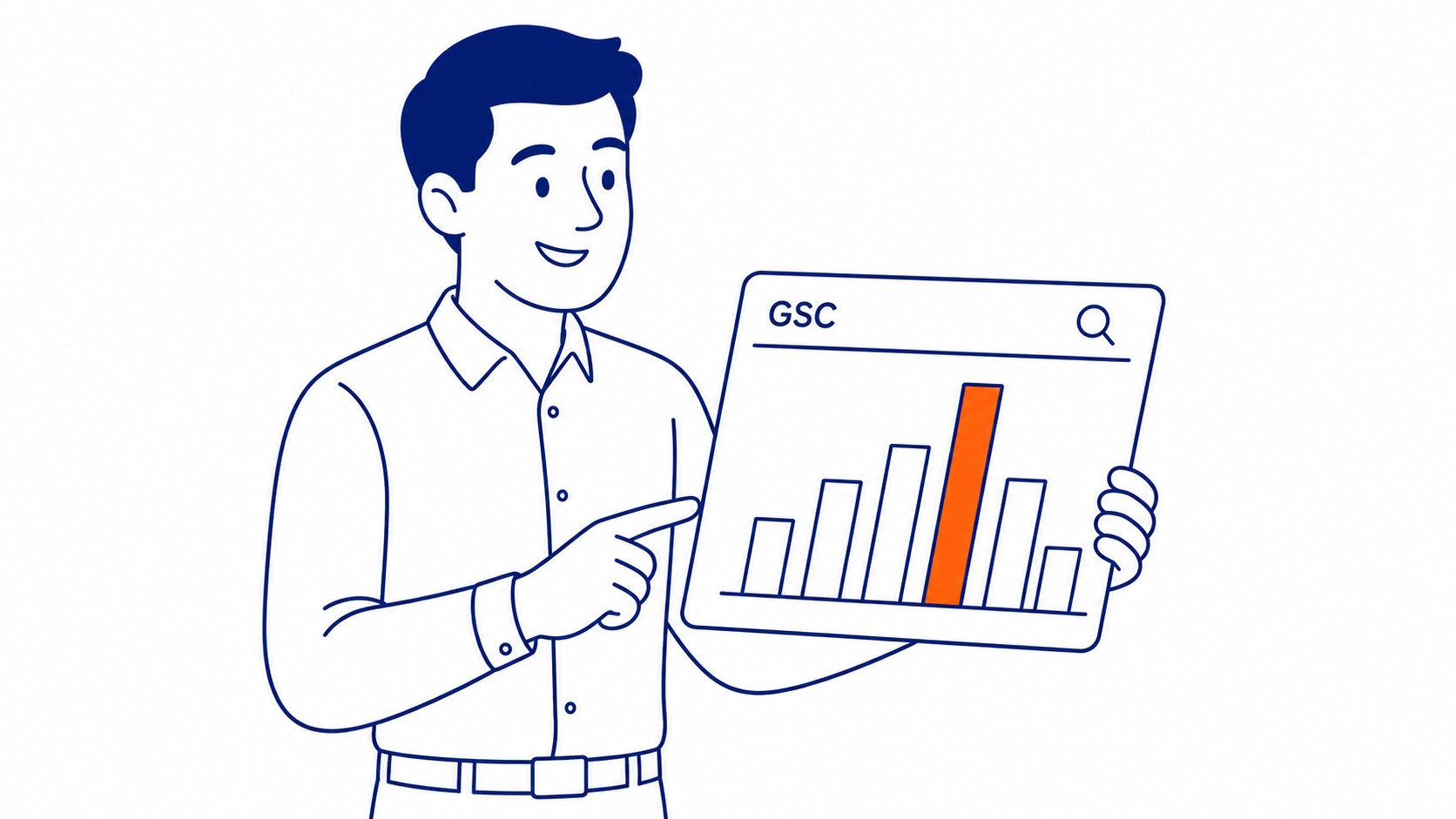
Google Search Console: the Free Baseline
Your SEO company should be in here every week.
Pull the Performance report. Set the date range to three months. Watch the click trend. Then impressions. Average position over time rounds out the picture. A well-run SEO campaign shows impressions growing first. Clicks follow once pages reach positions that generate click-through volume.
Check the Coverage report too. A spike in crawl errors or a growing list of excluded pages without a fix in place is a warning sign. Errors sitting unresolved past 30 days deserve an explanation from your SEO company.
Access is also worth confirming. Your Google Search Console property belongs in your account. If you do not have direct access to data for your website, ask for it today. A legitimate SEO company has no reason to hold the logins.
What Your SEO Company’s Monthly Reports Should Actually Cover
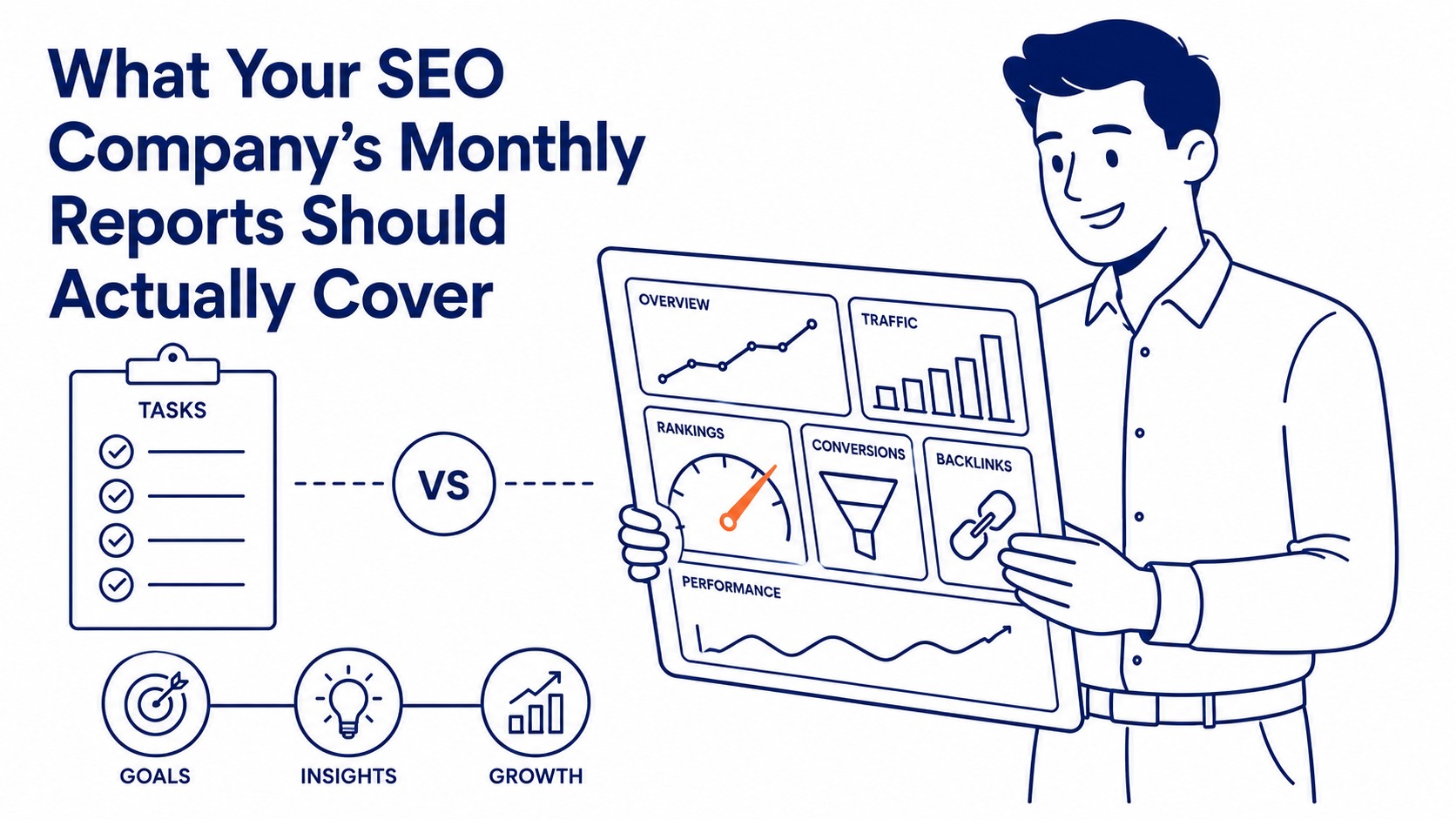
A task list is not a report.
“We published four blog posts and submitted two citations” is activity tracking. It is not analysis. A real monthly SEO report connects what was done to movement in the data. It explains why specific pages moved. Or why they did not. It flags what the next 30 days address and why.
Push for the story behind the numbers. A useful update sounds specific. Something along the lines of impressions up 18% because three pages moved from page two to page one on these terms. If the monthly report from your SEO company does not explain the why, it is a billing summary, not a progress report.
An SEO company that cannot explain what drove movement is probably not watching it closely enough to know. Knowing how to measure SEO results yourself makes that conversation much shorter. Half that argument disappears when the steps to set performance expectations happen at kickoff.
Google Analytics and Conversion Tracking
Rankings are intermediate signals. Conversions are the final measure.
Form fills. Phone call tracking. Product purchases. Set up a goal or conversion event in Google Analytics before the SEO work starts. Without that baseline, optimising toward traffic has no way to confirm the traffic actually converts.
We ask new clients where conversions are tracked before starting SEO keyword analysis. If tracking is not in place, that goes into month one. Rankings without conversion data is guesswork on both sides.
Check the sessions-to-conversions ratio monthly. Traffic growing with conversions flat for 90 days is a signal the intent match may be off. Worth raising with your SEO company before another quarter goes by.

Organic Traffic Quality: Not All Visits Are Equal
Traffic numbers without intent context mislead.
One e-commerce client came to us with organic traffic up 40%. Revenue was flat. We pulled the data. Most sessions were coming from informational queries with no purchase intent. The SEO work was ranking for the wrong terms on the wrong pages.
Traffic from informational content is not automatically bad. Building topical authority takes time. But a business paying for SEO services in Calgary deserves to see growth from traffic that matches its target audience. Growth from national informational queries alone signals an intent mismatch.
Ask your SEO company about intent. What share of organic sessions matches your actual buyers? The answer tells you whether the SEO strategy is pointed at your business goals or at volume for its own sake.

Red Flags Worth Taking Seriously
Guaranteed rankings. That is the obvious one.
No legitimate SEO company guarantees positions on Google or other search engines. Rankings are influenced by factors outside any single provider’s direct control. Any company promising page-one placement in 30 days is making a promise they cannot keep.
Look at the monthly reports too. Activity summaries with no organic traffic trend. Reports that describe tasks rather than explain results. An SEO company that cannot tell you why a page moved or stalled is not watching the data closely enough.
Also check data access. Your Google Search Console property and your Google Analytics account should both be directly accessible to you. If access requests get delayed or redirected, that is worth pressing on.
At To-The-TOP!, we tell clients when something we tried did not move the needle. That transparency is part of the work. Worth asking about before signing with any SEO company.

Frequently Asked Questions
How long before I can tell if my SEO company is working?
Three to six months for initial signals is the realistic timeline. Full traction on competitive terms runs nine to twelve months. Any company promising meaningful movement in 30 days is overselling.
For Calgary businesses in competitive industries, the answer is closer to six months before organic traffic trends become clear. Lower-competition terms can move faster. High-competition terms take longer than most clients expect, regardless of who is doing the work.
How to tell if your SEO is working?
Check Google Search Console monthly. Look at the impressions trend first. Rising impressions with flat clicks means rankings are improving before click-through rate catches up. That is normal early-stage progress on a well-run campaign.
Flat impressions after four months of paid SEO work signals a problem. Either a technical issue is holding indexation back, or the content strategy is not generating new ranking opportunities for your site.
Is SEO dead or evolving in 2026?
Evolving, not fading. Search behaviour is shifting toward AI-assisted retrieval and voice results. But rankings still drive the underlying citations in those systems. Pages with authority still get cited.
Page-level authority matters more now than it did five years ago. Schema markup too. Content depth more so. The fundamentals held. Tools reading those signals changed. That gap is where good SEO lives now.
Is my SEO company doing a good job?
Ask for a ranking report tied to search volume. The useful version names specific terms and shows their movement month to month. Which keywords moved. By how much. What the search volume is behind them. Ranked keywords with real search demand is meaningful progress. Rankings on zero-volume terms is padding.
Also ask what technical work was done on your site. A legitimate SEO company runs site audits and addresses crawl issues, not just content production. Content without the technical foundation underdelivers on every site.
SEO Company To-The-TOP! has been providing Calgary SEO since 2007. Solo practice, no junior handoffs. One expert handles every account throughout the engagement. If you want a straight read on how your current SEO is performing, a website audit is the right starting point. The data usually tells a clearer story than the monthly report you have been receiving.
Contact Calgary SEO Company To-The-TOP!
Questions about anything in this article, or about your own rankings? Talk to a Calgary SEO specialist directly.
Phone: (403) 308-5949
Address: 1509 14 Ave SW, Calgary, AB T3C 0W4
Hours:
Monday to Friday: 10:00 am – 7:00 pm
Saturday: 12:00 pm – 4:00 pm
Sunday: closed
