
What Is Grey Hat SEO?
Google publishes rules. Some SEO tactics follow them completely. Others break every one on purpose. A third category sits in between and stays unflagged for now. It goes by grey hat SEO, sometimes spelled gray hat. Not endorsed in Google’s guidelines. Never explicitly banned either. Just tolerated, for the moment.
Business owners bring this question to SEO Company To-The-TOP! often. A previous agency sold them exactly this pitch. Fast movement. Almost no explanation of how it actually worked underneath. The pitch is not usually a lie. It just skips the part where the tactic could stop working overnight.
Grey hat covers a real category of tactics, not a vague feeling. Buying a few backlinks. Running scaled AI content with no editorial pass. Reviving an expired domain and pointing its old authority at a money site. None of these trigger an automatic penalty the day they go live. Google’s spam systems have gotten faster at catching them anyway. The businesses using these tactics rarely get to choose when that catch happens.
Where the Line Actually Sits
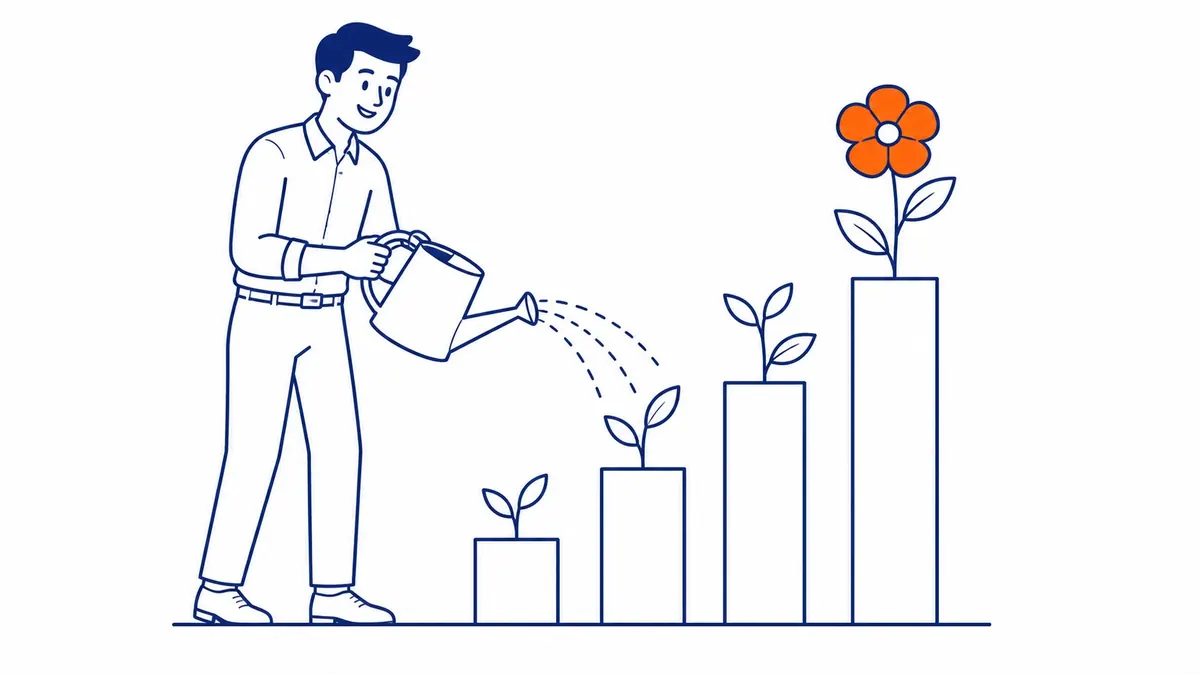
Google draws two firm categories in its own documentation. One category follows guidelines. The other violates them outright. Grey hat sits off that map by design. The tactic is not addressed one way or the other. That gap is exactly what makes it attractive. Nothing here restates a full comparison of ethical versus unethical SEO. The tactics below are the specific plays living in that gap. What each one actually looks like. Why the ceiling on all of them sits lower than it appears. Nowhere is that gap wider than with private blog networks. The clean route runs through a guide to building backlinks for SEO instead.
Aggressive Guest Posting and Link Exchanges
Guest posting itself is not the problem. A relevant post on a real site, written for real readers, holds up fine under any guideline. The grey version scales that same tactic past the point of relevance. Dozens of guest posts a month. Placed wherever a fee gets accepted. Keyword match beats readability when the anchor text gets chosen for these placements.
Link exchanges run the same play in reverse. Site A links to Site B. In return, Site B links back. Both sides count on it moving rankings. Google has called out reciprocal link schemes by name since the original Penguin update. A few exchanges rarely trigger anything on their own. Repeated patterns are different, especially across sites built just to trade links. That reads as manipulation, not editorial judgment.
Expired Domain Reuse and Redirect Schemes
A domain drops. Its owner stops paying. The backlinks pointing at it do not disappear with the registration. Buy that domain. Redirect it to a client site. The old authority, in theory, flows straight through. That is the entire pitch behind expired domain reuse.
Two problems sit underneath it. Google’s own systems treat a sudden redirect from an unrelated, previously dormant domain as a signal worth investigating. Not a gift worth passing along. The domain’s backlink profile was also built for whatever that old site used to be about. A defunct recipe blog does not hand real topical relevance to a plumbing company, whatever the link metrics claim.
Thin AI-Generated Content at Scale
Publish enough pages and something will rank, eventually, on volume alone. That is the logic behind mass AI content production. Hundreds of near-identical articles. Minimal editorial review. Built around every long-tail variation of a keyword phrase nobody set out to answer on purpose. Nobody reads most of them. That is not really the point.
Google’s helpful content systems, running since 2023, specifically target this pattern. Content that reorganizes existing information. Nothing new added, nothing genuinely useful learned by reading it. A client’s keyword research can surface real search volume on a term. Volume alone does not make a scaled AI page worth publishing. One test decides whether it is worth publishing at all. Could one specific reader have actually asked for this exact page. Scaled content almost never passes.

Private Blog Networks Run “Lightly”
A private blog network stops looking incriminating, or so the theory goes. Give each site an actual template. Occasional new content. A footprint scrubbed of shared hosting and shared analytics IDs. Ten quiet sites instead of fifty obvious ones. Each one links to the money site a handful of times, spaced out, never all at once.
Google’s algorithms cross-reference hosting data. Template fingerprints too. Registration patterns as well, all at a scale no PBN operator can outmanoeuvre by hand. A network built years ago to survive manual review does not survive the review method running today. Running it “lightly” slows detection. It does not stop it.
Cloaking-Adjacent Redirect Tricks
Cloaking, in its pure form, shows Googlebot one page and a visitor an entirely different one. The grey version is subtler. A page ranks clean and gets indexed. Then it swaps its own content after the fact. Some versions redirect a share of visitors elsewhere based on referrer or device, leaving the crawled version untouched.
Sneaky redirects already sit in Google’s own spam policy under a specific name. Not really a grey area once traffic starts moving through them differently than the crawl saw. Sites that lean on this tend to get caught the same way. A spike in bounce rate. Next, a support ticket from a confused visitor. Then a manual review that finds the mismatch fast.
Review Gating and Manufactured Trust
Review gating filters out unhappy customers before they ever reach a public review site. Only the satisfied ones get funnelled toward Google or Yelp. Feels harmless from the business side. Google’s guidelines say otherwise. Selectively soliciting reviews based on likely sentiment breaks policy on Google Business Profile and most major platforms.
The manufactured version goes further. A batch of reviews purchased outright. Timed to land in small clusters instead of one obvious dump so the pattern reads as organic. Both versions inflate trust that was never actually earned. Detection is catching up too, through timing patterns and repetitive language across review platforms.

The Real Risk Profile
None of this comes with a schedule. That is the part every grey hat pitch leaves out. A manual action can land the same week a tactic goes live. Or eighteen months later, once an algorithm update nobody saw coming targets the exact pattern being used.
Manual actions hit specific sites. A human reviewer flags them. Lifting one requires a formal reconsideration request. That process alone can take weeks after the underlying problem gets fixed.
Algorithmic devaluation is quieter still. No notification arrives in Search Console. Rankings just slide, page by page, over a stretch of weeks. Most site owners never connect the drop to the tactic that caused it months earlier.
Recovery from either one takes months of clean work, not days. Industry penalty-tracking data puts full recovery within a year at around one in three sites. Not great odds for a tactic sold as a shortcut.
Why To-The-TOP! Stays White Hat Only
To-The-TOP! has run Calgary SEO since 2007. Grey hat tactics have never been part of that work. Not once. Never for a single client.
The math is simple once you sit with it for a minute. A grey hat gain rarely lasts. Six months, maybe, before it collapses. That costs more than it saves once you count the lost time and lost trust. The slower gain never needed defending in the first place. White hat work is not a moral stance here so much as a bet on which approach survives the next update. That bet has paid off across nineteen years of watching updates roll through.
A website audit is usually where this conversation starts. Businesses often arrive already carrying grey hat baggage from a previous provider. Clean up what is recoverable. Disavow what is not. Then build forward on tactics built to survive the next core update instead of dodging the current one. Pairing that rebuild with a Google Ads campaign covers the visibility gap. Organic recovery takes months either way. Paid traffic does not care what a site’s backlink profile looked like eighteen months ago.
Frequently Asked Questions
Is grey hat SEO safe to use?
Not in any way that holds up over time. Some grey hat tactics avoid detection for months, occasionally longer. But “has not been caught yet” is not the same thing as safe. The tactics that survive longest tend to be the ones Google simply has not built detection for yet.
What is the difference between grey hat and black hat SEO?
Intent and disclosure, mostly. Black hat breaks a named rule outright. Cloaking. Keyword stuffing. Paid links passing obvious authority in bulk. Grey hat exploits a rule that has not been written clearly enough yet to call it a violation. Google closes those gaps eventually. Yesterday’s grey hat tactic becomes today’s black hat one when that happens.
Can grey hat SEO tactics still work in 2026?
Some still move rankings, briefly. Detection has gotten faster industry-wide, with automated spam systems catching patterns that used to take months to flag. The window where a grey hat tactic works without consequence keeps shrinking every year. Most of what worked a few years ago gets caught within weeks now, not years.
How long do grey hat SEO penalties take to recover from?
Months, typically. Sometimes longer, depending on how deep the manipulation went. A full recovery means removing or disavowing the manipulative links. Thin content gets replaced next. Then comes the wait, while search engines recrawl and rebuild trust. There is no guaranteed timeline on any of it, whatever a recovery service promises upfront.
Contact Calgary SEO Company To-The-TOP!
Questions about anything in this article, or about your own rankings? Talk to a Calgary SEO specialist directly.
Phone: (403) 308-5949
Address: 1509 14 Ave SW, Calgary, AB T3C 0W4
Hours:
Monday to Friday: 10:00 am – 7:00 pm
Saturday: 12:00 pm – 4:00 pm
Sunday: closed